Department of Internal Medicine and Hematology, Semmelweis University, Budapest, Hungary.
Department of Pathology and Experimental Cancer Research, Semmelweis University, Budapest, Hungary.
Pathol Oncol Res. 2022 May 16;28:1610322. doi: 10.3389/pore.2022.1610322. eCollection 2022.
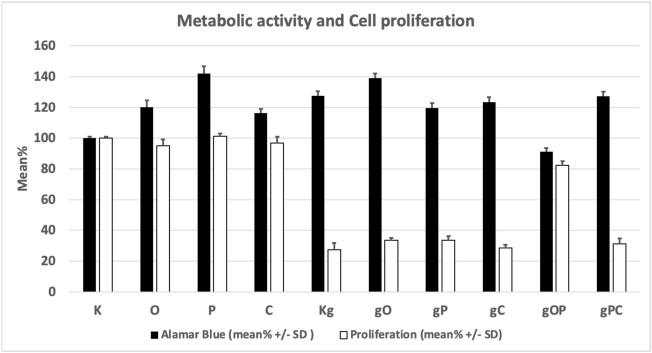
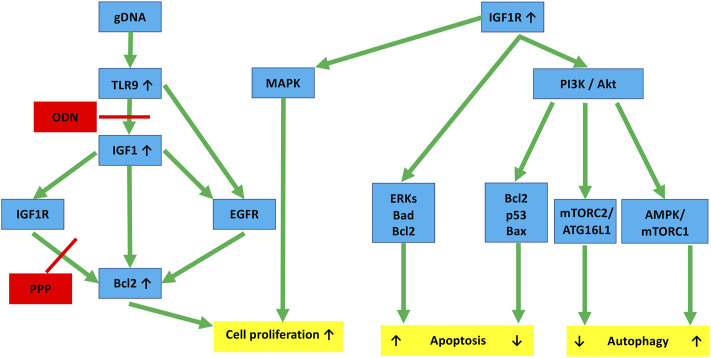
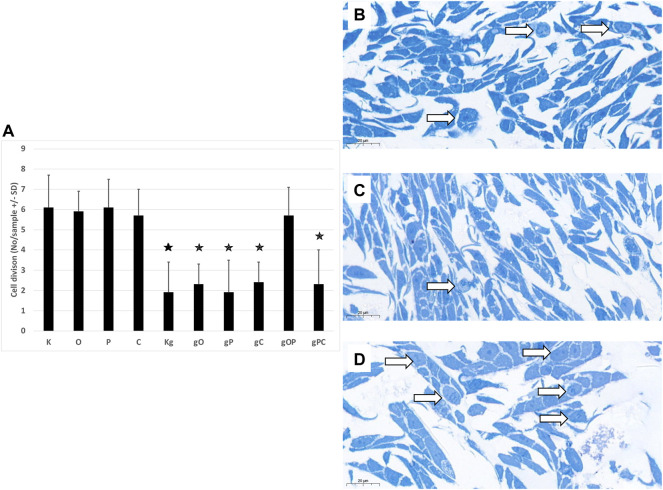
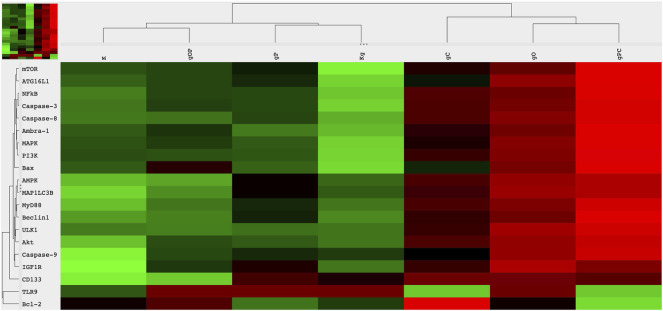
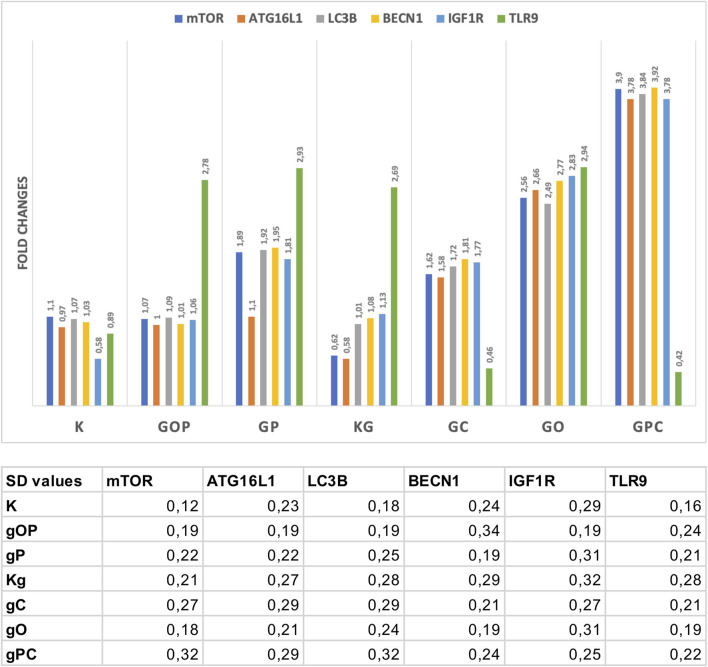
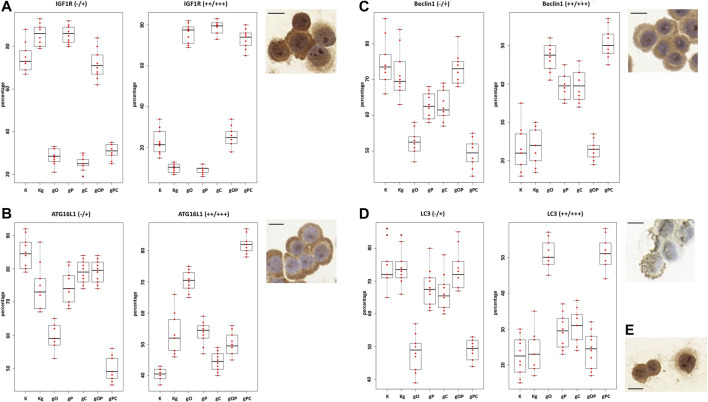
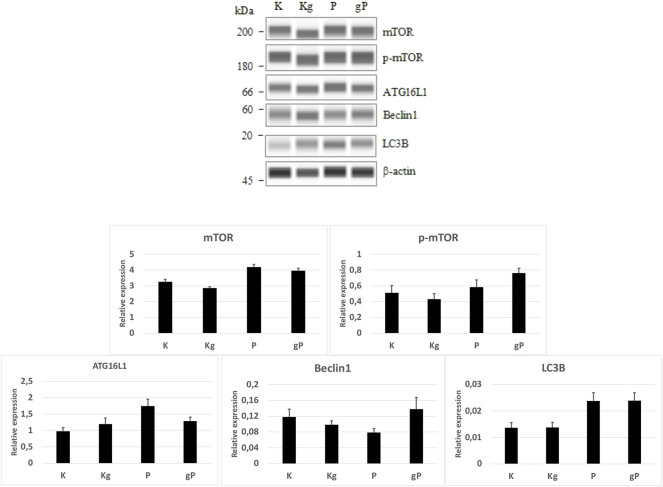
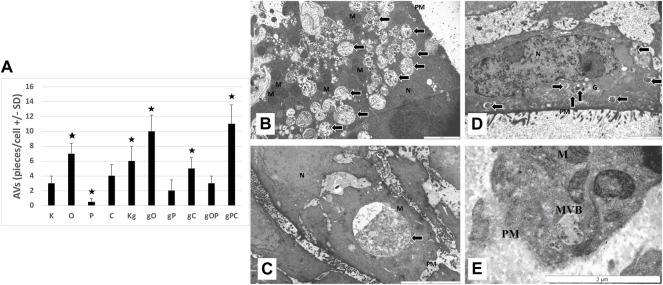
In HT29 colon cancer cells, a close interplay between self-DNA-induced TLR9 signaling and autophagy response was found, with remarkable effects on cell survival and differentiation. IGF1R activation drives the development and malignant progression of colorectal cancer. IGF1R inhibition displays a controversial effect on autophagy. The interrelated roles of IGF1R inhibition and TLR9/autophagy signaling in HT29 cancer cells have not yet been clarified. In our study, we aimed to investigate the complex interplay of IGF1R inhibition and TLR9/autophagy signaling in HT29 cells. HT29 cells were incubated with tumor-originated self-DNA with or without inhibitors of IGF1R (picropodophyllin), autophagy (chloroquine), and TLR9 (ODN2088), respectively. Cell proliferation and metabolic activity measurements, direct cell counting, NanoString and Taqman gene expression analyses, immunocytochemistry, WES Simple Western blot, and transmission electron microscopy investigations were performed. The concomitant use of tumor-derived self-DNA and IGF1R inhibitors displays anti-proliferative potential, which can be reversed by parallel TLR9 signaling inhibition. The distinct effects of picropodophyllin, ODN2088, and chloroquine or in combination on HT29 cell proliferation and autophagy suggest that either the IGF1R-associated or non-associated autophagy machinery is "Janus-faced" regarding its actions on cell proliferation. Autophagy, induced by different combinations of self-DNA and inhibitors is not sufficient to rescue HT29 cells from death but results in the survival of some CD133-positive stem-like HT29 cells. The creation of new types of combined IGF1R, autophagy, and/or TLR9 signaling inhibitors would play a significant role in the development of more personalized anti-tumor therapies for colorectal cancer.
在 HT29 结肠癌细胞中,发现了自身 DNA 诱导的 TLR9 信号和自噬反应之间的密切相互作用,对细胞存活和分化有显著影响。IGF1R 激活驱动结直肠癌的发展和恶性进展。IGF1R 抑制对自噬显示出有争议的影响。IGF1R 抑制和 TLR9/自噬信号在 HT29 癌细胞中的相互关系作用尚未阐明。在我们的研究中,我们旨在研究 IGF1R 抑制和 TLR9/自噬信号在 HT29 细胞中的复杂相互作用。HT29 细胞分别用肿瘤源性自身 DNA 和 IGF1R(苦鬼臼毒素)、自噬(氯喹)和 TLR9(ODN2088)抑制剂孵育。进行细胞增殖和代谢活性测量、直接细胞计数、NanoString 和 Taqman 基因表达分析、免疫细胞化学、WES Simple Western blot 和透射电子显微镜研究。同时使用肿瘤源性自身 DNA 和 IGF1R 抑制剂显示出抗增殖潜力,这种潜力可以通过平行 TLR9 信号抑制来逆转。苦鬼臼毒素、ODN2088 和氯喹或联合使用对 HT29 细胞增殖和自噬的不同影响表明,IGF1R 相关或不相关的自噬机制在其对细胞增殖的作用上是“两面派”。不同组合的自身 DNA 和抑制剂诱导的自噬不足以使 HT29 细胞免于死亡,但导致一些 CD133 阳性的干细胞样 HT29 细胞存活。创造新型的联合 IGF1R、自噬和/或 TLR9 信号抑制剂将在开发更具个性化的结直肠癌抗肿瘤疗法方面发挥重要作用。