Lunenfeld-Tanenbaum Research Institute at Mt. Sinai Hospital, Sinai Health, Toronto, Ontario, Canada.
Department of Molecular Genetics, University of Torontogrid.17063.33, Toronto, Ontario, Canada.
Microbiol Spectr. 2022 Jun 29;10(3):e0113422. doi: 10.1128/spectrum.01134-22. Epub 2022 Jun 2.
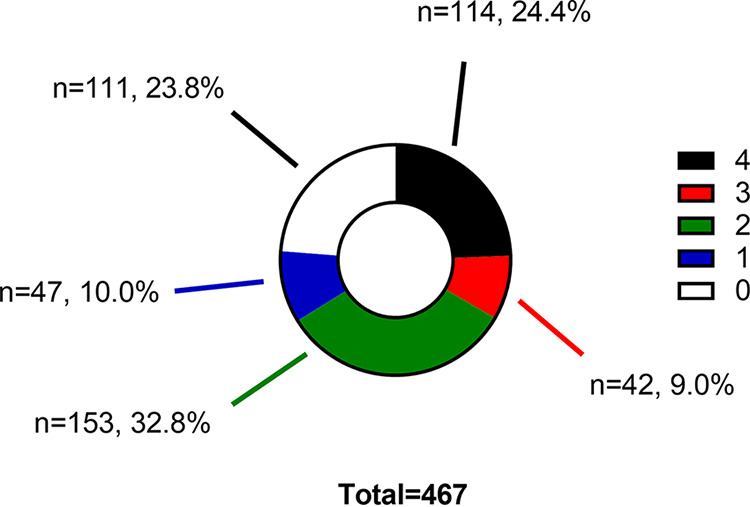
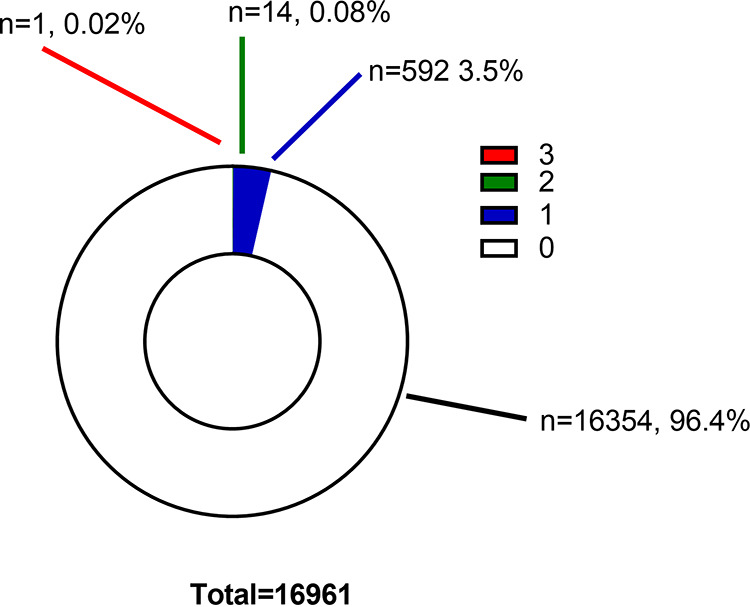
Our group has previously used laboratory and commercially developed assays to understand the IgG responses to SARS-CoV-2 antigens, including nucleocapsid (N), spike (S), and receptor binding domain (RBD), in Canadian blood donors. In this current study, we analyzed 17,428 available and previously characterized retention samples collected from April 2020 to March 2021. The analysis compared the characteristics of the Abbott SARS-CoV-2 IgG II Quant assay (Abbott anti-spike [S], Abbott, Chicago, IL) against four other IgG assays. The Abbott anti-S assay has a qualitative threshold of 50 AU/mL. The four comparator assays were the Abbott anti-nucleocapsid (N) assay and three commonly used Canadian in-house IgG enzyme-linked immunosorbent assays (ELISAs) recognizing distinct recombinant viral antigens, full-length spike glycoprotein, glycoprotein RBD, and nucleocapsid. The strongest qualitative relationship was between Sinai RBD and the Abbott anti-S assay (kappa, 0.707; standard error [SE] of kappa, 0.018; 95% confidence interval, 0.671 to 0.743). We then scored each previously characterized specimen as positive when two anti-SARS-COV-2 assays identified anti-SARS-CoV-2 IgG in the specimen. Using this composite reference standard approach, the sensitivity of the Abbott anti-S assay was 95.96% (95% confidence interval [CI], 93.27 to 97.63%). The specificity of the Abbott anti-S assay was 99.35% (95% CI, 99.21 to 99.46%). Our study provides context on the use of commonly used SARS-CoV-2 serologies in Canada and identifies how these assays qualitatively compare to newer commercial assays. Our next steps are to assess how well the Abbott anti-S assays quantitatively detect wild-type and SARS-CoV-2 variants of concern. We describe the qualitative test characteristics of the Abbott SARS-CoV-2 IgG II Quant assay against four other anti-SARS-CoV-2 IgG assays commonly used in Canada. Although there is no gold standard for identifying anti-SARS-CoV-2 seropositivity, aggregate standards can be used to assess seropositivity. In this study, we used a specimen bank of previously well-characterized specimens collected between April 2020 and March 2021. The Abbott anti-S assay showed the strongest qualitative relationship with a widely used laboratory-developed IgG assay for the SARS-CoV-2 receptor binding domain. Using the composite reference standard approach, we also showed that the Abbott anti-S assay was highly sensitive and specific. As new anti-SARS-CoV-2 assays are developed, it is important to compare their test characteristics against other assays that have been extensively used in prior research.
我们的团队之前曾使用实验室和商业开发的检测方法来了解加拿大献血者对 SARS-CoV-2 抗原的 IgG 反应,包括核衣壳(N)、刺突(S)和受体结合域(RBD)。在本研究中,我们分析了 2020 年 4 月至 2021 年 3 月期间收集的 17428 份可用且之前已确定特征的保留样本。该分析比较了 Abbott SARS-CoV-2 IgG II Quant 检测法( Abbott 抗刺突 [S], Abbott,芝加哥,IL)与其他四种 IgG 检测法的特征。Abbott 抗 S 检测法的定性阈值为 50 AU/mL。四种比较检测法是 Abbott 抗核衣壳(N)检测法和三种在加拿大常用的内部 IgG 酶联免疫吸附测定法(ELISA),它们分别识别不同的重组病毒抗原、全长刺突糖蛋白、糖蛋白 RBD 和核衣壳。最强的定性关系是西奈 RBD 与 Abbott 抗 S 检测法之间(kappa 值为 0.707;kappa 的标准误差 [SE]为 0.018;95%置信区间为 0.671 至 0.743)。然后,当两种抗 SARS-CoV-2 检测法在标本中识别出抗 SARS-CoV-2 IgG 时,我们将每个之前确定特征的标本标记为阳性。使用这种综合参考标准方法,Abbott 抗 S 检测法的灵敏度为 95.96%(95%置信区间为 93.27%至 97.63%)。Abbott 抗 S 检测法的特异性为 99.35%(95%置信区间为 99.21%至 99.46%)。我们的研究为加拿大常用的 SARS-CoV-2 血清学检测提供了背景信息,并确定了这些检测法与新型商业检测法的定性比较情况。我们的下一步是评估 Abbott 抗 S 检测法在定量检测野生型和 SARS-CoV-2 关注变体方面的效果如何。我们描述了 Abbott SARS-CoV-2 IgG II Quant 检测法与加拿大常用的四种其他抗 SARS-CoV-2 IgG 检测法的定性检测特征。尽管没有识别 SARS-CoV-2 血清阳性的金标准,但可以使用综合标准来评估血清阳性。在本研究中,我们使用了一个在 2020 年 4 月至 2021 年 3 月期间收集的之前特征明确的标本库。Abbott 抗 S 检测法与广泛使用的 SARS-CoV-2 受体结合域实验室开发的 IgG 检测法显示出最强的定性关系。使用综合参考标准方法,我们还表明 Abbott 抗 S 检测法具有很高的灵敏度和特异性。随着新的抗 SARS-CoV-2 检测法的开发,重要的是要将其检测特征与之前研究中广泛使用的其他检测法进行比较。