University of Basel, Department of Psychiatry (UPK), Basel, Switzerland.
Department of Microbiology and Immunology, Rega Institute for Medical Research, KU Leuven-University of Leuven, Leuven, Belgium.
Transl Psychiatry. 2022 Jun 3;12(1):227. doi: 10.1038/s41398-022-01977-z.
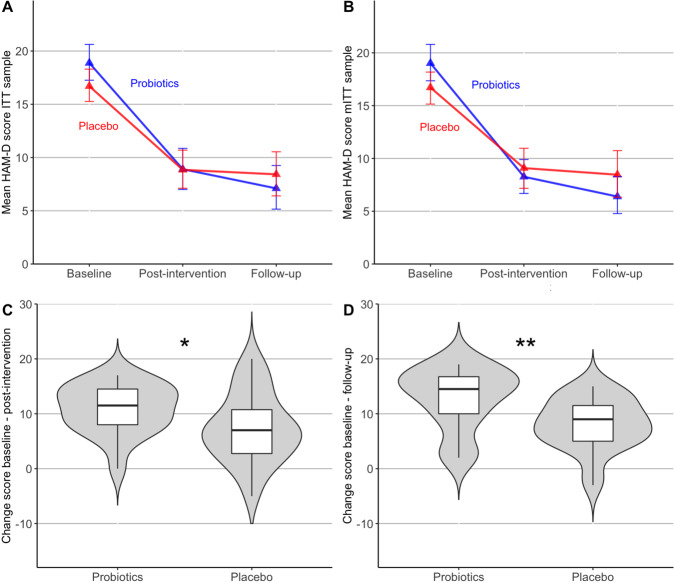
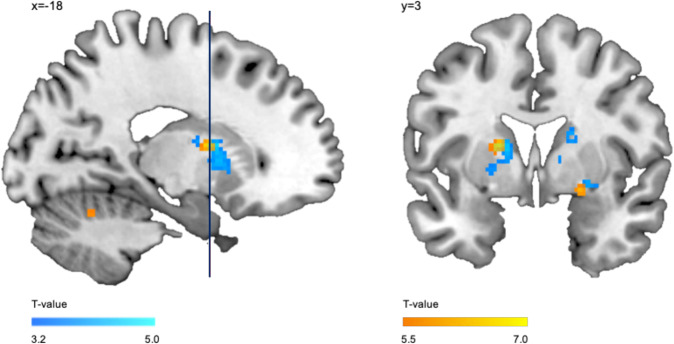
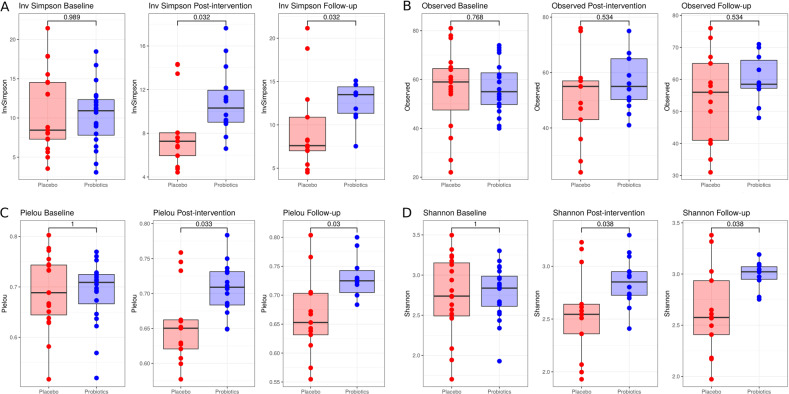
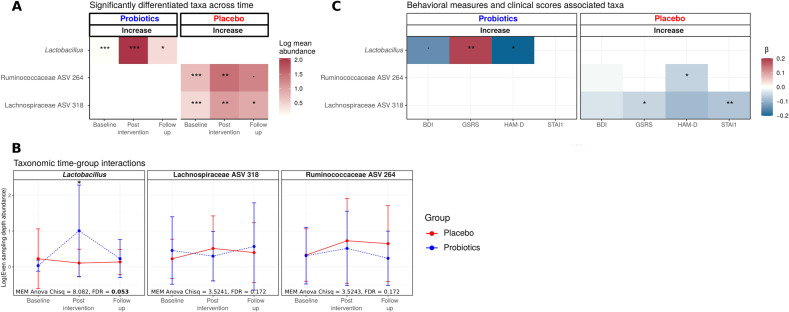
A promising new treatment approach for major depressive disorder (MDD) targets the microbiota-gut-brain (MGB) axis, which is linked to physiological and behavioral functions affected in MDD. This is the first randomized controlled trial to determine whether short-term, high-dose probiotic supplementation reduces depressive symptoms along with gut microbial and neural changes in depressed patients. Patients with current depressive episodes took either a multi-strain probiotic supplement or placebo over 31 days additionally to treatment-as-usual. Assessments took place before, immediately after and again four weeks after the intervention. The Hamilton Depression Rating Sale (HAM-D) was assessed as primary outcome. Quantitative microbiome profiling and neuroimaging was used to detect changes along the MGB axis. In the sample that completed the intervention (probiotics N = 21, placebo N = 26), HAM-D scores decreased over time and interactions between time and group indicated a stronger decrease in the probiotics relative to the placebo group. Probiotics maintained microbial diversity and increased the abundance of the genus Lactobacillus, indicating the effectivity of the probiotics to increase specific taxa. The increase of the Lactobacillus was associated with decreased depressive symptoms in the probiotics group. Finally, putamen activation in response to neutral faces was significantly decreased after the probiotic intervention. Our data imply that an add-on probiotic treatment ameliorates depressive symptoms (HAM-D) along with changes in the gut microbiota and brain, which highlights the role of the MGB axis in MDD and emphasizes the potential of microbiota-related treatment approaches as accessible, pragmatic, and non-stigmatizing therapies in MDD. Trial Registration: www.clinicaltrials.gov , identifier: NCT02957591.
一种有前景的治疗重度抑郁症(MDD)的新方法针对的是微生物群-肠道-大脑(MGB)轴,该轴与 MDD 中受影响的生理和行为功能有关。这是第一项确定短期高剂量益生菌补充是否可以减轻抑郁患者的抑郁症状以及肠道微生物和神经变化的随机对照试验。目前患有抑郁发作的患者在接受常规治疗的同时,额外服用多菌株益生菌补充剂或安慰剂 31 天。评估在干预之前、之后立即和干预后四周进行。汉密尔顿抑郁评定量表(HAM-D)被评估为主要结局。定量微生物组分析和神经影像学用于检测 MGB 轴上的变化。在完成干预的样本中(益生菌 N=21,安慰剂 N=26),HAM-D 评分随时间降低,时间和组之间的相互作用表明益生菌组相对于安慰剂组的降低幅度更大。益生菌维持微生物多样性并增加了乳杆菌属的丰度,表明益生菌增加特定分类群的有效性。乳杆菌属的增加与益生菌组中抑郁症状的减轻有关。最后,在益生菌干预后,对中性面孔的壳核激活显著降低。我们的数据表明,附加益生菌治疗可改善抑郁症状(HAM-D)以及肠道微生物群和大脑的变化,这突显了 MGB 轴在 MDD 中的作用,并强调了与微生物组相关的治疗方法作为一种可获得、实用且非污名化的 MDD 治疗方法的潜力。试验注册:www.clinicaltrials.gov ,标识符:NCT02957591。