Graduate School of Engineering Science, Osaka University, 1‑3 Machikaneyama, Toyonaka, Osaka, 560‑8631, Japan.
Panasonic Holdings Corporation, Kyoto, 619-0237, Japan.
Nat Commun. 2022 Jun 2;13(1):3067. doi: 10.1038/s41467-022-30764-z.
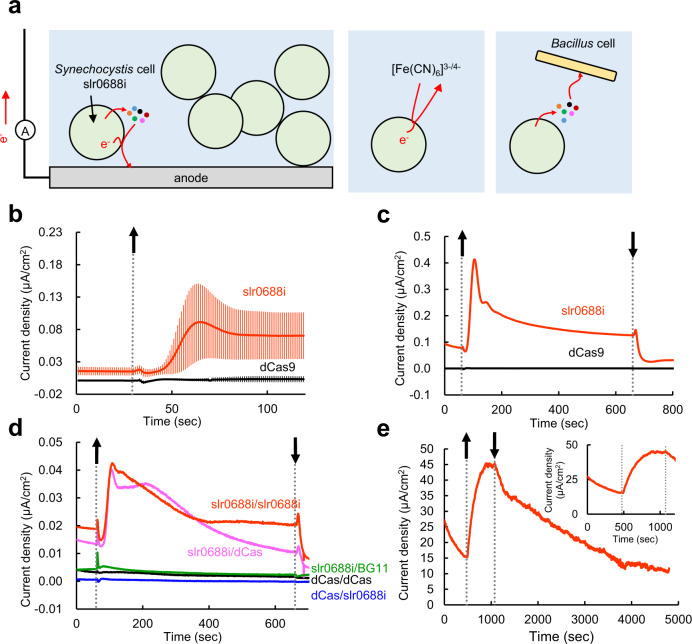
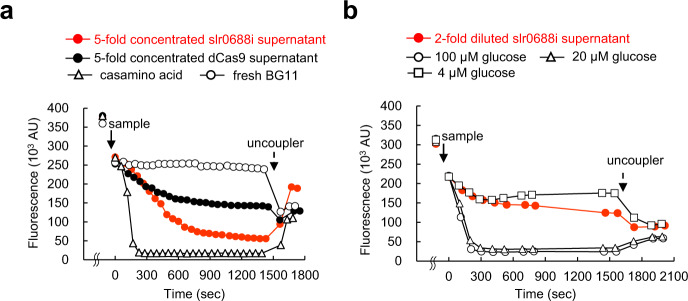
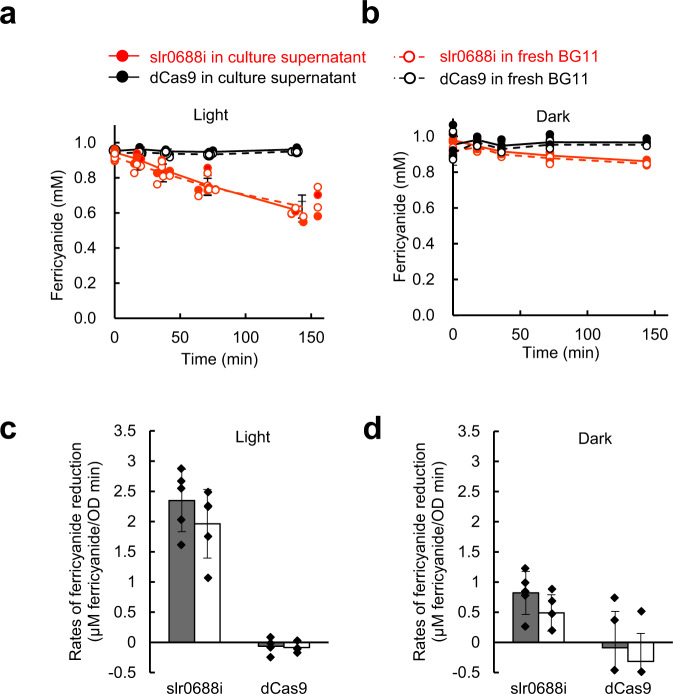
Biophotovoltaics (BPV) generates electricity from reducing equivalent(s) produced by photosynthetic organisms by exploiting a phenomenon called extracellular electron transfer (EET), where reducing equivalent(s) is transferred to external electron acceptors. Although cyanobacteria have been extensively studied for BPV because of their high photosynthetic activity and ease of handling, their low EET activity poses a limitation. Here, we show an order-of-magnitude enhancement in photocurrent generation of the cyanobacterium Synechocystis sp. PCC 6803 by deprivation of the outer membrane, where electrons are suggested to stem from pathway(s) downstream of photosystem I. A marked enhancement of EET activity itself is verified by rapid reduction of exogenous electron acceptor, ferricyanide. The extracellular organic substances, including reducing equivalent(s), produced by this cyanobacterium serve as respiratory substrates for other heterotrophic bacteria. These findings demonstrate that the outer membrane is a barrier that limits EET. Therefore, depriving this membrane is an effective approach to exploit the cyanobacterial reducing equivalent(s).
生物光伏(BPV)利用细胞外电子传递(EET)现象,从光合生物产生的还原当量中产生电能,其中还原当量被转移到外部电子受体。尽管由于蓝藻具有较高的光合活性和易于处理,因此被广泛研究用于 BPV,但它们的 EET 活性低是一个限制因素。在这里,我们通过剥夺外膜来展示蓝藻 Synechocystis sp. PCC 6803 的光电流产生的数量级增强,其中电子被认为来自光系统 I 下游的途径。通过快速还原外源电子受体铁氰化物,验证了 EET 活性本身的显著增强。这种蓝藻产生的细胞外有机物质,包括还原当量,可作为其他异养细菌的呼吸底物。这些发现表明,外膜是限制 EET 的障碍。因此,剥夺这种膜是利用蓝藻还原当量的有效方法。