Ma ZhaoLei, Liu Chun-Feng, Zhang Li, Xiang Ning, Zhang Yifan, Chu Lan
Department of Neurology, The Affiliated Hospital of Guizhou Medical University, Guiyang, China.
Department of Neurology, Clinical Research Center of Neurological Disease, The Second Affiliated Hospital of Soochow University, Suzhou, China.
Front Aging Neurosci. 2022 May 17;14:806200. doi: 10.3389/fnagi.2022.806200. eCollection 2022.
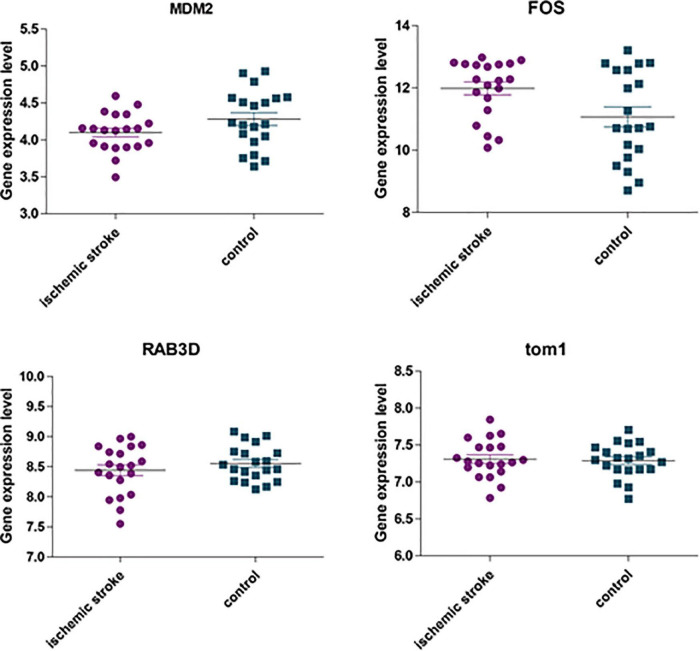
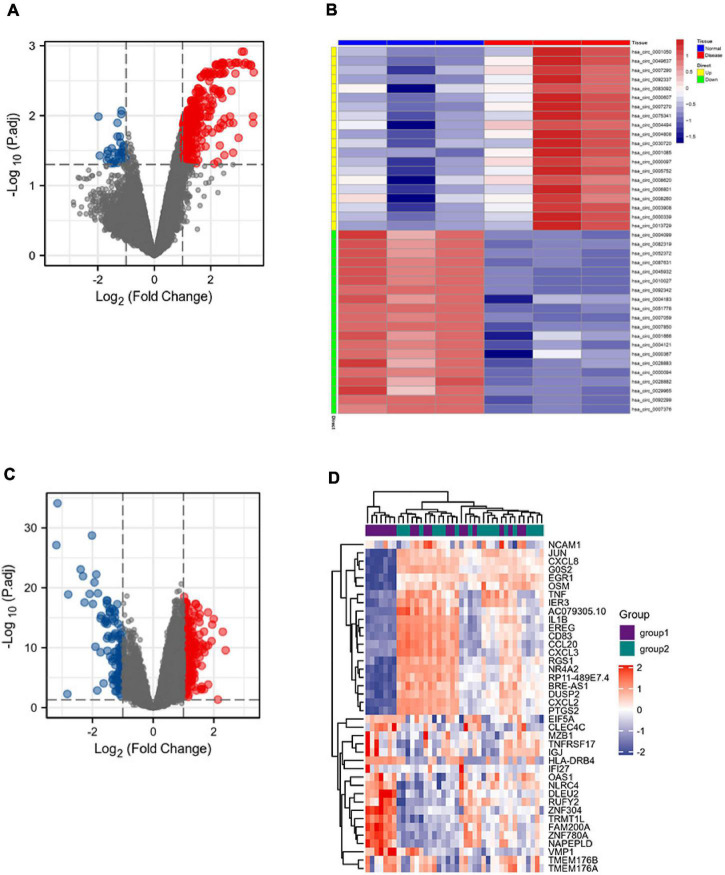
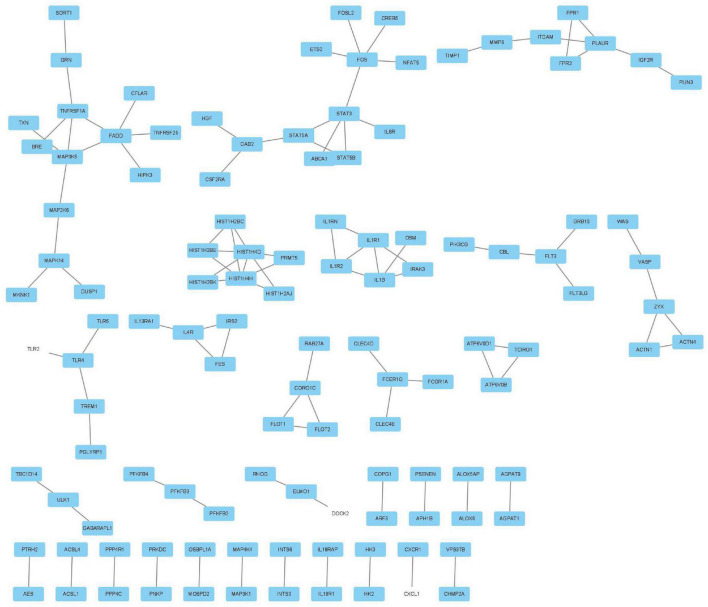
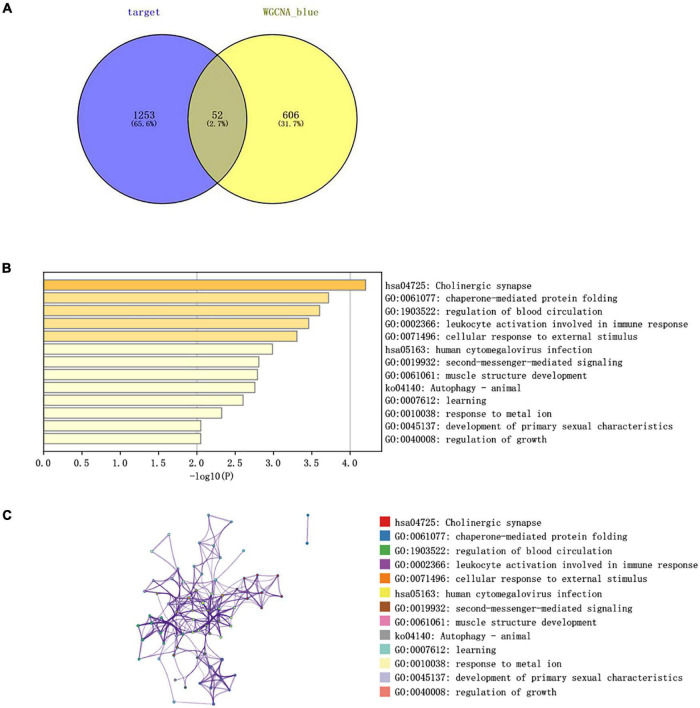
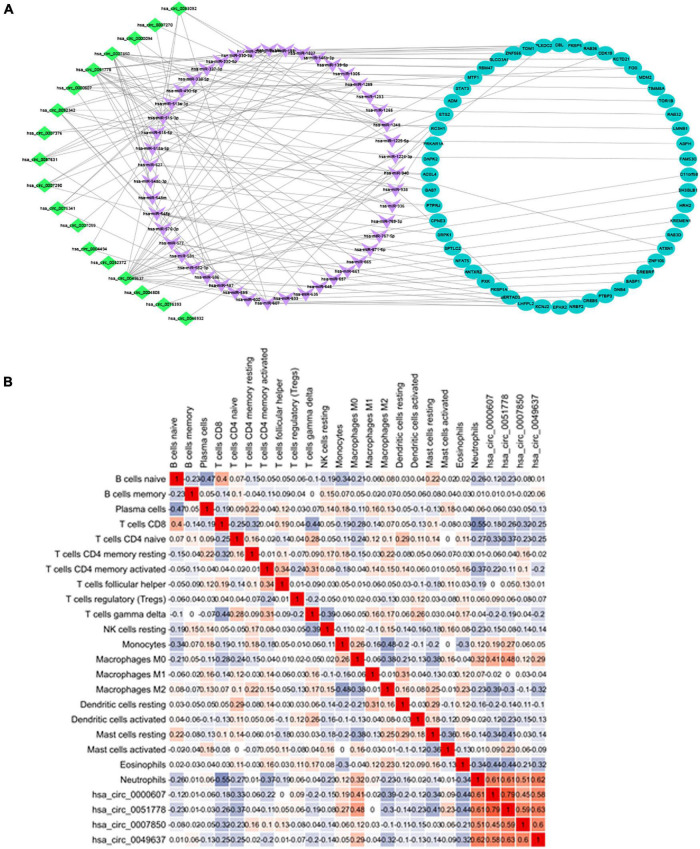
Acute ischemic stroke (AIS) is a common neurological disease that seriously endangers both the physical and mental health of human. After AIS, activated immune cells are recruited to the stroke site, where inflammatory mediators are released locally, and severe immune inflammatory reactions occur within a short time, which affects the progress and prognosis of IS. Circular RNA (circRNA) is a type of non-coding RNA (ncRNA) with a closed-loop structure and high stability. Studies have found that circRNA can affect the course of IS. However, there is no report on ceRNA's pathogenesis in AIS that is mediated by circRNA. In this study, the CIBERSORT algorithm was used to analyze the distribution of immune cells in patients with AIS. mRNA dataset was downloaded from the GEO database, and the weighted gene co-expression network analysis (WGCNA) method was used to construct weighted gene co-expression to determine 668 target genes, using GO, KEGG enrichment analysis, construction of protein-protein interaction (PPI) network analysis, and molecular complex detection (MCODE) plug-in analysis. The results showed that the biological function of the target gene was in line with the activation and immune regulation of neutrophils; signal pathways were mostly enriched in immune inflammation-related pathways. A Venn diagram was used to obtain 52 intersection genes between target genes and disease genes. By analyzing the correlation between the intersection genes and immune cells, we found that the top 5 hub genes were TOM1, STAT3, RAB3D, MDM2, and FOS, which were all significantly positively correlated with neutrophils and significantly negatively correlated with eosinophils. A total of 52 intersection genes and the related circRNA and miRNA were used as input for Cytoscape software to construct a circRNA-mediated ceRNA competition endogenous network, where a total of 18 circRNAs were found. Further analysis of the correlation between circRNA and immune cells found that 4 circRNAs are positively correlated with neutrophils. Therefore, we speculate that there may be a regulatory relationship between circRNA-mediated ceRNA and the immune mechanism in AIS. This study has important guiding significance for the progress, outcome of AIS, and the development of new medicine.
急性缺血性卒中(AIS)是一种常见的神经系统疾病,严重危害人类身心健康。AIS发生后,活化的免疫细胞被募集到卒中部位,在那里局部释放炎症介质,并在短时间内发生严重的免疫炎症反应,这影响了缺血性卒中的进展和预后。环状RNA(circRNA)是一种具有闭环结构和高稳定性的非编码RNA(ncRNA)。研究发现,circRNA可影响缺血性卒中的病程。然而,尚无关于circRNA介导的竞争性内源RNA(ceRNA)在AIS发病机制中的报道。在本研究中,使用CIBERSORT算法分析AIS患者免疫细胞的分布。从基因表达综合数据库(GEO数据库)下载mRNA数据集,并使用加权基因共表达网络分析(WGCNA)方法构建加权基因共表达,以确定668个靶基因,采用基因本体论(GO)、京都基因与基因组百科全书(KEGG)富集分析、蛋白质-蛋白质相互作用(PPI)网络分析构建及分子复合物检测(MCODE)插件分析。结果表明,靶基因的生物学功能与中性粒细胞的激活和免疫调节一致;信号通路大多富集于免疫炎症相关通路。使用维恩图获得靶基因与疾病基因之间的52个交集基因。通过分析交集基因与免疫细胞之间的相关性,我们发现排名前5的枢纽基因是TOM1、信号转导和转录激活因子3(STAT3)、RAB3D、小鼠双微体2(MDM2)和FOS,它们均与中性粒细胞显著正相关,与嗜酸性粒细胞显著负相关。将总共52个交集基因以及相关的circRNA和微小RNA(miRNA)作为输入,导入Cytoscape软件构建circRNA介导的ceRNA竞争性内源网络,共发现18条circRNA。进一步分析circRNA与免疫细胞之间的相关性发现,4条circRNA与中性粒细胞呈正相关。因此,我们推测circRNA介导的ceRNA与AIS免疫机制之间可能存在调控关系。本研究对AIS的进展、结局及新药研发具有重要指导意义。