Beijing National Laboratory for Molecular Sciences, CAS Research/Education Center for Excellence in Molecular Sciences, Institute of Chemistry Chinese Academy of Sciences, Beijing Mass Spectrum Center, Beijing, 100190, China.
Graduate School, University of Chinese Academy of Sciences, Beijing, 100049, China.
J Nanobiotechnology. 2022 Jun 3;20(1):258. doi: 10.1186/s12951-022-01465-y.
Cisplatin, the alkylating agent of platinum(II) (Pt(II)), is the most common antitumor drug in clinic; however, it has many side effects, therefore it is higly desired to develop low toxicity platinum(IV) (Pt(IV)) drugs. Multi-omics analysis, as a powerful tool, has been frequently employed for the mechanism study of a certain therapy at the molecular level, which might be helpful for elucidating the mechanism of platinum drugs and facilitating their clinical application.
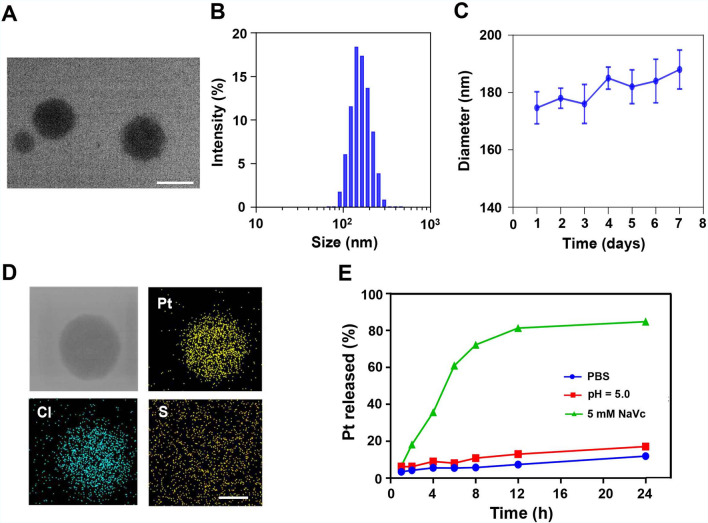
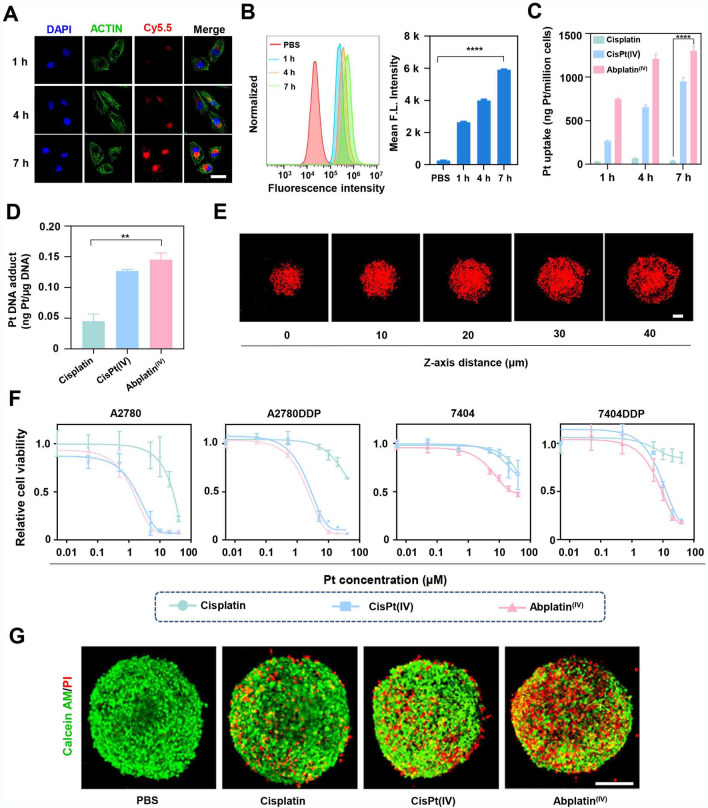
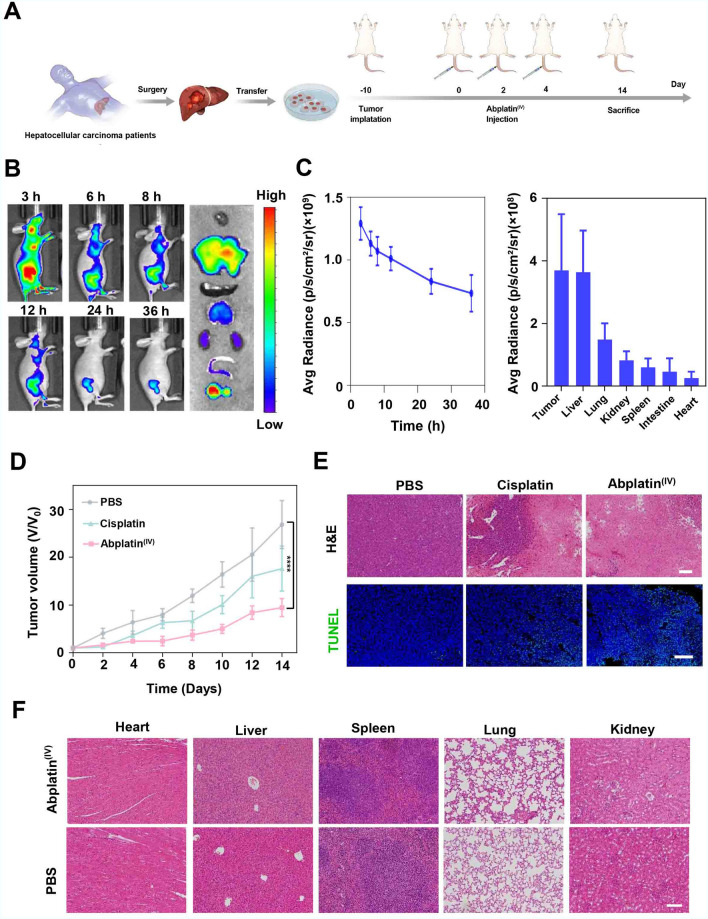
Strating form cisplatin, a hydrophobic Pt(IV) prodrug (CisPt(IV)) with two hydrophobic aliphatic chains was synthesized, and further encapsulated with a drug carrier, human serum albumin (HSA), to form nanoparticles, namely AbPlatin. The anticancer effect of AbPlatin was investigated in vitro and in vivo. Moreover, transcriptomics, metabolomics and lipidomics were performed to explore the mechanism of AbPlatin(IV).
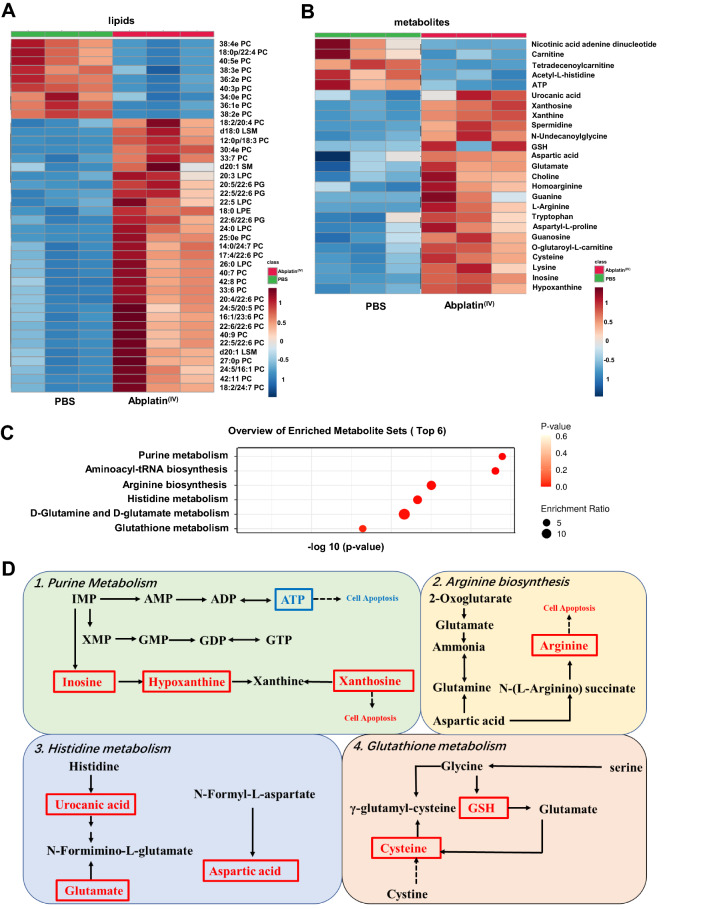
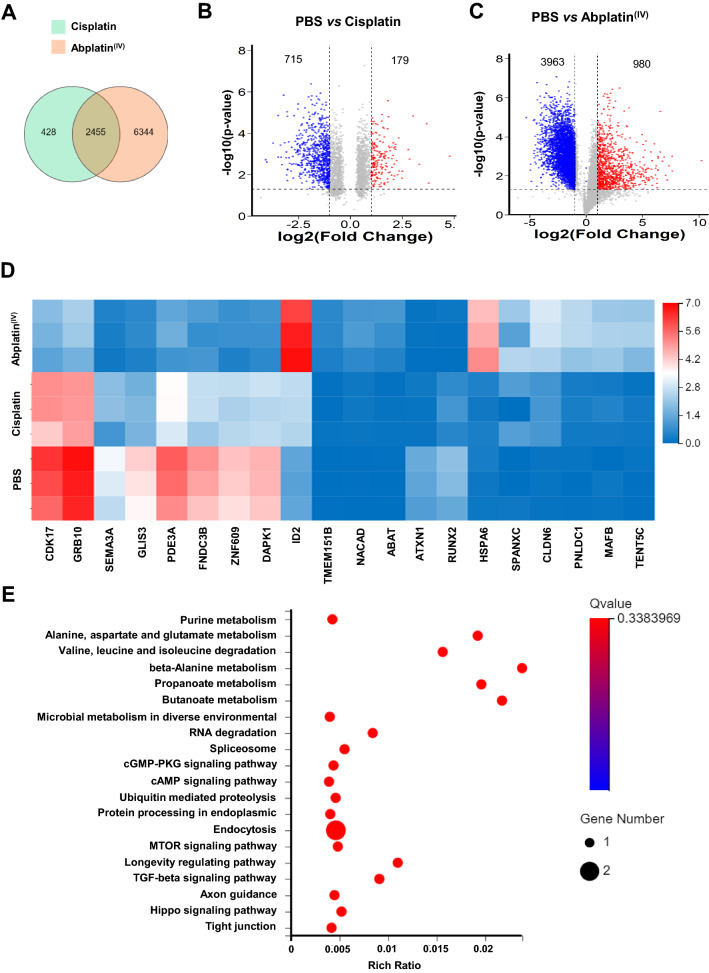
Compared with cisplatin, Abplatin exhibited better tumor-targeting effect and greater tumor inhibition rate. Lipidomics study showed that Abplatin might induce the changes of BEL-7404 cell membrane, and cause the disorder of glycerophospholipids and sphingolipids. In addition, transcriptomics and metabolomics study showed that Abplatin significantly disturbed the purine metabolism pathway.
This research highlighted the development of Abplatin and the use of multi-omics for the mechanism elucidation of prodrug, which is the key to the clinical translation of prodrug.
顺铂是铂(II)的烷化剂,是临床最常用的抗肿瘤药物;然而,它有许多副作用,因此人们非常希望开发低毒性的铂(IV)药物。多组学分析作为一种强大的工具,已被频繁用于从分子水平上研究某种治疗方法的机制,这可能有助于阐明铂类药物的作用机制并促进其临床应用。
以顺铂为起始原料,合成了一种具有两条疏水性脂肪链的亲脂性铂(IV)前药(CisPt(IV)),并进一步用药物载体人血清白蛋白(HSA)包封形成纳米颗粒,即 AbPlatin。在体外和体内研究了 AbPlatin 的抗癌作用。此外,进行了转录组学、代谢组学和脂质组学研究,以探讨 AbPlatin(IV)的作用机制。
与顺铂相比,Abplatin 表现出更好的肿瘤靶向作用和更高的肿瘤抑制率。脂质组学研究表明,Abplatin 可能诱导 BEL-7404 细胞膜发生变化,导致甘油磷脂和鞘脂紊乱。此外,转录组学和代谢组学研究表明,Abplatin 显著扰乱了嘌呤代谢途径。
本研究强调了 Abplatin 的开发和多组学在阐明前药作用机制中的应用,这是前药临床转化的关键。