Yin Zuojing, Yan Xinmiao, Wang Qiming, Deng Zeliang, Tang Kailin, Cao Zhiwei, Qiu Tianyi
Department of Gastroenterology, Shanghai Tenth People's Hospital, College of Life Science and Technology, Tongji University, Shanghai, China.
Shanghai Public Health Clinical Center, Fudan University, Shanghai, China.
Front Genet. 2020 May 26;11:524. doi: 10.3389/fgene.2020.00524. eCollection 2020.
Colon cancer is one of the most common health threats for humans since its high morbidity and mortality. Detecting potential prognosis risk biomarkers (PRBs) is essential for the improvement of therapeutic strategies and drug development. Currently, although an integrated prognostic analysis of multi-omics for colon cancer is insufficient, it has been reported to be valuable for improving PRBs' detection in other cancer types.
This study aims to detect potential PRBs for colon adenocarcinoma (COAD) samples through the cancer genome atlas (TCGA) by integrating muti-omics.
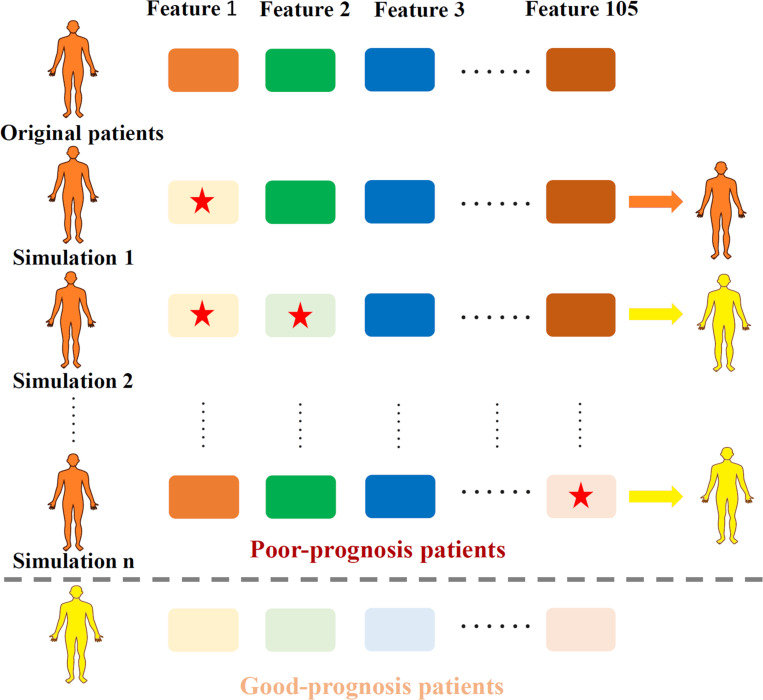
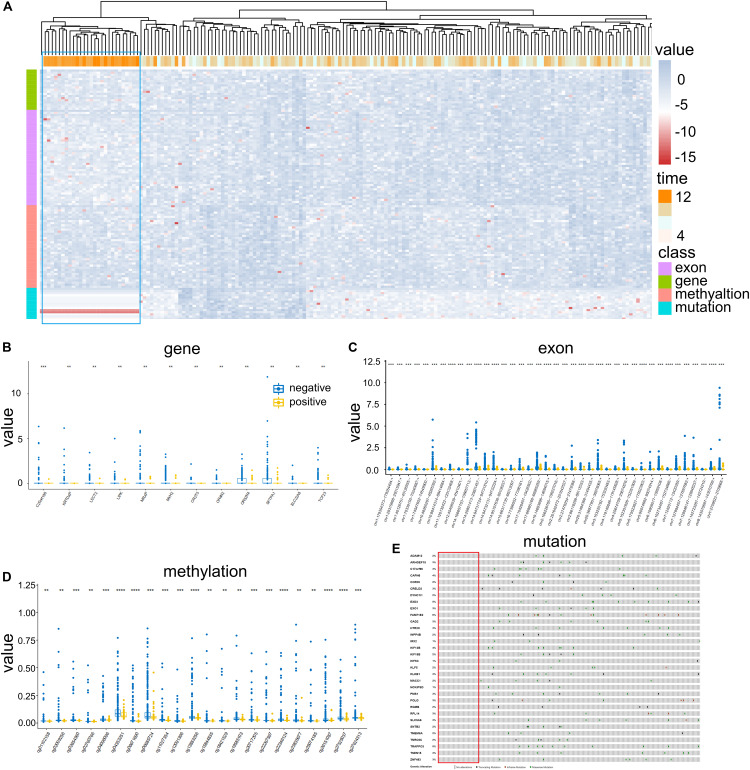
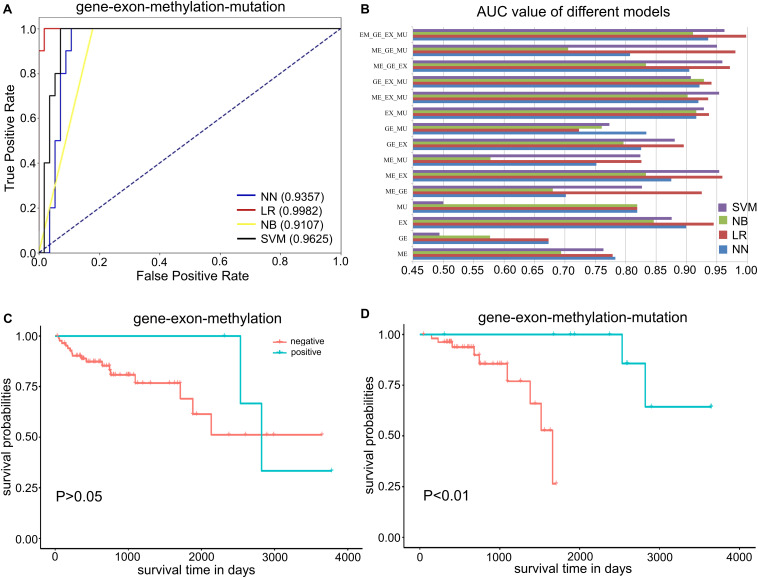
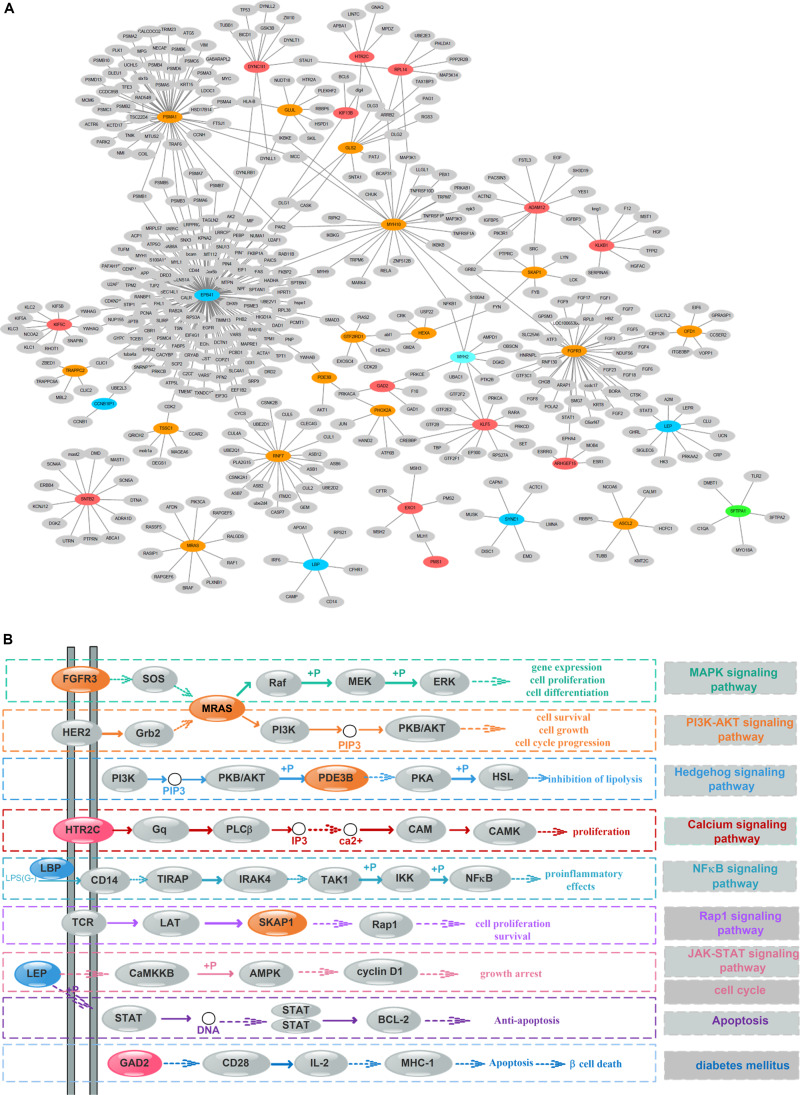
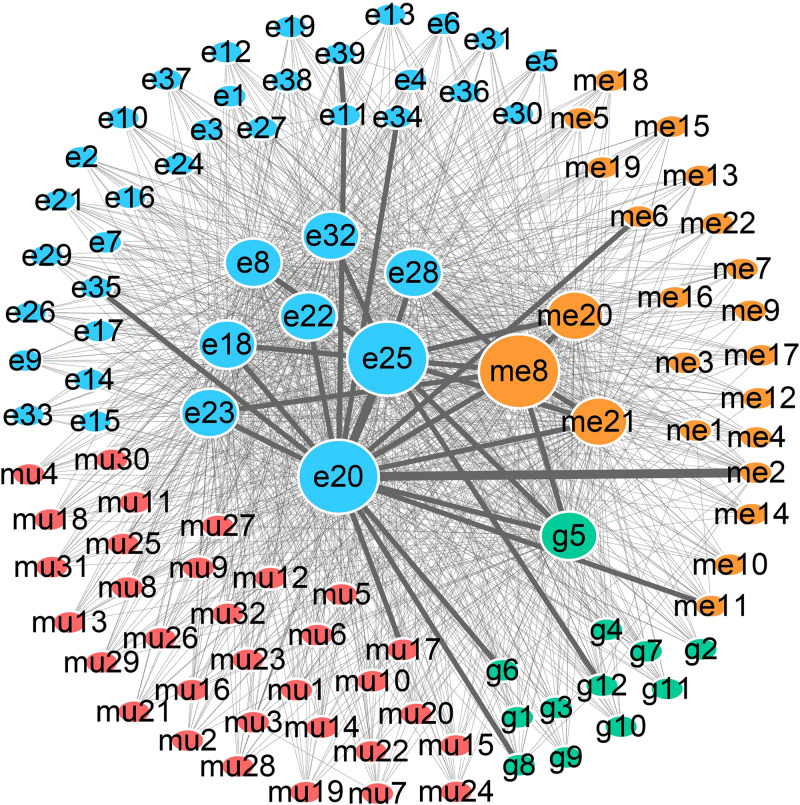
The multi-omics-based prognostic analysis (MPA) model was first constructed to systemically analyze the prognosis of colon cancer based on four-omics data of gene expression, exon expression, DNA methylation and somatic mutations on COAD samples. Then, the essential features related to prognosis were functionally annotated through protein-protein interaction (PPI) network and cancer-related pathways. Moreover, the significance of those essential prognostic features were further confirmed by the target regulation simulation (TRS) model. Finally, an independent testing dataset, as well as the single cell-based expression dataset were utilized to validate the generality and repeatability of PRBs detected in this study.
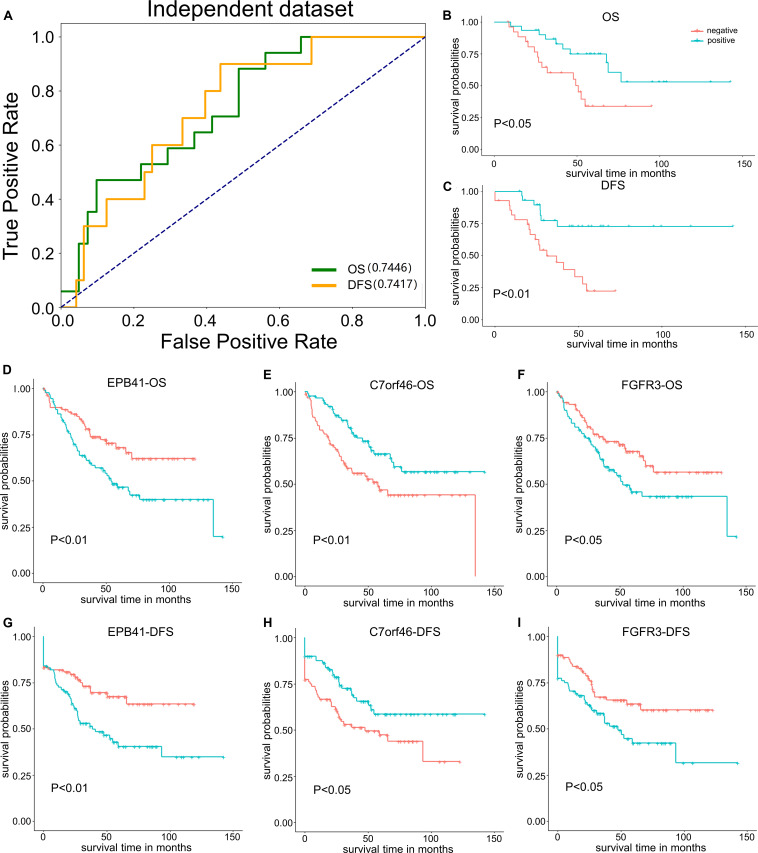
By integrating the result of MPA modeling, as well the PPI network, integrated pathway and TRS modeling, essential features with gene symbols such as EPB41, PSMA1, FGFR3, MRAS, LEP, C7orf46, LOC285000, LBP, ZNF35, SLC30A3, LECT2, RNF7, and DYNC1I1 were identified as PRBs which provide high potential as drug targets for COAD treatment. Validation on the independent testing dataset demonstrated that these PRBs could be applied to distinguish the prognosis of COAD patients. Moreover, the prognosis of patients with different clinical conditions could also be distinguished by the above PRBs.
The MPA and TRS models constructed in this paper, as well as the PPI network and integrated pathway analysis, could not only help detect PRBs as potential therapeutic targets for COAD patients but also make it a paradigm for the prognostic analysis of other cancers.
结肠癌因其高发病率和死亡率,是对人类最常见的健康威胁之一。检测潜在的预后风险生物标志物(PRB)对于改进治疗策略和药物开发至关重要。目前,尽管对结肠癌的多组学综合预后分析尚不充分,但据报道其对改善其他癌症类型中PRB的检测具有重要价值。
本研究旨在通过整合多组学,利用癌症基因组图谱(TCGA)检测结肠腺癌(COAD)样本的潜在PRB。
首先构建基于多组学的预后分析(MPA)模型,以基于COAD样本的基因表达、外显子表达、DNA甲基化和体细胞突变这四种组学数据,系统分析结肠癌的预后。然后,通过蛋白质-蛋白质相互作用(PPI)网络和癌症相关通路对与预后相关的关键特征进行功能注释。此外,通过靶标调控模拟(TRS)模型进一步确认这些关键预后特征的重要性。最后,利用一个独立测试数据集以及基于单细胞的表达数据集,验证本研究中检测到的PRB的普遍性和可重复性。
通过整合MPA建模结果以及PPI网络、整合通路和TRS建模,确定了具有基因符号如EPB41、PSMA1、FGFR3、MRAS、LEP、C7orf46、LOC285000、LBP、ZNF35、SLC30A3、LECT2、RNF7和DYNC1I1的关键特征为PRB,这些特征作为COAD治疗的药物靶点具有很高的潜力。在独立测试数据集上的验证表明,这些PRB可用于区分COAD患者的预后。此外,上述PRB还可区分不同临床状况患者的预后。
本文构建的MPA和TRS模型,以及PPI网络和整合通路分析,不仅有助于检测PRB作为COAD患者的潜在治疗靶点,还使其成为其他癌症预后分析的范例。