University of Birmingham Microbiome Treatment Centre, Birmingham, UK; Institute of Cancer and Genomic Sciences, University of Birmingham, UK.
Earlham Institute, Norwich, UK.
EBioMedicine. 2022 Jul;81:104088. doi: 10.1016/j.ebiom.2022.104088. Epub 2022 May 31.
Faecal microbiota transplantation (FMT) has previously been explored as a treatment for ulcerative colitis (UC) however, biomarkers that predict and / or are associated with clinical response are poorly defined. The aim of this systematic review was to identify donor and recipient clinical, microbial and metabolomic predictive biomarkers of response to FMT in UC.
A systematic search of the relevant literature of studies exploring FMT in UC was conducted. Data on microbial diversity, taxonomic changes, metabolic changes, donor and recipient microbiota relationship and baseline predictors was examined.
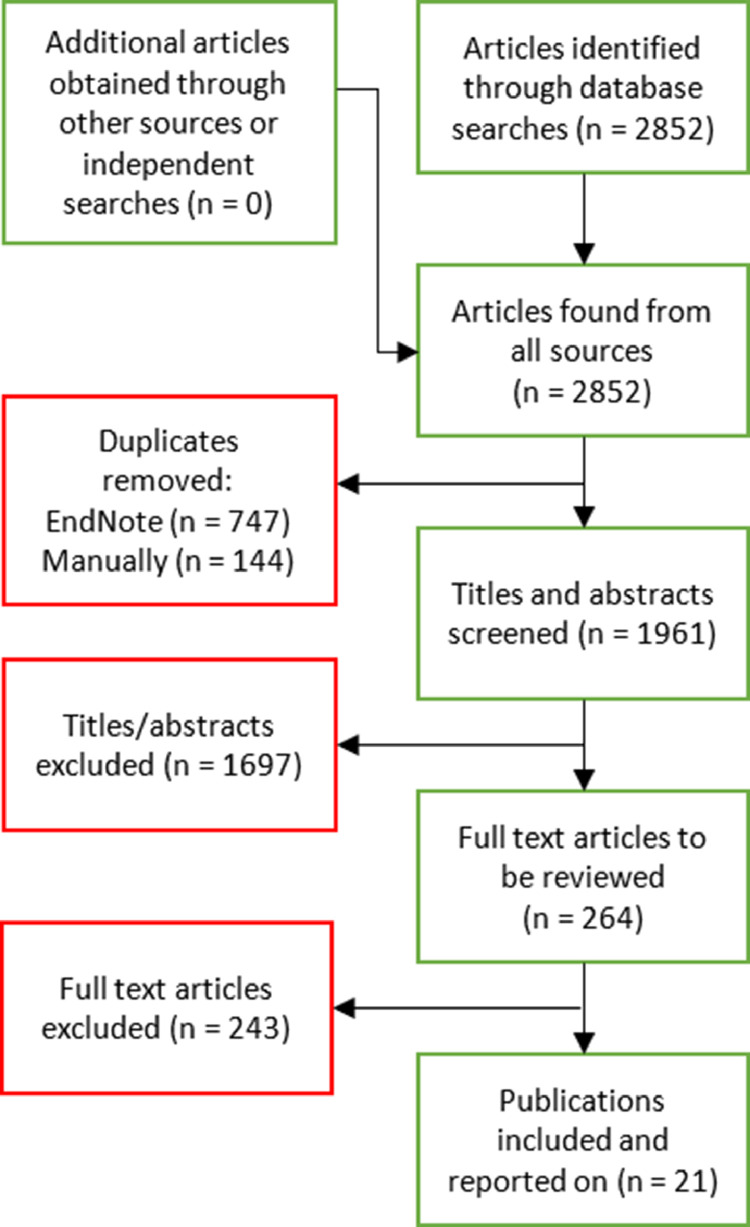
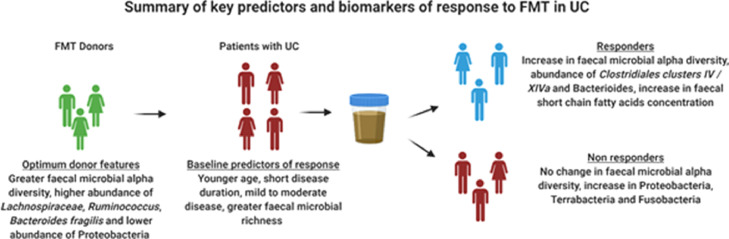
2852 studies were screened, and 25 papers were included in this systematic review. Following FMT, alpha diversity was seen to increase in responders along with increases in the abundance of Clostridiales clusters (order) and Bacteroides genus. Metabolomic analysis revealed short chain fatty acid (SCFA) production as a marker of FMT success. Donors or FMT batches with higher microbial alpha diversity and a greater abundance of taxa belonging to certain Bacteroides and Clostridia clusters were associated with clinical response to FMT. Baseline clinical predictors of response in patients with UC included younger age, less severe disease and possibly shorter disease duration. Baseline recipient microbial predictors at response consisted of higher faecal species richness, greater abundance of Candida and donor microbial profile similarity.
Distinct changes in gut microbiota profiles post-FMT indicate that certain baseline characteristics along with specific microbial and metabolomic alterations may predispose patients towards a successful therapeutic outcome. Opportunities towards a biomarker led precision medicine approach with FMT should be explored in future clinical studies.
There no specific funding to declare.
粪菌移植(FMT)已被探索用于治疗溃疡性结肠炎(UC),但预测和/或与临床反应相关的生物标志物定义尚不明确。本系统评价的目的是确定供体和受体临床、微生物和代谢组学预测 UC 对 FMT 反应的生物标志物。
对探索 UC 中 FMT 的相关文献进行了系统检索。检查了微生物多样性、分类变化、代谢变化、供体和受体微生物群关系以及基线预测因素的数据。
共筛选出 2852 项研究,其中 25 项研究纳入本系统评价。在 FMT 后,应答者的 alpha 多样性增加,同时 Clostridiales 目(order)和 Bacteroides 属的丰度增加。代谢组学分析显示短链脂肪酸(SCFA)的产生是 FMT 成功的标志物。供体或 FMT 批次的微生物 alpha 多样性较高,属于某些 Bacteroides 和 Clostridia 类群的分类群丰度较高,与 UC 患者对 FMT 的临床反应相关。UC 患者对 FMT 反应的基线临床预测因素包括年龄较小、疾病较轻和可能的疾病持续时间较短。应答者的基线受体微生物预测因素包括粪便物种丰富度较高、念珠菌丰度较高和供体微生物特征相似。
FMT 后肠道微生物群谱的明显变化表明,某些基线特征以及特定的微生物和代谢组学改变可能使患者更倾向于获得成功的治疗结果。未来的临床研究应探索基于生物标志物的 FMT 精准医学方法的机会。
无特定资金申报。