Robert and Arlene Kogod Center on Aging and Division of Endocrinology and Metabolism, Mayo Clinic, Rochester, MN.
Robert and Arlene Kogod Center on Aging and Division of Endocrinology and Metabolism, Mayo Clinic, Rochester, MN.
Mayo Clin Proc. 2022 Jun;97(6):1194-1208. doi: 10.1016/j.mayocp.2022.03.011.
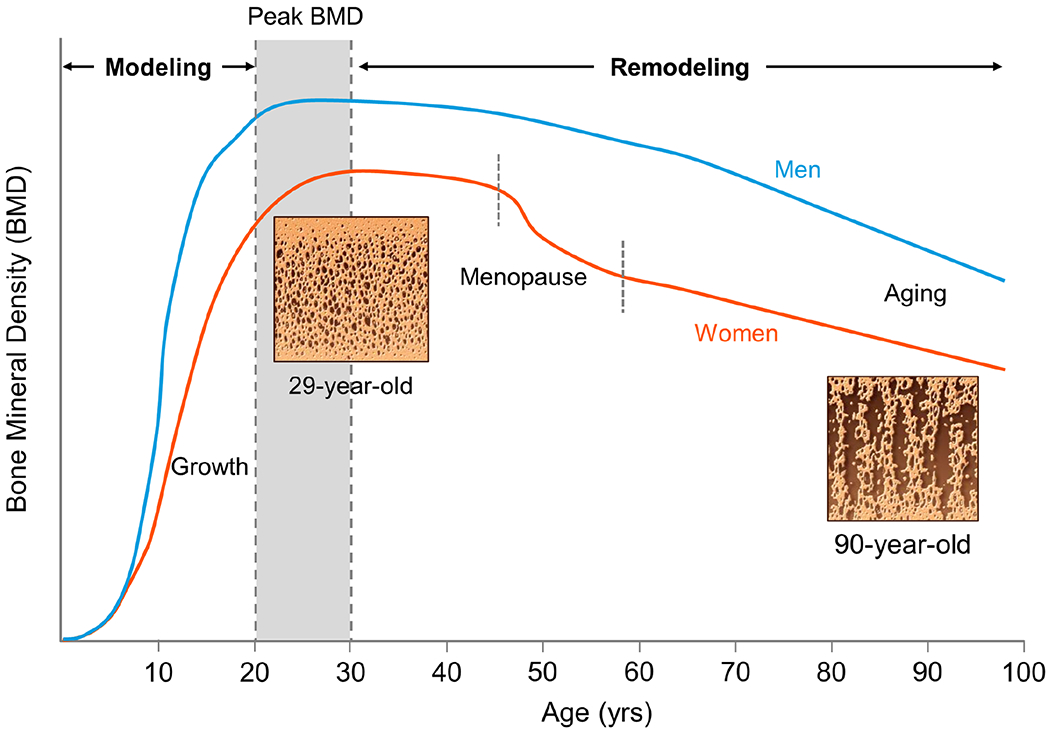
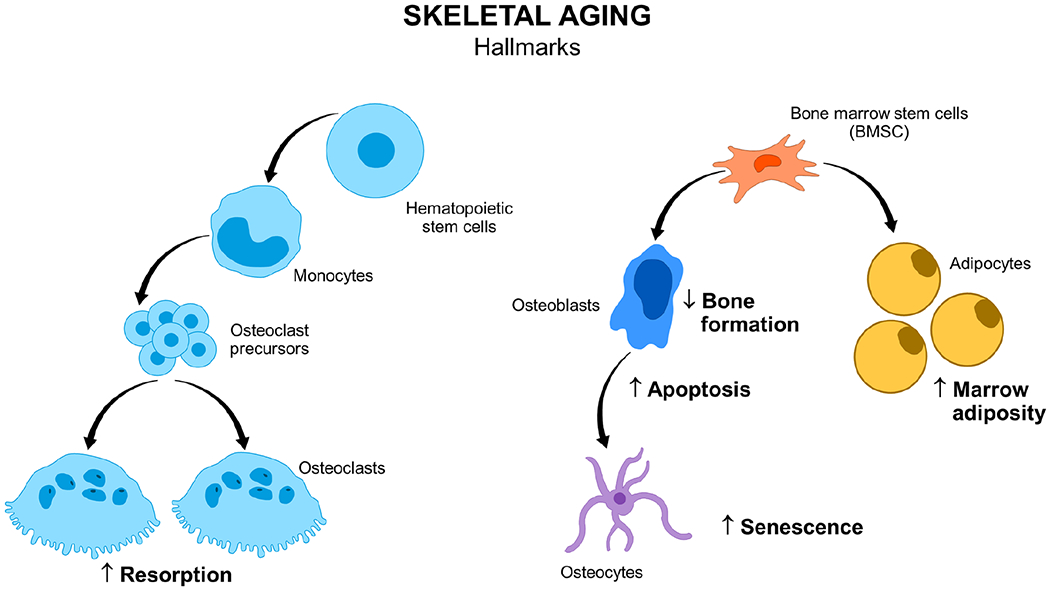
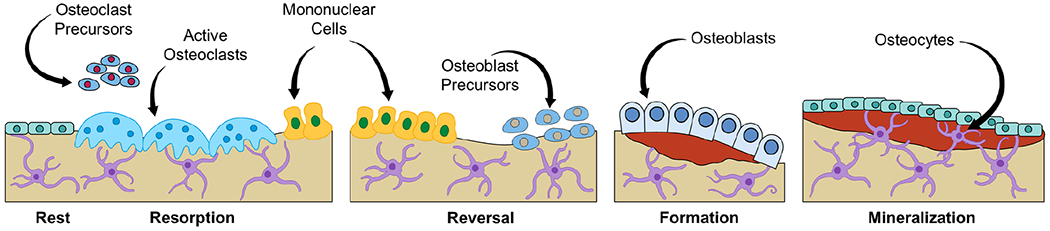
Aging represents the single greatest risk factor for chronic diseases, including osteoporosis, a skeletal fragility syndrome that increases fracture risk. Optimizing bone strength throughout life reduces fracture risk. Factors critical for bone strength include nutrition, physical activity, and vitamin D status, whereas unhealthy lifestyles, illnesses, and certain medications (eg, glucocorticoids) are detrimental. Hormonal status is another important determinant of skeletal health, with sex steroid concentrations, particularly estrogen, having major effects on bone remodeling. Aging exacerbates bone loss in both sexes and results in imbalanced bone resorption relative to formation; it is associated with increased marrow adiposity, osteoblast/osteocyte apoptosis, and accumulation of senescent cells. The mechanisms underlying skeletal aging are as diverse as the factors that determine the strength (and thus fragility) of bone. This review updates our current understanding of the epidemiology, pathophysiology, and treatment of osteoporosis and provides an overview of the underlying hallmark mechanisms that drive skeletal aging.
衰老是导致骨质疏松症等慢性疾病的最大单一风险因素,骨质疏松症是一种骨骼脆弱综合征,会增加骨折风险。在整个生命周期中优化骨骼强度可以降低骨折风险。影响骨骼强度的关键因素包括营养、身体活动和维生素 D 状况,而不健康的生活方式、疾病和某些药物(如糖皮质激素)则会产生不利影响。激素状态是骨骼健康的另一个重要决定因素,性激素浓度,尤其是雌激素,对骨重塑有重大影响。衰老会加剧两性的骨质流失,导致骨吸收相对于形成失衡;它与骨髓脂肪增多、成骨细胞/骨细胞凋亡以及衰老细胞积累有关。骨骼衰老的机制与决定骨骼强度(因此易碎性)的因素一样多样化。本文综述更新了我们对骨质疏松症的流行病学、病理生理学和治疗的认识,并概述了驱动骨骼衰老的潜在标志性机制。