Department of Respiratory and Critical Care Medicine, The Center Hospital of Xiaogan, Xiaogan, Hubei, China.
J Immunol Res. 2022 May 25;2022:5366185. doi: 10.1155/2022/5366185. eCollection 2022.
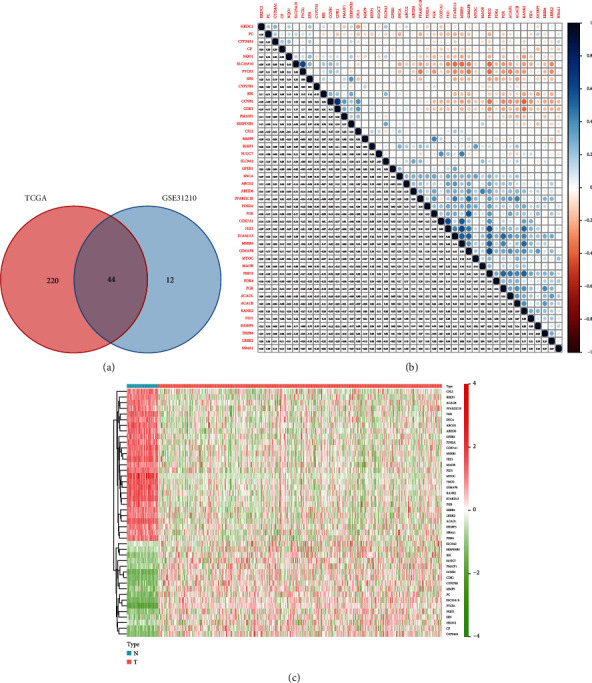
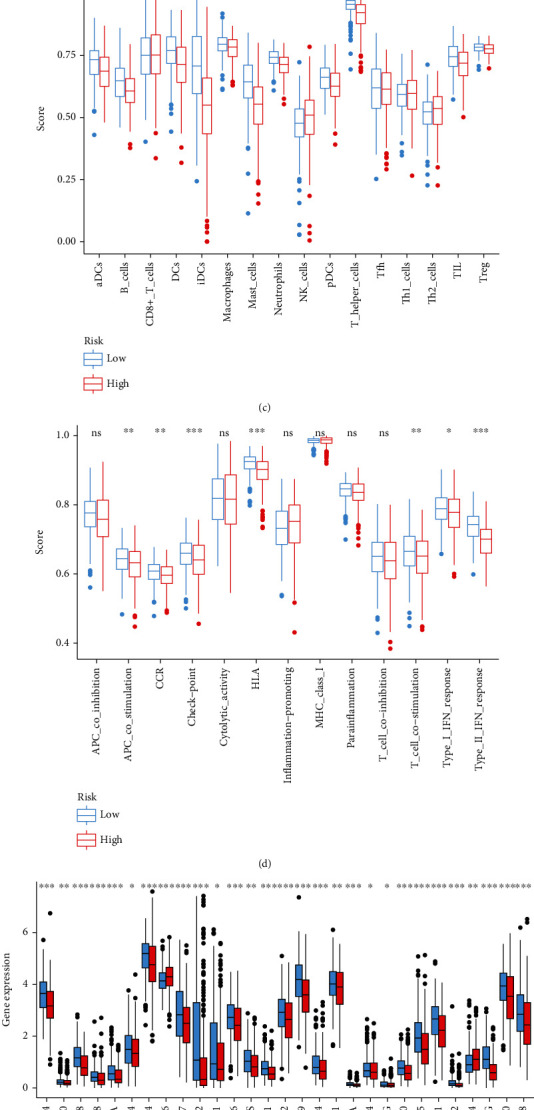
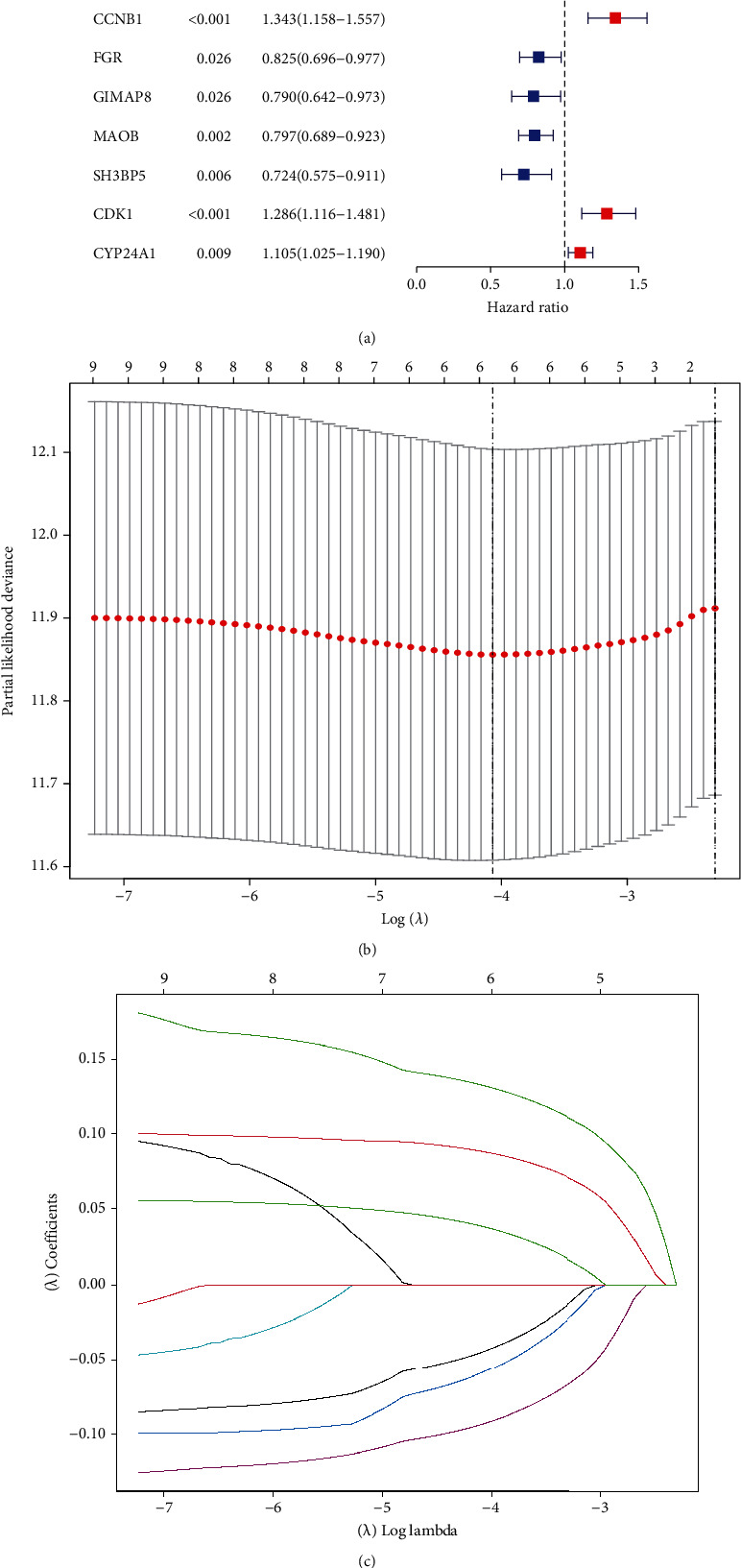
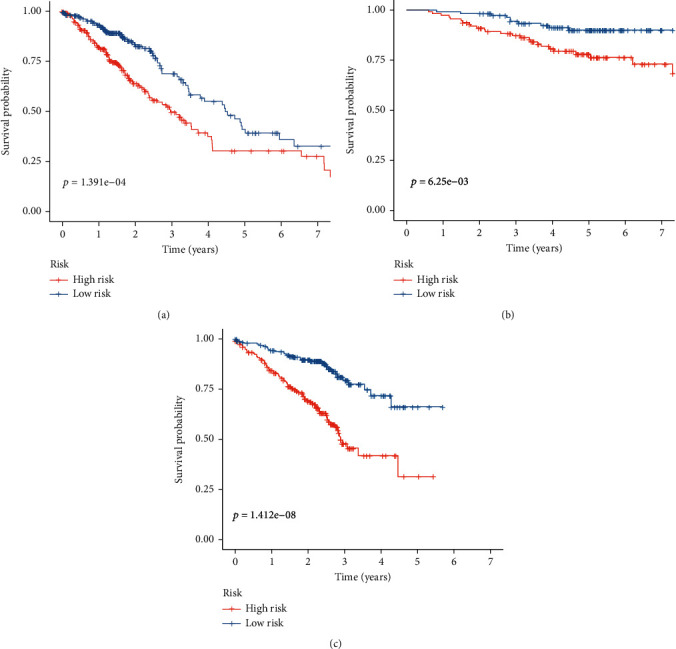
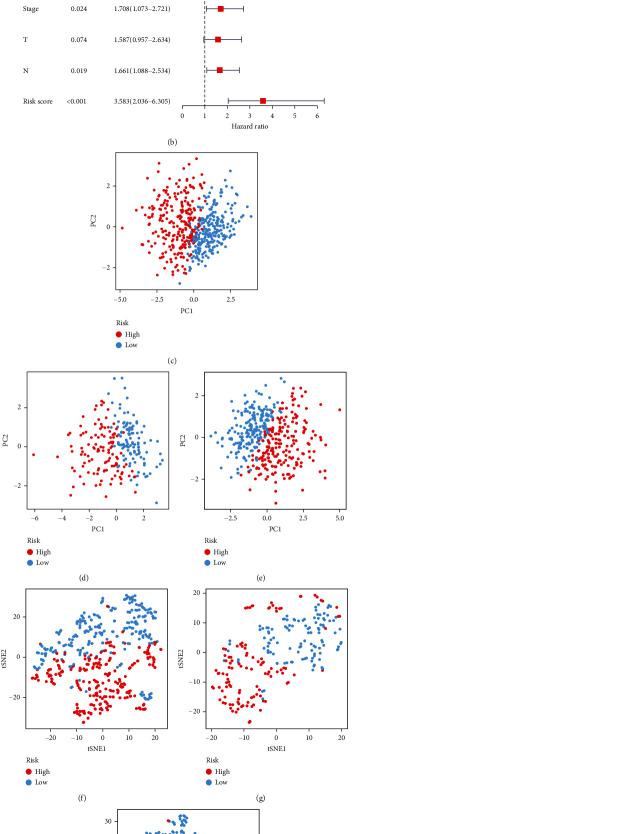
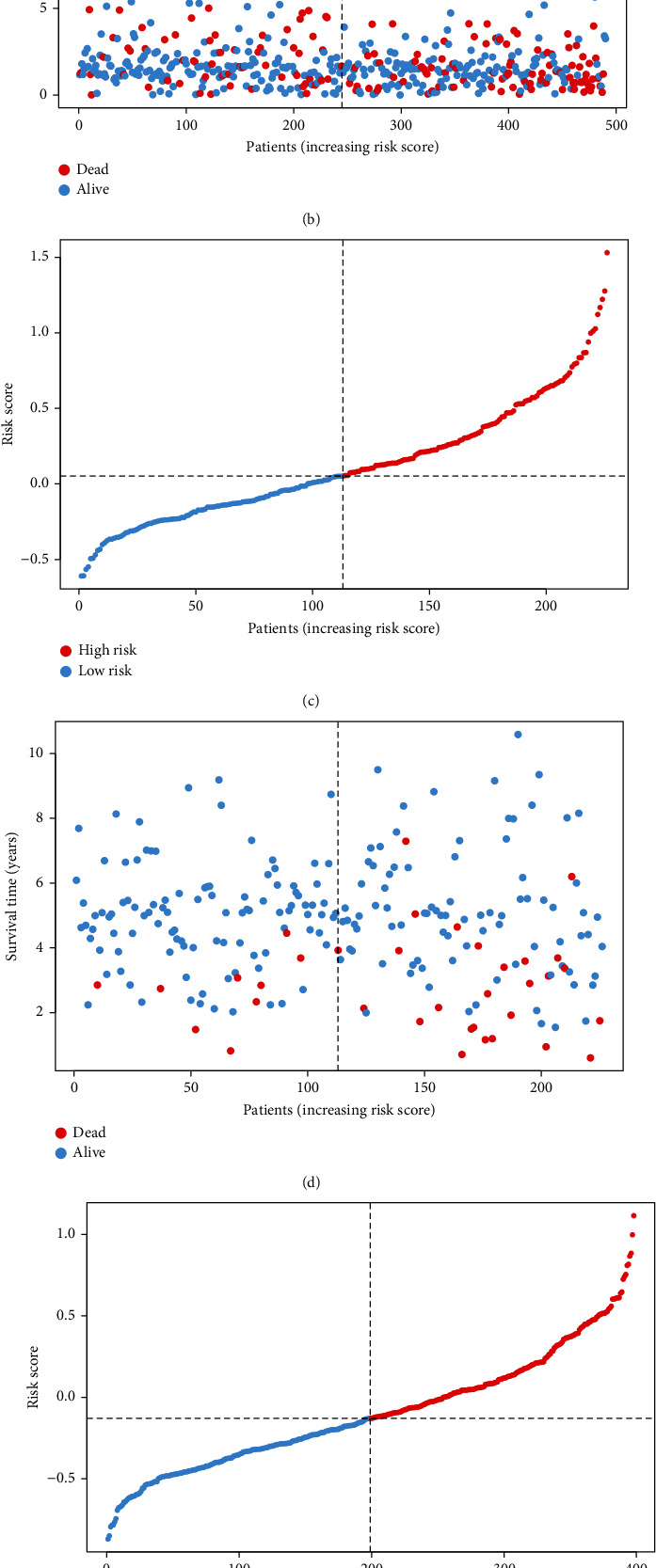
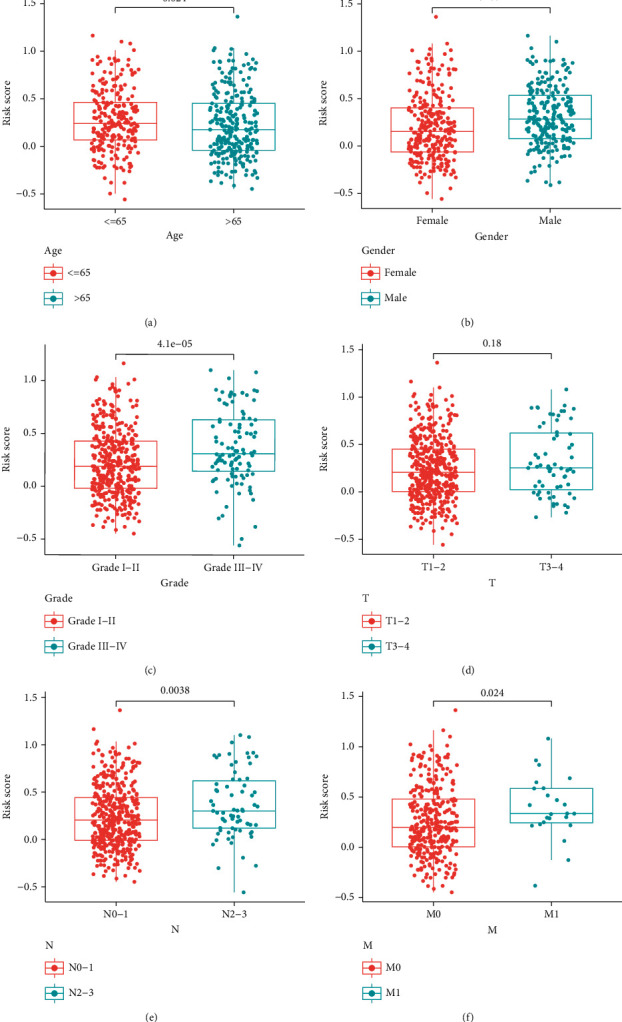
Lung adenocarcinoma (LUAD) remains the most common deadly disease and has a poor prognosis. More and more studies have reported that mitochondrial-related genes (MTRGs) were associated with the clinical outcomes of multiple tumors solely. In this study, we aimed to develop a novel prognostic model based on MTRGs. Differentially expressed MTRGs were identified from TCGA-LUAD and GSE31210 cohorts. Univariate Cox regression analysis was utilized to screen differentially expressed MTRGs that were related to prognosis of LUAD. Then, LASSO Cox regression analysis was used to develop a prognostic signature. ESTIMATE was used for estimating the fractions of immune cell types. In this study, we identified 44 overlapping differentially expressed MTRGs in TCGA-LUAD and GSE31210 cohorts. Among 44 overlapping differentially expressed MTRGs, nine genes were associated with prognosis of LUAD. When the penalty parameter lambda was the minimum, there were six genes meeting the conditions of constructing the signature, including SERPINB5, CCNB1, FGR MAOB, SH3BP5, and CYP24A1. The survival analysis suggested that prognosis of patients in the high-risk group was significantly worse than that in the low-risk group. Cox regression analyses showed that the risk score was an independent predictor of LUAD prognosis. As with the results of ESTIMATE score, the degree of immune cell infiltration in the low-risk group was higher than that in the high-risk group, such as TIL, Treg, and B cells. In addition, TMB and cancer stem cell infiltration were higher in the low-risk group than the high-risk group. In conclusion, we developed a novel MTRG signature acting as a negative independent prognostic factor. In the future, individualized treatments and medical decision-making may benefit from using the predicted model.
肺腺癌 (LUAD) 仍然是最常见的致命疾病,预后较差。越来越多的研究报告表明,线粒体相关基因 (MTRGs) 仅与多种肿瘤的临床结局相关。在这项研究中,我们旨在基于 MTRGs 开发一种新的预后模型。从 TCGA-LUAD 和 GSE31210 队列中鉴定差异表达的 MTRGs。使用单因素 Cox 回归分析筛选与 LUAD 预后相关的差异表达 MTRGs。然后,使用 LASSO Cox 回归分析开发预后特征。ESTIMATE 用于估计免疫细胞类型的分数。在这项研究中,我们在 TCGA-LUAD 和 GSE31210 队列中鉴定了 44 个重叠的差异表达 MTRGs。在 44 个重叠的差异表达 MTRGs 中,有 9 个基因与 LUAD 的预后相关。当惩罚参数 lambda 为最小时,有 6 个基因满足构建特征的条件,包括 SERPINB5、CCNB1、FGR MAOB、SH3BP5 和 CYP24A1。生存分析表明,高危组患者的预后明显差于低危组。Cox 回归分析表明,风险评分是 LUAD 预后的独立预测因子。与 ESTIMATE 评分的结果一样,低危组的免疫细胞浸润程度高于高危组,如 TIL、Treg 和 B 细胞。此外,低危组的 TMB 和癌症干细胞浸润高于高危组。总之,我们开发了一种新的 MTRG 特征作为负独立预后因素。在未来,个体化治疗和医疗决策可能会受益于使用预测模型。