Xiao Shiwei, Zuo Yigang, Li Yanan, Huang Yinglong, Fu Shi, Yuan Dongbo, Qiao Xuhua, Wang Haifeng, Wang Jiansong
Department of Urology, The Second Affiliated Hospital of Kunming Medical University, Yunnan Institute of Urology, Kunming, China.
Department of Urology, Guizhou Provincial People's Hospital, Guiyang, China.
Front Oncol. 2022 May 18;12:876090. doi: 10.3389/fonc.2022.876090. eCollection 2022.
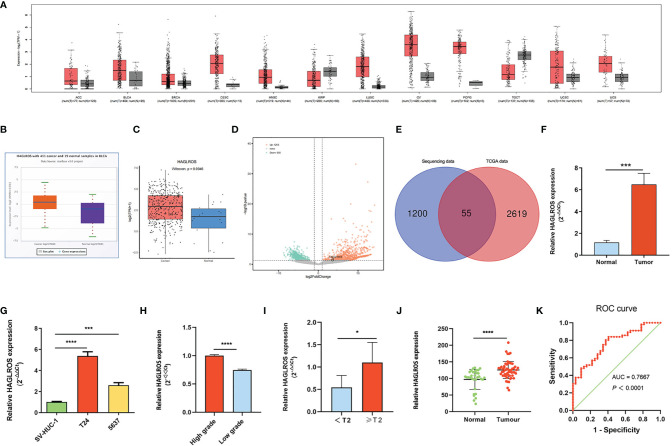
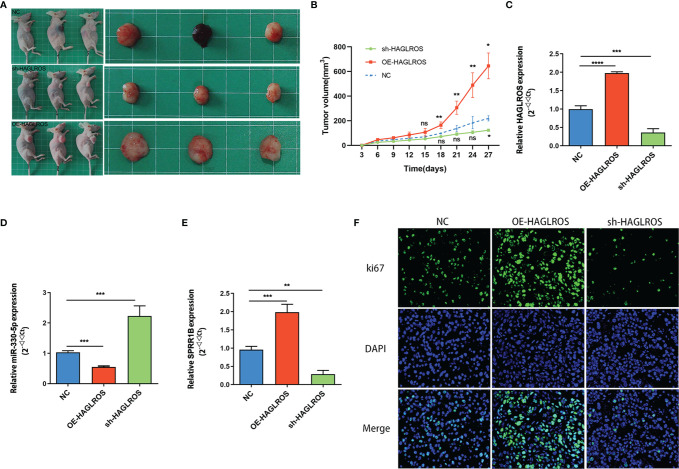
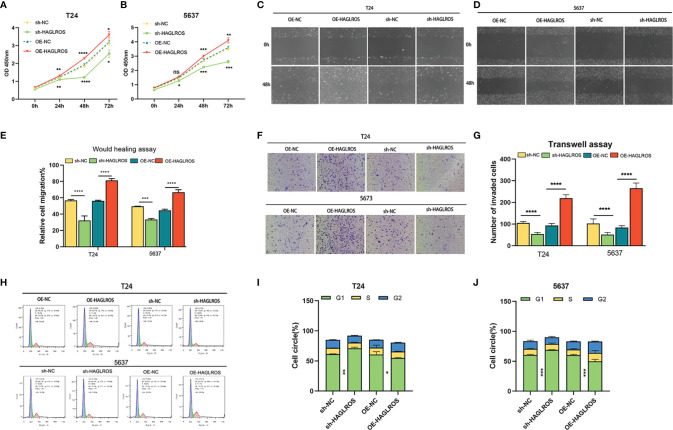
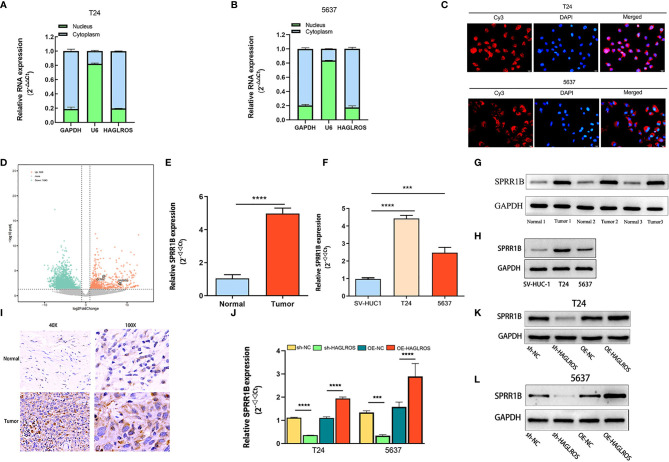
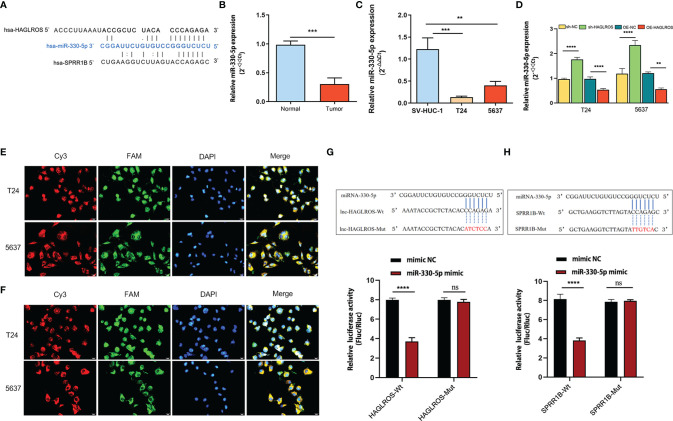
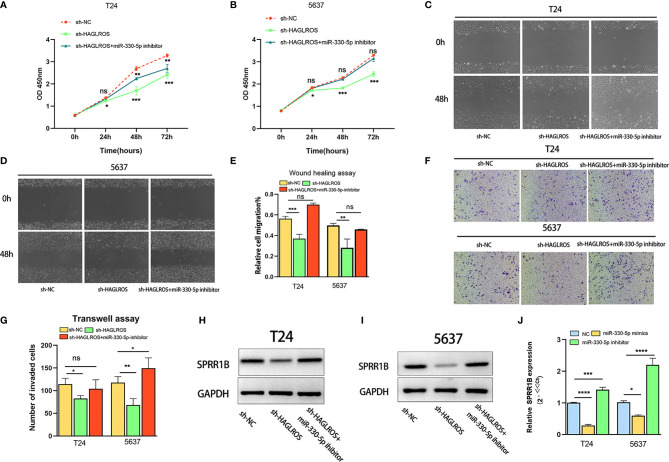
Bladder cancer (BC) is the most common genitourinary malignancy worldwide, and its aetiology and pathogenesis remain unclear. Accumulating evidence has shown that HAGLROS is closely related to the occurrence and progression of various cancers. However, the biological functions and underlying mechanisms of HAGLROS in BC remain unknown. In the present study, the expression of HAGLROS in BC was determined by public dataset analysis, transcriptome sequencing analysis, qRT-PCR and ISH assays. Gain- or loss-of-function assays were performed to study the biological roles of HAGLROS in BC cells and nude mouse xenograft model. Bioinformatic analysis, qRT-PCR, western blot, immunohistochemistry, FISH assays, subcellular fractionation assays and luciferase reporter assays were performed to explore the underlying molecular mechanisms of HAGLROS in BC. Here, we found that HAGLROS expression is significantly upregulated in BC tissues and cells, and elevated HAGLROS expression was related to higher pathologic grade and advanced clinical stage, which is significant for BC diagnosis. HAGLROS can enhance the growth and metastasis of BC and . Furthermore, miR-330-5p downregulation reversed the BC cells proliferation, migration and invasion inhibited by silencing HAGLROS. SPRR1B silencing restored the malignant phenotypes of BC cells promoted by miR-330--5p inhibitor. Mechanistically, we found that HAGLROS functions as a microRNA sponge to positively regulate SPRR1B expression by sponging miR-330-5p. Together, these results demonstrate that HAGLROS plays an oncogenic role and may serve as a potential biomarker for the diagnosis and treatment of BC.
膀胱癌(BC)是全球最常见的泌尿生殖系统恶性肿瘤,其病因和发病机制仍不清楚。越来越多的证据表明,HAGLROS与各种癌症的发生和进展密切相关。然而,HAGLROS在膀胱癌中的生物学功能和潜在机制仍然未知。在本研究中,通过公共数据集分析、转录组测序分析、qRT-PCR和ISH检测来确定HAGLROS在膀胱癌中的表达。进行功能获得或缺失实验以研究HAGLROS在膀胱癌细胞和裸鼠异种移植模型中的生物学作用。通过生物信息学分析、qRT-PCR、蛋白质印迹、免疫组织化学、FISH检测、亚细胞分级分离检测和荧光素酶报告基因检测来探索HAGLROS在膀胱癌中的潜在分子机制。在此,我们发现HAGLROS在膀胱癌组织和细胞中表达显著上调,HAGLROS表达升高与更高的病理分级和晚期临床分期相关,这对膀胱癌的诊断具有重要意义。HAGLROS可以增强膀胱癌的生长和转移。此外,miR-330-5p下调逆转了沉默HAGLROS抑制的膀胱癌细胞增殖、迁移和侵袭。沉默SPRR1B恢复了miR-330-5p抑制剂促进的膀胱癌细胞的恶性表型。机制上,我们发现HAGLROS作为一种微小RNA海绵,通过结合miR-330-5p来正向调节SPRR1B的表达。总之,这些结果表明HAGLROS发挥致癌作用,可能作为膀胱癌诊断和治疗的潜在生物标志物。