Cunliffe A, Gran S, Ali U, Grindlay D, Lax S J, Williams H C, Burden-Teh E
Nottingham University Hospitals NHS Trust Nottingham UK.
Centre of Evidence Based Dermatology School of Medicine University of Nottingham Nottingham UK.
Skin Health Dis. 2021 May 5;1(2):e29. doi: 10.1002/ski2.29. eCollection 2021 Jun.
Previous studies report both coexistence and mutual exclusivity of atopic eczema (AE) and psoriasis, but these have not been appraised systematically. Knowledge of such disease association throws light on disease mechanisms and may influence therapeutic choices.
To summarise evidence for AE and psoriasis occurring in the same person at the same point in time. Planned primary outcome was the incidence, prevalence or risk of psoriasis or eczema.
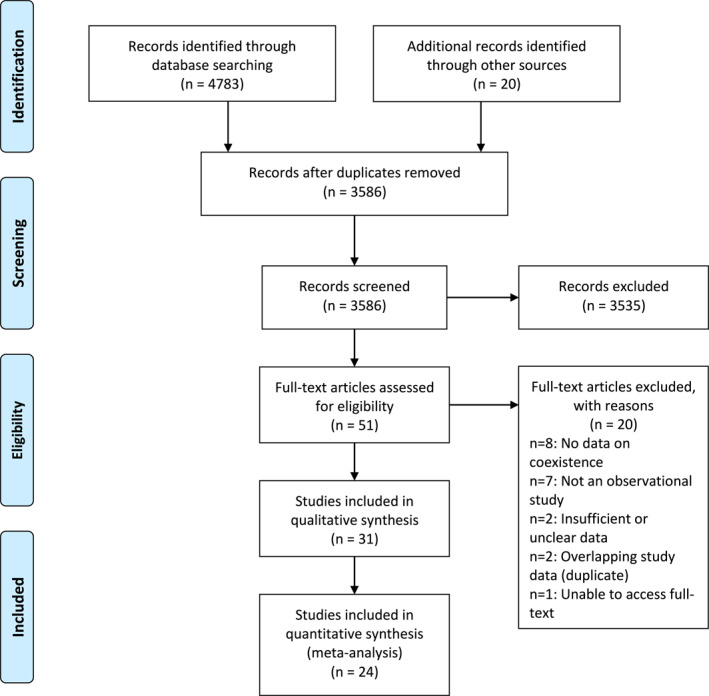
Ovid MEDLINE and Ovid Embase were searched from inception to 1st February 2020. The search strategy was built around the key terms 'atopic eczema', 'psoriasis' and 'co-existence'. Observational studies (cohort, case-control, cross-sectional and case-series) with a minimum of 10 consecutive patients were included. There were no restrictions on participants, geography or language. Studies were selected, data extracted and critically appraised by two independent reviewers. Data were extracted on the method of diagnosis: health professional (dermatologist, criteria, other), self-reported, not specified. Study quality was assessed using validated Joanna Brigg's Institute critical appraisal tools. A random-effects model was used to combine studies. The effect of study quality on the pooled estimate was investigated using stratification. Heterogeneity was explored by subgroup analysis.
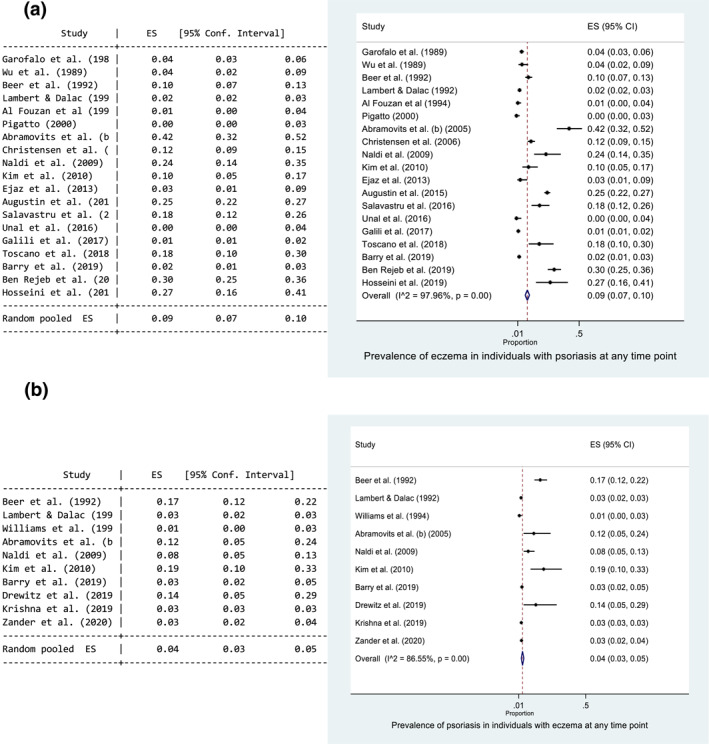
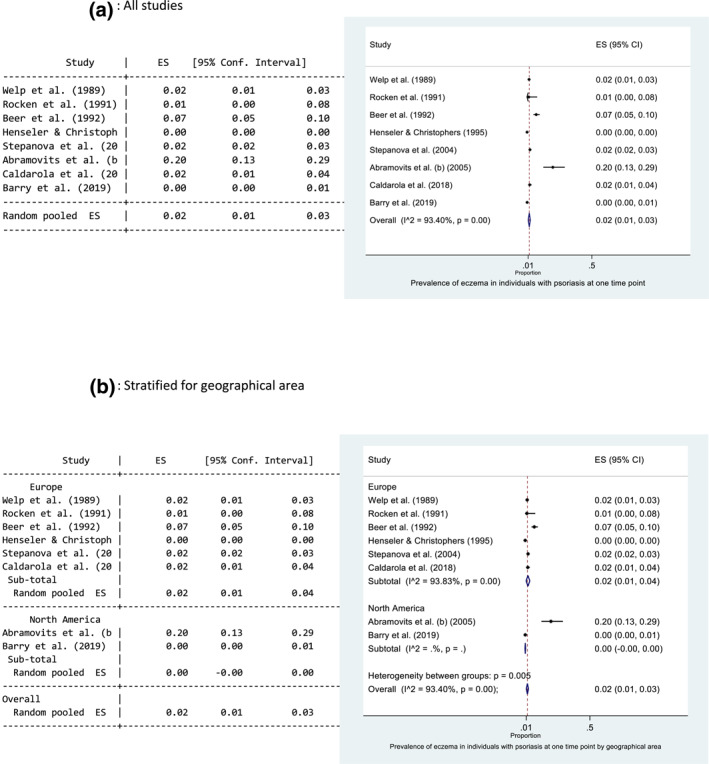
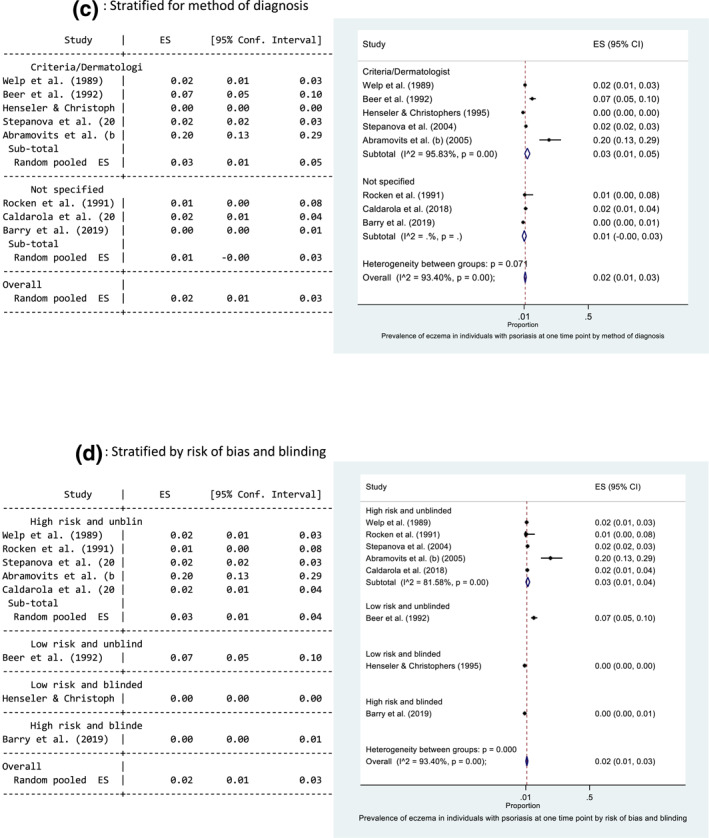
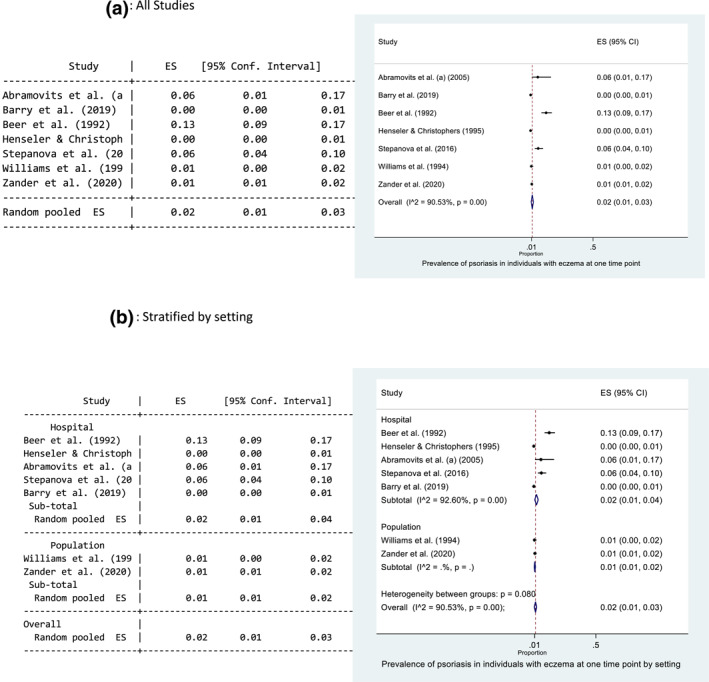
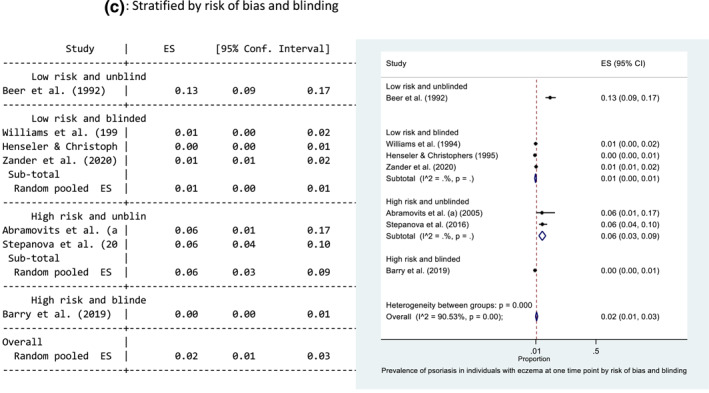
This review included 31 studies and 20 523 individuals with psoriasis and 1 405 911 with AE. Eight studies reported the prevalence of AE in those with psoriasis and values ranged from 0.17% to 20%: the pooled prevalence was 2% (95% confidence interval [CI]: 1, 3). Seven studies reported the prevalence of psoriasis in those with AE and values ranged from 0.3% to 12.6%; the pooled prevalence was 2% (95% CI: 1, 3). Ten studies were assessed as low risk of bias. Geographical area, method of diagnosis, setting and whether the assessment of diagnosis was blinded, partly contributed to the heterogeneity.
This review provides some evidence for the coexistence of AE and psoriasis. Clinicians should be aware of coexistence at diagnosis, when selecting therapies and when reviewing poor response to treatment.
既往研究报告了特应性皮炎(AE)和银屑病的共存及相互排斥情况,但这些尚未得到系统评估。了解此类疾病关联有助于揭示疾病机制,并可能影响治疗选择。
总结同一时间点同一人同时患有AE和银屑病的证据。计划的主要结局是银屑病或湿疹的发病率、患病率或风险。
检索Ovid MEDLINE和Ovid Embase数据库,检索时间从建库至2020年2月1日。检索策略围绕关键词“特应性皮炎”、“银屑病”和“共存”构建。纳入至少连续10例患者的观察性研究(队列研究、病例对照研究、横断面研究和病例系列研究)。对参与者、地域或语言没有限制。由两名独立评审员进行研究筛选、数据提取和严格评价。提取关于诊断方法的数据:卫生专业人员(皮肤科医生、标准、其他)、自我报告、未明确说明。使用经过验证的乔安娜·布里格研究所严格评价工具评估研究质量。采用随机效应模型合并研究。通过分层研究评估研究质量对合并估计值的影响。通过亚组分析探讨异质性。
本综述纳入31项研究,共20523例银屑病患者和1405911例AE患者。8项研究报告了银屑病患者中AE的患病率,范围为0.17%至20%:合并患病率为2%(95%置信区间[CI]:1,3)。7项研究报告了AE患者中银屑病的患病率,范围为0.3%至12.6%;合并患病率为2%(95%CI:1,3)。10项研究被评估为低偏倚风险。地理区域、诊断方法、研究背景以及诊断评估是否采用盲法,部分导致了异质性。
本综述为AE和银屑病的共存提供了一些证据。临床医生在诊断、选择治疗方法以及评估治疗反应不佳时,应意识到两者共存的情况。