Nsiah-Dosu S, Scholz C, Orinska Z, Sadik C D, Ludwig R J, Schmidt E, Zillikens D, Hartmann K
Department of Dermatology University of Luebeck Luebeck Germany.
Department of Infectious Diseases and Microbiology University of Luebeck Luebeck Germany.
Skin Health Dis. 2021 Dec 21;2(1):e70. doi: 10.1002/ski2.70. eCollection 2022 Mar.
Bullous pemphigoid (BP) is the most frequent autoimmune blistering disease of the skin affecting the elderly. BP is immunopathologically characterized by autoantibodies against BP180 and BP230. With the growing evidence of cell-mediated autoimmunity in the pathogenesis of BP, it still remains unclear whether mast cells (MCs) are involved, due to conflicting data obtained from Kit-dependent MC-deficient mouse models.
To clarify the role of MCs in experimental BP; the dynamics in cutaneous MC numbers, associated immune cells and the development of disease in Kit-independent MC-deficient mouse model.
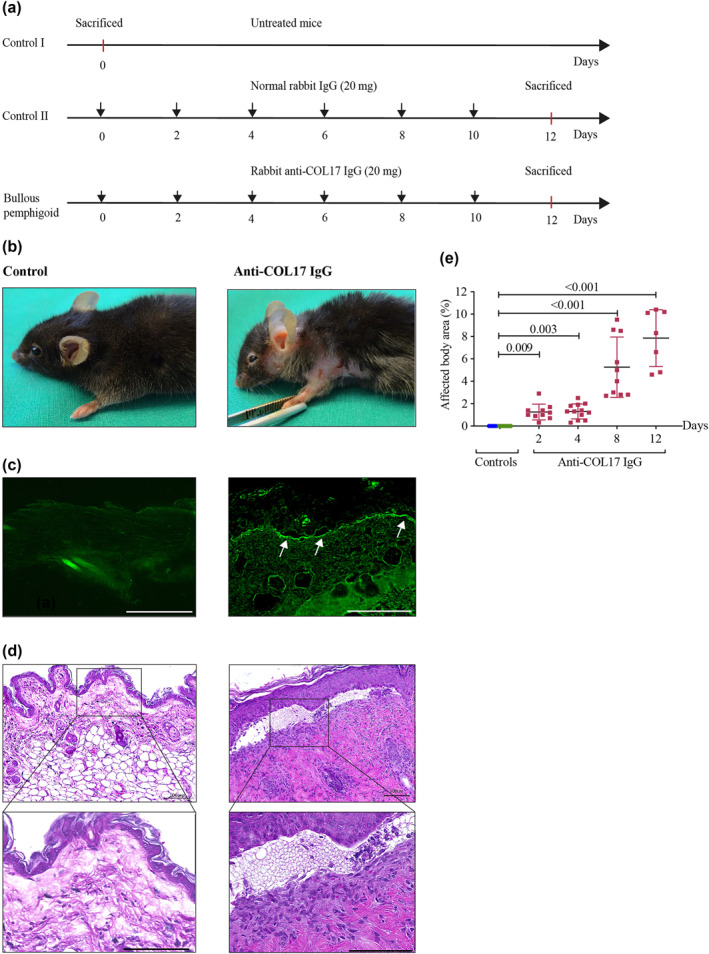
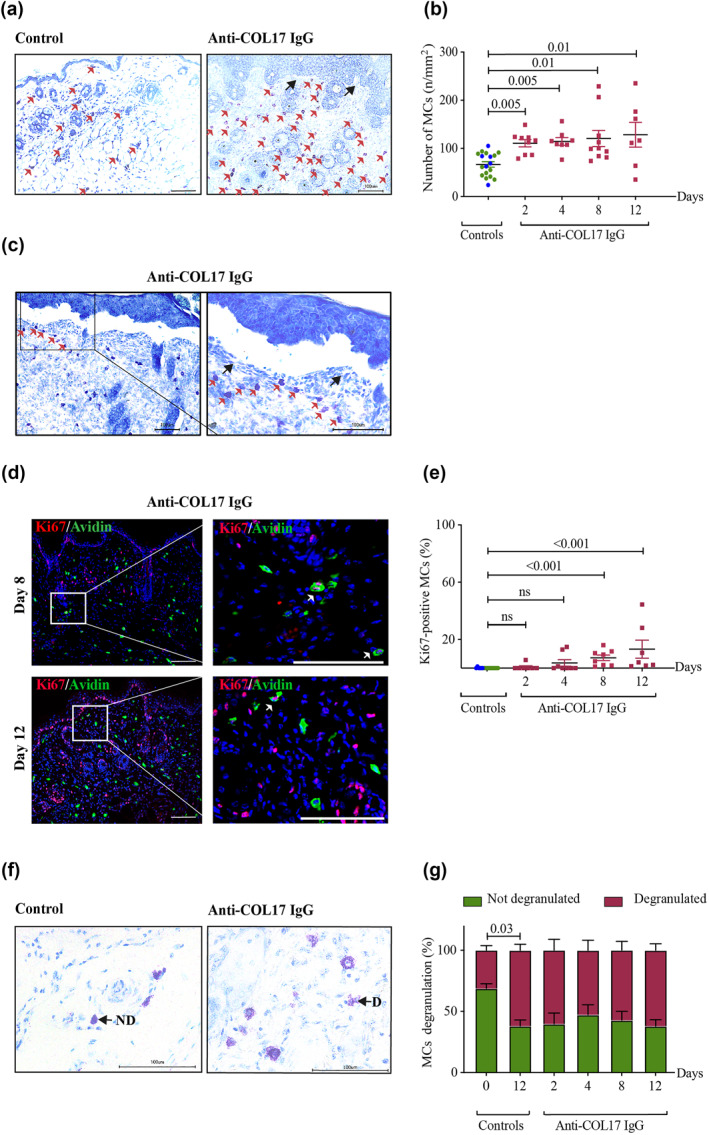
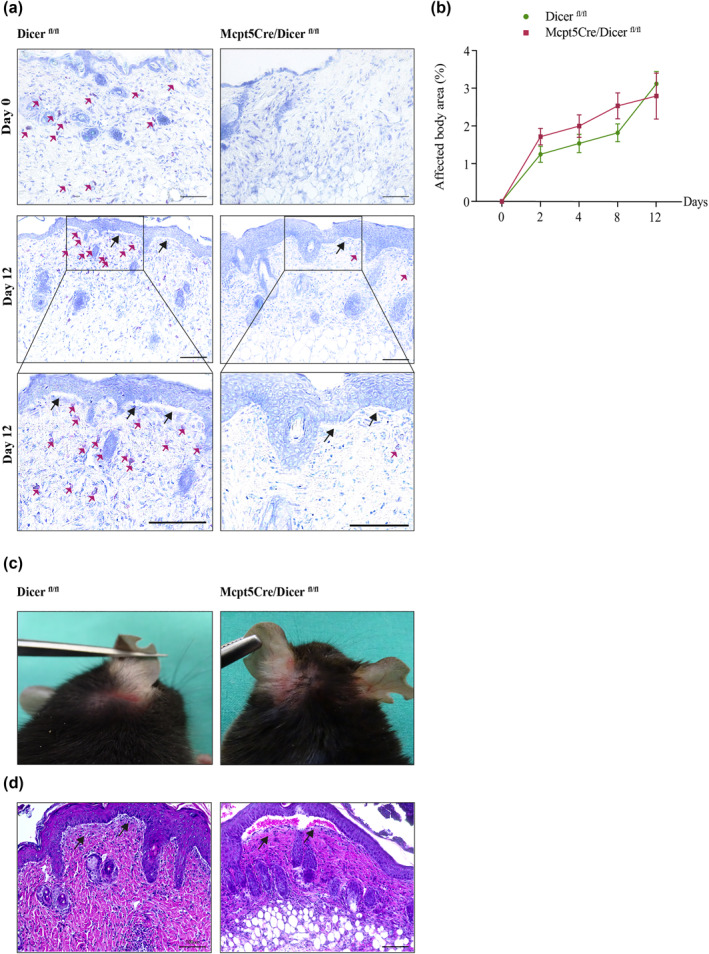
Employing a recently established murine adult passive transfer model of BP induced by the transfer of pathogenic immunoglobulin G (IgG), lesional skin biopsies were investigated histologically and immunohistochemically for the time-dependent MC accumulation and dermal infiltration.
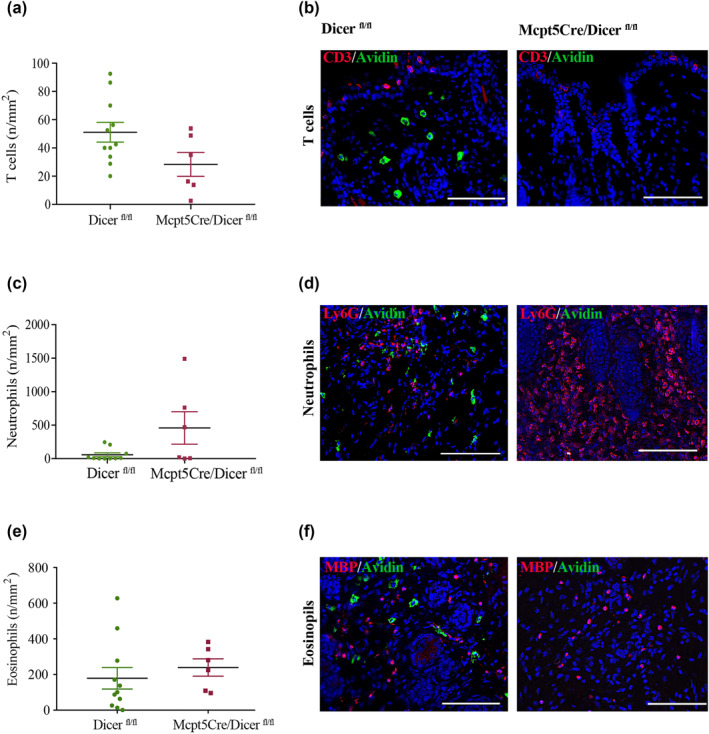
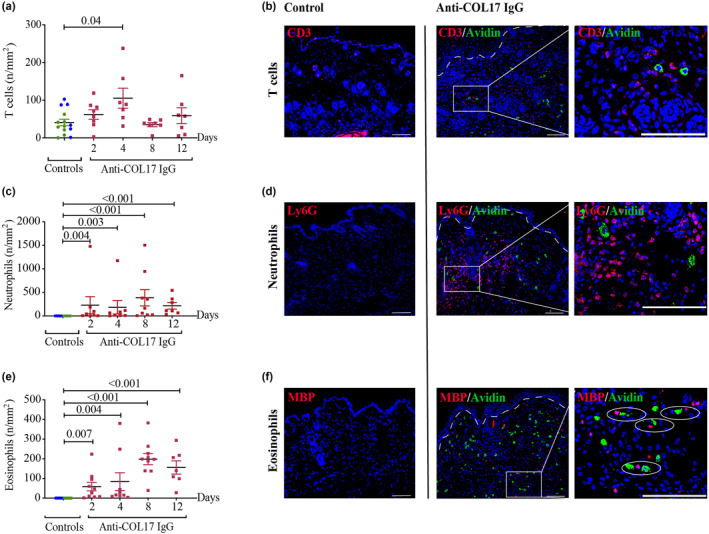
The numbers of cutaneous MCs increased following the induction of BP, in part, maintained by MC proliferation. Numbers of T cells, neutrophils and eosinophils in the skin also increased after BP induction, with eosinophils showing a preferential co-localization with MCs. Furthermore, clinical disease manifestation in MC-deficient mice remained unchanged compared to MC-sufficient mice. The composition of the immune cell infiltration including as T cells, neutrophils and eosinophils was largely unaffected by the absence of MCs.
MCs do not play a pivotal role in the pathogenesis of passive IgG-transfer mediated BP model. Their increase in number may be a bystander effect following tissue injury. We therefore suggest caution regarding the selection of MCs as sole targets for the development of novel drugs for BP.
大疱性类天疱疮(BP)是最常见的影响老年人的自身免疫性皮肤水疱病。BP的免疫病理学特征是存在针对BP180和BP230的自身抗体。随着细胞介导的自身免疫在BP发病机制中的证据越来越多,由于从依赖Kit的肥大细胞缺陷小鼠模型获得的数据相互矛盾,肥大细胞(MCs)是否参与其中仍不清楚。
阐明MCs在实验性BP中的作用;在不依赖Kit的肥大细胞缺陷小鼠模型中,皮肤MC数量、相关免疫细胞的动态变化以及疾病的发展情况。
采用最近建立的由致病性免疫球蛋白G(IgG)转移诱导的小鼠成人被动转移BP模型,对病变皮肤活检组织进行组织学和免疫组织化学研究,以观察MC随时间的积累和真皮浸润情况。
BP诱导后皮肤MC数量增加,部分是由MC增殖维持的。BP诱导后皮肤中T细胞、中性粒细胞和嗜酸性粒细胞的数量也增加,嗜酸性粒细胞显示出与MC优先共定位。此外,与MC充足的小鼠相比,MC缺陷小鼠的临床疾病表现保持不变。包括T细胞、中性粒细胞和嗜酸性粒细胞在内的免疫细胞浸润组成在很大程度上不受MC缺失的影响。
MCs在被动IgG转移介导的BP模型发病机制中不发挥关键作用。它们数量的增加可能是组织损伤后的旁观者效应。因此,我们建议在选择MCs作为BP新药开发的唯一靶点时要谨慎。