Department of Biology, University of Padova, Padua, Italy.
Telethon Institute of Genetics and Medicine (TIGEM), Pozzuoli, Naples, Italy.
Mol Neurobiol. 2022 Aug;59(8):5000-5023. doi: 10.1007/s12035-022-02895-3. Epub 2022 Jun 4.
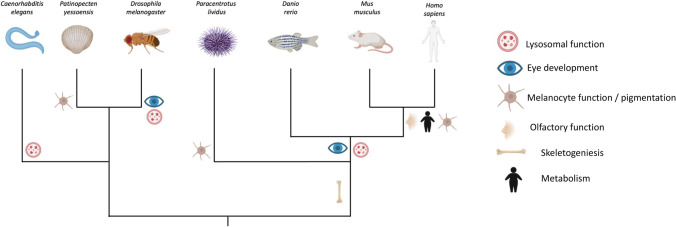
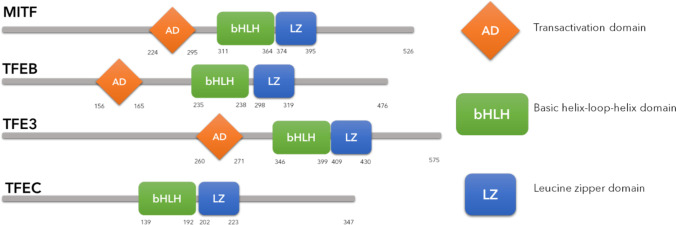
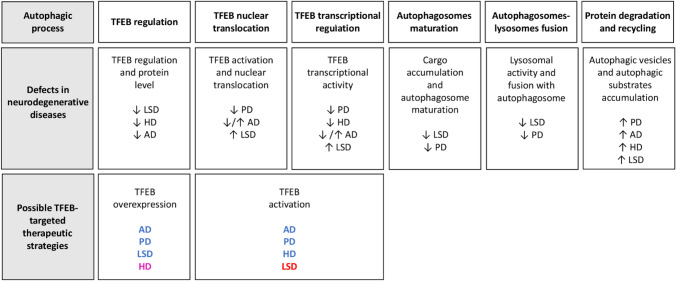
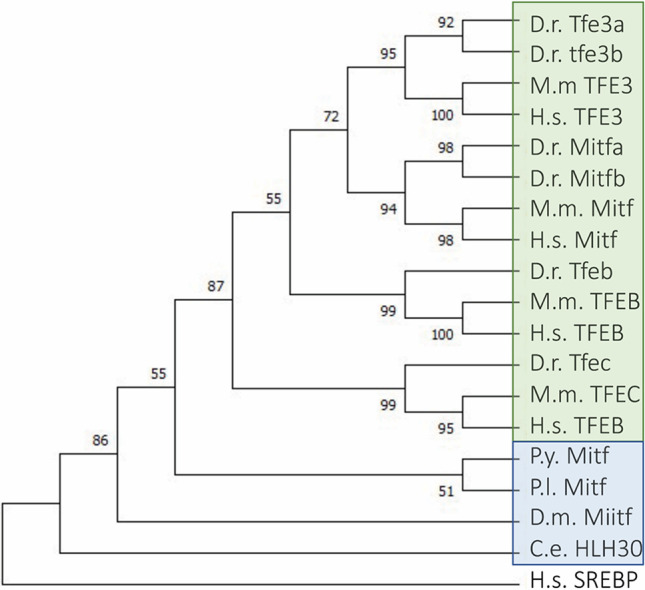
The microphthalmia/transcription factor E (MiTF/TFE) transcription factors are responsible for the regulation of various key processes for the maintenance of brain function, including autophagy-lysosomal pathway, lipid catabolism, and mitochondrial homeostasis. Among them, autophagy is one of the most relevant pathways in this frame; it is evolutionary conserved and crucial for cellular homeostasis. The dysregulation of MiTF/TFE proteins was shown to be involved in the development and progression of neurodegenerative diseases. Thus, the characterization of their function is key in the understanding of the etiology of these diseases, with the potential to develop novel therapeutics targeted to MiTF/TFE proteins and to the autophagic process. The fact that these proteins are evolutionary conserved suggests that their function and dysfunction can be investigated in model organisms with a simpler nervous system than the mammalian one. Building not only on studies in mammalian models but also in complementary model organisms, in this review we discuss (1) the mechanistic regulation of MiTF/TFE transcription factors; (2) their roles in different regions of the central nervous system, in different cell types, and their involvement in the development of neurodegenerative diseases, including lysosomal storage disorders; (3) the overlap and the compensation that occur among the different members of the family; (4) the importance of the evolutionary conservation of these protein and the process they regulate, which allows their study in different model organisms; and (5) their possible role as therapeutic targets in neurodegeneration.
小眼畸形/转录因子 E(MiTF/TFE)转录因子负责调节维持脑功能的各种关键过程,包括自噬-溶酶体途径、脂质分解代谢和线粒体动态平衡。其中,自噬是该框架中最相关的途径之一;它是进化保守的,对细胞动态平衡至关重要。MiTF/TFE 蛋白的失调被证明与神经退行性疾病的发生和进展有关。因此,其功能的特征对于理解这些疾病的病因学至关重要,有可能针对 MiTF/TFE 蛋白和自噬过程开发新的治疗方法。这些蛋白质在进化上是保守的,这表明可以在神经系统比哺乳动物更简单的模式生物中研究它们的功能和功能障碍。本综述不仅基于哺乳动物模型的研究,还基于互补的模式生物,讨论了(1)MiTF/TFE 转录因子的机制调节;(2)它们在中枢神经系统不同区域、不同细胞类型中的作用,以及它们在神经退行性疾病(包括溶酶体贮积症)中的参与;(3)家族不同成员之间的重叠和补偿;(4)这些蛋白质及其调节的过程在进化上的保守性的重要性,这允许在不同的模式生物中研究它们;以及(5)它们作为神经退行性变治疗靶点的可能作用。