Tsinghua-Peking Center for Life Sciences and Department of Basic Medical Sciences, Tsinghua University, Beijing, China.
Department of Radiation Oncology, University of Texas Southwestern Medical Center, Dallas, Texas, USA.
J Biol Chem. 2022 Jul;298(7):102102. doi: 10.1016/j.jbc.2022.102102. Epub 2022 Jun 3.
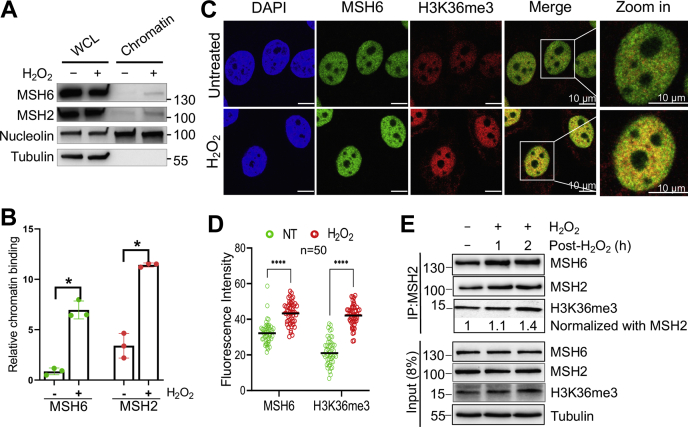
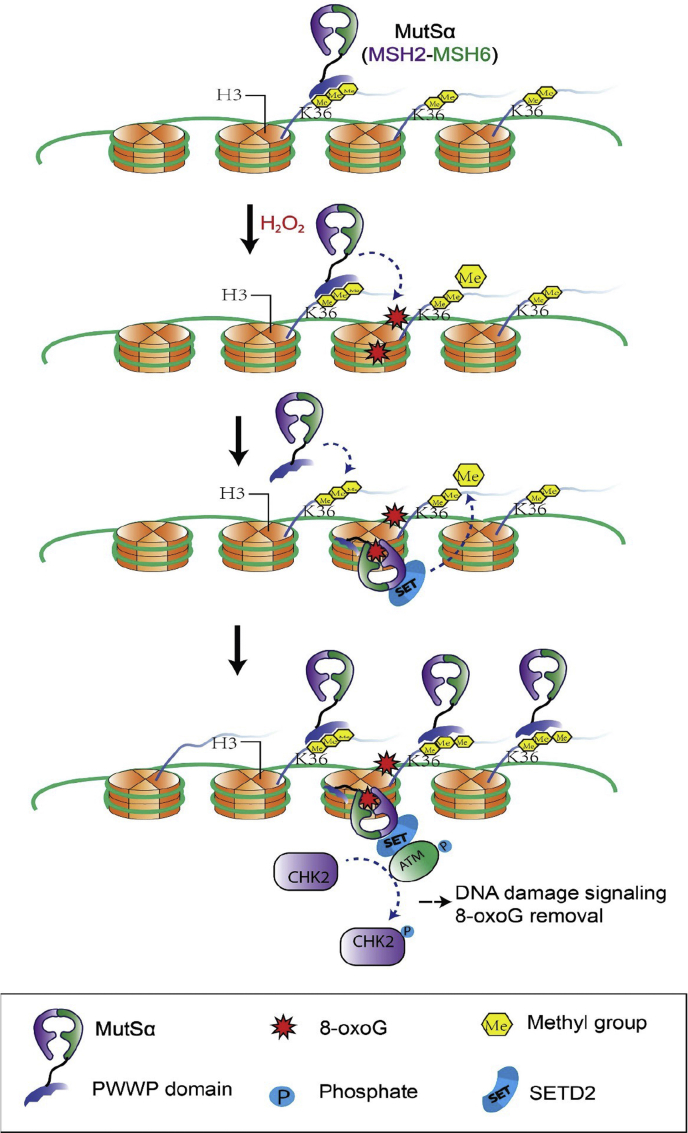
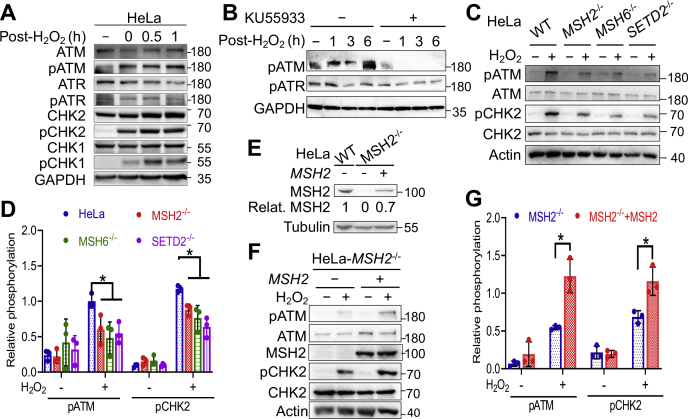
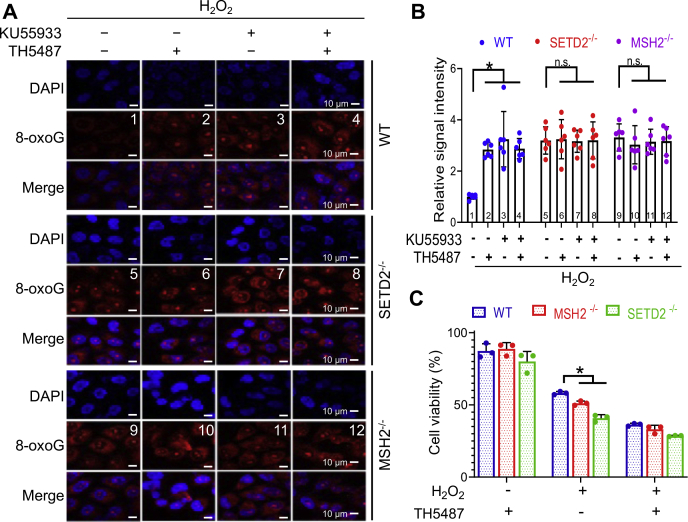
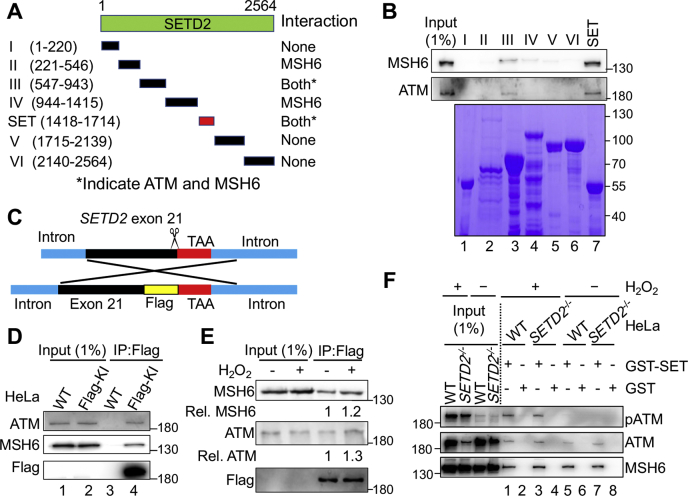
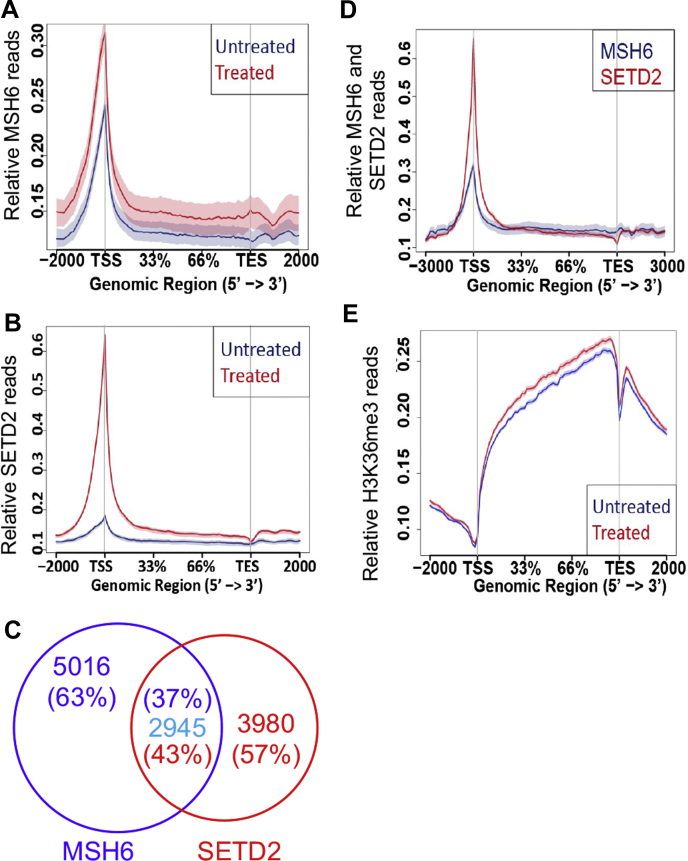
Oxidative DNA damage contributes to aging and the pathogenesis of numerous human diseases including cancer. 8-hydroxyguanine (8-oxoG) is the major product of oxidative DNA lesions. Although OGG1-mediated base excision repair is the primary mechanism for 8-oxoG removal, DNA mismatch repair has also been implicated in processing oxidative DNA damage. However, the mechanism of the latter is not fully understood. Here, we treated human cells defective in various 8-oxoG repair factors with HO and performed biochemical, live cell imaging, and chromatin immunoprecipitation sequencing analyses to determine their response to the treatment. We show that the mismatch repair processing of oxidative DNA damage involves cohesive interactions between mismatch recognition protein MutSα, histone mark H3K36me3, and H3K36 trimethyltransferase SETD2, which activates the ATM DNA damage signaling pathway. We found that cells depleted of MutSα or SETD2 accumulate 8-oxoG adducts and fail to trigger HO-induced ATM activation. Furthermore, we show that SETD2 physically interacts with both MutSα and ATM, which suggests a role for SETD2 in transducing DNA damage signals from lesion-bound MutSα to ATM. Consistently, MutSα and SETD2 are highly coenriched at oxidative damage sites. The data presented here support a model wherein MutSα, SETD2, ATM, and H3K36me3 constitute a positive feedback loop to help cells cope with oxidative DNA damage.
氧化 DNA 损伤导致衰老和许多人类疾病的发病机制,包括癌症。8-羟基鸟嘌呤(8-oxoG)是氧化 DNA 损伤的主要产物。虽然 OGG1 介导的碱基切除修复是 8-oxoG 去除的主要机制,但 DNA 错配修复也被牵连到氧化 DNA 损伤的处理中。然而,后者的机制尚未完全了解。在这里,我们用 HO 处理各种 8-oxoG 修复因子缺陷的人类细胞,并进行生化、活细胞成像和染色质免疫沉淀测序分析,以确定它们对处理的反应。我们表明,氧化 DNA 损伤的错配修复涉及错配识别蛋白 MutSα、组蛋白标记 H3K36me3 和 H3K36 三甲基转移酶 SETD2 之间的凝聚相互作用,这激活了 ATM DNA 损伤信号通路。我们发现,耗尽 MutSα 或 SETD2 的细胞会积累 8-oxoG 加合物,并且无法触发 HO 诱导的 ATM 激活。此外,我们表明 SETD2 与 MutSα 和 ATM 都有物理相互作用,这表明 SETD2 在将来自损伤结合的 MutSα 的 DNA 损伤信号转导到 ATM 中起作用。一致地,MutSα 和 SETD2 在氧化损伤部位高度共富集。这里呈现的数据支持这样的模型,即 MutSα、SETD2、ATM 和 H3K36me3 构成一个正反馈回路,以帮助细胞应对氧化 DNA 损伤。