Department of Microbiology and Immunology, Graduate School of Medicine, Yamaguchi University, Yamaguchi, Japan
Department of Molecular Immunology, Research Institute for Microbial Diseases, Osaka University, Osaka, Japan.
Life Sci Alliance. 2022 Jun 6;5(10). doi: 10.26508/lsa.202201441. Print 2022 Oct.
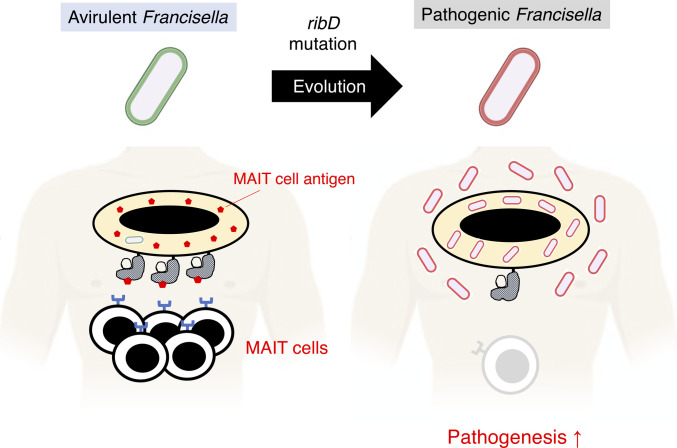
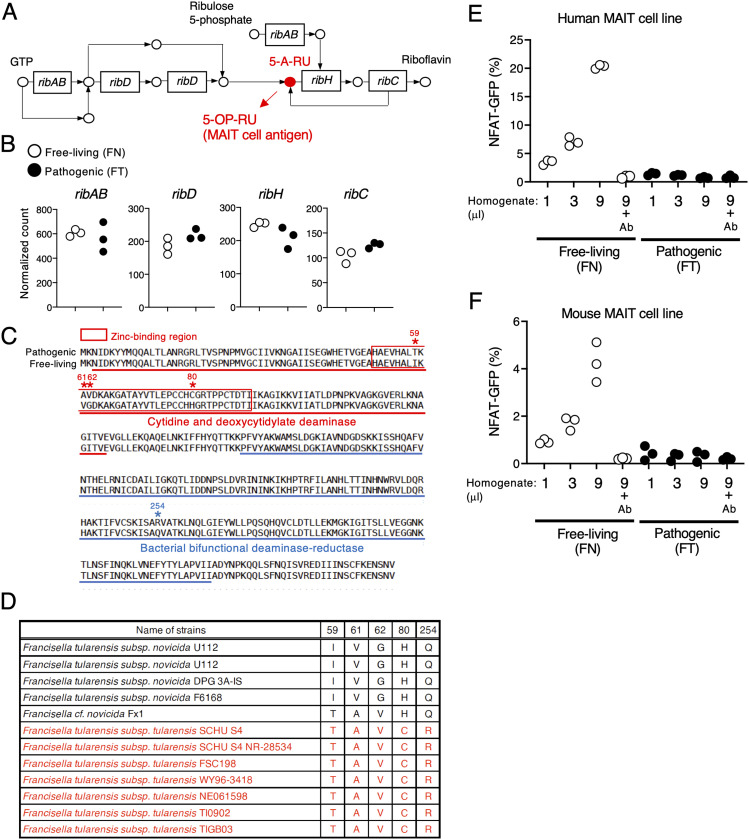
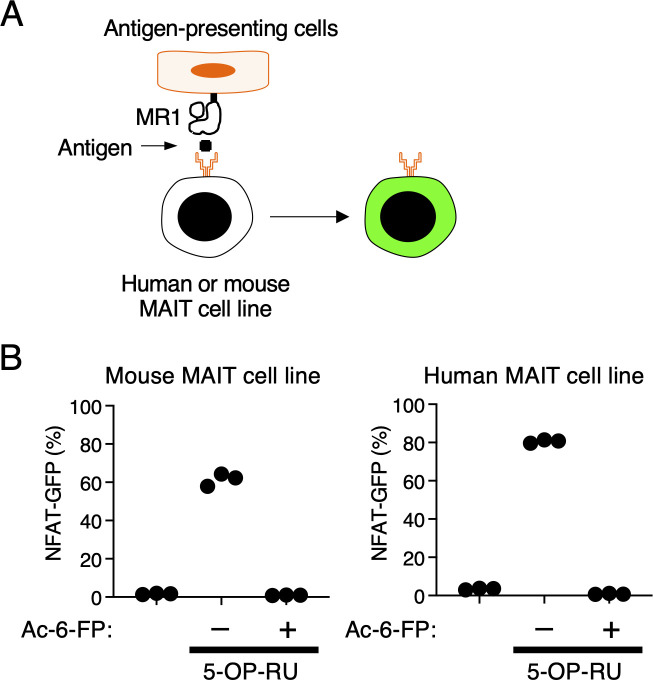
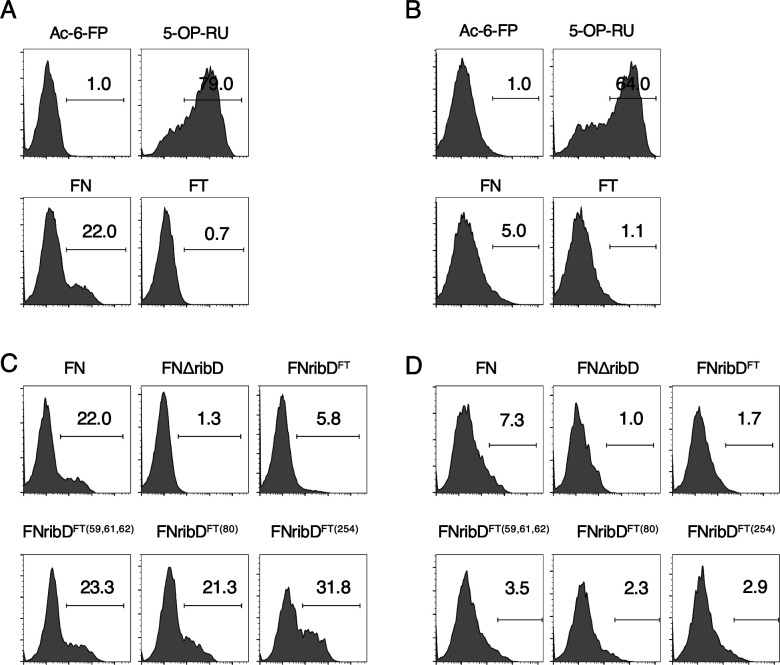
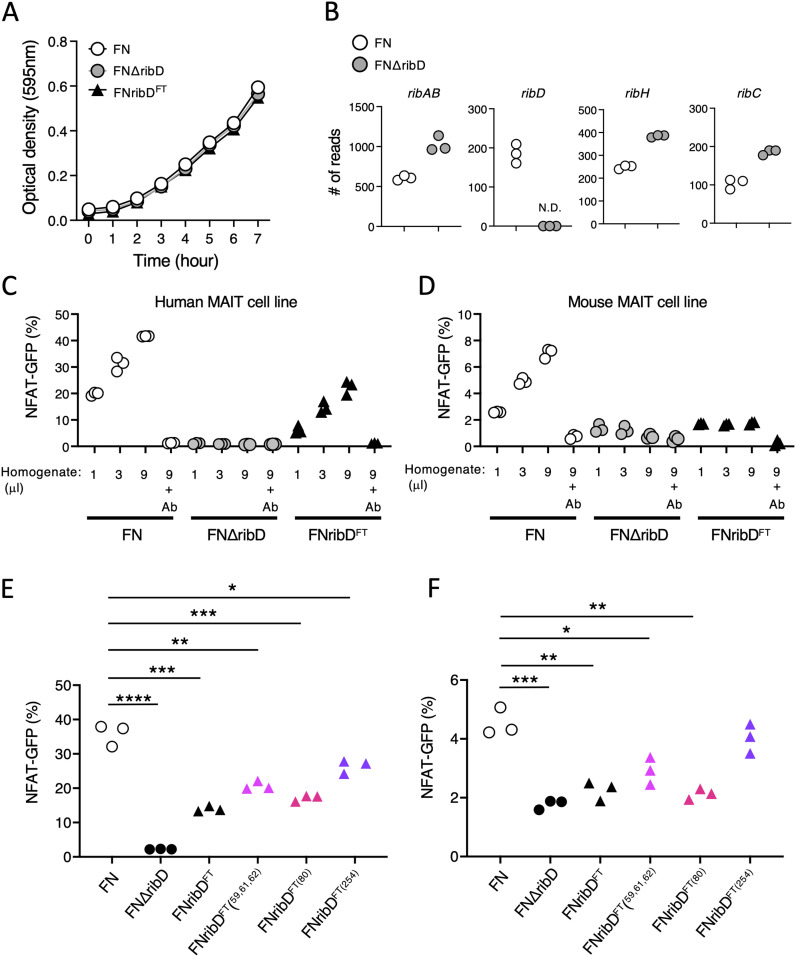
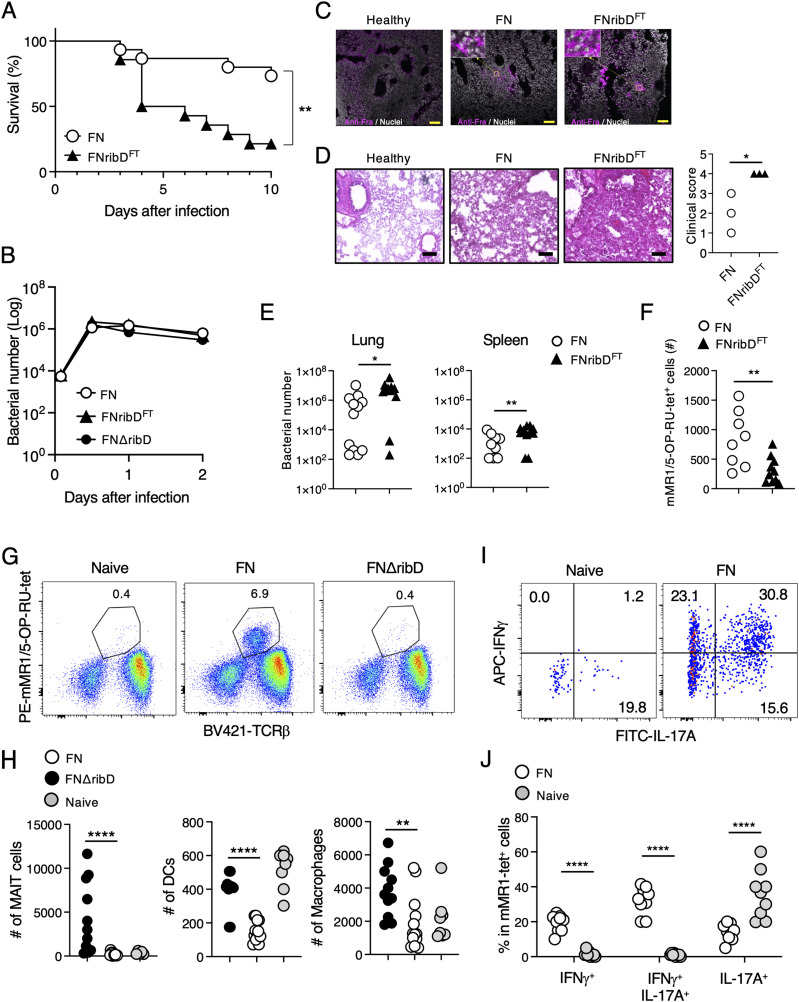
Intracellular pathogens lose many metabolic genes during their evolution from free-living bacteria, but the pathogenic consequences of their altered metabolic programs on host immunity are poorly understood. Here, we show that a pathogenic strain of (FT) has five amino acid substitutions in RibD, a converting enzyme of the riboflavin synthetic pathway responsible for generating metabolites recognized by mucosal-associated invariant T (MAIT) cells. Metabolites from a free-living strain, (FN), activated MAIT cells in a T-cell receptor (TCR)-dependent manner, whereas introduction of FT-type to the free-living strain was sufficient to attenuate this activation in both human and mouse MAIT cells. Intranasal infection in mice showed that the -expressing FN strain induced impaired Th1-type MAIT cell expansion and resulted in reduced bacterial clearance and worsened survival compared with the wild-type free-living strain FN. These results demonstrate that can acquire immune evasion capacity by alteration of metabolic programs during evolution.
在从自由生活的细菌进化为细胞内病原体的过程中,许多代谢基因丢失,但它们改变的代谢程序对宿主免疫的致病后果还知之甚少。在这里,我们表明,一种致病性的 (FT)菌株在负责生成被粘膜相关不变 T(MAIT)细胞识别的代谢物的核黄素合成途径的转化酶 RibD 中有五个氨基酸取代。来自自由生活菌株的代谢物, (FN),以 TCR 依赖性方式激活 MAIT 细胞,而将 FT 型 引入自由生活菌株足以减弱人源和鼠源 MAIT 细胞的这种激活。在小鼠的鼻腔感染中表明,表达 的 FN 菌株诱导 Th1 型 MAIT 细胞扩增受损,导致与野生型自由生活 FN 菌株相比,细菌清除减少和存活率降低。这些结果表明, 在进化过程中通过改变代谢程序可以获得免疫逃避能力。