Department of Anesthesiology, Shenzhen Hospital, Southern Medical University, No. 1333, Xinhu Road, Baoan District, Shenzhen, 518110, Guangdong, China.
Department of Anaesthetics, Affiliated Hospital of Guangdong Medical University, No. 57 People Avenue South, Zhanjiang, 524001, Guangdong, China.
Commun Biol. 2022 Jun 6;5(1):543. doi: 10.1038/s42003-022-03481-y.
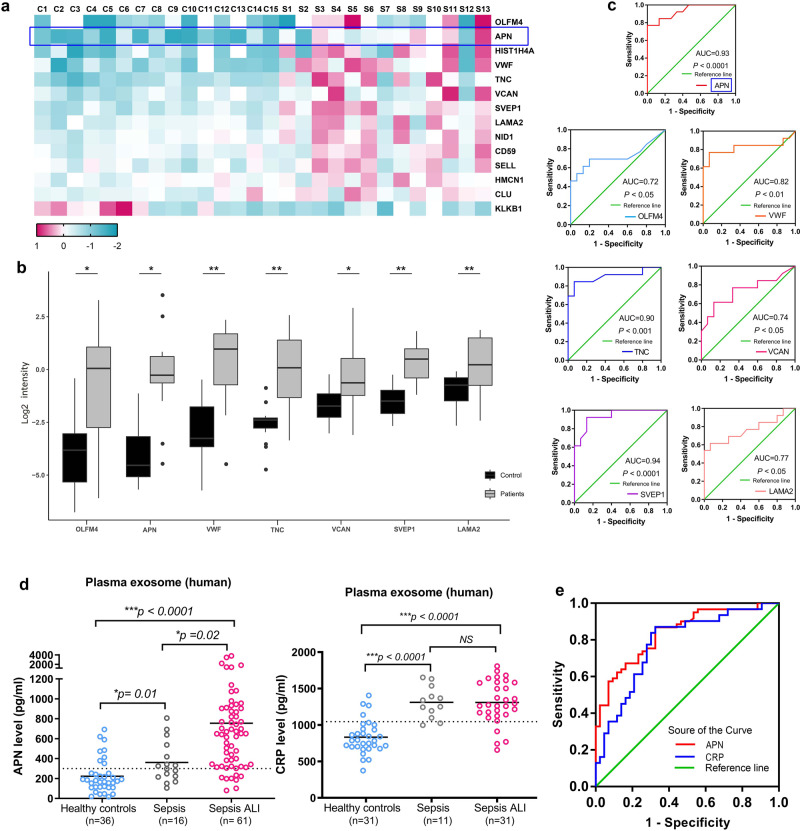
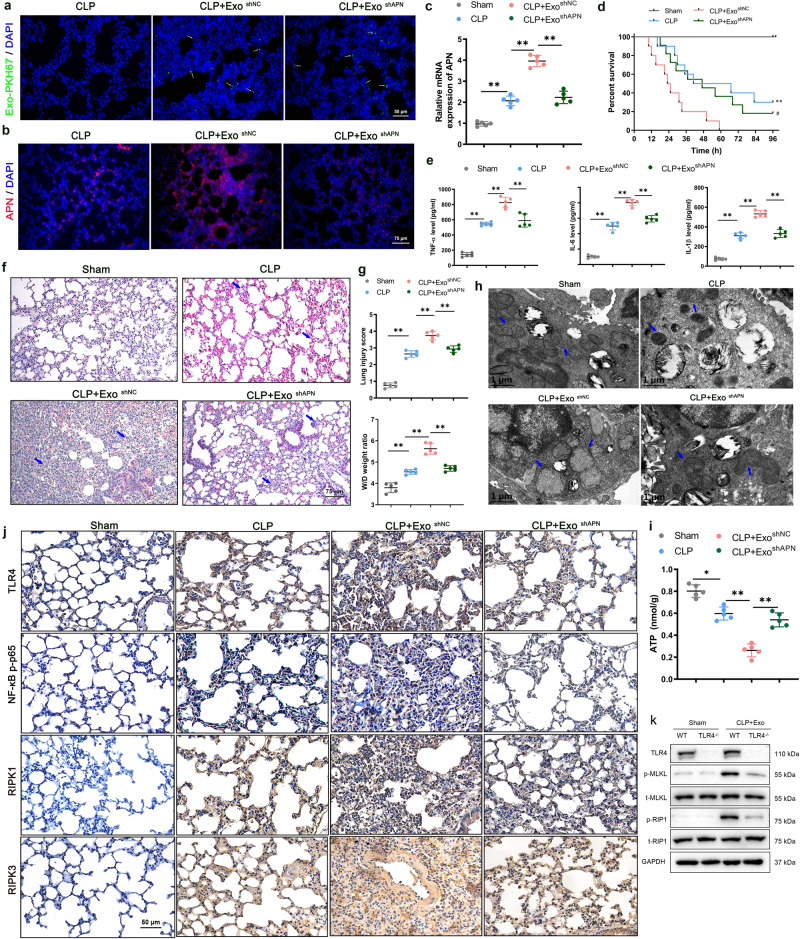
Sepsis-induced acute lung injury (ALI) is a serious sepsis complication and the prevailing cause of death. Circulating plasma exosomes might exert a key role in regulating intercellular communication between immunological and structural cells, as well as contributing to sepsis-related organ damage. However, the molecular mechanisms by which exosome-mediated intercellular signaling exacerbate ALI in septic infection remains undefined. Therefore, we investigated the effect of macrophage-derived exosomal APN/CD13 on the induction of epithelial cell necrosis. Exosomal APN/CD13 levels in the plasma of septic mice and patients with septic ALI were found to be higher. Furthermore, increased plasma exosomal APN/CD13 levels were associated with the severity of ALI and fatality in sepsis patients. We found remarkably high expression of APN/CD13 in exosomes secreted by LPS-stimulated macrophages. Moreover, c-Myc directly induced APN/CD13 expression and was packed into exosomes. Finally, exosomal APN/CD13 from macrophages regulated necroptosis of lung epithelial cells by binding to the cell surface receptor TLR4 to induce ROS generation, mitochondrial dysfunction and NF-κB activation. These results demonstrate that macrophage-secreted exosomal APN/CD13 can trigger epithelial cell necroptosis in an APN/CD13-dependent manner, which provides insight into the mechanism of epithelial cell functional disorder in sepsis-induced ALI.
脓毒症诱导的急性肺损伤 (ALI) 是一种严重的脓毒症并发症,也是主要的死亡原因。循环血浆外泌体可能在调节免疫和结构细胞之间的细胞间通讯方面发挥关键作用,并有助于与脓毒症相关的器官损伤。然而,外泌体介导的细胞间信号转导加剧脓毒症感染中的 ALI 的分子机制仍未定义。因此,我们研究了巨噬细胞衍生的外泌体 APN/CD13 对上皮细胞坏死诱导的影响。发现脓毒症小鼠和脓毒症合并 ALI 患者血浆中的外泌体 APN/CD13 水平升高。此外,血浆外泌体 APN/CD13 水平的增加与脓毒症患者 ALI 的严重程度和死亡率相关。我们发现 LPS 刺激的巨噬细胞分泌的外泌体中 APN/CD13 的表达显著升高。此外,c-Myc 直接诱导 APN/CD13 的表达并被包装到外泌体中。最后,巨噬细胞来源的外泌体 APN/CD13 通过与细胞表面受体 TLR4 结合来调节肺上皮细胞的坏死,从而诱导 ROS 生成、线粒体功能障碍和 NF-κB 激活。这些结果表明,巨噬细胞分泌的外泌体 APN/CD13 可以以 APN/CD13 依赖的方式触发上皮细胞坏死,这为脓毒症诱导的 ALI 中上皮细胞功能障碍的机制提供了新的见解。