University of York, UK.
Autism. 2023 Jan;27(1):188-199. doi: 10.1177/13623613221086997. Epub 2022 Jun 6.
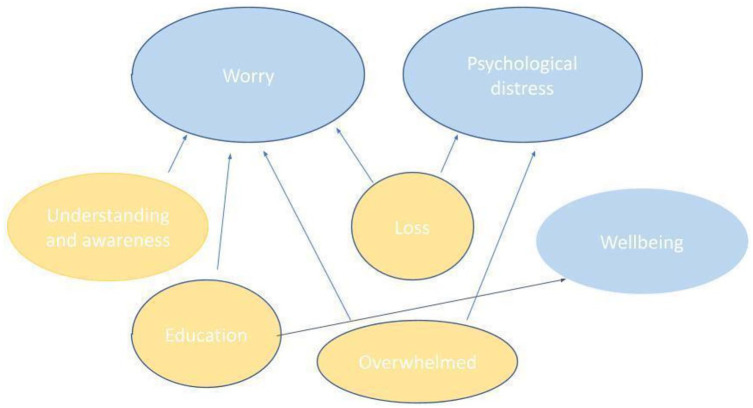
We know that autistic children and young people, and their caregivers, are at increased risk of mental ill health. We asked whether the first 6 months of COVID-19 exacerbated that risk, and whether the implications were different for autistic pupils and their caregivers, than for those with other special educational needs and difficulties. In a linked paper, we found that caregivers of autistic pupils reported higher levels of depression and anxiety symptoms in their children than parents of children with other special educational needs and difficulties (Toseeb & Asbury, 2022). For pupils with other special educational needs and difficulties, their parent-reported anxiety symptoms eased over time while remaining high throughout for autistic pupils. There were no differences in mental health and wellbeing between caregivers of autistic pupils and those with other special educational needs and difficulties. Here, we used parents' written descriptions of their own and their child's mental health during the first 6 months of COVID-19 to explore these linked findings in greater depth. We identified strong evidence of worry and distress for all, but most prominently autistic children and young people. Our finding that worry and distress declined over time for pupils with other special educational needs and difficulties, but not for autistic pupils, was supported and we observed a few differences between caregivers. We also found evidence of wellbeing throughout the sample, and examples of some (mainly autistic) pupils benefitting from a reduction in demands (e.g. going to school). This has implications for our understanding of the school experience for autistic pupils. Findings suggest that the mental health of autistic children and young people may have been disproportionately affected during the first 6 months of COVID-19 and that careful consideration of optimal support, from both health and education perspectives, is vital.
我们知道,自闭症儿童和青少年及其照顾者面临更高的心理健康风险。我们想知道 COVID-19 大流行的前 6 个月是否加剧了这种风险,以及对于自闭症学生及其照顾者来说,这种影响是否与其他具有特殊教育需求和困难的学生不同。在一篇相关论文中,我们发现自闭症学生的照顾者报告其子女的抑郁和焦虑症状比其他具有特殊教育需求和困难的学生的父母更高(Toseeb & Asbury,2022)。对于其他具有特殊教育需求和困难的学生,其父母报告的焦虑症状随着时间的推移而缓解,但对于自闭症学生,焦虑症状一直很高。自闭症学生的照顾者和其他具有特殊教育需求和困难的学生之间的心理健康和幸福感没有差异。在这里,我们使用父母在 COVID-19 大流行的前 6 个月期间对自己和孩子的心理健康的书面描述,更深入地探讨了这些关联发现。我们发现所有学生都存在强烈的担忧和困扰,但自闭症儿童和青少年最为突出。我们发现,对于其他具有特殊教育需求和困难的学生来说,焦虑和困扰随着时间的推移而减轻,但对于自闭症学生则没有,这一发现得到了支持,并且我们观察到照顾者之间存在一些差异。我们还在整个样本中发现了幸福感的证据,并且有一些例子(主要是自闭症)学生受益于需求减少(例如不上学)。这对我们理解自闭症学生的学校经历具有启示意义。研究结果表明,在 COVID-19 大流行的前 6 个月期间,自闭症儿童和青少年的心理健康可能受到了不成比例的影响,从健康和教育的角度出发,仔细考虑最佳支持至关重要。