• 文献检索
  • 文档翻译
  • 深度研究
  • 学术资讯
  • Suppr Zotero 插件Zotero 插件
  • 邀请有礼
  • 套餐&价格
  • 历史记录
应用&插件
Suppr Zotero 插件Zotero 插件浏览器插件Mac 客户端Windows 客户端微信小程序
定价
高级版会员购买积分包购买API积分包
服务
文献检索文档翻译深度研究API 文档MCP 服务
关于我们
关于 Suppr公司介绍联系我们用户协议隐私条款
关注我们

Suppr 超能文献

核心技术专利:CN118964589B侵权必究
粤ICP备2023148730 号-1Suppr @ 2026

文献检索

告别复杂PubMed语法,用中文像聊天一样搜索,搜遍4000万医学文献。AI智能推荐,让科研检索更轻松。

立即免费搜索

文件翻译

保留排版,准确专业,支持PDF/Word/PPT等文件格式,支持 12+语言互译。

免费翻译文档

深度研究

AI帮你快速写综述,25分钟生成高质量综述,智能提取关键信息,辅助科研写作。

立即免费体验

AD-CovNet:利用混合深度学习模型处理数据不平衡、预测 COVID-19 合并阿尔茨海默病患者病死率和危险因素的探索性分析。

AD-CovNet: An exploratory analysis using a hybrid deep learning model to handle data imbalance, predict fatality, and risk factors in Alzheimer's patients with COVID-19.

机构信息

Department of Bioinformatics and Computational Biology, George Mason University, Fairfax, VA, USA.

Department of Biochemistry and Molecular Biology, University of Dhaka, Dhaka, Bangladesh.

出版信息

Comput Biol Med. 2022 Jul;146:105657. doi: 10.1016/j.compbiomed.2022.105657. Epub 2022 May 22.

DOI:10.1016/j.compbiomed.2022.105657
PMID:35672170
原文链接:https://pmc.ncbi.nlm.nih.gov/articles/PMC9675947/
Abstract

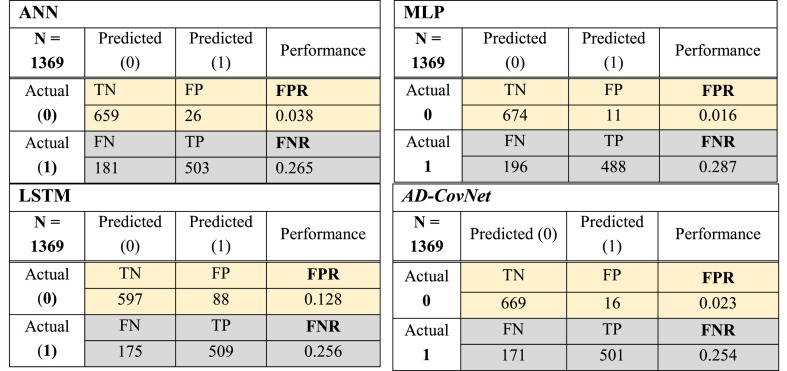
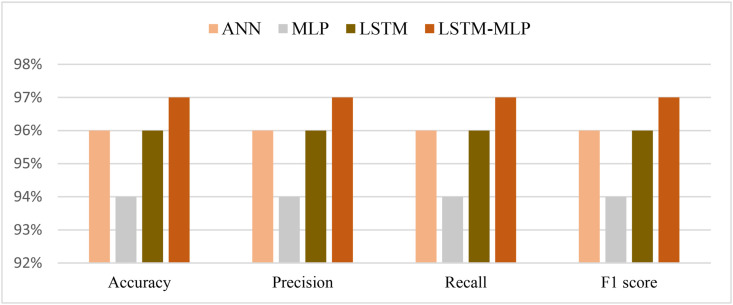
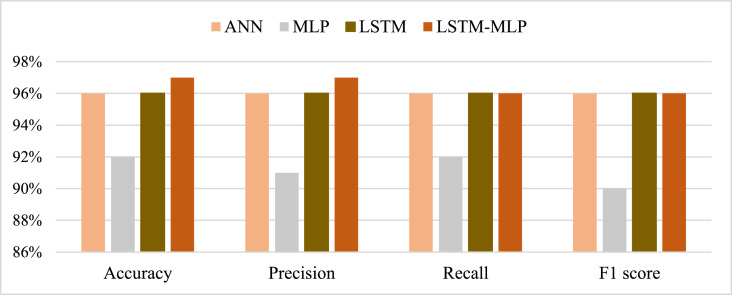
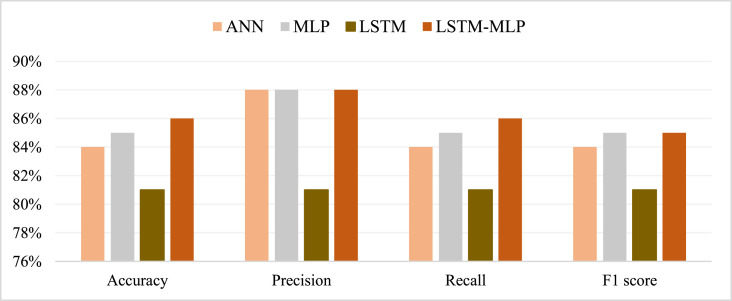
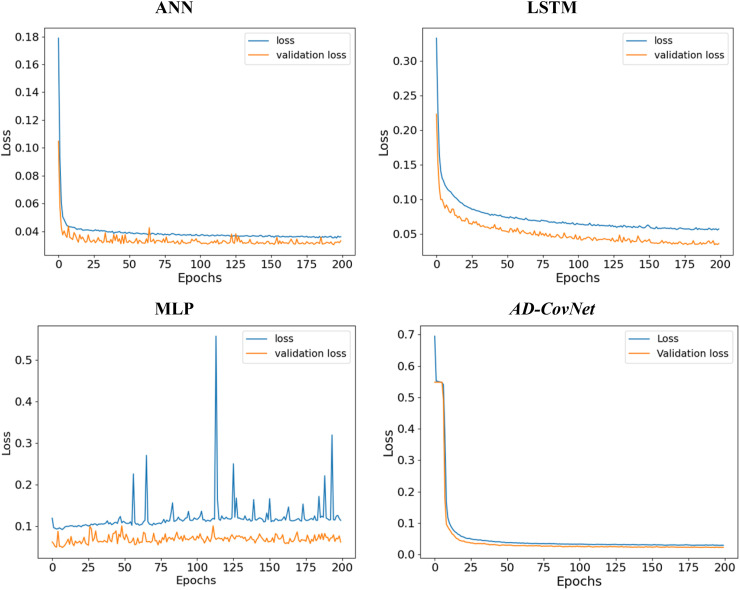
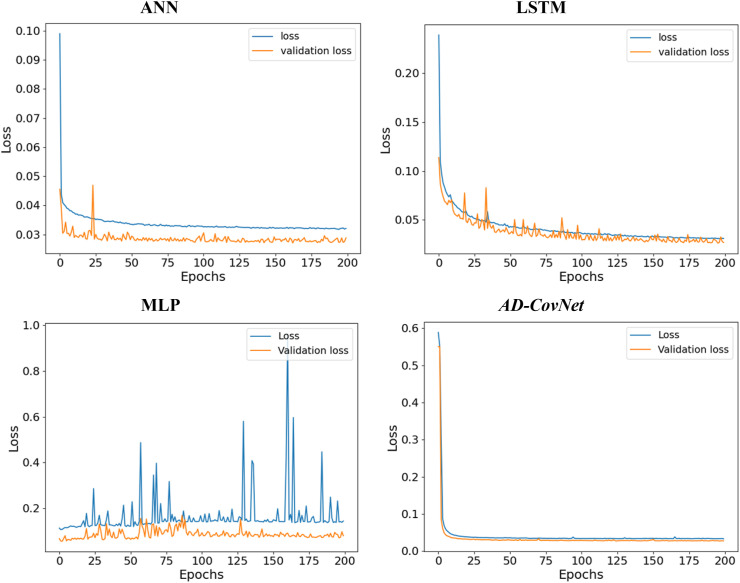
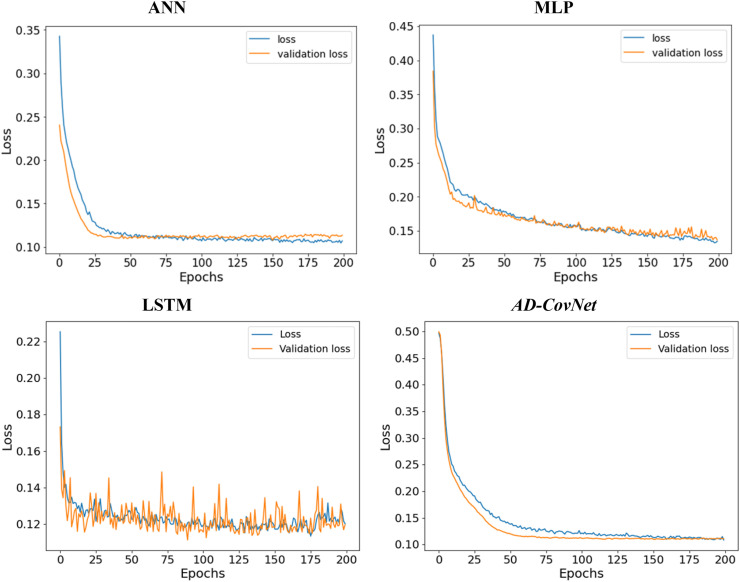
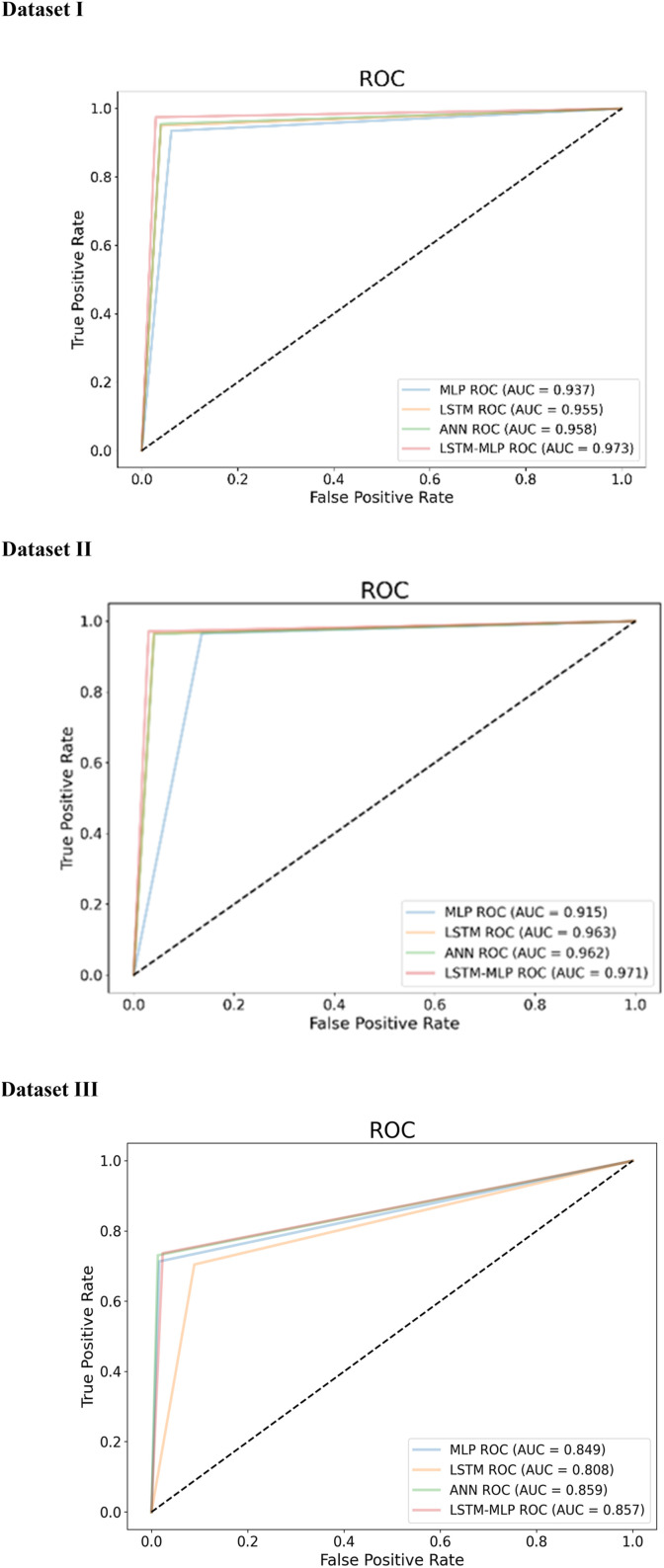
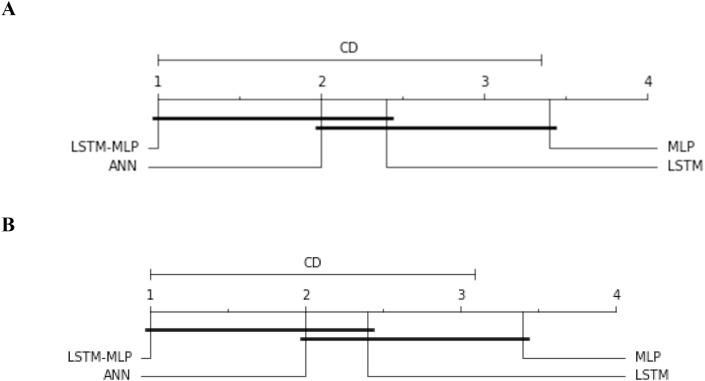
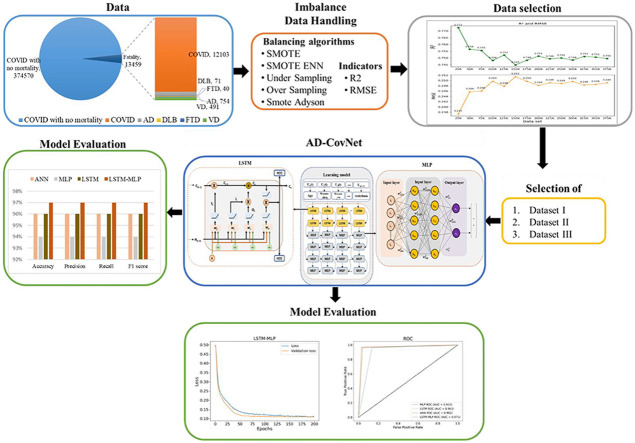
Alzheimer's disease (AD) is the leading cause of dementia globally, with a growing morbidity burden that may exceed diagnosis and management capabilities. The situation worsens when AD patient fatalities are exposed to COVID-19. Because of differences in clinical features and patient condition, a patient's recovery from COVID-19 with or without AD varies greatly. Thus, this situation stimulates a spectrum of imbalanced data. The inclusion of different features in the class imbalance offers substantial problems for developing of a classification framework. This study proposes a framework to handle class imbalance and select the most suitable and representative datasets for the hybrid model. Under this framework, various state-of-the-art resample techniques were utilized to balance the datasets, and three sets of data were finally selected. We developed a novel hybrid deep learning model AD-CovNet using Long Short-Term Memory (LSTM) and Multi-layer Perceptron (MLP) algorithms that delineate three unique datasets of COVID-19 and AD-COVID-19 patient fatality predictions. This proposed model achieved 97% accuracy, 97% precision, 97% recall, and 97% F1-score for Dataset I; 97% accuracy, 97% precision, 96% recall, and 96% F1-score for Dataset II; and 86% accuracy, 88% precision, 88% recall, and 86% F1-score for Dataset III. In addition, AdaBoost, XGBoost, and Random Forest models were utilized to evaluate the risk factors associated with AD-COVID-19 patients, and the outcome outperformed diagnostic performance. The risk factors predicted by the models showed significant clinical importance and relevance to mortality. Furthermore, the proposed hybrid model's performance was evaluated using a statistical significance test and compared to previously published works. Overall, the uniqueness of the large dataset, the effectiveness of the deep learning architecture, and the accuracy and performance of the hybrid model showcase the first cohesive work that can formulate better predictions and help in clinical decision-making.

摘要

阿尔茨海默病(AD)是全球痴呆症的主要病因,其发病率不断增加,可能超过诊断和管理能力。当 AD 患者因 COVID-19 而死亡时,情况会变得更糟。由于临床特征和患者病情的差异,AD 患者从 COVID-19 中康复的情况因有无 AD 而有很大差异。因此,这种情况刺激了一系列不平衡的数据。类不平衡中包含的不同特征为开发分类框架带来了实质性的问题。本研究提出了一种框架来处理类不平衡,并为混合模型选择最合适和最具代表性的数据集。在这个框架下,利用各种最先进的重采样技术来平衡数据集,并最终选择了三个数据集。我们使用长短期记忆(LSTM)和多层感知机(MLP)算法开发了一种新的混合深度学习模型 AD-CovNet,用于区分 COVID-19 和 AD-COVID-19 患者死亡预测的三个独特数据集。该模型在数据集 I 中实现了 97%的准确率、97%的精度、97%的召回率和 97%的 F1 得分;在数据集 II 中实现了 97%的准确率、97%的精度、96%的召回率和 96%的 F1 得分;在数据集 III 中实现了 86%的准确率、88%的精度、88%的召回率和 86%的 F1 得分。此外,还利用 AdaBoost、XGBoost 和随机森林模型来评估与 AD-COVID-19 患者相关的风险因素,其结果优于诊断性能。模型预测的风险因素具有显著的临床重要性和相关性。此外,还通过统计显著性检验评估了混合模型的性能,并与以前发表的工作进行了比较。总体而言,大型数据集的独特性、深度学习架构的有效性、以及混合模型的准确性和性能展示了首个可以做出更好预测并有助于临床决策的综合工作。
https://cdn.ncbi.nlm.nih.gov/pmc/blobs/1658/9675947/8c773f804e9e/gr17_lrg.jpg
https://cdn.ncbi.nlm.nih.gov/pmc/blobs/1658/9675947/894fdcc071d7/ga1_lrg.jpg
https://cdn.ncbi.nlm.nih.gov/pmc/blobs/1658/9675947/90cf0f2be507/gr1_lrg.jpg
https://cdn.ncbi.nlm.nih.gov/pmc/blobs/1658/9675947/4bff46d00e31/gr2_lrg.jpg
https://cdn.ncbi.nlm.nih.gov/pmc/blobs/1658/9675947/05327a957be6/gr3_lrg.jpg
https://cdn.ncbi.nlm.nih.gov/pmc/blobs/1658/9675947/11e04bf111cc/gr4_lrg.jpg
https://cdn.ncbi.nlm.nih.gov/pmc/blobs/1658/9675947/debb7b0ba790/gr5_lrg.jpg
https://cdn.ncbi.nlm.nih.gov/pmc/blobs/1658/9675947/ac46fe74cb14/gr6_lrg.jpg
https://cdn.ncbi.nlm.nih.gov/pmc/blobs/1658/9675947/6eae7b45b274/gr7_lrg.jpg
https://cdn.ncbi.nlm.nih.gov/pmc/blobs/1658/9675947/6ade959d090e/gr8_lrg.jpg
https://cdn.ncbi.nlm.nih.gov/pmc/blobs/1658/9675947/23ee88651caf/gr9_lrg.jpg
https://cdn.ncbi.nlm.nih.gov/pmc/blobs/1658/9675947/8333567a4feb/gr10_lrg.jpg
https://cdn.ncbi.nlm.nih.gov/pmc/blobs/1658/9675947/5b79d5cbbf32/gr11_lrg.jpg
https://cdn.ncbi.nlm.nih.gov/pmc/blobs/1658/9675947/d56de4c221ed/gr12_lrg.jpg
https://cdn.ncbi.nlm.nih.gov/pmc/blobs/1658/9675947/a16dfe1c10bc/gr13_lrg.jpg
https://cdn.ncbi.nlm.nih.gov/pmc/blobs/1658/9675947/f3f735151a6c/gr14_lrg.jpg
https://cdn.ncbi.nlm.nih.gov/pmc/blobs/1658/9675947/245b97ab83db/gr15_lrg.jpg
https://cdn.ncbi.nlm.nih.gov/pmc/blobs/1658/9675947/38e2bb287742/gr16_lrg.jpg
https://cdn.ncbi.nlm.nih.gov/pmc/blobs/1658/9675947/8c773f804e9e/gr17_lrg.jpg
https://cdn.ncbi.nlm.nih.gov/pmc/blobs/1658/9675947/894fdcc071d7/ga1_lrg.jpg
https://cdn.ncbi.nlm.nih.gov/pmc/blobs/1658/9675947/90cf0f2be507/gr1_lrg.jpg
https://cdn.ncbi.nlm.nih.gov/pmc/blobs/1658/9675947/4bff46d00e31/gr2_lrg.jpg
https://cdn.ncbi.nlm.nih.gov/pmc/blobs/1658/9675947/05327a957be6/gr3_lrg.jpg
https://cdn.ncbi.nlm.nih.gov/pmc/blobs/1658/9675947/11e04bf111cc/gr4_lrg.jpg
https://cdn.ncbi.nlm.nih.gov/pmc/blobs/1658/9675947/debb7b0ba790/gr5_lrg.jpg
https://cdn.ncbi.nlm.nih.gov/pmc/blobs/1658/9675947/ac46fe74cb14/gr6_lrg.jpg
https://cdn.ncbi.nlm.nih.gov/pmc/blobs/1658/9675947/6eae7b45b274/gr7_lrg.jpg
https://cdn.ncbi.nlm.nih.gov/pmc/blobs/1658/9675947/6ade959d090e/gr8_lrg.jpg
https://cdn.ncbi.nlm.nih.gov/pmc/blobs/1658/9675947/23ee88651caf/gr9_lrg.jpg
https://cdn.ncbi.nlm.nih.gov/pmc/blobs/1658/9675947/8333567a4feb/gr10_lrg.jpg
https://cdn.ncbi.nlm.nih.gov/pmc/blobs/1658/9675947/5b79d5cbbf32/gr11_lrg.jpg
https://cdn.ncbi.nlm.nih.gov/pmc/blobs/1658/9675947/d56de4c221ed/gr12_lrg.jpg
https://cdn.ncbi.nlm.nih.gov/pmc/blobs/1658/9675947/a16dfe1c10bc/gr13_lrg.jpg
https://cdn.ncbi.nlm.nih.gov/pmc/blobs/1658/9675947/f3f735151a6c/gr14_lrg.jpg
https://cdn.ncbi.nlm.nih.gov/pmc/blobs/1658/9675947/245b97ab83db/gr15_lrg.jpg
https://cdn.ncbi.nlm.nih.gov/pmc/blobs/1658/9675947/38e2bb287742/gr16_lrg.jpg
https://cdn.ncbi.nlm.nih.gov/pmc/blobs/1658/9675947/8c773f804e9e/gr17_lrg.jpg

相似文献

1
AD-CovNet: An exploratory analysis using a hybrid deep learning model to handle data imbalance, predict fatality, and risk factors in Alzheimer's patients with COVID-19.AD-CovNet:利用混合深度学习模型处理数据不平衡、预测 COVID-19 合并阿尔茨海默病患者病死率和危险因素的探索性分析。
Comput Biol Med. 2022 Jul;146:105657. doi: 10.1016/j.compbiomed.2022.105657. Epub 2022 May 22.
2
XGBoost-SHAP-based interpretable diagnostic framework for alzheimer's disease.基于 XGBoost-SHAP 的阿尔茨海默病可解释诊断框架。
BMC Med Inform Decis Mak. 2023 Jul 25;23(1):137. doi: 10.1186/s12911-023-02238-9.
3
Influence of medical domain knowledge on deep learning for Alzheimer's disease prediction.医学领域知识对用于阿尔茨海默病预测的深度学习的影响。
Comput Methods Programs Biomed. 2020 Dec;197:105765. doi: 10.1016/j.cmpb.2020.105765. Epub 2020 Sep 20.
4
A Deep Learning Approach for Automated Diagnosis and Multi-Class Classification of Alzheimer's Disease Stages Using Resting-State fMRI and Residual Neural Networks.基于静息态 fMRI 和残差神经网络的深度学习方法对阿尔茨海默病阶段进行自动诊断和多分类。
J Med Syst. 2019 Dec 18;44(2):37. doi: 10.1007/s10916-019-1475-2.
5
DAD-Net: Classification of Alzheimer's Disease Using ADASYN Oversampling Technique and Optimized Neural Network.DAD-Net:基于 ADASYN 过采样技术和优化神经网络的阿尔茨海默病分类。
Molecules. 2022 Oct 20;27(20):7085. doi: 10.3390/molecules27207085.
6
Computer aided progression detection model based on optimized deep LSTM ensemble model and the fusion of multivariate time series data.基于优化深度 LSTM 集成模型和多元时间序列数据融合的计算机辅助进展检测模型。
Sci Rep. 2023 Sep 28;13(1):16336. doi: 10.1038/s41598-023-42796-6.
7
Improving clinical abbreviation sense disambiguation using attention-based Bi-LSTM and hybrid balancing techniques in imbalanced datasets.基于注意力机制的 Bi-LSTM 和混合平衡技术在不平衡数据集上提高临床缩写词消歧
J Eval Clin Pract. 2024 Oct;30(7):1327-1336. doi: 10.1111/jep.14041. Epub 2024 Jun 21.
8
Enhancing Alzheimer's Disease Classification with Transfer Learning: Finetuning a Pre-trained Algorithm.利用迁移学习增强阿尔茨海默病分类:微调预训练算法。
Curr Med Imaging. 2024;20:e15734056305633. doi: 10.2174/0115734056305633240603061644.
9
A parameter-efficient deep learning approach to predict conversion from mild cognitive impairment to Alzheimer's disease.一种参数高效的深度学习方法,用于预测轻度认知障碍向阿尔茨海默病的转化。
Neuroimage. 2019 Apr 1;189:276-287. doi: 10.1016/j.neuroimage.2019.01.031. Epub 2019 Jan 14.
10
Machine learning and deep learning-based approach to categorize Bengali comments on social networks using fused dataset.基于机器学习和深度学习的方法,使用融合数据集对孟加拉语社交网络评论进行分类。
PLoS One. 2024 Oct 3;19(10):e0308862. doi: 10.1371/journal.pone.0308862. eCollection 2024.

引用本文的文献

1
Application of artificial intelligence in Alzheimer's disease: a bibliometric analysis.人工智能在阿尔茨海默病中的应用:一项文献计量分析
Front Neurosci. 2025 Feb 14;19:1511350. doi: 10.3389/fnins.2025.1511350. eCollection 2025.
2
XGBoost-SHAP-based interpretable diagnostic framework for alzheimer's disease.基于 XGBoost-SHAP 的阿尔茨海默病可解释诊断框架。
BMC Med Inform Decis Mak. 2023 Jul 25;23(1):137. doi: 10.1186/s12911-023-02238-9.
3
Global trends in COVID-19 Alzheimer's related research: a bibliometric analysis.COVID-19与阿尔茨海默病相关研究的全球趋势:一项文献计量分析

本文引用的文献

1
COVID-19 Detection Using Deep Learning Algorithm on Chest X-ray Images.基于胸部X光图像利用深度学习算法进行COVID-19检测
Biology (Basel). 2021 Nov 13;10(11):1174. doi: 10.3390/biology10111174.
2
Time series predicting of COVID-19 based on deep learning.基于深度学习的新型冠状病毒肺炎时间序列预测
Neurocomputing (Amst). 2022 Jan 11;468:335-344. doi: 10.1016/j.neucom.2021.10.035. Epub 2021 Oct 19.
3
COVID-19 Case Fatality and Alzheimer's Disease.COVID-19 病死率与阿尔茨海默病
Front Neurol. 2023 Jun 5;14:1193768. doi: 10.3389/fneur.2023.1193768. eCollection 2023.
4
Weighted Average Ensemble Deep Learning Model for Stratification of Brain Tumor in MRI Images.用于MRI图像中脑肿瘤分层的加权平均集成深度学习模型
Diagnostics (Basel). 2023 Apr 2;13(7):1320. doi: 10.3390/diagnostics13071320.
5
Feature selection of pre-trained shallow CNN using the QLESCA optimizer: COVID-19 detection as a case study.使用QLESCA优化器对预训练浅层卷积神经网络进行特征选择:以新冠病毒疾病检测为例
Appl Intell (Dordr). 2023 Feb 6:1-23. doi: 10.1007/s10489-022-04446-8.
J Alzheimers Dis. 2021;84(4):1447-1452. doi: 10.3233/JAD-215161.
4
MTU-COVNet: A hybrid methodology for diagnosing the COVID-19 pneumonia with optimized features from multi-net.MTU-COVNet:一种基于多网络优化特征的 COVID-19 肺炎诊断混合方法。
Clin Imaging. 2022 Jan;81:1-8. doi: 10.1016/j.clinimag.2021.09.007. Epub 2021 Sep 27.
5
Alzheimer's disease in elderly COVID-19 patients: potential mechanisms and preventive measures.老年 COVID-19 患者中的阿尔茨海默病:潜在机制和预防措施。
Neurol Sci. 2021 Dec;42(12):4913-4920. doi: 10.1007/s10072-021-05616-1. Epub 2021 Sep 22.
6
Predicting mortality in SARS-COV-2 (COVID-19) positive patients in the inpatient setting using a novel deep neural network.利用新型深度神经网络预测住院 SARS-COV-2(COVID-19)阳性患者的死亡率。
Int J Med Inform. 2021 Oct;154:104556. doi: 10.1016/j.ijmedinf.2021.104556. Epub 2021 Aug 21.
7
Mortality-related risk factors of COVID-19: a systematic review and meta-analysis of 42 studies and 423,117 patients.COVID-19 相关死亡风险因素:42 项研究和 423117 例患者的系统评价和荟萃分析。
BMC Infect Dis. 2021 Aug 21;21(1):855. doi: 10.1186/s12879-021-06536-3.
8
Machine learning approach to dynamic risk modeling of mortality in COVID-19: a UK Biobank study.机器学习方法对 COVID-19 死亡率的动态风险建模:英国生物库研究。
Sci Rep. 2021 Aug 19;11(1):16936. doi: 10.1038/s41598-021-95136-x.
9
Deleterious single nucleotide polymorphisms (SNPs) of human IFNAR2 gene facilitate COVID-19 severity in patients: a comprehensive approach.人类 IFNAR2 基因的有害单核苷酸多态性 (SNPs) 使 COVID-19 患者病情加重:一种综合方法。
J Biomol Struct Dyn. 2022;40(21):11173-11189. doi: 10.1080/07391102.2021.1957714. Epub 2021 Aug 6.
10
A machine learning based exploration of COVID-19 mortality risk.基于机器学习的 COVID-19 死亡率风险探索。
PLoS One. 2021 Jul 2;16(7):e0252384. doi: 10.1371/journal.pone.0252384. eCollection 2021.