Department of Information and Communications Technologies, Universitat Pompeu Fabra, 08018, Barcelona, Spain.
Fraunhofer Institute for Biomedical Engineering IBMT, 66280, Sulzbach, Germany.
J Neuroeng Rehabil. 2022 Jun 7;19(1):57. doi: 10.1186/s12984-022-01033-3.
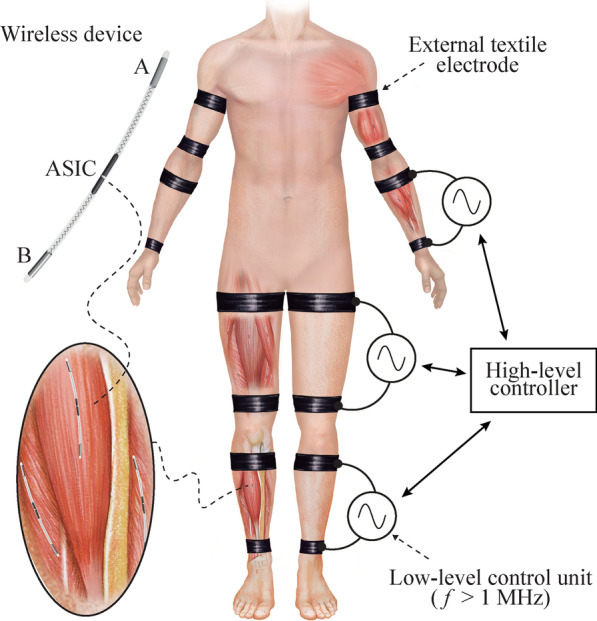
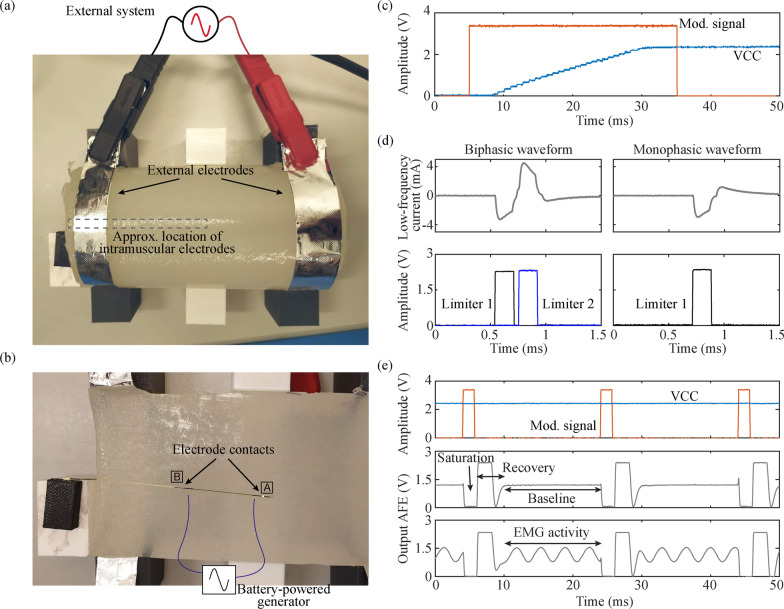
Implantable neuroprostheses consisting of a central electronic unit wired to electrodes benefit thousands of patients worldwide. However, they present limitations that restrict their use. Those limitations, which are more adverse in motor neuroprostheses, mostly arise from their bulkiness and the need to perform complex surgical implantation procedures. Alternatively, it has been proposed the development of distributed networks of intramuscular wireless microsensors and microstimulators that communicate with external systems for analyzing neuromuscular activity and performing stimulation or controlling external devices. This paradigm requires the development of miniaturized implants that can be wirelessly powered and operated by an external system. To accomplish this, we propose a wireless power transfer (WPT) and communications approach based on volume conduction of innocuous high frequency (HF) current bursts. The currents are applied through external textile electrodes and are collected by the wireless devices through two electrodes for powering and bidirectional digital communications. As these devices do not require bulky components for obtaining power, they may have a flexible threadlike conformation, facilitating deep implantation by injection.
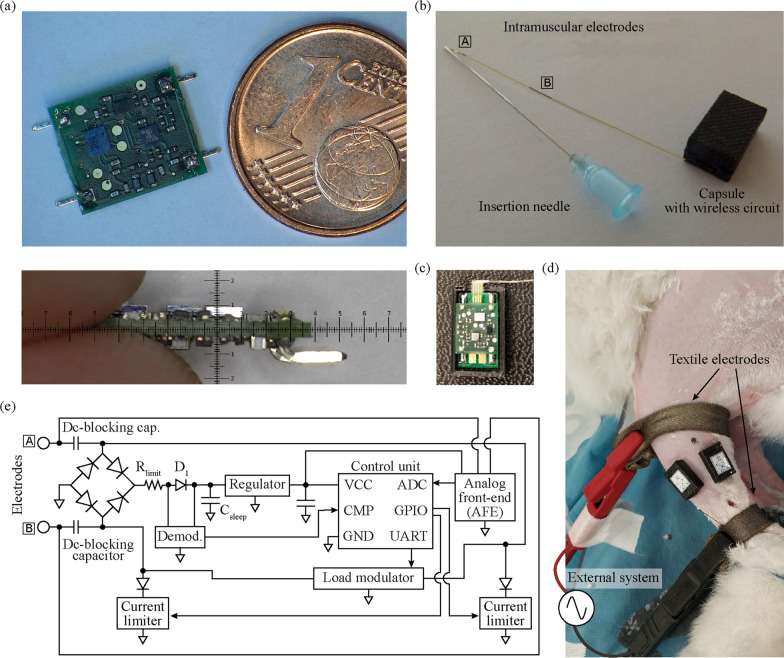
We report the design and evaluation of advanced prototypes based on the above approach. The system consists of an external unit, floating semi-implantable devices for sensing and stimulation, and a bidirectional communications protocol. The devices are intended for their future use in acute human trials to demonstrate the distributed paradigm. The technology is assayed in vitro using an agar phantom, and in vivo in hindlimbs of anesthetized rabbits.
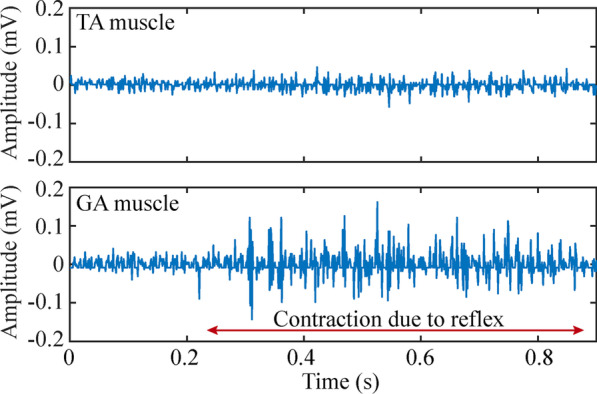
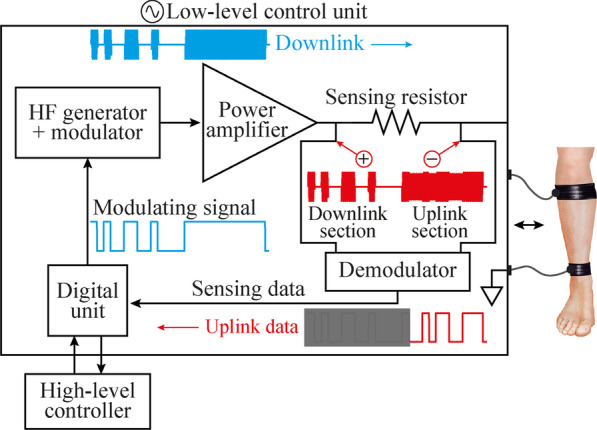
The semi-implantable devices were able to power and bidirectionally communicate with the external unit. Using 13 commands modulated in innocuous 3 MHz HF current bursts, the external unit configured the sensing and stimulation parameters, and controlled their execution. Raw EMG was successfully acquired by the wireless devices at 1 ksps.
The demonstrated approach overcomes key limitations of existing neuroprostheses, paving the way to the development of distributed flexible threadlike sensors and stimulators. To the best of our knowledge, these devices are the first based on WPT by volume conduction that can work as EMG sensors and as electrical stimulators in a network of wireless devices.
由中央电子单元和电极组成的可植入神经假体使全球数以千计的患者受益。然而,它们存在限制,限制了它们的使用。这些限制在运动神经假体中更为不利,主要源于其体积大和需要进行复杂的手术植入程序。或者,可以提出开发由肌肉内无线微传感器和微刺激器组成的分布式网络,这些传感器和微刺激器与外部系统通信,用于分析神经肌肉活动并进行刺激或控制外部设备。这种范式需要开发可以通过外部系统进行无线供电和操作的小型化植入物。为了实现这一目标,我们提出了一种基于无害高频 (HF) 电流脉冲容积传导的无线功率传输 (WPT) 和通信方法。电流通过外部纺织电极施加,并通过两个电极收集到无线设备中,用于为设备供电和进行双向数字通信。由于这些设备不需要用于获取功率的笨重组件,因此它们可能具有灵活的线状形态,便于通过注射进行深层植入。
我们报告了基于上述方法的先进原型的设计和评估。该系统由外部单元、用于传感和刺激的浮置半植入式设备以及双向通信协议组成。这些设备旨在未来用于人体急性试验,以展示分布式范例。该技术在体外使用琼脂模型进行了测试,并在麻醉兔的后肢进行了体内测试。
半植入式设备能够与外部单元进行供电和双向通信。使用调制在无害 3 MHz HF 电流脉冲中的 13 个命令,外部单元配置了传感和刺激参数,并控制了它们的执行。无线设备成功以 1 ksps 的速率采集原始肌电图。
所展示的方法克服了现有神经假体的关键限制,为开发分布式灵活线状传感器和刺激器铺平了道路。据我们所知,这些设备是首批基于容积传导的无线功率传输的设备,可作为肌电图传感器,并在无线设备网络中作为电刺激器使用。