Department of Neurosurgery, The First Affiliated Hospital of Harbin Medical University, Harbin, 150001, China.
Central Research Laboratory, Bashkir State Medical University, Ufa, 450008, Russia.
Curr Pharm Des. 2022;28(23):1863-1869. doi: 10.2174/1381612828666220607105746.
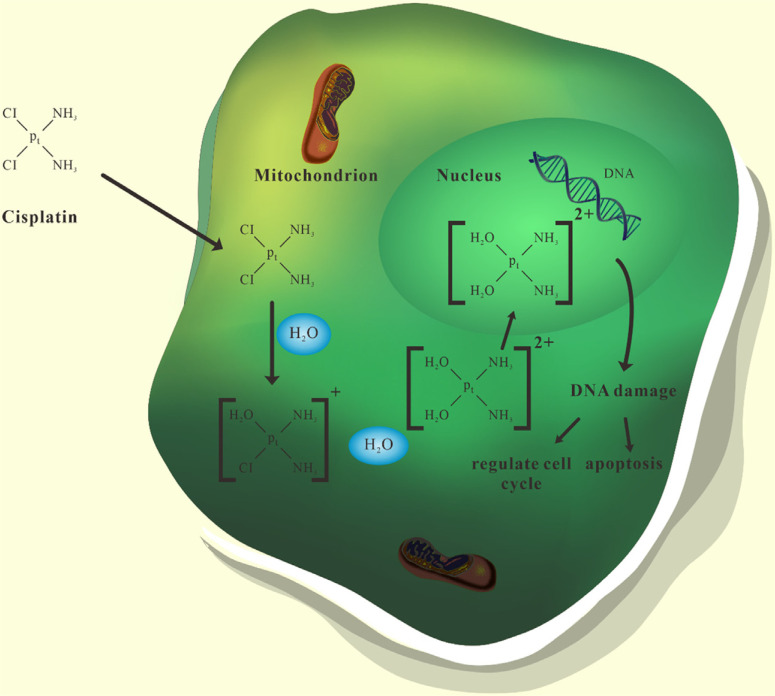
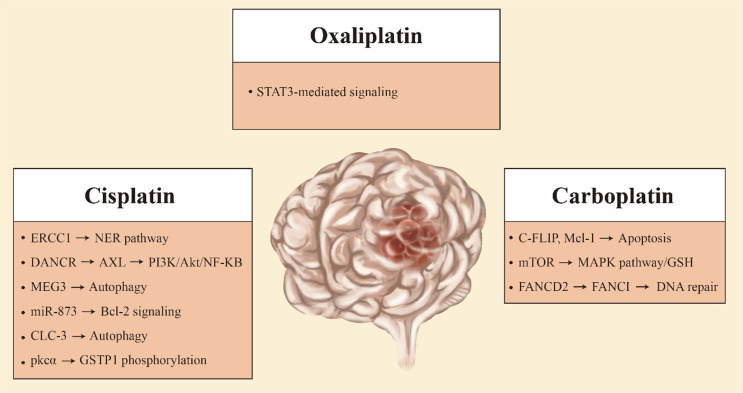
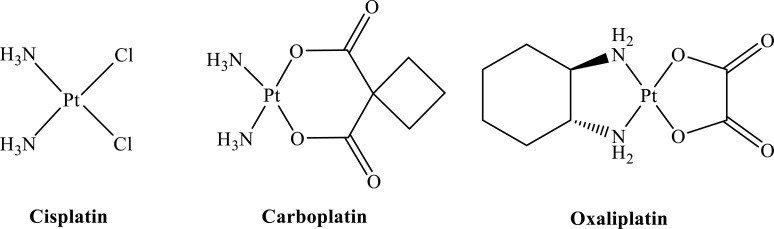
Gliomas are the most common and malignant primary tumors of the central nervous system (CNS). Glioblastomas are the most malignant and aggressive form of primary brain tumors and account for the majority of brain tumor-related deaths. The current standard treatment for gliomas is surgical resection supplemented by postoperative chemotherapy. Platinum drugs are a class of chemotherapeutic drugs that affect the cell cycle, and the main site of action is the DNA of cells, which are common chemotherapeutic drugs in clinical practice. Chemotherapy with platinum drugs such as cisplatin, carboplatin, oxaliplatin, or a combination thereof is used to treat a variety of tumors. However, the results of gliomas chemotherapy are unsatisfactory, and resistance to platinum drugs is one of the important reasons. The resistance of gliomas to platinum drugs is the result of a combination of influencing factors. Decreased intracellular drug concentration, enhanced function of cell processing active products, enhanced repair ability of cellular DNA damage, and blockage of related apoptosis pathways play an important role in it. It is known that the pathogenic properties of glioma cells and the response of glioma towards platinum-based drugs are strongly influenced by non-coding RNAs, particularly, by microRNAs (miRNAs) and long non-coding RNAs (lncRNAs). miRNAs and lncRNAs control drug sensitivity and the development of tumor resistance towards platinum drugs. This mini-review summarizes the resistance mechanisms of gliomas to platinum drugs, as well as molecules and therapies that can improve the sensitivity of gliomas to platinum drugs.
神经胶质瘤是中枢神经系统(CNS)最常见和恶性的原发性肿瘤。胶质母细胞瘤是原发性脑肿瘤中最恶性和侵袭性的形式,占大多数与脑瘤相关的死亡人数。目前,胶质母细胞瘤的标准治疗方法是手术切除,辅以术后化疗。铂类药物是一类影响细胞周期的化疗药物,主要作用部位是细胞的 DNA,是临床实践中常用的化疗药物。顺铂、卡铂、奥沙利铂或其组合等铂类药物的化疗用于治疗多种肿瘤。然而,胶质母细胞瘤的化疗效果并不理想,对铂类药物的耐药性是重要原因之一。胶质母细胞瘤对铂类药物的耐药性是多种影响因素共同作用的结果。细胞内药物浓度降低、细胞处理活性产物的功能增强、细胞 DNA 损伤的修复能力增强以及相关凋亡途径的阻断在其中起着重要作用。已知,miRNA 和 lncRNA 等非编码 RNA 强烈影响胶质瘤细胞的发病特性和对铂类药物的反应。miRNA 和 lncRNA 控制着药物敏感性和肿瘤对铂类药物的耐药性发展。本综述总结了胶质母细胞瘤对铂类药物的耐药机制,以及可以提高胶质母细胞瘤对铂类药物敏感性的分子和治疗方法。