Department of Cell Biology and Genetics, Chongqing Medical University, Chongqing 400016, China.
Department of Oncology, Daping Hospital, Army Medical University, Chongqing 400042, China.
Aging (Albany NY). 2022 Jun 7;14(11):4739-4754. doi: 10.18632/aging.204108.
Immune microenvironment and microRNAs serve as common predictors for diagnosis and prognosis of tumors.
Expression of 122 genes and 126 microRNAs in thymoma was obtained from TCGA database. The proportion of tumor-infiltrating cells was calculated, and IMRS was constructed. TREM2hi score was calculated before functional enrichment analysis on gene sets.
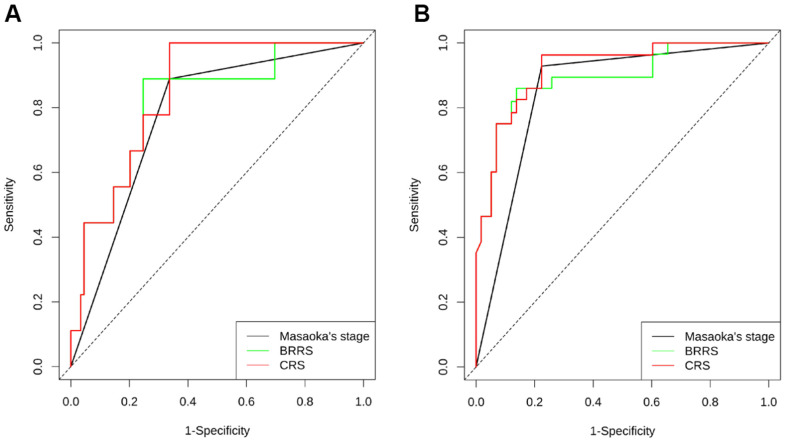
IMRS3, TREM2hi score, and CD8+ T lymphocyte abundance were significantly different among WHO classifications. WHO classification, Masaoka staging, and miR-130b-5p, miR-1307-3p, miR-425-5p, CD8, CD68, and CCL18 expression were prognostic factors for relapse-free survival and overall survival. IMRS3 upregulation polarized macrophages into M2, which rejected CD8+ T and other effector lymphocytes to promote thymoma malignant progression.
BRRS may present a novel immune-related microRNA signature for TET prognosis.
免疫微环境和 microRNAs 可作为肿瘤诊断和预后的共同预测因子。
从 TCGA 数据库中获取胸腺瘤中 122 个基因和 126 个 microRNAs 的表达情况。计算肿瘤浸润细胞的比例,并构建 IMRS。在对基因集进行功能富集分析之前,计算 TREM2hi 评分。
IMRS3、TREM2hi 评分和 CD8+T 淋巴细胞丰度在 WHO 分类中存在显著差异。WHO 分类、Masaoka 分期、miR-130b-5p、miR-1307-3p、miR-425-5p、CD8、CD68 和 CCL18 的表达是无复发生存和总生存的预后因素。IMRS3 的上调使巨噬细胞向 M2 极化,排斥 CD8+T 和其他效应淋巴细胞,促进胸腺瘤恶性进展。
BRRS 可能为 TET 的预后提供一种新的免疫相关 microRNA 特征。