Yokoyama Ryo, de Oliveira Marcos V V, Takeda-Kimura Yuri, Ishihara Hirofumi, Alseekh Saleh, Arrivault Stéphanie, Kukshal Vandna, Jez Joseph M, Stitt Mark, Fernie Alisdair R, Maeda Hiroshi A
Department of Botany, University of Wisconsin-Madison, Madison, WI, USA.
Max-Planck-Institut für Molekulare Pflanzenphysiologie, Potsdam-Golm, Germany.
Sci Adv. 2022 Jun 10;8(23):eabo3416. doi: 10.1126/sciadv.abo3416. Epub 2022 Jun 8.
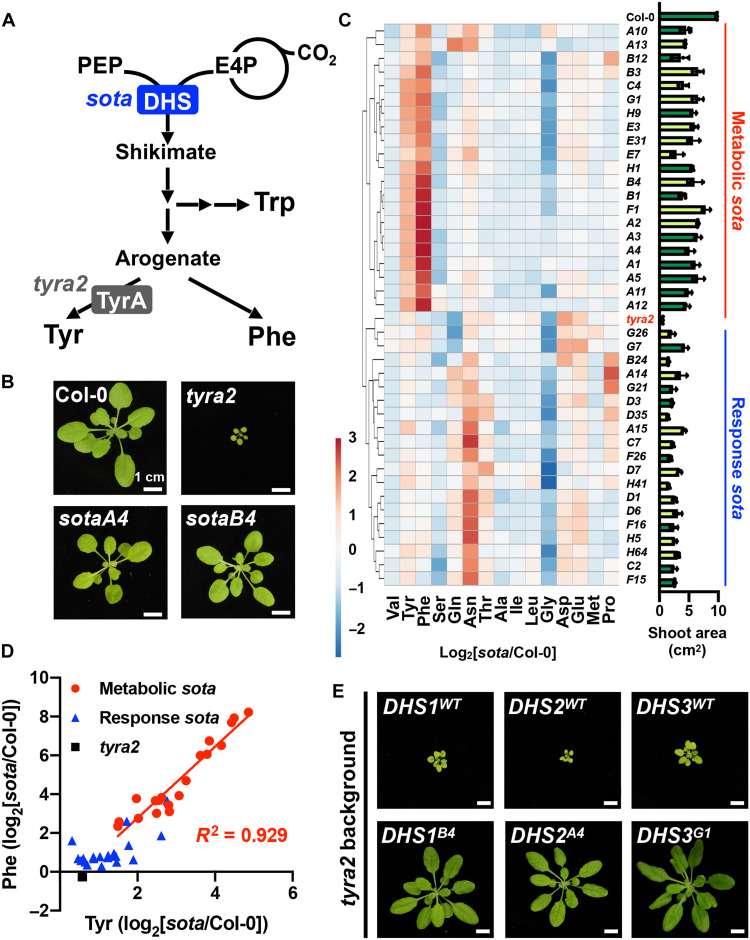
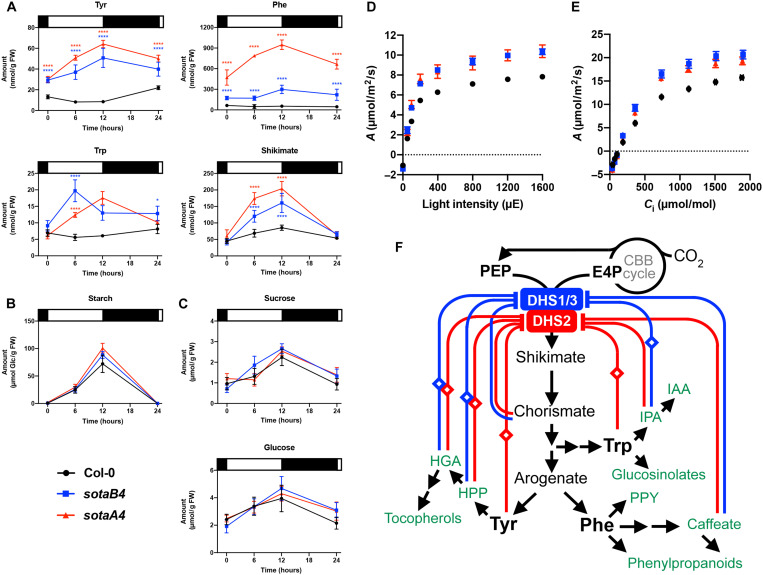
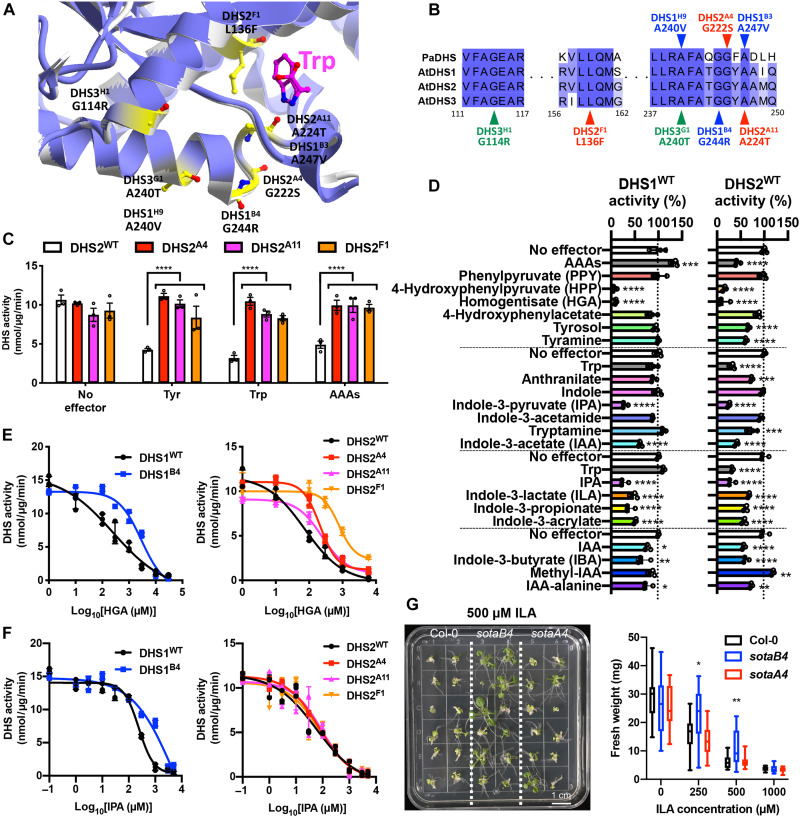
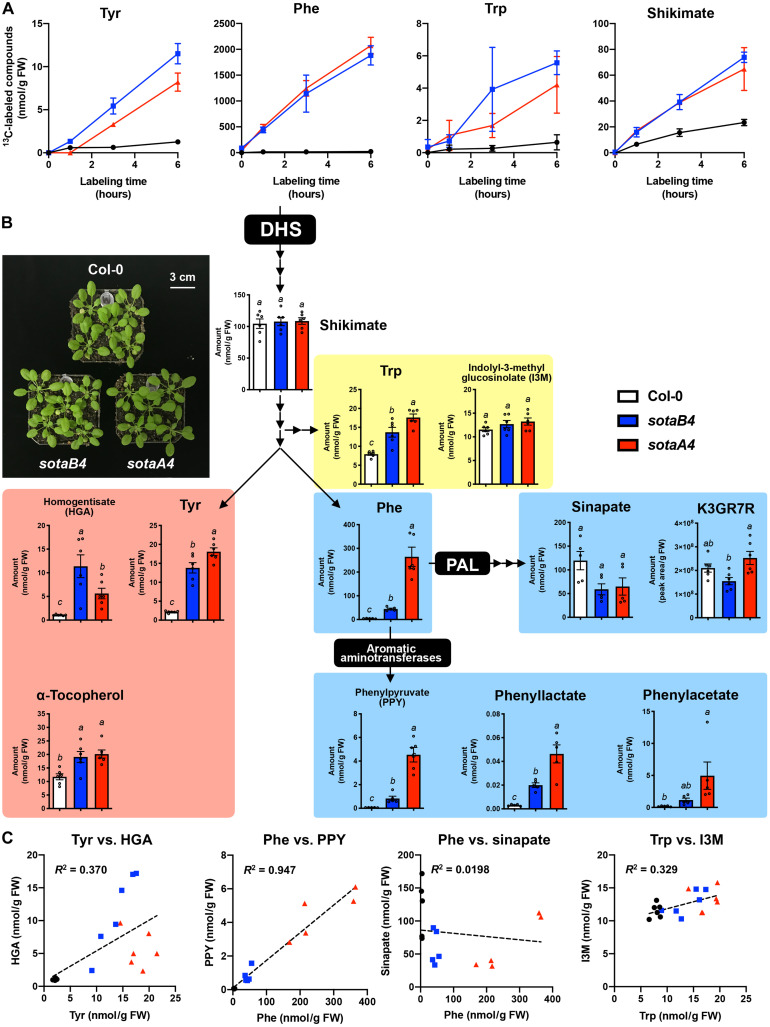
Aromatic compounds having unusual stability provide high-value chemicals and considerable promise for carbon storage. Terrestrial plants can convert atmospheric CO into diverse and abundant aromatic compounds. However, it is unclear how plants control the shikimate pathway that connects the photosynthetic carbon fixation with the biosynthesis of aromatic amino acids, the major precursors of plant aromatic natural products. This study identified () mutations that deregulate the first step in the plant shikimate pathway by alleviating multiple effector-mediated feedback regulation in . The mutant plants showed hyperaccumulation of aromatic amino acids accompanied by up to a 30% increase in net CO assimilation. The identified mutations can be used to enhance plant-based, sustainable conversion of atmospheric CO to high-energy and high-value aromatic compounds.
具有异常稳定性的芳香族化合物可提供高价值化学品,并在碳储存方面具有巨大潜力。陆生植物能够将大气中的二氧化碳转化为多样且丰富的芳香族化合物。然而,目前尚不清楚植物如何控制莽草酸途径,该途径将光合碳固定与芳香族氨基酸(植物芳香族天然产物的主要前体)的生物合成联系起来。本研究鉴定出了()个突变,这些突变通过减轻多种效应物介导的反馈调节来解除对植物莽草酸途径第一步的调控。这些突变体植物表现出芳香族氨基酸的超积累,同时净二氧化碳同化量增加了30%。所鉴定出的突变可用于增强基于植物的将大气中的二氧化碳可持续转化为高能量和高价值芳香族化合物的能力。