Systems Medicine, Deutsches Zentrum für Neurodegenerative Erkrankungen (DZNE), Bonn, Germany; Institute of Computational Biology, Helmholtz Center Munich, 85764 Neuherberg, Germany; Department of Immunology, Faculty of Medicine, Technion - Israel Institute of Technology, Haifa, Israel.
Department of Intensive Care Medicine, Radboud University Medical Center, Nijmegen, the Netherlands; Radboud Center for Infectious Diseases, Radboud University Medical Center, Nijmegen, the Netherlands.
Cell Rep Med. 2022 Jun 21;3(6):100652. doi: 10.1016/j.xcrm.2022.100652. Epub 2022 May 17.
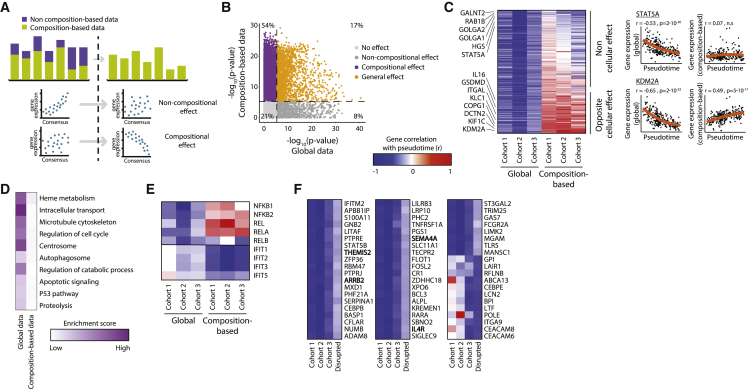
Disease recovery dynamics are often difficult to assess, as patients display heterogeneous recovery courses. To model recovery dynamics, exemplified by severe COVID-19, we apply a computational scheme on longitudinally sampled blood transcriptomes, generating recovery states, which we then link to cellular and molecular mechanisms, presenting a framework for studying the kinetics of recovery compared with non-recovery over time and long-term effects of the disease. Specifically, a decrease in mature neutrophils is the strongest cellular effect during recovery, with direct implications on disease outcome. Furthermore, we present strong indications for global regulatory changes in gene programs, decoupled from cell compositional changes, including an early rise in T cell activation and differentiation, resulting in immune rebalancing between interferon and NF-κB activity and restoration of cell homeostasis. Overall, we present a clinically relevant computational framework for modeling disease recovery, paving the way for future studies of the recovery dynamics in other diseases and tissues.
疾病恢复动态通常难以评估,因为患者表现出异质的恢复过程。为了对恢复动态进行建模,我们以严重的 COVID-19 为例,应用一种在纵向采样的血液转录组上的计算方案,生成恢复状态,然后将其与细胞和分子机制联系起来,提出了一种框架,用于研究与非恢复相比,恢复的动力学以及疾病的长期影响。具体来说,成熟中性粒细胞的减少是恢复过程中最强的细胞效应,对疾病结果有直接影响。此外,我们还提出了强有力的证据表明,基因程序的全局调控变化与细胞组成变化解耦,包括 T 细胞激活和分化的早期增加,导致干扰素和 NF-κB 活性之间的免疫再平衡,并恢复细胞内稳态。总的来说,我们提出了一个具有临床相关性的计算框架,用于模拟疾病的恢复,为未来在其他疾病和组织中研究恢复动态铺平了道路。