Department of Respiratory and Critical Care Medicine, Tongji Hospital, School of Medicine, Tongji University, Shanghai, 200065, China.
Key Laboratory of Spine and Spinal Cord Injury Repair and Regeneration (Tongji University), Ministry of Education, Shanghai, 200065, China.
Crit Care. 2021 Jul 3;25(1):234. doi: 10.1186/s13054-021-03661-y.
The coronavirus disease 2019 (COVID-19) has induced a worldwide epidemiological event with a high infectivity and mortality. However, the predicting biomarkers and their potential mechanism in the progression of COVID-19 are not well known.
The aim of this study is to identify the candidate predictors of COVID-19 and investigate their underlying mechanism.
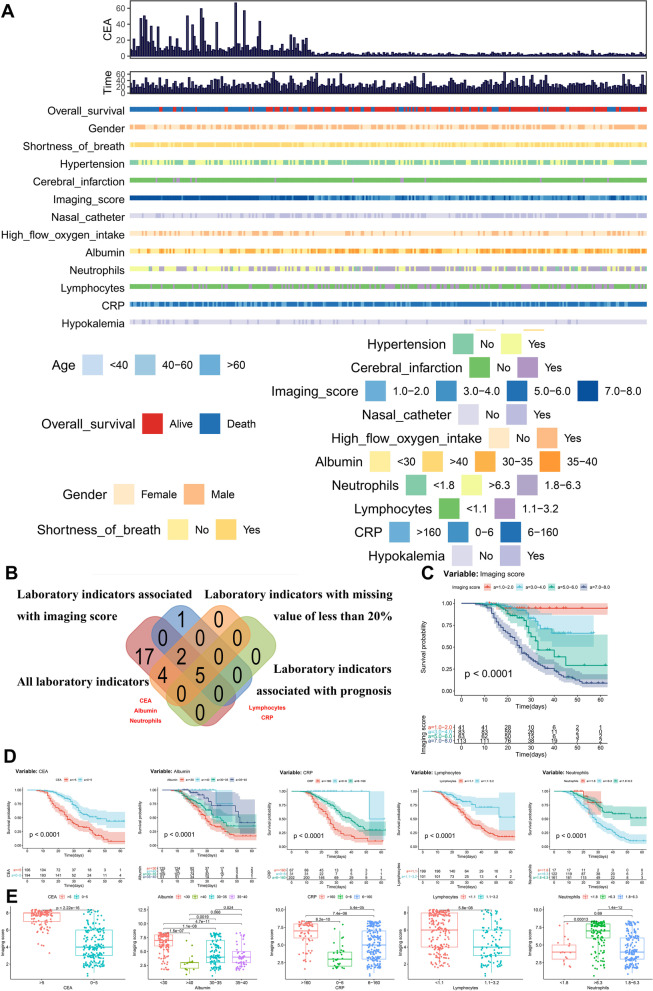
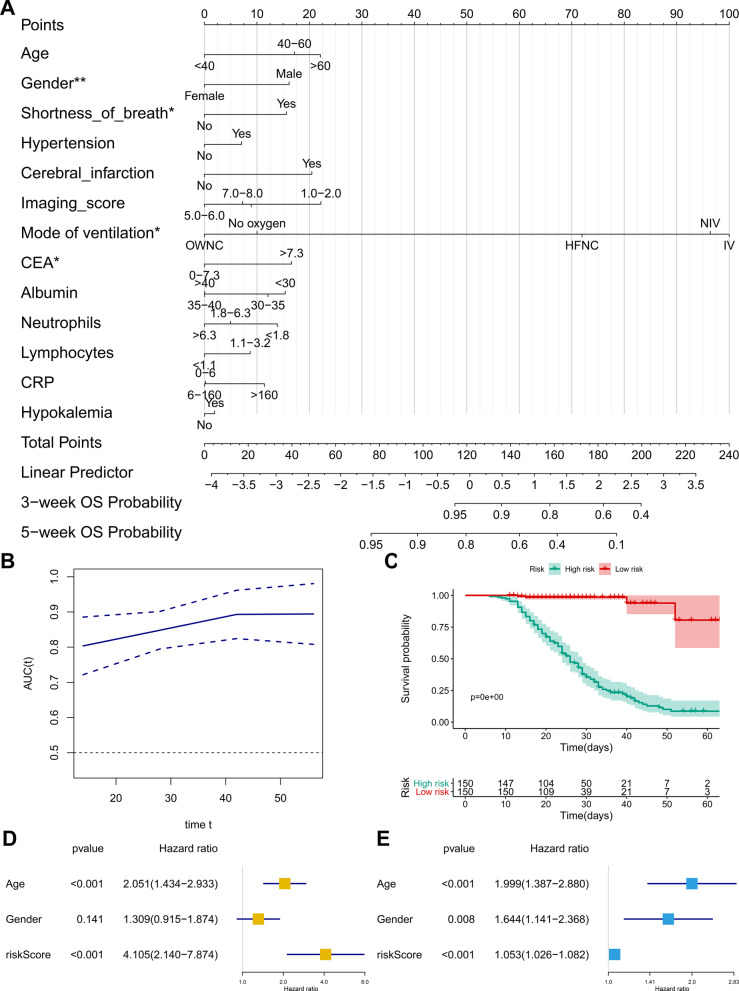
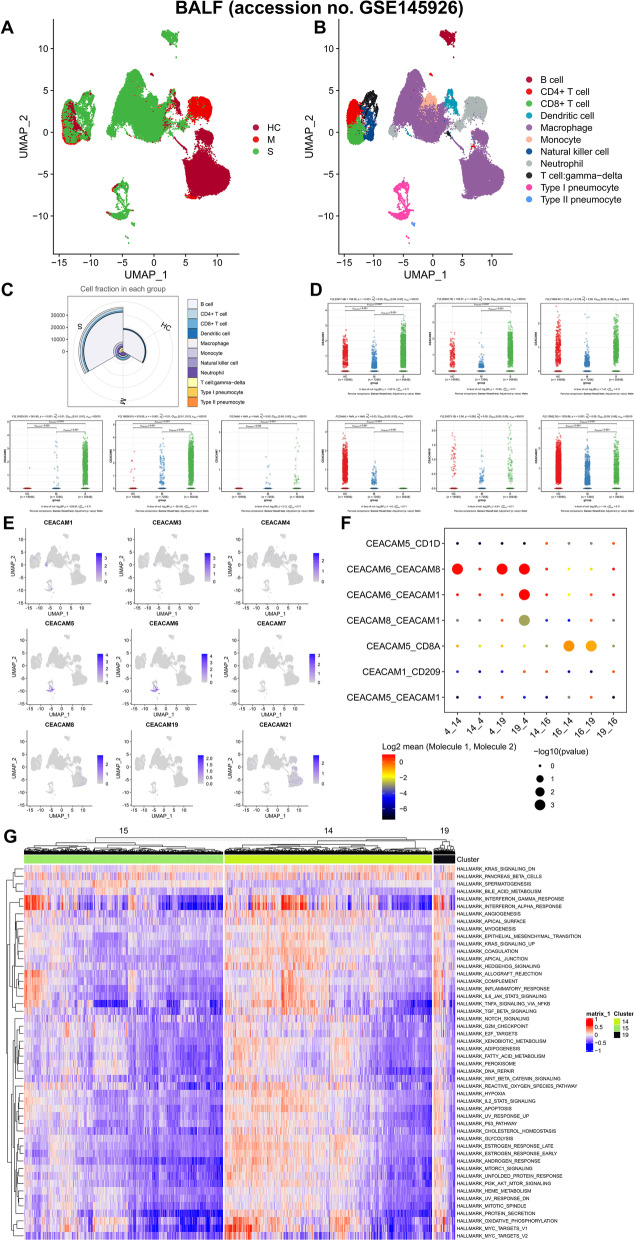
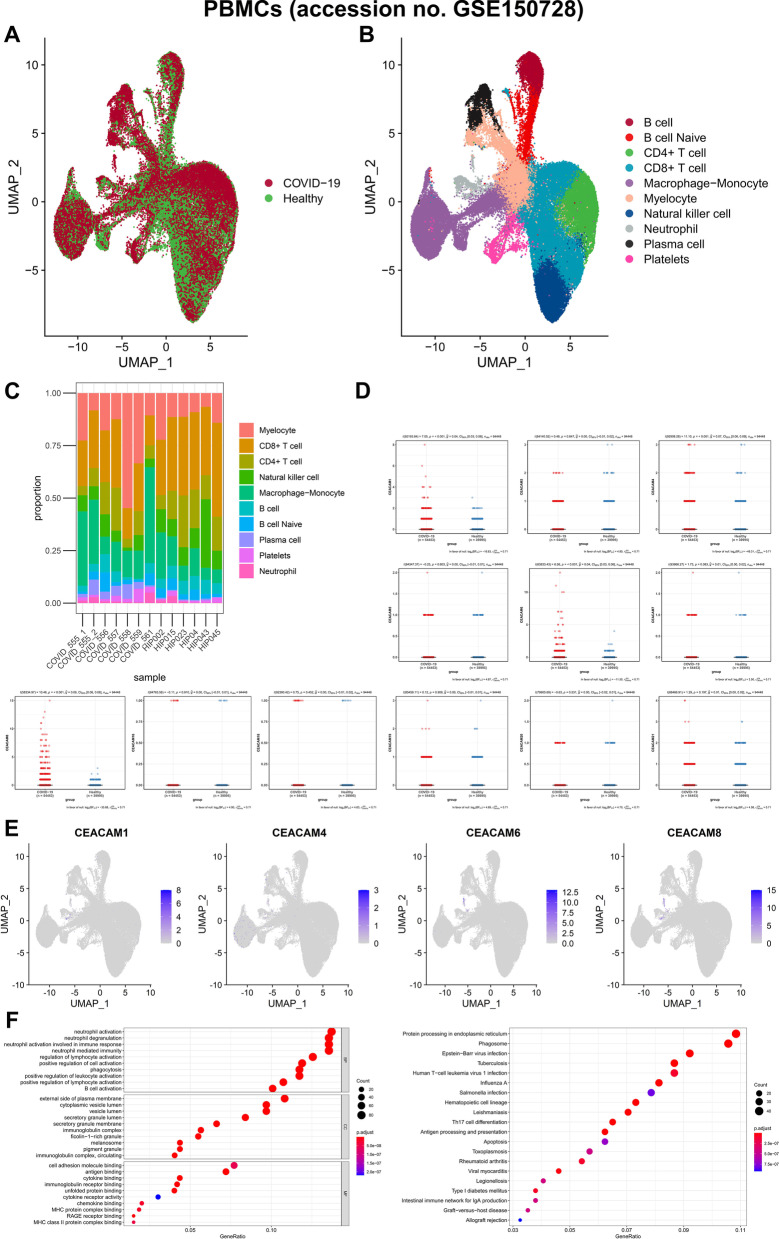
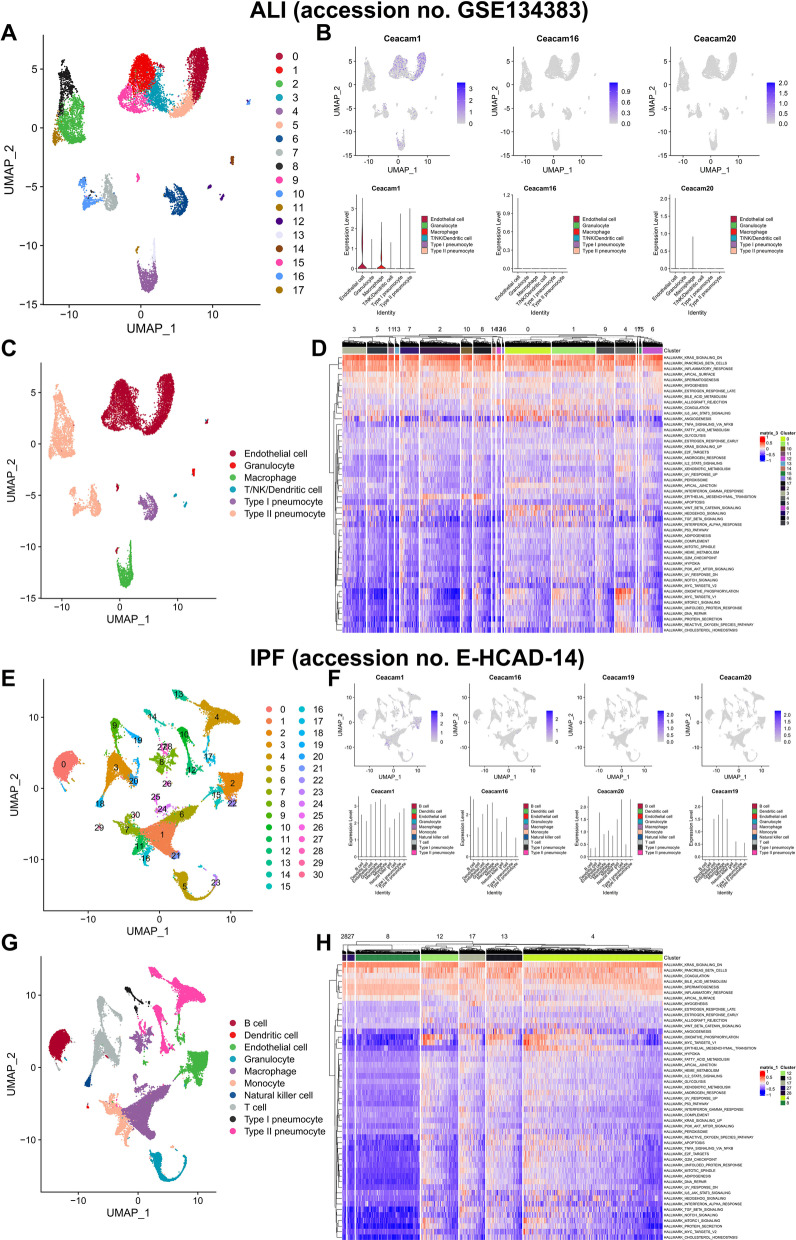
The retrospective study was conducted to identify the potential laboratory indicators with prognostic values of COVID-19 disease. Then, the prognostic nomogram was constructed to predict the overall survival of COVID-19 patients. Additionally, the scRNA-seq data of BALF and PBMCs from COVID-19 patients were downloaded to investigate the underlying mechanism of the most important prognostic indicators in lungs and peripherals, respectively.
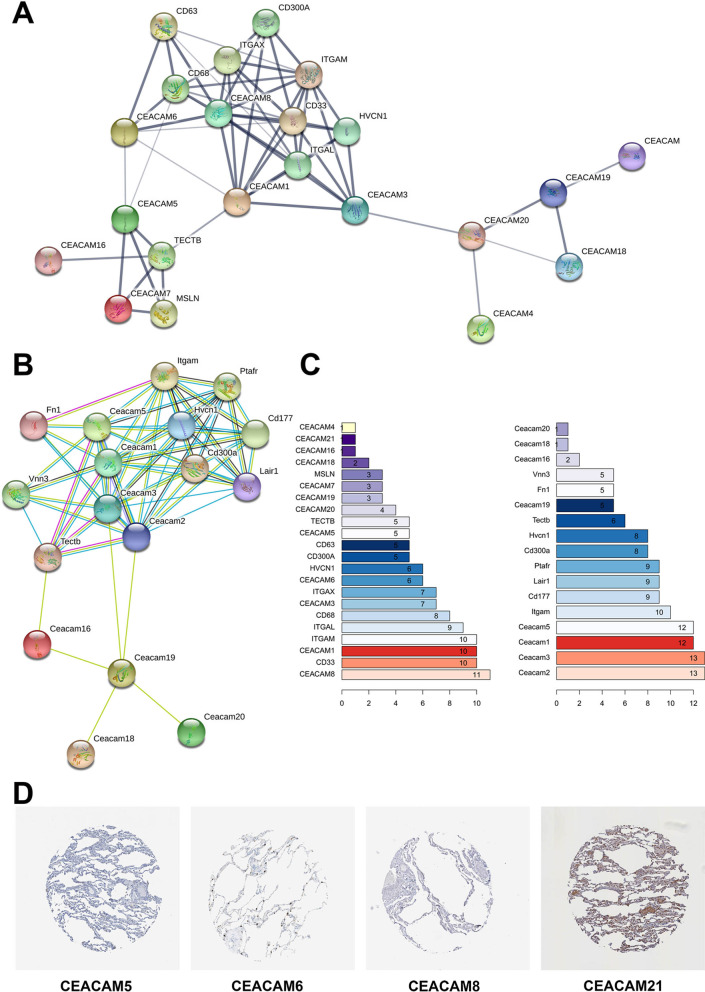
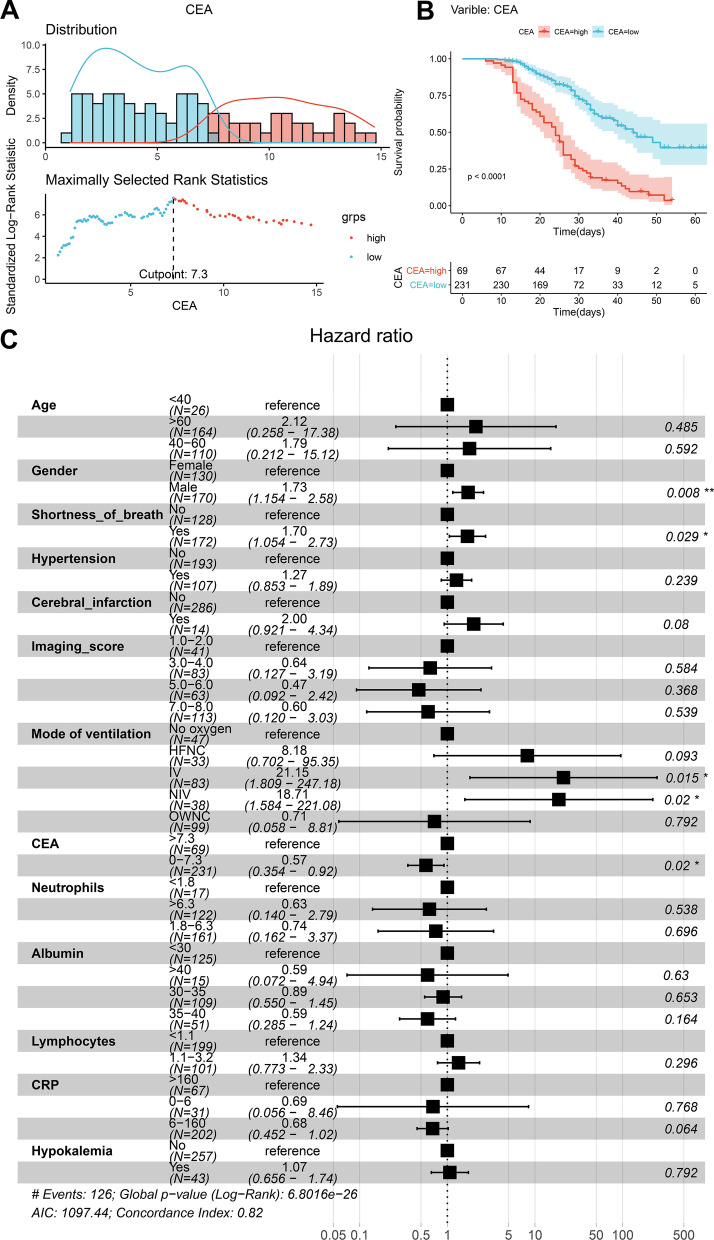
In total, 304 hospitalized adult COVID-19 patients in Wuhan Jinyintan Hospital were included in the retrospective study. CEA was the only laboratory indicator with significant difference in the univariate (P < 0.001) and multivariate analysis (P = 0.020). The scRNA-seq data of BALF and PBMCs from COVID-19 patients were downloaded to investigate the underlying mechanism of CEA in lungs and peripherals, respectively. The results revealed the potential roles of CEA were significantly distributed in type II pneumocytes of BALF and developing neutrophils of PBMCs, participating in the progression of COVID-19 by regulating the cell-cell communication.
This study identifies the prognostic roles of CEA in COVID-19 patients and implies the potential roles of CEACAM8-CEACAM6 in the progression of COVID-19 by regulating the cell-cell communication of developing neutrophils and type II pneumocyte.
2019 年冠状病毒病(COVID-19)引发了一场具有高传染性和高死亡率的全球性流行病学事件。然而,COVID-19 进展的预测生物标志物及其潜在机制尚不清楚。
本研究旨在确定 COVID-19 的候选预测标志物,并探讨其潜在机制。
进行回顾性研究以确定具有 COVID-19 疾病预后价值的潜在实验室指标。然后,构建预后列线图以预测 COVID-19 患者的总生存率。此外,还下载了 COVID-19 患者 BALF 和 PBMCs 的 scRNA-seq 数据,分别研究肺部和外周最重要预后指标的潜在机制。
共纳入武汉金银潭医院 304 例住院成年 COVID-19 患者进行回顾性研究。CEA 是唯一在单因素(P<0.001)和多因素分析(P=0.020)中具有显著差异的实验室指标。下载 COVID-19 患者 BALF 和 PBMCs 的 scRNA-seq 数据,分别研究 CEA 在肺部和外周的潜在机制。结果表明,CEA 的潜在作用在 BALF 的 II 型肺泡细胞和 PBMCs 的发育中性粒细胞中明显分布,通过调节细胞间通讯参与 COVID-19 的进展。
本研究确定了 CEA 在 COVID-19 患者中的预后作用,并暗示了 CEACAM8-CEACAM6 通过调节发育中性粒细胞和 II 型肺泡细胞的细胞间通讯,在 COVID-19 的进展中发挥潜在作用。