Division of Health Sciences, Warwick Medical School, University of Warwick, Coventry, UK
Division of Health Sciences, Warwick Medical School, University of Warwick, Coventry, UK.
BMJ Open. 2022 Jun 8;12(6):e057204. doi: 10.1136/bmjopen-2021-057204.
To systematically review interventions that include an element of menstrual education delivered to young adolescent girls.
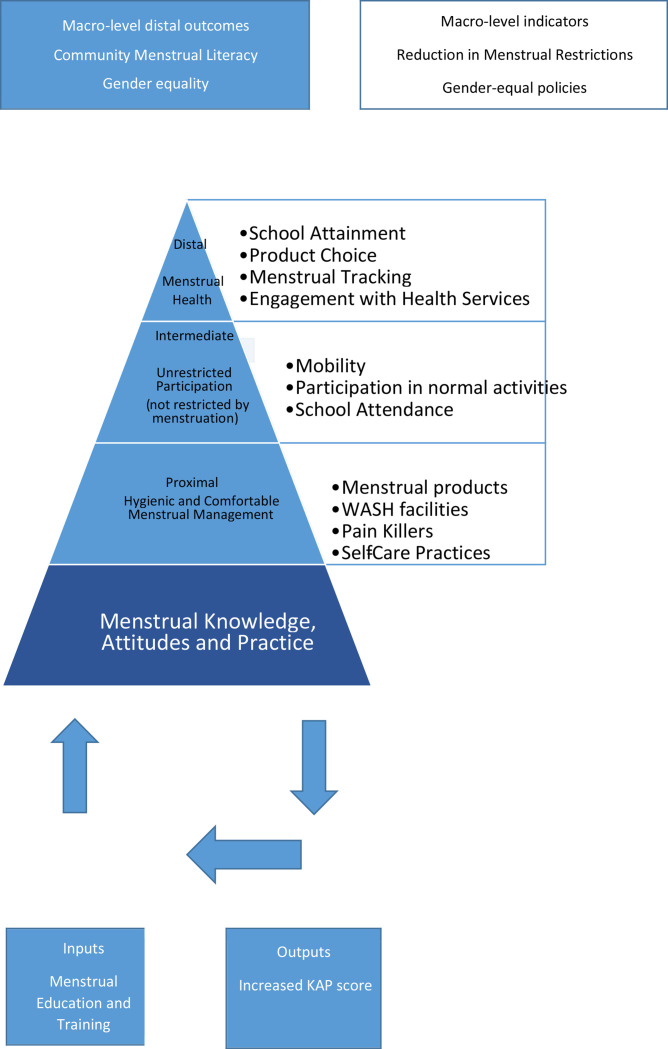
This was a systematic review and meta-analysis. Selected articles were quality assessed using the Mixed Methods Appraisal Tool quality appraisal checklist. A meta-analysis was conducted on a subset of articles, and the effect size of the intervention was calculated using Cohen's d. A logic model was constructed to frame the effect of menstrual education interventions on menstrual health.
Papers reporting on interventions in high-income and low-income and middle-income countries were sought.
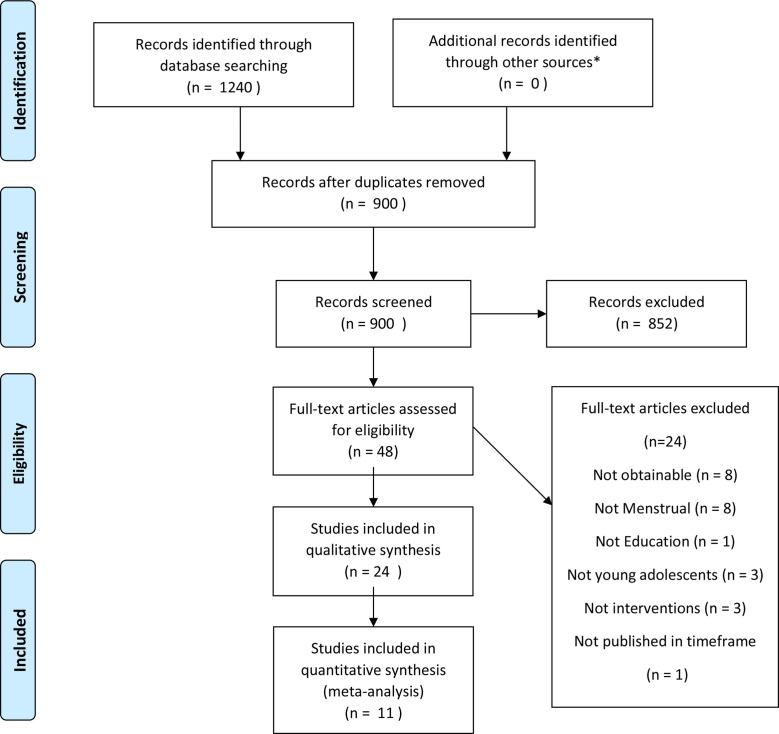
Seven electronic databases were searched for English-language entries that were published between January 2014 and May 2020.
The interventions were aimed at younger adolescent girls aged 10-14 years old.
The interventions were designed to improve the menstrual health of the recipients, by addressing one or more elements of menstrual knowledge, attitude or practices (KAP).
Interventions that had not been evaluated were excluded.
The most common type of output was a difference in knowledge or skill score ascertained from a pre and post test. Some studies measured additional outcomes, such as attitude or confidence.
Twenty-four eligible studies were identified. The number of participants varied from 1 to 2564. All studies reported improvements in menstrual KAP. The meta-analysis indicates that larger effect sizes were attained by those that encouraged discussion than those that distributed pamphlets.
Education interventions are effective in increasing the menstrual knowledge of young adolescent girls and skills training improves competency to manage menstruation more hygienically and comfortably. Interactive interventions are more motivating than didactic or written. Sharing concerns gives girls confidence and helps them to gain agency on the path to menstrual health.
For this review, a protocol was not prepared or registered.
系统回顾包含对青春期少女进行经期教育内容的干预措施。
这是一项系统综述和荟萃分析。使用混合方法评估工具质量评估检查表对选定的文章进行质量评估。对一部分文章进行荟萃分析,并使用 Cohen's d 计算干预的效果大小。构建一个逻辑模型来阐述经期教育干预对经期健康的影响。
检索了报告高收入和低收入及中等收入国家干预措施的英文文献。
在 2014 年 1 月至 2020 年 5 月期间,检索了七个电子数据库,以获取英文文献。
干预对象为年龄在 10-14 岁的青春期少女。
这些干预措施旨在通过解决经期知识、态度或实践(KAP)的一个或多个方面,来改善接受者的经期健康。
未经过评估的干预措施被排除在外。
最常见的输出类型是通过预测试和后测试确定的知识或技能得分的差异。一些研究还测量了其他结果,如态度或信心。
确定了 24 项符合条件的研究。参与者人数从 1 人到 2564 人不等。所有研究都报告了经期 KAP 的提高。荟萃分析表明,鼓励讨论的干预措施比分发小册子的干预措施效果更大。
教育干预措施在提高青春期少女的经期知识和技能培训方面是有效的,可以更卫生、更舒适地管理经期。互动式干预比说教式或书面式干预更有激励性。分享关注可以给女孩信心,并帮助她们在获得经期健康的道路上获得自主权。
对于本次综述,未制定或注册方案。