Department of Surgical Oncology, Roswell Park Comprehensive Cancer Center, Elm & Carlton Streets, Buffalo, NY, 14263, USA.
Department of Molecular & Cellular Biology, Roswell Park Comprehensive Cancer Center, Elm & Carlton Streets, Buffalo, NY, 14263, USA.
Cancer Gene Ther. 2022 Nov;29(11):1662-1675. doi: 10.1038/s41417-022-00485-y. Epub 2022 Jun 8.
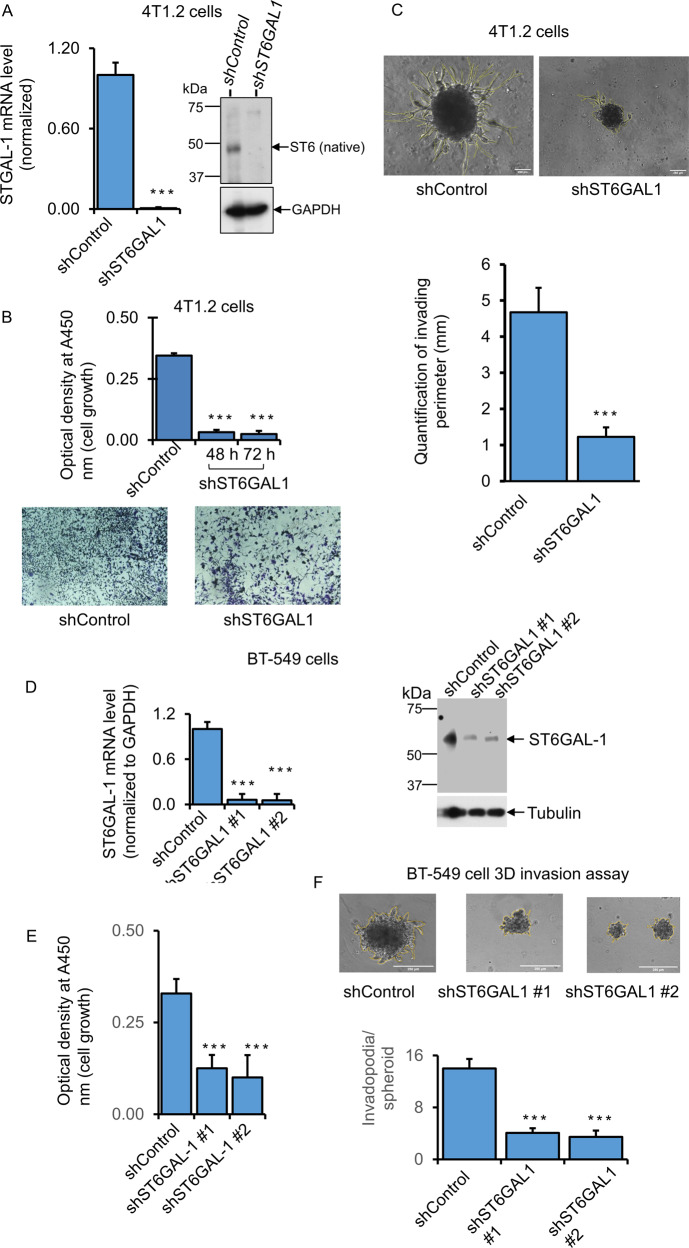
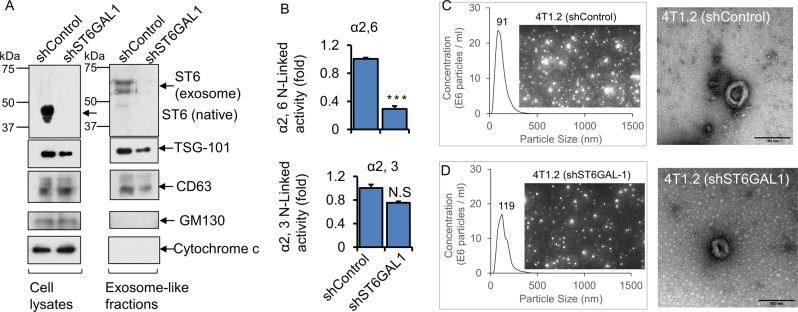
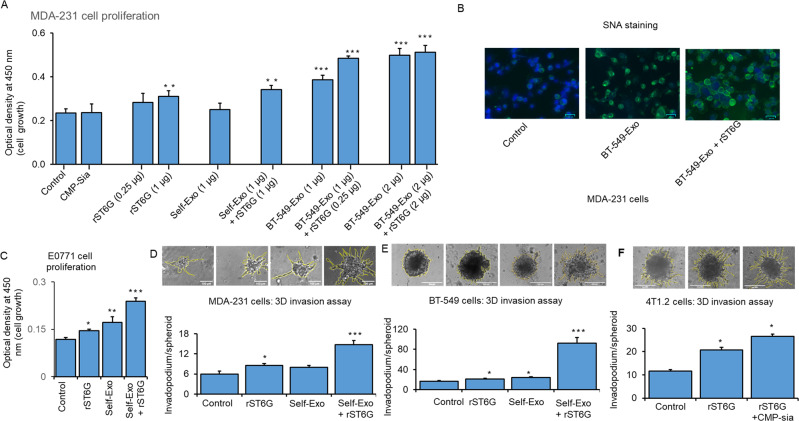
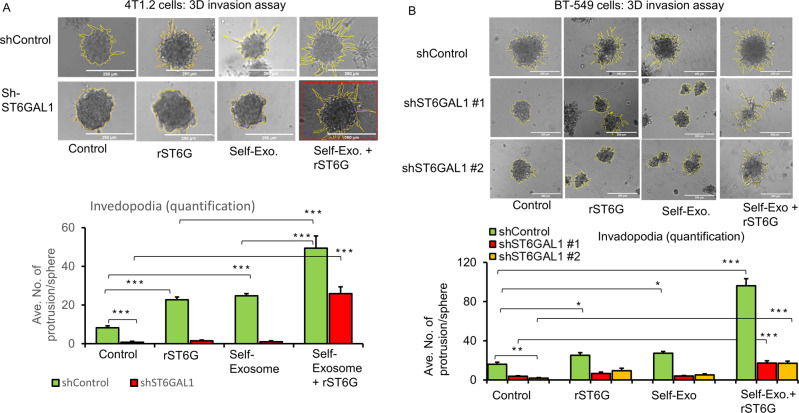
The sialyltransferase ST6GAL1 that adds α2-6 linked sialic acids to N-glycans of cell surface and secreted glycoproteins is prominently associated with many human cancers. Tumor-native ST6GAL1 promotes tumor cell behaviors such as invasion and resistance to cell stress and chemo- and radio-treatments. Canonically, ST6GAL1 resides in the intracellular secretory apparatus and glycosylates nascent glycoproteins in biosynthetic transit. However, ST6GAL1 is also released into the extracellular milieu and extracellularly remodels cell surface and secreted glycans. The impact of this non-canonical extrinsic mechanism of ST6GAL1 on tumor cell pathobiology is not known. We hypothesize that ST6GAL1 action is the combined effect of natively expressed sialyltransferase acting cell-autonomously within the ER-Golgi complex and sialyltransferase from extracellular origins acting extrinsically to remodel cell-surface glycans. We found that shRNA knockdown of intrinsic ST6GAL1 expression resulted in decreased ST6GAL1 cargo in the exosome-like vesicles as well as decreased breast tumor cell growth and invasive behavior in 3D in vitro cultures. Extracellular ST6GAL1, present in cancer exosomes or the freely soluble recombinant sialyltransferase, compensates for insufficient intrinsic ST6GAL1 by boosting cancer cell proliferation and increasing invasiveness. Moreover, we present evidence supporting the existence novel but yet uncharacterized cofactors in the exosome-like particles that potently amplify extrinsic ST6GAL1 action, highlighting a previously unknown mechanism linking this enzyme and cancer pathobiology. Our data indicate that extracellular ST6GAL1 from remote sources can compensate for cellular ST6GAL1-mediated aggressive tumor cell proliferation and invasive behavior and has great clinical potential for extracellular ST6GAL1 as these molecules are in the extracellular space should be easily accessible targets.
唾液酸化转移酶 ST6GAL1 在细胞表面和分泌糖蛋白的 N-糖链上添加α2-6 连接的唾液酸,与许多人类癌症密切相关。肿瘤源性 ST6GAL1 促进肿瘤细胞的行为,如侵袭和抵抗细胞应激以及化疗和放疗。通常情况下,ST6GAL1 位于细胞内分泌装置中,并在生物合成转运过程中糖基化新生糖蛋白。然而,ST6GAL1 也被释放到细胞外环境中,并对细胞表面和分泌糖链进行细胞外重塑。这种非典型的 ST6GAL1 外在机制对肿瘤细胞病理生物学的影响尚不清楚。我们假设 ST6GAL1 的作用是内质网-高尔基体复合物中自主表达的天然唾液酸转移酶和来自细胞外来源的唾液酸转移酶共同作用的结果,后者对细胞表面糖链进行外在重塑。我们发现,内在 ST6GAL1 表达的 shRNA 敲低导致外泌体样囊泡中 ST6GAL1 货物减少,以及体外 3D 培养中乳腺癌细胞生长和侵袭行为减少。存在于癌症外泌体或游离可溶性重组唾液酸转移酶中的细胞外 ST6GAL1 通过促进癌细胞增殖和增加侵袭性来补偿内在 ST6GAL1 的不足。此外,我们提供了支持外泌体样颗粒中存在新型但尚未表征的辅助因子的证据,这些因子强烈放大了外在 ST6GAL1 的作用,突出了一种以前未知的将这种酶与癌症病理生物学联系起来的机制。我们的数据表明,来自远程来源的细胞外 ST6GAL1 可以补偿细胞内 ST6GAL1 介导的侵袭性肿瘤细胞增殖和侵袭行为,并且由于这些分子位于细胞外空间,因此细胞外 ST6GAL1 具有很大的临床潜力,应该很容易成为靶点。