Department of Diabetes, School of Cardiovascular and Metabolic Medicine and Sciences, Faculty of Life Sciences & Medicine, King's College London, London, UK.
Comparative Medicine and Pathology, Vascular Biology and Therapeutics Program (VBT) Program in Integrative Cell Signaling and Neurobiology of Metabolism (ICSNM), Yale University School of Medicine, New Haven, Connecticut, USA.
Diabetes Obes Metab. 2022 Oct;24(10):2038-2050. doi: 10.1111/dom.14791. Epub 2022 Jul 11.
This study investigated whether therapeutically relevant concentrations of fluoxetine, which have been shown to reduce plasma glucose and glycated haemoglobin independent of changes in food intake and body weight, regulate beta-cell function and improve glucose homeostasis.
Cell viability, insulin secretion, beta-cell proliferation and apoptosis were assessed after exposure of MIN6 beta cells or isolated mouse and human islets to 0.1, 1 or 10 μmol/L fluoxetine. The effect of fluoxetine (10 mg/kg body weight) administration on glucose homeostasis and islet function was also examined in ob/ob mice.
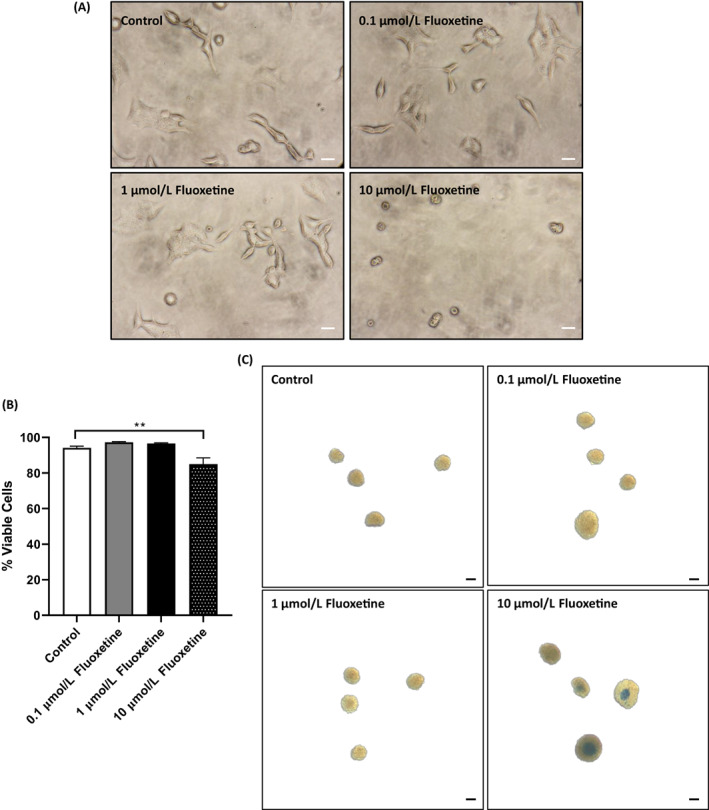
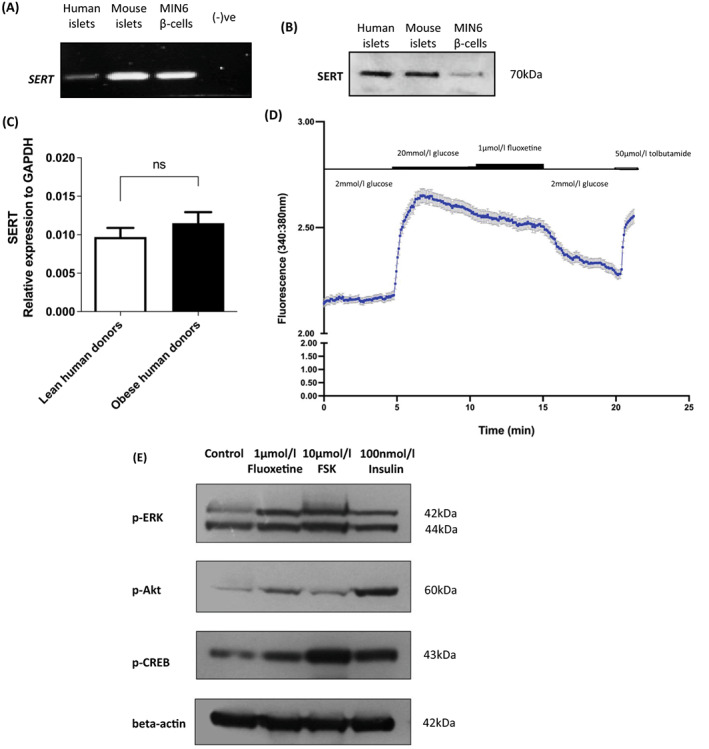
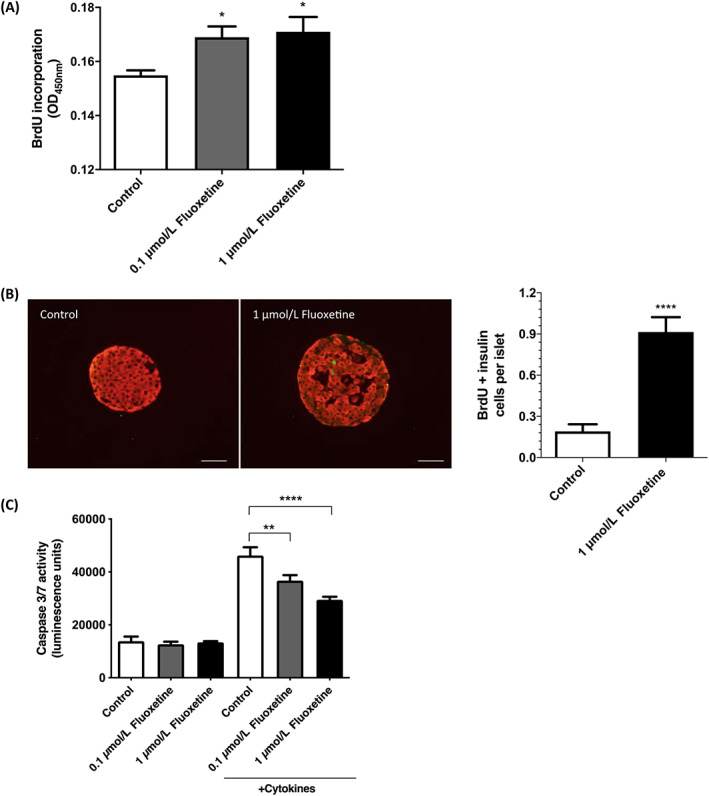
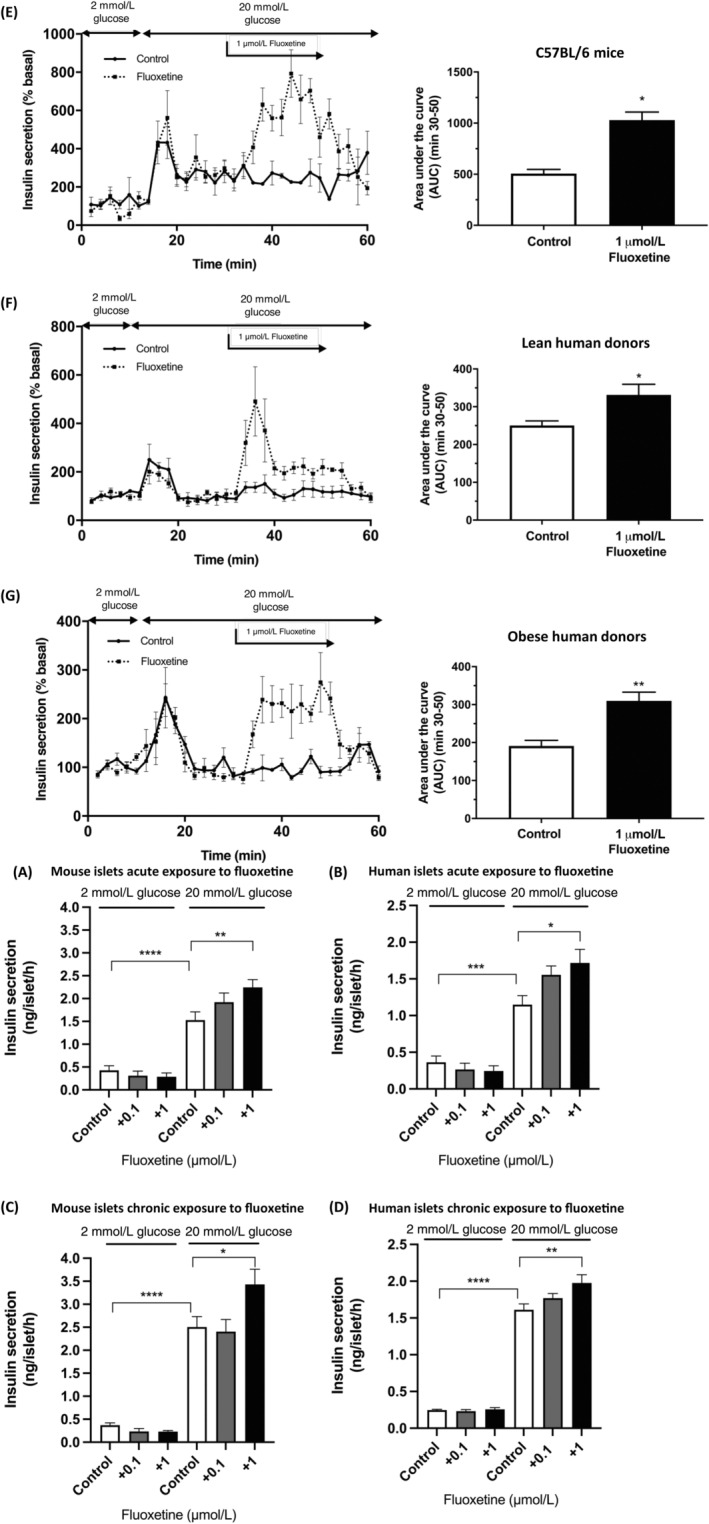
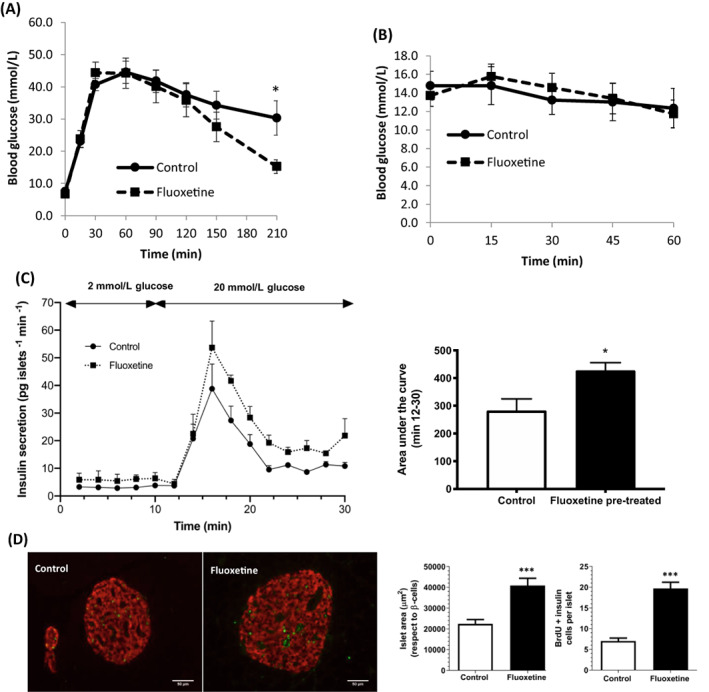
Exposure of MIN6 cells and mouse islets to 0.1 and 1 μmol/L fluoxetine for 72 hours did not compromise cell viability but 10 μmol/L fluoxetine significantly increased Trypan blue uptake. The dose of 1 μmol/L fluoxetine significantly increased beta-cell proliferation and protected islet cells from cytokine-induced apoptosis. In addition, 1 μmol/L fluoxetine induced rapid and reversible potentiation of glucose-stimulated insulin secretion from islets isolated from mice, and from lean and obese human donors. Finally, intraperitoneal administration of fluoxetine to ob/ob mice over 14 days improved glucose tolerance and resulted in significant increases in beta-cell proliferation and enhanced insulin secretory capacity.
These data are consistent with a role for fluoxetine in regulating glucose homeostasis through direct effects on beta cells. Fluoxetine thus demonstrates promise as a preferential antidepressant for patients with concomitant occurrence of depression and diabetes.
本研究旨在探讨氟西汀的治疗相关浓度是否能调节β细胞功能和改善葡萄糖稳态,因为此前的研究表明,氟西汀可降低血糖和糖化血红蛋白,且不依赖于饮食和体重的变化。
将 MIN6 胰岛β细胞或分离的小鼠和人胰岛暴露于 0.1、1 或 10μmol/L 氟西汀中,评估细胞活力、胰岛素分泌、β细胞增殖和细胞凋亡情况。还在 ob/ob 小鼠中研究了氟西汀(10mg/kg 体重)给药对葡萄糖稳态和胰岛功能的影响。
MIN6 细胞和小鼠胰岛暴露于 0.1 和 1μmol/L 氟西汀 72 小时不会损害细胞活力,但 10μmol/L 氟西汀会显著增加台盼蓝摄取。1μmol/L 的氟西汀剂量可显著增加β细胞增殖,并保护胰岛细胞免受细胞因子诱导的凋亡。此外,1μmol/L 氟西汀可迅速且可逆地增强从小鼠、瘦人和肥胖的人类供体中分离的胰岛对葡萄糖刺激的胰岛素分泌。最后,氟西汀腹腔注射治疗 ob/ob 小鼠 14 天可改善葡萄糖耐量,并导致β细胞增殖增加和胰岛素分泌能力增强。
这些数据与氟西汀通过直接作用于β细胞在调节葡萄糖稳态中的作用一致。因此,氟西汀有望成为同时患有抑郁症和糖尿病的患者的首选抗抑郁药。