Zhang Rentao, Zhou Zhongkun, Ma Yunhao, Du Kangjia, Sun Mengze, Zhang Hao, Tu Hongyuan, Jiang Xinrong, Lu Juan, Tu Lixue, Niu Yuqing, Chen Peng
School of Pharmacy, Lanzhou University, Lanzhou, China.
Front Bioeng Biotechnol. 2022 May 23;10:898240. doi: 10.3389/fbioe.2022.898240. eCollection 2022.
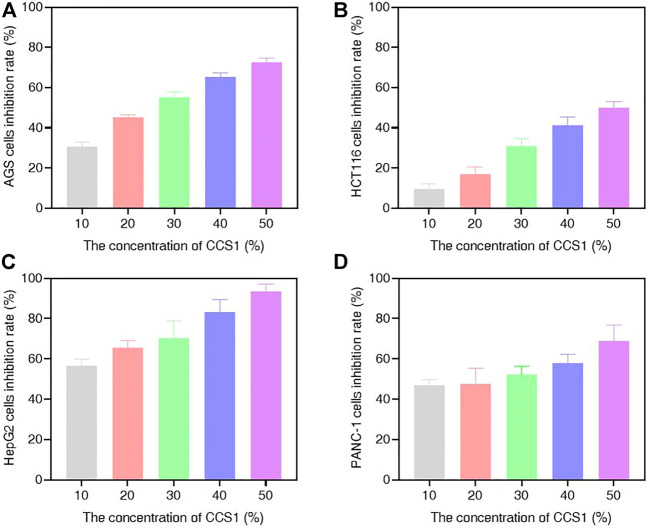
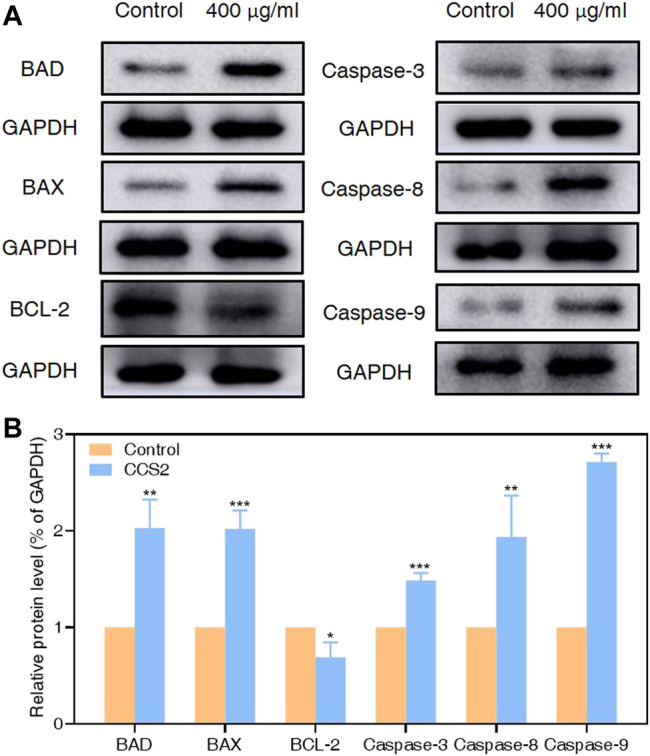
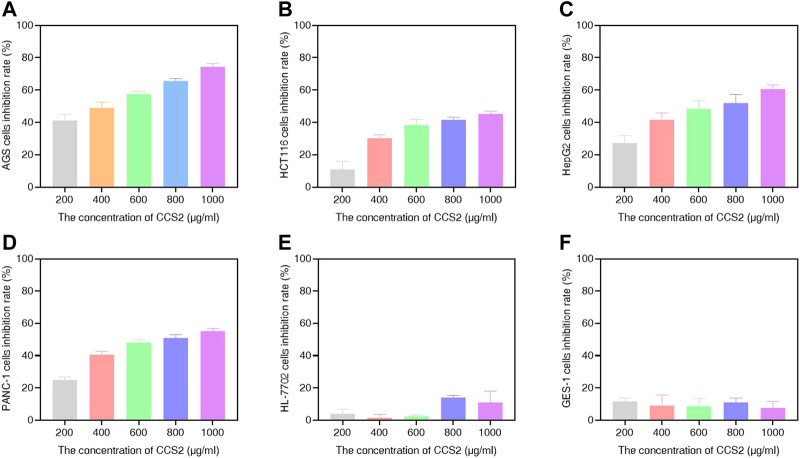
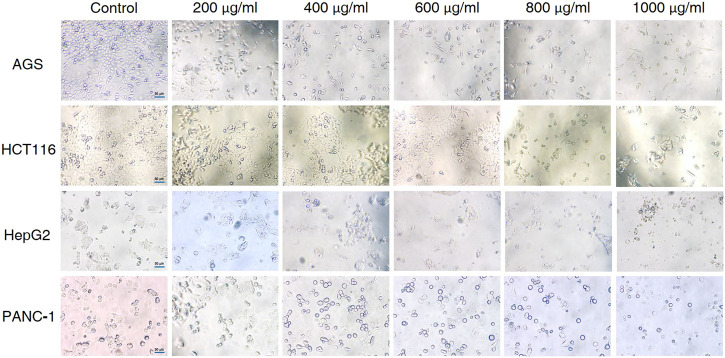
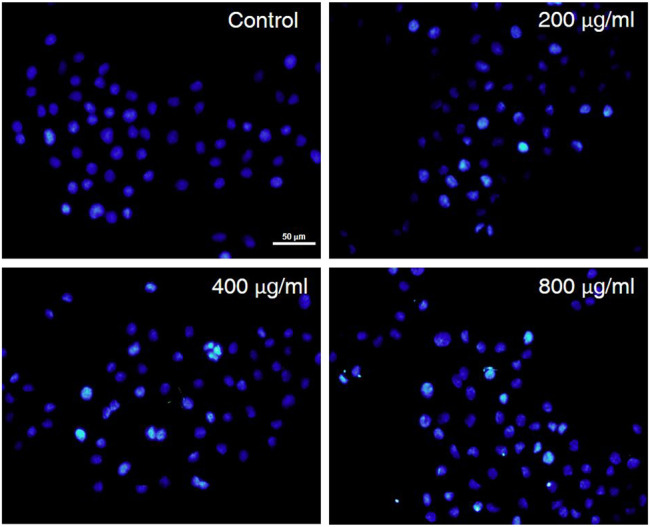
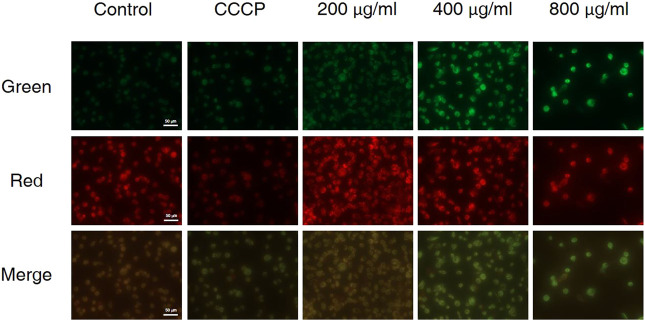
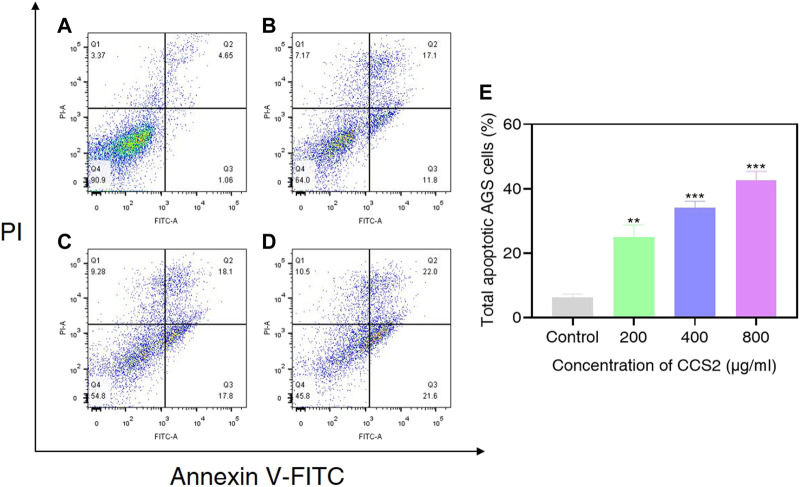
Cancer is second only to heart disease as a cause of death, despite improvements in its early diagnosis and precision medicine. Due to the limitations of commonly used anticancer methods such as surgery, radiotherapy and chemotherapy, biological therapy, especially probiotics such as lactic acid bacteria, has received widespread attention. has been proven to inhibit the proliferation of a variety of cancer cells. In this work, the effects of the cell-free culture supernatant of serofluid dish (CCS1) and the cell-free culture supernatant of YT013 (CCS2) isolated from serofluid dish on AGS, HCT116, HepG2 and PANC-1 cells were investigated. Based on the CCK-8 assay, CCS1 and CCS2 were shown to suppress the growth of cancer cells in a concentration-dependent manner. The IC values of CCS2 of AGS, HCT116, HepG2 and PANC-1 cells were 346.51 ± 35.28, 1207.69 ± 333.18, 650.94 ± 123.78 and 808.96 ± 126.27 μg/ml, respectively. In addition, the results of fluorescence microscopy showed that CCS2 changed cell morphology and treated with CCS2 (200, 400 and 800 μg/ml) for 48 h, AGS cell apoptosis was quantitatively surveyed by flow cytometry, showing 25.0, 34.1, and 42.6% total apoptotic cells. Moreover, western blotting confirmed that BAX, BAD and Caspase-3/8/9 were significantly upregulated and that BCL-2 was significantly downregulated in AGS cells treated with CCS2. These results indicated that CCS2 might lead to apoptosis via the endogenous mitochondrial apoptotic pathway. In summary, YT013 may be considered a good candidate for anticancer therapies.
尽管癌症在早期诊断和精准医学方面有所进步,但它仍是仅次于心脏病的第二大致死原因。由于手术、放疗和化疗等常用抗癌方法存在局限性,生物疗法,尤其是乳酸菌等益生菌受到了广泛关注。已被证明能抑制多种癌细胞的增殖。在这项工作中,研究了从血清培养基中分离出的血清培养基无细胞培养上清液(CCS1)和YT013无细胞培养上清液(CCS2)对AGS、HCT116、HepG2和PANC - 1细胞的影响。基于CCK - 8测定,CCS1和CCS2显示出以浓度依赖的方式抑制癌细胞生长。AGS、HCT116、HepG2和PANC - 1细胞的CCS2的IC值分别为346.51±35.28、1207.69±333.18、650.94±123.78和808.96±126.27μg/ml。此外,荧光显微镜结果显示CCS2改变了细胞形态,用CCS2(200、400和800μg/ml)处理48小时后,通过流式细胞术对AGS细胞凋亡进行定量检测,显示总凋亡细胞分别为25.0%、34.1%和42.6%。此外,蛋白质免疫印迹证实,在用CCS2处理的AGS细胞中,BAX、BAD和Caspase - 3/8/9显著上调,而BCL - 2显著下调。这些结果表明,CCS2可能通过内源性线粒体凋亡途径导致细胞凋亡。总之,YT013可能被认为是抗癌治疗的良好候选物。