Xu Huifen, Hu Xiaoman, Wang Wenyu, Chen Hong, Yu Fangfei, Zhang Xiaofei, Zheng Weili, Han Kaiyu
Department of Respiratory and Critical Medicine, the Second Affiliated Hospital of Harbin Medical University, Heilongjiang, People's Republic of China.
Infect Drug Resist. 2022 Jun 1;15:2813-2824. doi: 10.2147/IDR.S365757. eCollection 2022.
Metagenomic next-generation sequencing (mNGS) is a novel technique of pathogens detection that plays an increasingly important role in clinical practice. In this study, we explored the application value of mNGS in pulmonary infection combined with pleural effusion applied to samples of pleural effusion fluid.
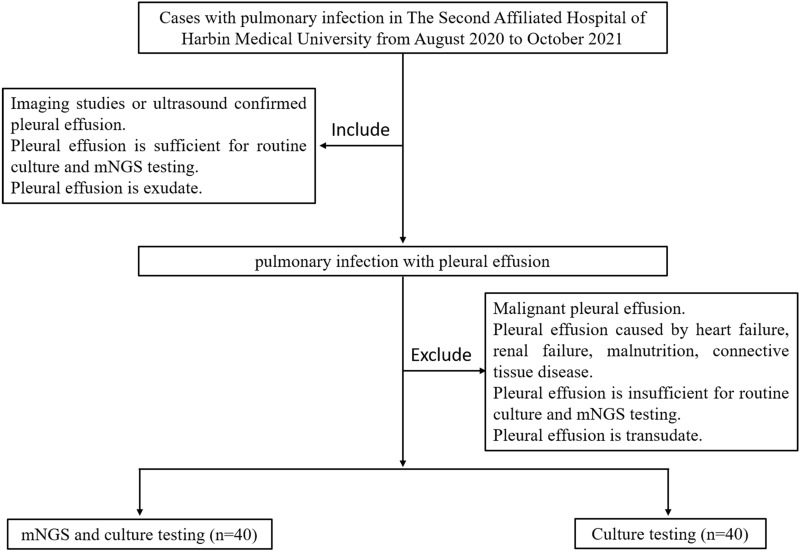
We reviewed 80 cases of pulmonary infection with pleural effusion between August 2020 and October 2021. Among them, 40 patients were placed in the mNGS group and underwent both culture and mNGS testing; the patients in the control group were only subjected to culture test. The effectiveness of mNGS was evaluated for microbial composition and diagnostic accuracy in every pleural effusion specimen type.
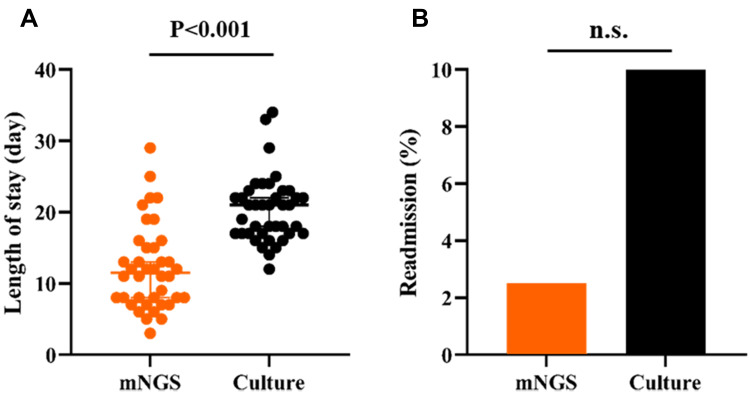
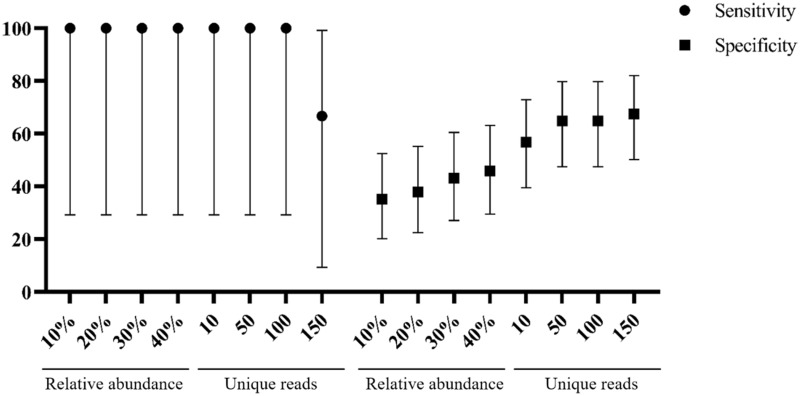
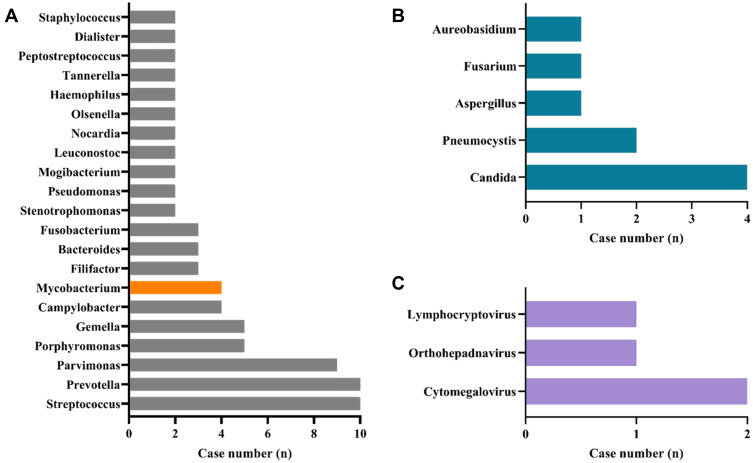
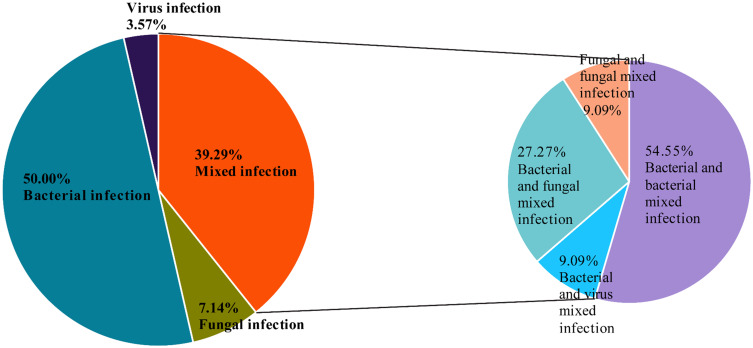
We found that the positive rate of mNGS was 70% (28/40). The comparison between mNGS and culture method resulted that the sensitivity was 100% (95% CI: 29.2-100%) and the specificity was 64.9% (95% CI: 47.5-79.8%). The positive predictive value of mNGS was 18.8% (95% CI, 13.0-26.3%), and the negative predictive value was 100%. The most commonly identified potential pathogens were bacteria, such as , , , and . The most detected fungal infection was and . A total of 11 patients were identified as mixed infection by mNGS. Treatment regimen adjustments were made according to mNGS results and the overall length of hospital stay in the mNGS group was shorter compared to that of the control group.
In this study, mNGS produced higher positive rates than the culture method in detecting pathogens in the pleural effusion specimens. The technology performed satisfactorily, providing more diagnostic evidence and reducing the length of hospital stay.
宏基因组下一代测序(mNGS)是一种新型病原体检测技术,在临床实践中发挥着越来越重要的作用。在本研究中,我们探讨了mNGS在肺部感染合并胸腔积液中应用于胸腔积液样本的价值。
我们回顾性分析了2020年8月至2021年10月期间80例肺部感染合并胸腔积液的病例。其中,40例患者被纳入mNGS组,同时进行培养和mNGS检测;对照组患者仅进行培养检测。评估mNGS在每种胸腔积液标本类型中的微生物组成和诊断准确性的有效性。
我们发现mNGS的阳性率为70%(28/40)。mNGS与培养方法的比较结果显示,敏感性为100%(95%CI:29.2-100%),特异性为64.9%(95%CI:47.5-79.8%)。mNGS的阳性预测值为18.8%(95%CI,13.0-26.3%),阴性预测值为100%。最常见的潜在病原体是细菌,如 、 、 、 和 。检测到最多的真菌感染是 和 。共有11例患者通过mNGS被鉴定为混合感染。根据mNGS结果调整治疗方案,mNGS组的总住院时间比对照组短。
在本研究中,mNGS在检测胸腔积液标本中的病原体方面比培养方法具有更高的阳性率。该技术表现令人满意,提供了更多诊断证据并缩短了住院时间。