Wang Anzhu, Li Zhendong, Zhuo Sun, Gao Feng, Zhang Hongwei, Zhang Zhibo, Ren Gaocan, Ma Xiaochang
Xiyuan Hospital, China Academy of Chinese Medical Sciences, Beijing, China.
Graduate School, China Academy of Chinese Medical Sciences, Beijing, China.
Front Cardiovasc Med. 2022 May 23;9:857952. doi: 10.3389/fcvm.2022.857952. eCollection 2022.
Sodium-glucose cotransporter 2 (SGLT2) inhibitors have cardiorenal protective effects regardless of whether they are combined with type 2 diabetes mellitus, but their specific pharmacological mechanisms remain undetermined.
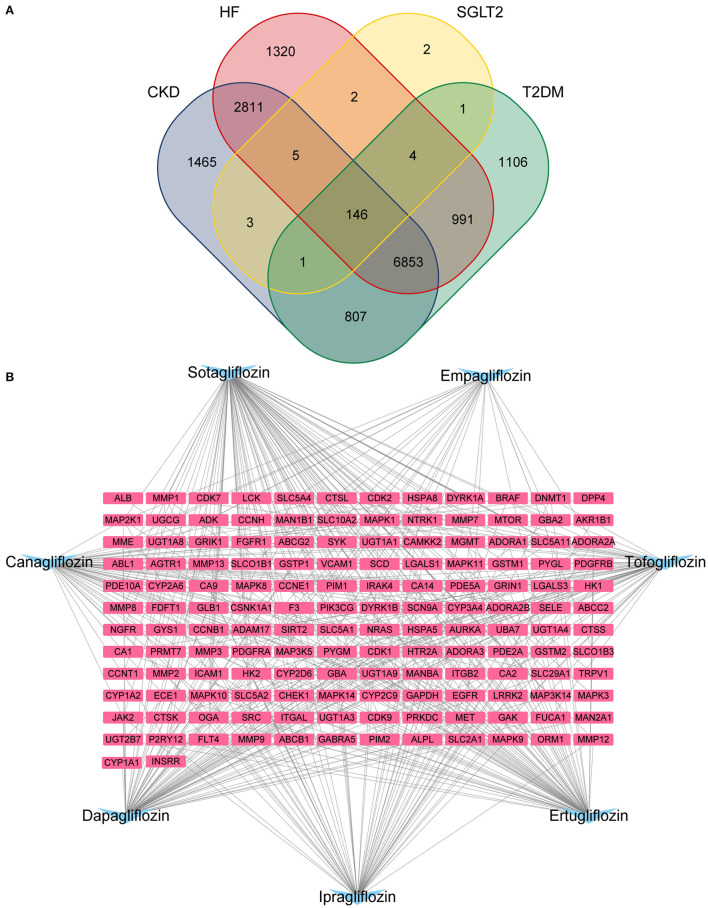
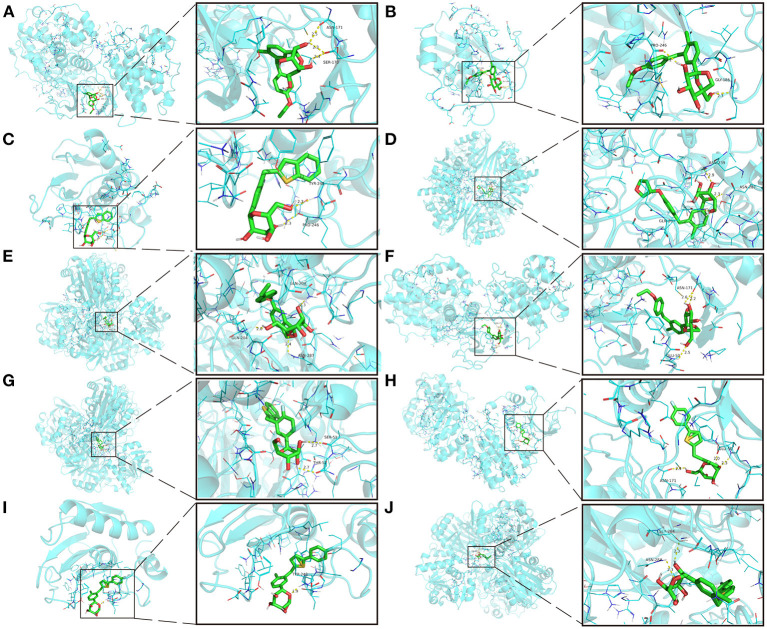
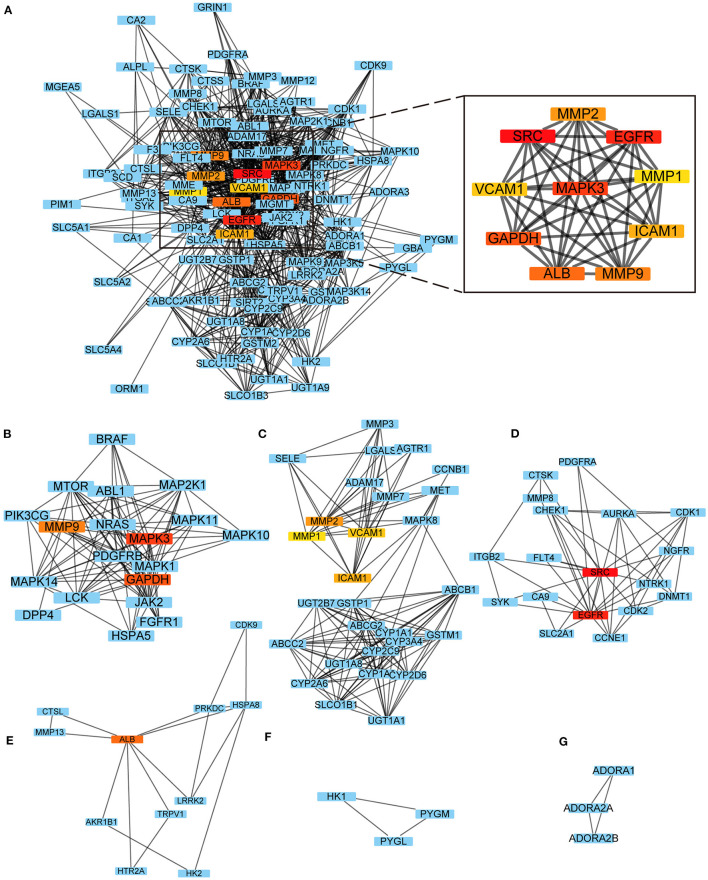
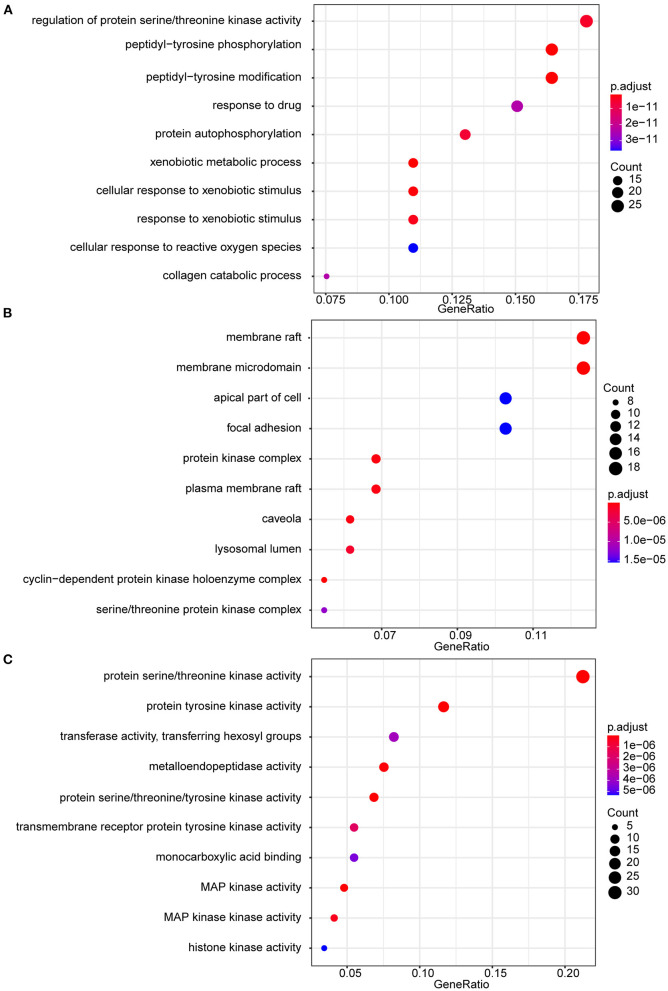
We used databases to obtain information on the disease targets of "Chronic Kidney Disease," "Heart Failure," and "Type 2 Diabetes Mellitus" as well as the targets of SGLT2 inhibitors. After screening the common targets, we used Cytoscape 3.8.2 software to construct SGLT2 inhibitors' regulatory network and protein-protein interaction network. The clusterProfiler R package was used to perform gene ontology functional analysis and Kyoto encyclopedia of genes and genomes pathway enrichment analyses on the target genes. Molecular docking was utilized to verify the relationship between SGLT2 inhibitors and core targets.
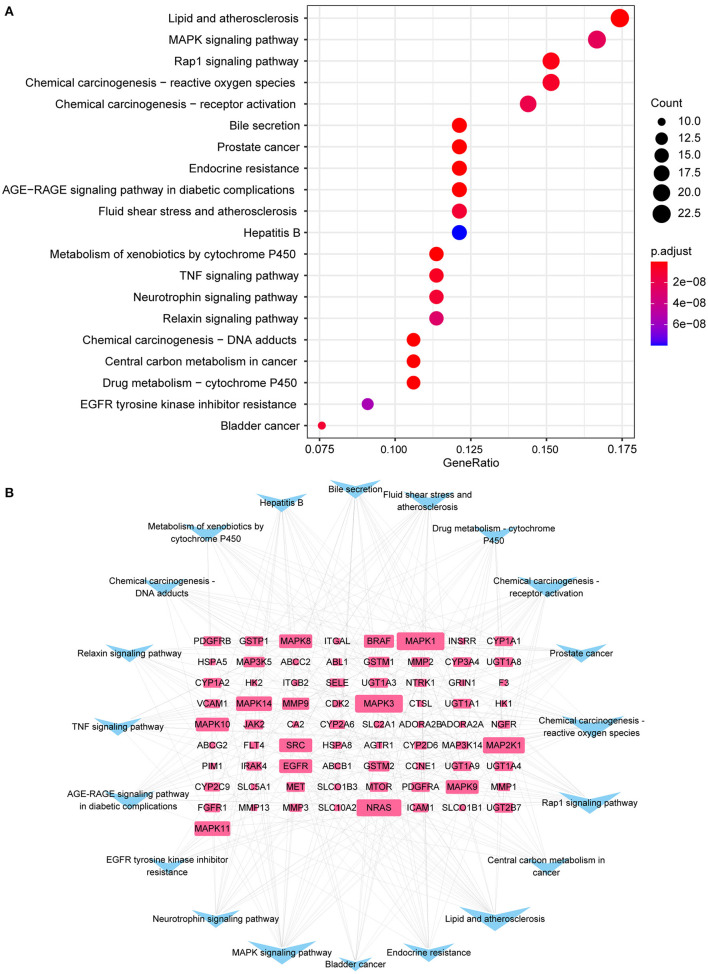
Seven different SGLT2 inhibitors were found to have cardiorenal protective effects on 146 targets. The main mechanisms of action may be associated with lipid and atherosclerosis, MAPK signaling pathway, Rap1 signaling pathway, endocrine resistance, fluid shear stress, atherosclerosis, TNF signaling pathway, relaxin signaling pathway, neurotrophin signaling pathway, and AGEs-RAGE signaling pathway in diabetic complications were related. Docking of SGLT2 inhibitors with key targets such as GAPDH, MAPK3, MMP9, MAPK1, and NRAS revealed that these compounds bind to proteins spontaneously.
Based on pharmacological networks, this study elucidates the potential mechanisms of action of SGLT2 inhibitors from a systemic and holistic perspective. These key targets and pathways will provide new ideas for future studies on the pharmacological mechanisms of cardiorenal protection by SGLT2 inhibitors.
钠-葡萄糖协同转运蛋白2(SGLT2)抑制剂无论是否与2型糖尿病合并,均具有心肾保护作用,但其具体药理机制尚不清楚。
我们利用数据库获取“慢性肾脏病”“心力衰竭”和“2型糖尿病”的疾病靶点以及SGLT2抑制剂的靶点信息。筛选出共同靶点后,使用Cytoscape 3.8.2软件构建SGLT2抑制剂的调控网络和蛋白质-蛋白质相互作用网络。利用clusterProfiler R包对靶基因进行基因本体功能分析和京都基因与基因组百科全书通路富集分析。采用分子对接技术验证SGLT2抑制剂与核心靶点之间的关系。
发现7种不同的SGLT2抑制剂对146个靶点具有心肾保护作用。主要作用机制可能与脂质和动脉粥样硬化、MAPK信号通路、Rap1信号通路、内分泌抵抗、流体剪切应力、动脉粥样硬化、TNF信号通路、松弛素信号通路、神经营养因子信号通路以及糖尿病并发症中的AGEs-RAGE信号通路有关。SGLT2抑制剂与GAPDH、MAPK3、MMP9、MAPK1和NRAS等关键靶点的对接显示,这些化合物可自发结合蛋白质。
本研究基于药理网络,从系统和整体的角度阐明了SGLT2抑制剂的潜在作用机制。这些关键靶点和通路将为未来SGLT2抑制剂心肾保护药理机制的研究提供新思路。