Graduate School of Anhui University of Chinese Medicine, Hefei, Anhui, China.
Department of Pharmacy, The First Affiliated Hospital of Anhui University of Traditional Chinese Medicine, Hefei, Anhui, China.
J Diabetes Res. 2021 May 28;2021:9941791. doi: 10.1155/2021/9941791. eCollection 2021.
To investigate the potential mechanism of action of Yi-Qi-Huo-Xue-Tong-Luo formula (YQHXTLF) in the treatment of diabetic peripheral neuropathy (DPN).
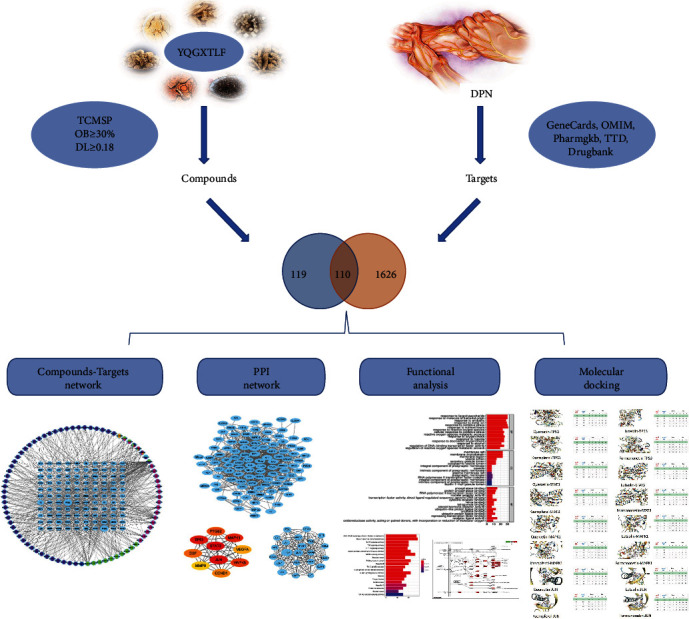
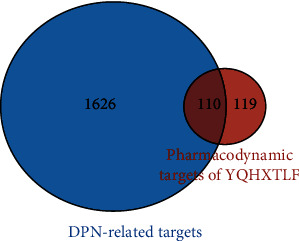
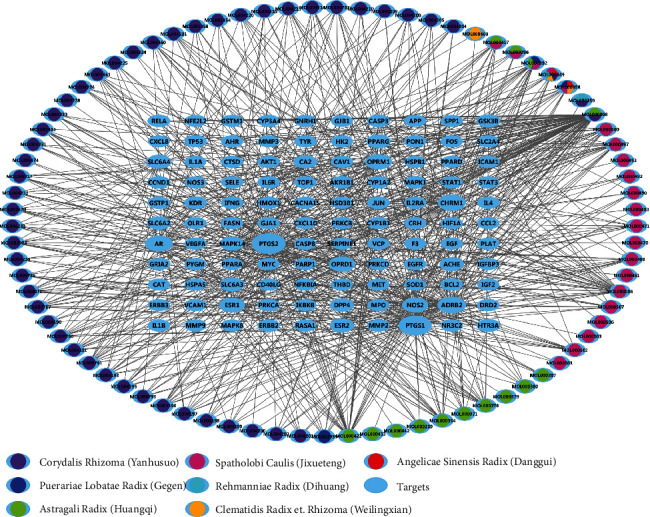
Network pharmacology and molecular docking techniques were used in this study. Firstly, the active ingredients and the corresponding targets of YQHXTLF were retrieved using the Traditional Chinese Medicine Systems Pharmacology (TCMSP) platform; subsequently, the targets related to DPN were retrieved using GeneCards, Online Mendelian Inheritance in Man (OMIM), Pharmgkb, Therapeutic Target Database (TTD) and Drugbank databases; the common targets of YQHXTLF and DPN were obtained by Venn diagram; afterwards, the "YQHXTLF Pharmacodynamic Component-DPN Target" regulatory network was visualized using Cytoscape 3.6.1 software, and Gene Ontology (GO) enrichment analysis and Kyoto Encyclopedia of Genes and Genomes (KEGG) pathway analysis were performed on the potential targets using R 3.6.3 software. Finally, molecular docking of the main chemical components in the PPI network with the core targets was verified by Autodock Vina software.
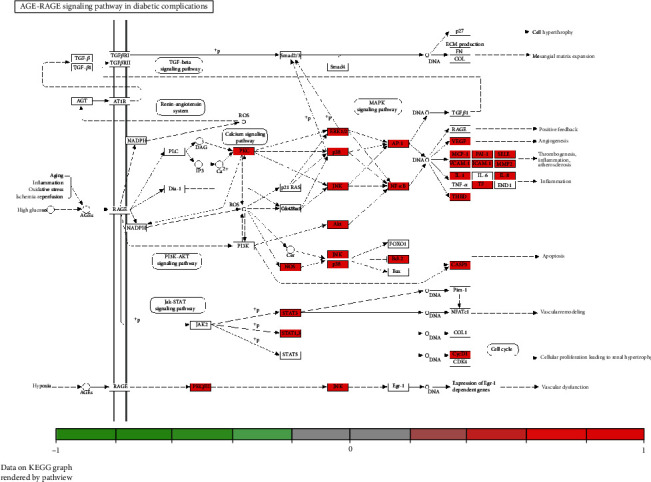
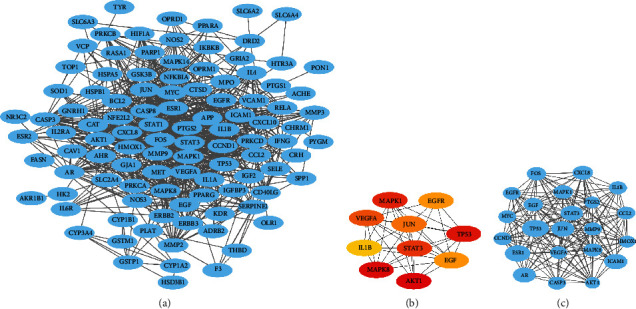
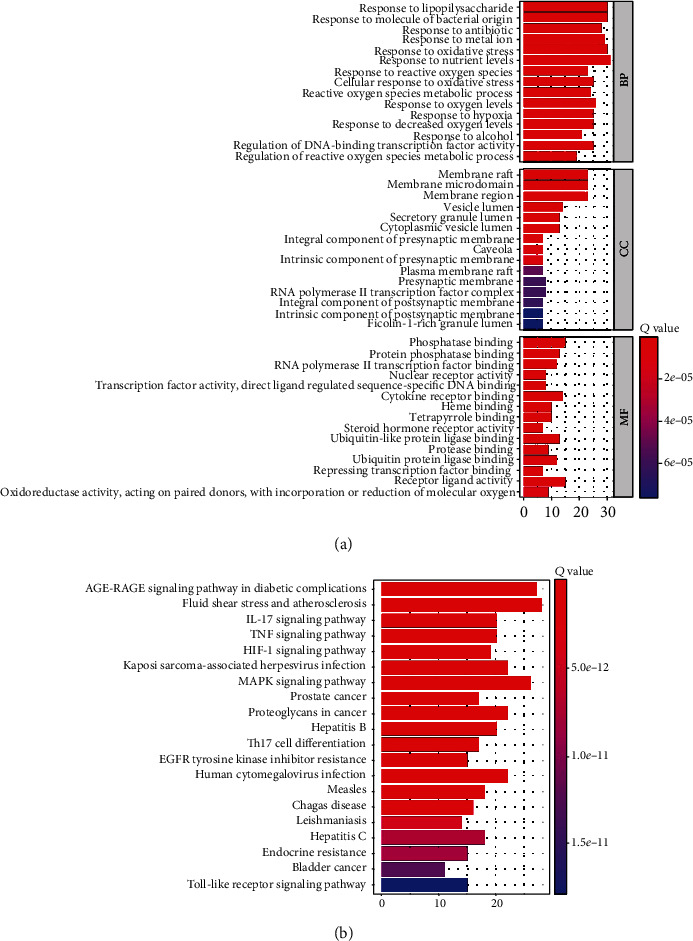
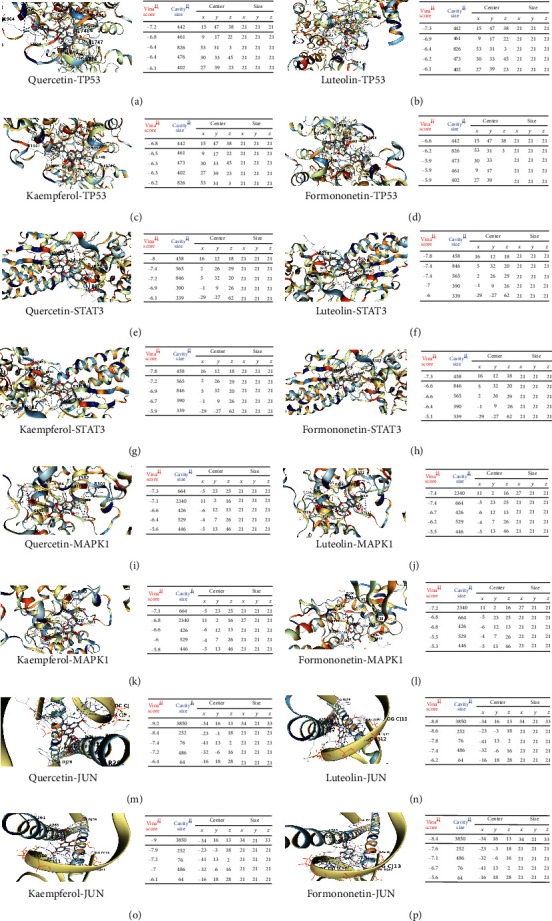
A total of 86 active ingredients and 229 targets in YQHXTLF were screened, and 81 active ingredients and 110 targets were identified to be closely related to diabetic peripheral neuropathy disease. PPI network mapping identified TP53, MAPK1, JUN, and STAT3 as possible core targets. KEGG pathway analysis showed that these targets are mostly involved in AGE-RAGE signaling pathway in diabetic complications, TNF signaling pathway, and MAPK signaling pathway. The molecular docking results showed that the main chemical components of YQHXTLF have a stable binding activity to the core pivotal targets.
YQHXTLF may act on TP53, MAPK1, JUN, and STAT3 to regulate inflammatory response, apoptosis, or proliferation as a molecular mechanism for the treatment of diabetic peripheral neuropathy, reflecting its multitarget and multipathway action, and providing new ideas to further uncover its pharmacological basis and mechanism of action.
探讨益气活血通络方(YQHXTLF)治疗糖尿病周围神经病变(DPN)的作用机制。
采用网络药理学和分子对接技术。首先,通过中药系统药理学数据库和分析平台(TCMSP)检索 YQHXTLF 的活性成分及其相应靶点;然后,利用基因卡片(GeneCards)、在线孟德尔遗传数据库(OMIM)、PharmGKB、治疗靶点数据库(TTD)和药物数据库(Drugbank)检索与 DPN 相关的靶点,通过 Venn 图获取 YQHXTLF 和 DPN 的共同靶点;随后,使用 Cytoscape 3.6.1 软件可视化“YQHXTLF 药效成分-DPN 靶点”调控网络,使用 R 3.6.3 软件对潜在靶点进行基因本体(GO)富集分析和京都基因与基因组百科全书(KEGG)通路分析;最后,使用 Autodock Vina 软件验证 PPI 网络中主要化学成分与核心靶点的分子对接。
筛选出 YQHXTLF 中 86 种活性成分和 229 个靶点,鉴定出与糖尿病周围神经病变密切相关的 81 种活性成分和 110 个靶点。PPI 网络映射确定 TP53、MAPK1、JUN 和 STAT3 为可能的核心靶点。KEGG 通路分析表明,这些靶点主要涉及糖尿病并发症的 AGE-RAGE 信号通路、TNF 信号通路和 MAPK 信号通路。分子对接结果表明,YQHXTLF 的主要化学成分与核心关键靶点具有稳定的结合活性。
YQHXTLF 可能通过作用于 TP53、MAPK1、JUN 和 STAT3 来调节炎症反应、细胞凋亡或增殖,从而成为治疗糖尿病周围神经病变的分子机制,反映其多靶点、多途径作用,为进一步揭示其药理基础和作用机制提供了新的思路。