Clinical and Molecular Medicine Department, Faculty of Medicine and Psychology, Sant'Andrea Hospital, Sapienza University of Rome, 00189 Rome, Italy.
Int J Mol Sci. 2023 Mar 7;24(6):5089. doi: 10.3390/ijms24065089.
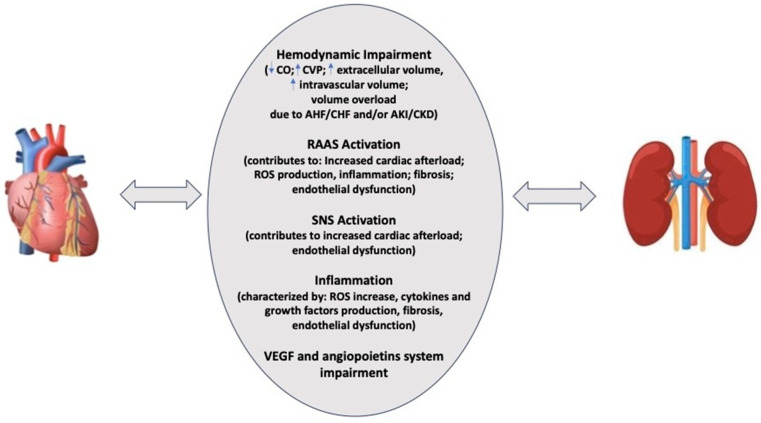
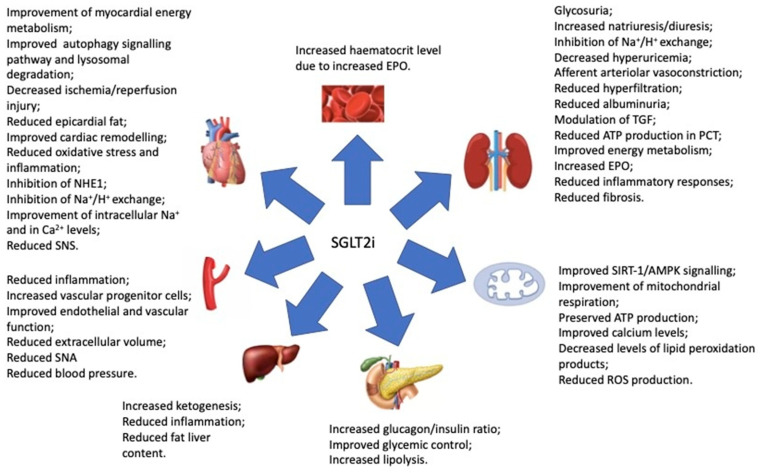
Cardiorenal syndrome consists in the coexistence of acute or chronic dysfunction of heart and kidneys resulting in a cascade of feedback mechanisms and causing damage to both organs associated with high morbidity and mortality. In the last few years, different biomarkers have been investigated with the aim to achieve an early and accurate diagnosis of cardiorenal syndrome, to provide a prognostic role and to guide the development of targeted pharmacological and non-pharmacological therapies. In such a context, sodium-glucose cotransporter 2 (SGLT2) inhibitors, recommended as the first-line choice in the management of heart failure, might represent a promising strategy in the management of cardiorenal syndrome due to their efficacy in reducing both cardiac and renal outcomes. In this review, we will discuss the current knowledge on the pathophysiology of cardiorenal syndrome in adults, as well as the utility of biomarkers in cardiac and kidney dysfunction and potential insights into novel therapeutics.
心肾综合征是指心脏和肾脏急性或慢性功能障碍同时存在,导致一系列反馈机制,并对两个器官造成损害,同时伴有高发病率和死亡率。在过去的几年中,人们研究了不同的生物标志物,旨在实现心肾综合征的早期和准确诊断,提供预后作用,并指导靶向药物和非药物治疗的发展。在这种情况下,钠-葡萄糖共转运蛋白 2(SGLT2)抑制剂被推荐为心力衰竭管理的一线选择,由于其在降低心脏和肾脏结局方面的疗效,可能成为心肾综合征管理的有前途的策略。在这篇综述中,我们将讨论成人心肾综合征的病理生理学的现有知识,以及生物标志物在心和肾功能障碍中的应用以及对新型治疗方法的潜在见解。