Division of Intramural Research, National Institute of Allergy and Infectious Diseases, National Institutes of Health, Bethesda, Maryland, United States of America.
Department of Pathology, Johns Hopkins School of Medicine, Baltimore, Maryland, United States of America.
PLoS One. 2022 Jun 9;17(6):e0264298. doi: 10.1371/journal.pone.0264298. eCollection 2022.
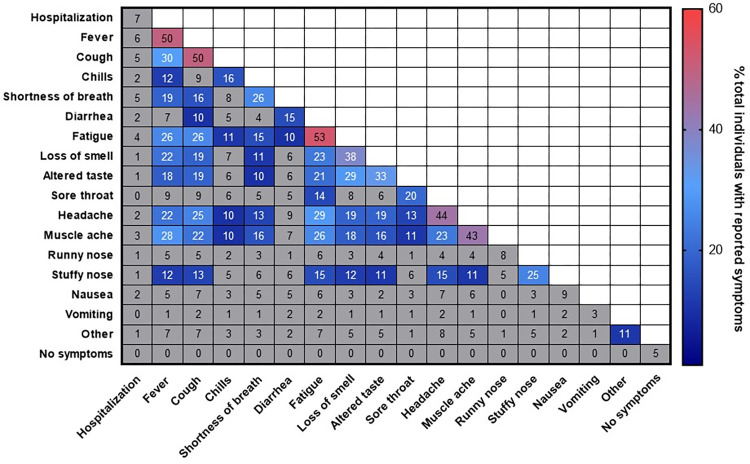
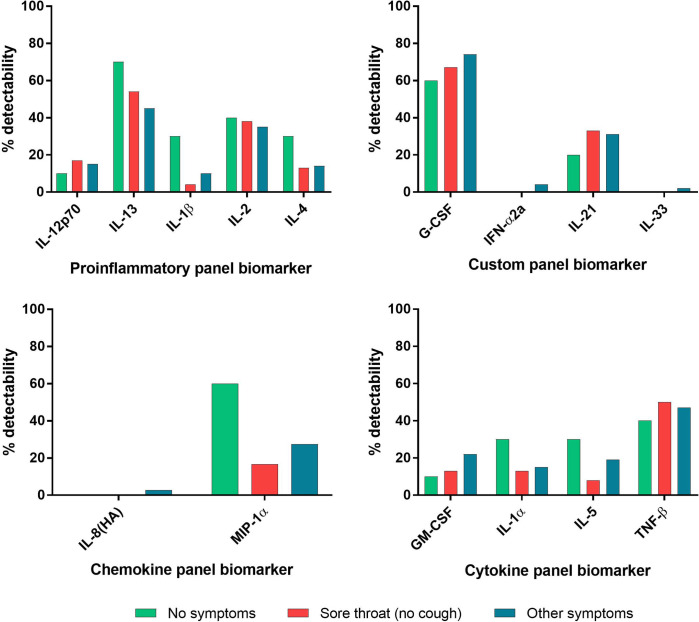
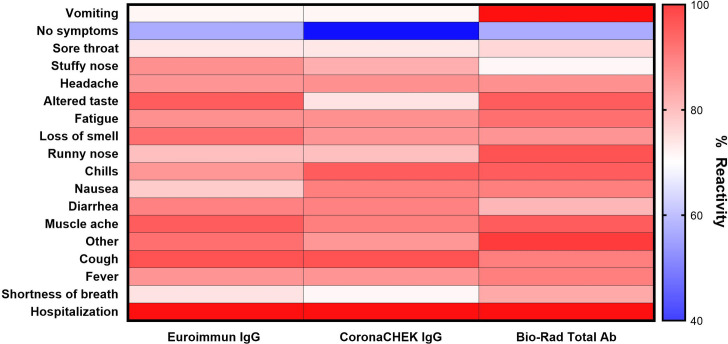
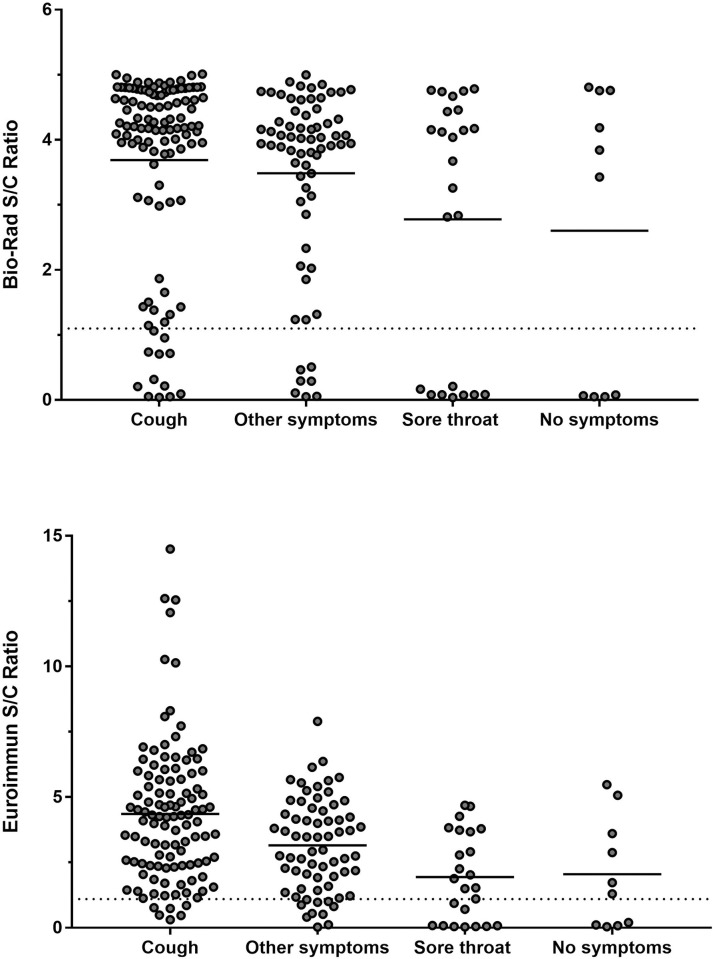
The association between COVID-19 symptoms and antibody responses against SARS-CoV-2 is poorly characterized. We analyzed antibody levels in individuals with known SARS-CoV-2 infection to identify potential antibody-symptom associations. Convalescent plasma from 216 SARS-CoV-2 RNA+ individuals with symptomatology information were tested for the presence of IgG to the spike S1 subunit (Euroimmun ELISA), IgG to receptor binding domain (RBD, CoronaCHEK rapid test), and for IgG, IgA, and IgM to nucleocapsid (N, Bio-Rad ELISA). Logistic regression was used to estimate the odds of having a COVID-19 symptom from the antibody response, adjusting for sex and age. Cough strongly associated with antibodies against S1 (adjusted odds ratio [aOR] = 5.33; 95% CI from 1.51 to 18.86) and RBD (aOR = 4.36; CI 1.49, 12.78). In contrast, sore throat significantly associated with the absence of antibodies to S1 and N (aOR = 0.25; CI 0.08, 0.80 and aOR = 0.31; 0.11, 0.91). Similarly, lack of symptoms associated with the absence of antibodies to N and RBD (aOR = 0.16; CI 0.03, 0.97 and aOR = 0.16; CI 0.03, 1.01). Cough appeared to be correlated with a seropositive result, suggesting that SARS-CoV-2 infected individuals exhibiting lower respiratory symptoms generate a robust antibody response. Conversely, those without symptoms or limited to a sore throat while infected with SARS-CoV-2 were likely to lack a detectable antibody response. These findings strongly support the notion that severity of infection correlates with robust antibody response.
新型冠状病毒肺炎(COVID-19)症状与针对严重急性呼吸综合征冠状病毒 2(SARS-CoV-2)的抗体反应之间的关联尚未明确。我们分析了已知感染 SARS-CoV-2 的个体的抗体水平,以确定潜在的抗体-症状关联。我们使用 Euroimmun ELISA 检测针对 Spike S1 亚基的 IgG、CoronaCHEK 快速检测针对受体结合域(RBD)的 IgG,以及使用 Bio-Rad ELISA 检测针对核衣壳(N)的 IgG、IgA 和 IgM,对 216 名具有症状信息的 SARS-CoV-2 RNA+个体的恢复期血浆进行了检测。采用逻辑回归估计了抗体反应引起 COVID-19 症状的几率,调整了性别和年龄。咳嗽与针对 S1(调整后的优势比[aOR] = 5.33;95%置信区间[CI]为 1.51 至 18.86)和 RBD(aOR = 4.36;CI 1.49 至 12.78)的抗体强烈相关。相比之下,咽痛与 S1 和 N 抗体的缺失显著相关(aOR = 0.25;CI 0.08 至 0.80 和 aOR = 0.31;0.11 至 0.91)。同样,无症状与 N 和 RBD 抗体的缺失相关(aOR = 0.16;CI 0.03 至 0.97 和 aOR = 0.16;CI 0.03 至 1.01)。咳嗽似乎与血清阳性结果相关,这表明感染 SARS-CoV-2 的个体出现下呼吸道症状会产生强烈的抗体反应。相反,感染 SARS-CoV-2 而无症状或仅限于咽痛的个体可能缺乏可检测到的抗体反应。这些发现强烈支持感染严重程度与强烈的抗体反应相关的观点。