Li Xiaolian, Xu Mingkun, Shen Jiaojiao, Li Yuqin, Lin Shaoping, Zhu Min, Pang Qiongni, Tan Xiujuan, Tang Jing
Department of Anesthesiology, Affiliated Hospital of Guangdong Medical University, 524000, Zhanjiang City, Guangdong Province, China.
Department of Anesthesiology, Guangdong Provincial People's Hospital, Guangdong Academy of Medical Sciences, 510080, Guangzhou City, Guangdong Province, China.
Cell Death Discov. 2022 Jun 9;8(1):281. doi: 10.1038/s41420-022-01073-7.
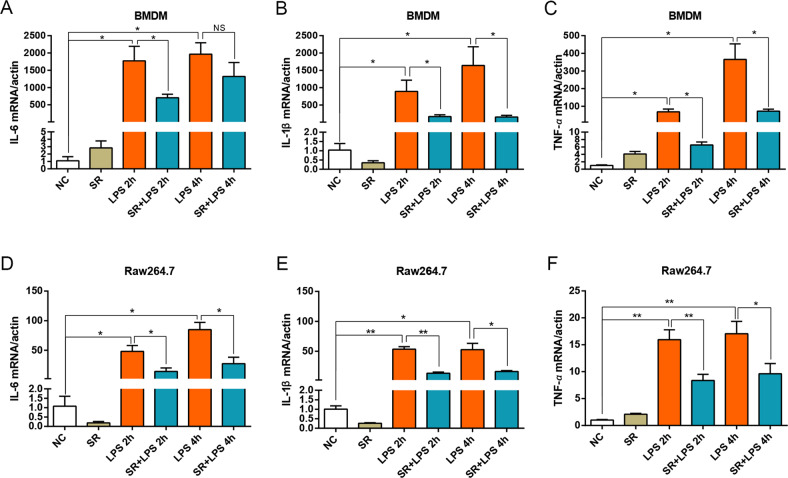
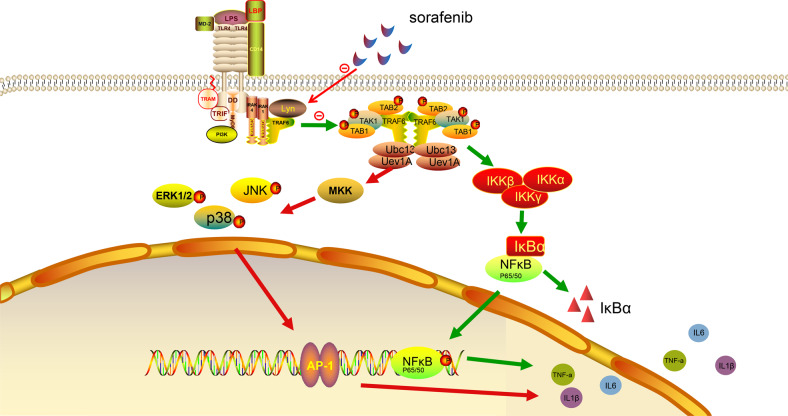
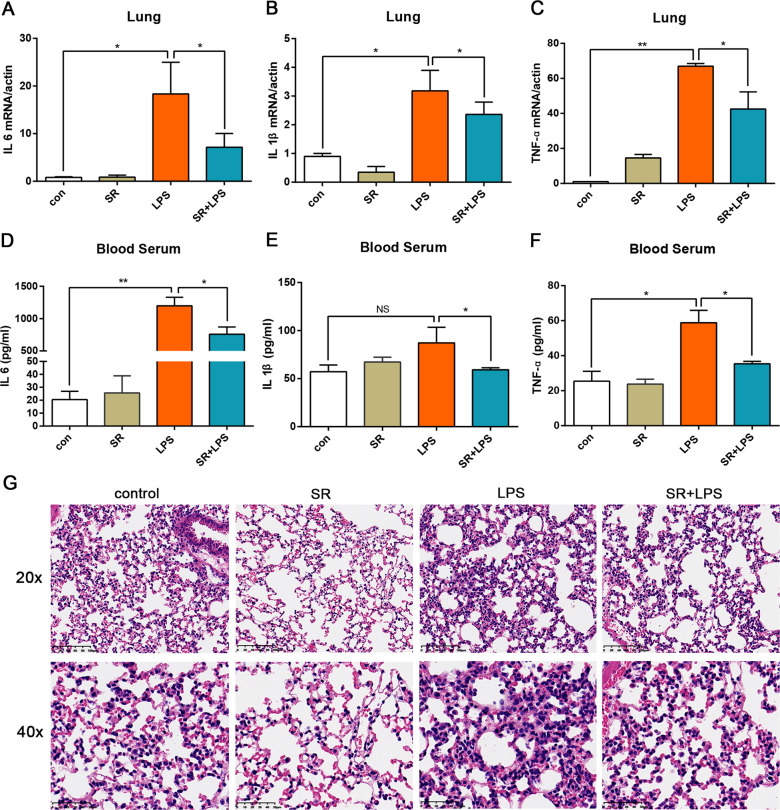
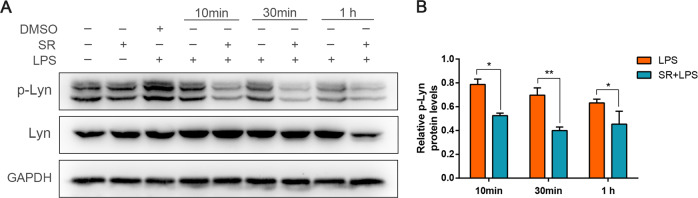
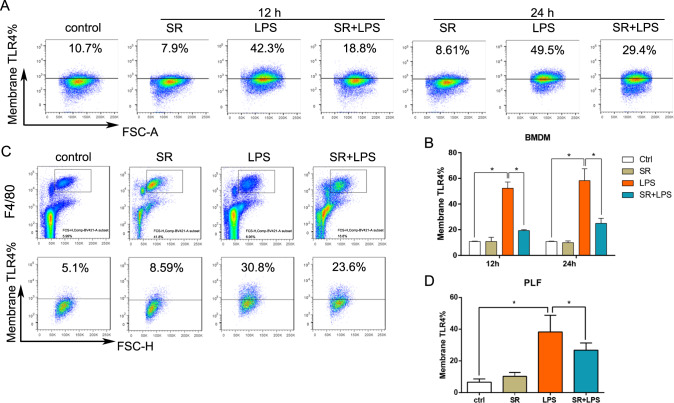
Sorafenib is an anti-tumor drug widely used in clinical treatment, which can inhibit tyrosine kinase receptor on cell surface and serine/threonine kinase in downstream Ras/MAPK cascade signaling pathway of cells. Tyrosine kinase phosphorylation plays an important role in inflammatory mechanism, such as TLR4 tyrosine phosphorylation, MAPK pathway protein activation, and activation of downstream NF-кB. However, the effects of sorafenib on LPS-induced inflammatory reaction and its specific mechanism have still remained unknown. We found that sorafenib inhibited the phosphorylation of tyrosine kinase Lyn induced by LPS, thereby reducing the phosphorylation level of p38 and JNK, inhibiting the activation of c-Jun and NF-κB, and then inhibiting the expression of inflammatory factors IL-6, IL-1β, and TNF-α. Furthermore, sorafenib also decreased the expression of TLR4 on the macrophage membrane to inhibit the expression of inflammatory factors latterly, which may be related to the inactivation of Lyn. These results provide a new perspective and direction for the clinical treatment of sepsis.
索拉非尼是一种广泛应用于临床治疗的抗肿瘤药物,它能够抑制细胞表面的酪氨酸激酶受体以及细胞下游Ras/MAPK级联信号通路中的丝氨酸/苏氨酸激酶。酪氨酸激酶磷酸化在炎症机制中发挥着重要作用,如TLR4酪氨酸磷酸化、MAPK通路蛋白激活以及下游NF-кB的激活。然而,索拉非尼对脂多糖(LPS)诱导的炎症反应的影响及其具体机制仍不清楚。我们发现,索拉非尼可抑制LPS诱导的酪氨酸激酶Lyn的磷酸化,从而降低p38和JNK的磷酸化水平,抑制c-Jun和NF-κB的激活,进而抑制炎症因子IL-6、IL-1β和TNF-α的表达。此外,索拉非尼还可降低巨噬细胞膜上TLR4的表达,从而抑制炎症因子的表达,这可能与Lyn的失活有关。这些结果为脓毒症的临床治疗提供了新的视角和方向。