Department of Biological Sciences, University of Notre Dame, 100 Galvin Life Sciences, Notre Dame, IN, 46556, USA.
Department of Geography, University of California Santa Barbara, Santa Barbara, CA, 93106, USA.
Nat Commun. 2022 Jun 9;13(1):3332. doi: 10.1038/s41467-022-30993-2.
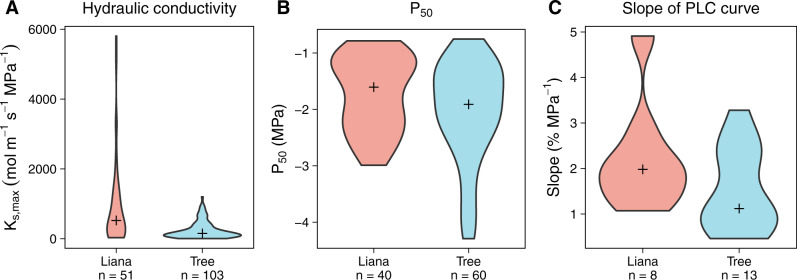
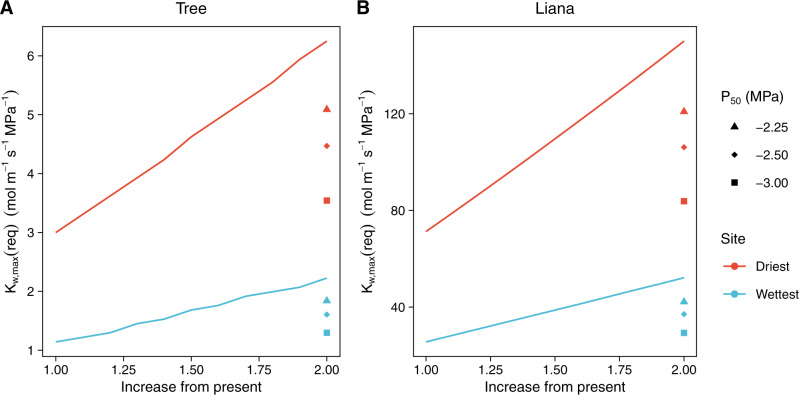
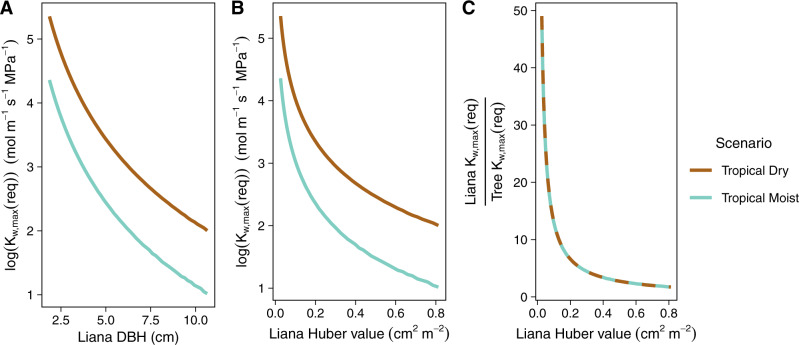
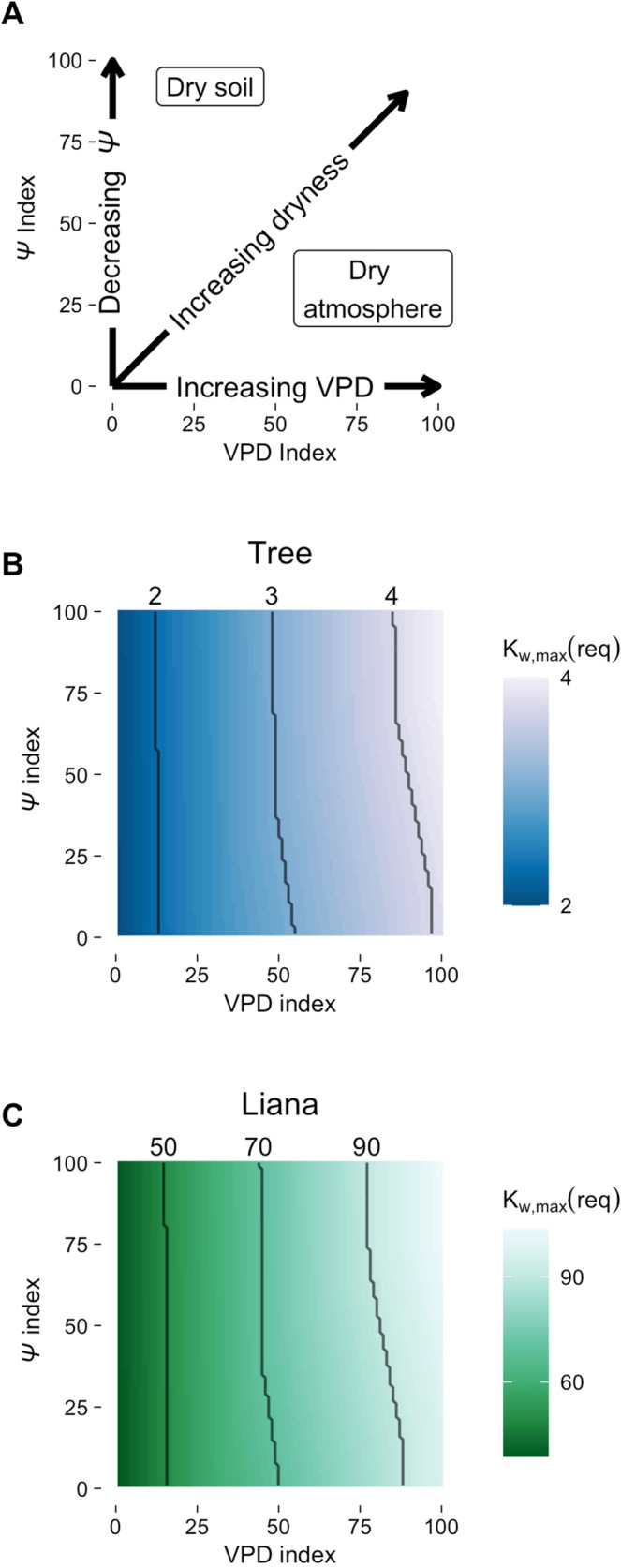
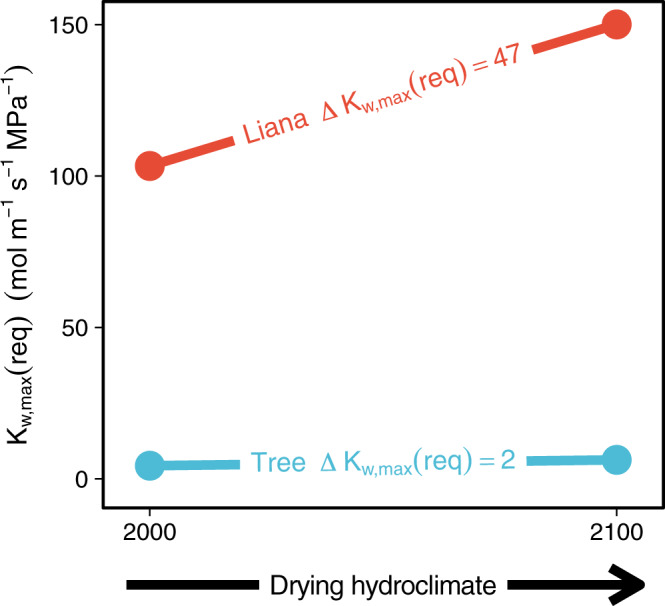
Lianas, or woody vines, and trees dominate the canopy of tropical forests and comprise the majority of tropical aboveground carbon storage. These growth forms respond differently to contemporary variation in climate and resource availability, but their responses to future climate change are poorly understood because there are very few predictive ecosystem models representing lianas. We compile a database of liana functional traits (846 species) and use it to parameterize a mechanistic model of liana-tree competition. The substantial difference between liana and tree hydraulic conductivity represents a critical source of inter-growth form variation. Here, we show that lianas are many times more sensitive to drying atmospheric conditions than trees as a result of this trait difference. Further, we use our competition model and projections of tropical hydroclimate based on Representative Concentration Pathway 4.5 to show that lianas are more susceptible to reaching a hydraulic threshold for viability by 2100.
藤本植物,或木质藤本植物,和树木占据了热带森林的树冠层,构成了热带地区地上碳储存的大部分。这些生长形式对当代气候和资源可利用性的变化反应不同,但对未来气候变化的反应却知之甚少,因为很少有预测生态系统模型能够代表藤本植物。我们编制了一个藤本植物功能性状数据库(846 个物种),并用它来为藤本-树木竞争的机制模型提供参数。藤本植物和树木水力传导率之间的显著差异代表了生长形式变化的一个关键来源。在这里,我们表明,由于这种性状差异,藤本植物对干燥大气条件的敏感性比树木高得多。此外,我们使用我们的竞争模型和基于代表性浓度路径 4.5 的热带水文气候预测,表明到 2100 年,藤本植物更有可能达到生存的水力阈值。