State Key Laboratory of Silkworm Genome Biology, College of Sericulture, Textile and Biomass Sciences, Southwest University, Chongqing, 400715, China.
Shanghai OE Biotech. Co., Ltd., Shanghai, 201212, China.
Nat Commun. 2022 Jun 9;13(1):3316. doi: 10.1038/s41467-022-31003-1.
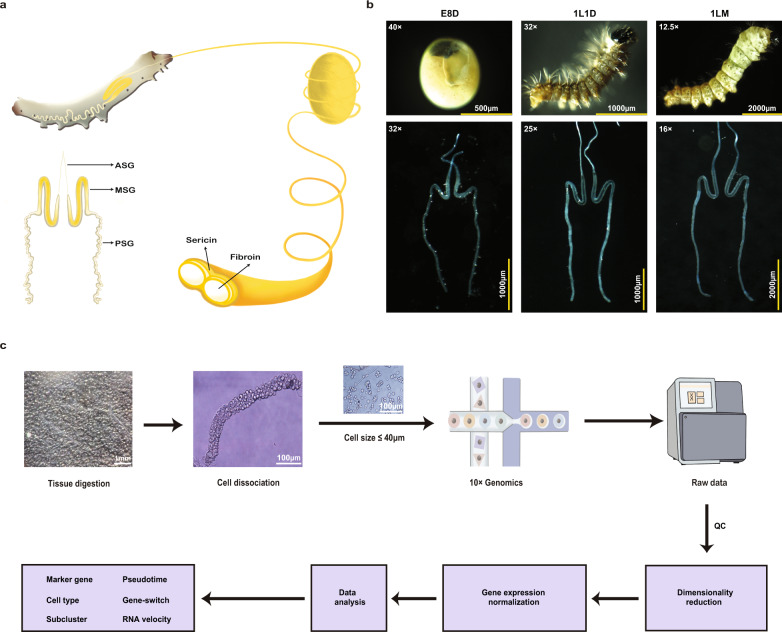
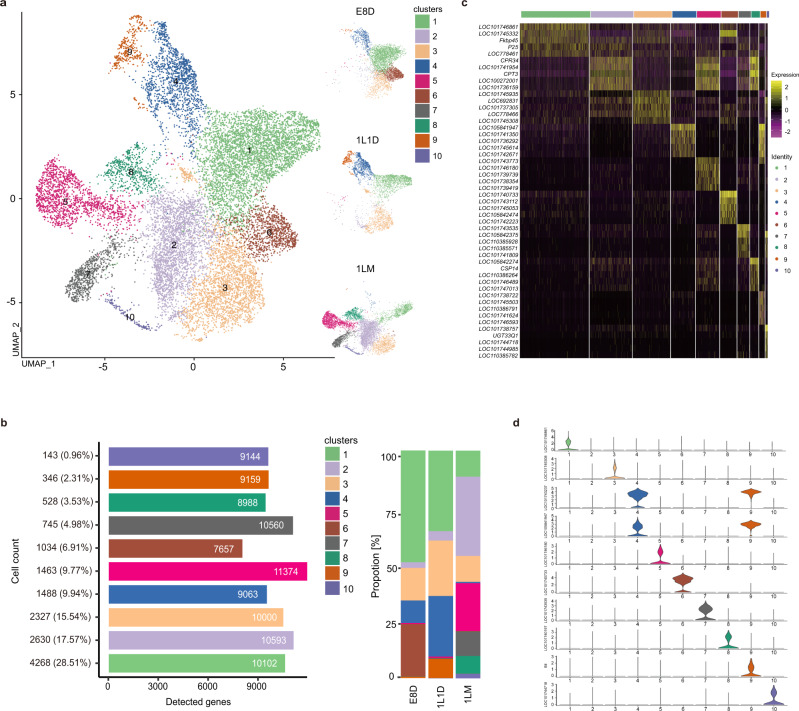
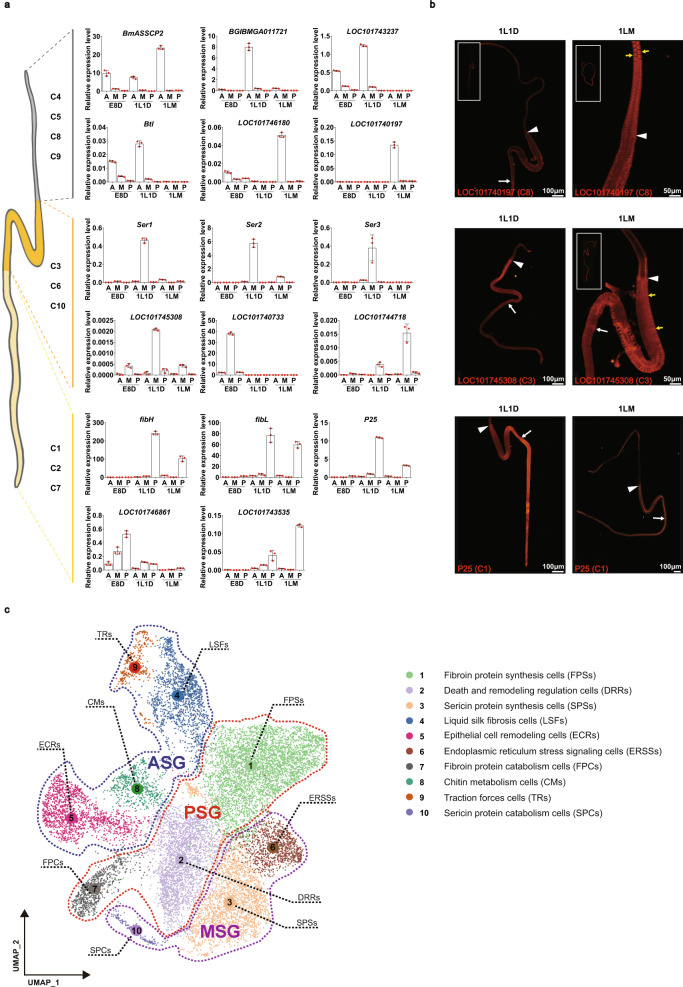
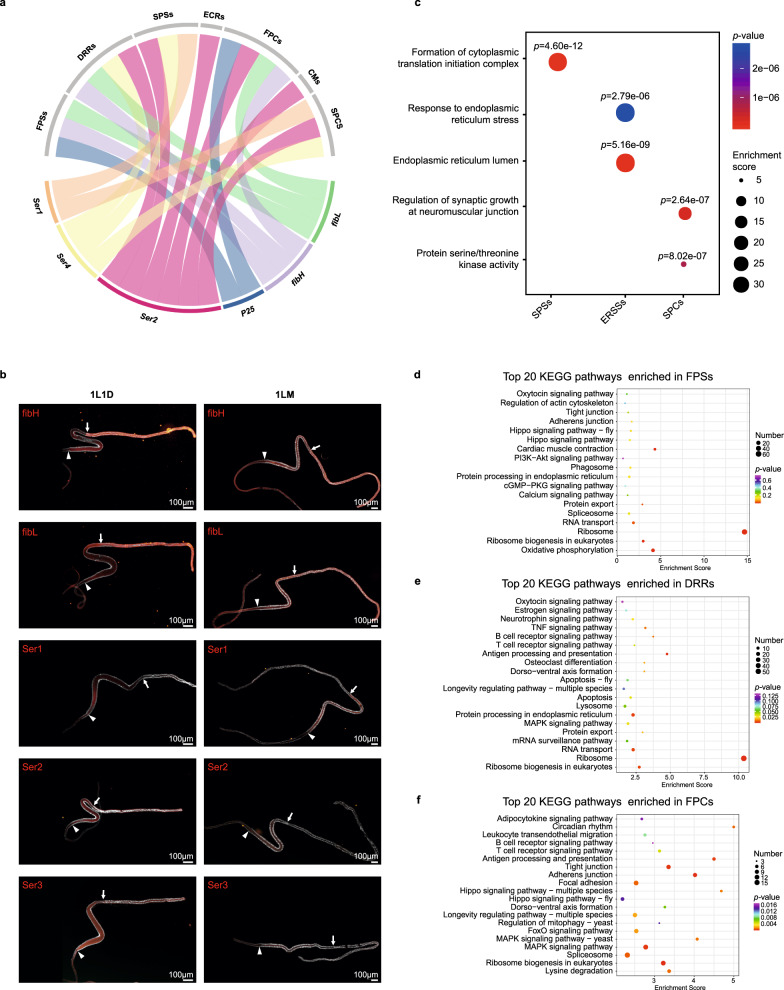
The silk gland of the domesticated silkworm Bombyx mori, is a remarkable organ that produces vast amounts of silk with exceptional properties. Little is known about which silk gland cells execute silk protein synthesis and its precise spatiotemporal control. Here, we use single-cell RNA sequencing to build a comprehensive cell atlas of the silkworm silk gland, consisting of 14,972 high-quality cells representing 10 distinct cell types, in three early developmental stages. We annotate all 10 cell types and determine their distributions in each region of the silk gland. Additionally, we decode the developmental trajectory and gene expression status of silk gland cells. Finally, we discover marker genes involved in the regulation of silk gland development and silk protein synthesis. Altogether, this work reveals the heterogeneity of silkworm silk gland cells and their gene expression dynamics, affording a deeper understanding of silk-producing organs at the single-cell level.
家蚕的丝腺是一个非常了不起的器官,它能产生大量具有特殊性质的丝。目前人们对哪些丝腺细胞执行丝蛋白合成及其精确的时空控制还知之甚少。在这里,我们使用单细胞 RNA 测序构建了家蚕丝腺的综合细胞图谱,该图谱由 14972 个高质量细胞组成,代表 10 种不同的细胞类型,涵盖三个早期发育阶段。我们注释了所有 10 种细胞类型,并确定了它们在丝腺各个区域的分布。此外,我们还解码了丝腺细胞的发育轨迹和基因表达状态。最后,我们发现了参与丝腺发育和丝蛋白合成调控的标记基因。总的来说,这项工作揭示了家蚕丝腺细胞的异质性及其基因表达动态,使我们能够在单细胞水平上更深入地了解产丝器官。