Department of Ophthalmology, Beijing Children's Hospital, Capital Medical University, National Center for Children's Health, Beijing, 100045, China.
BMC Ophthalmol. 2022 Jun 9;22(1):260. doi: 10.1186/s12886-022-02476-x.
Sturge-Weber Syndrome (SWS) is a rare disease involving the eye, skin, and brain. Port-wine stain (PWS) and glaucoma are common clinical manifestations. This study analysed the clinical characteristics of infants with PWS and glaucoma secondary to SWS.
Children with PWS and glaucoma secondary to SWS were enrolled. Data were extracted from ophthalmic and systemic examination findings. Ocular examinations included intraocular pressure, anterior segment and fundus examination, and ocular A-scan and B-scan ultrasonography.
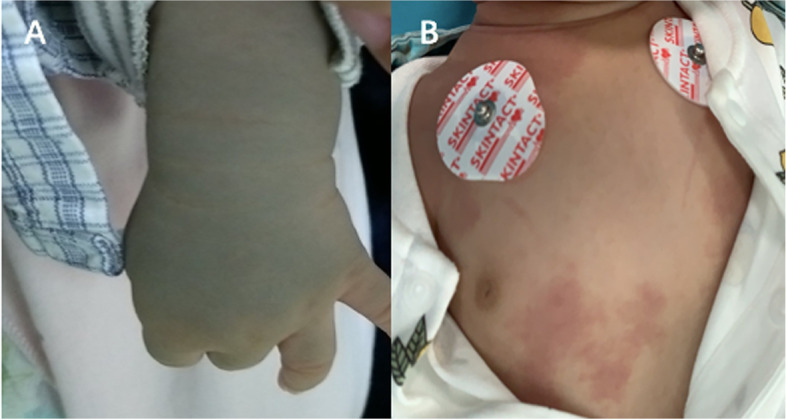
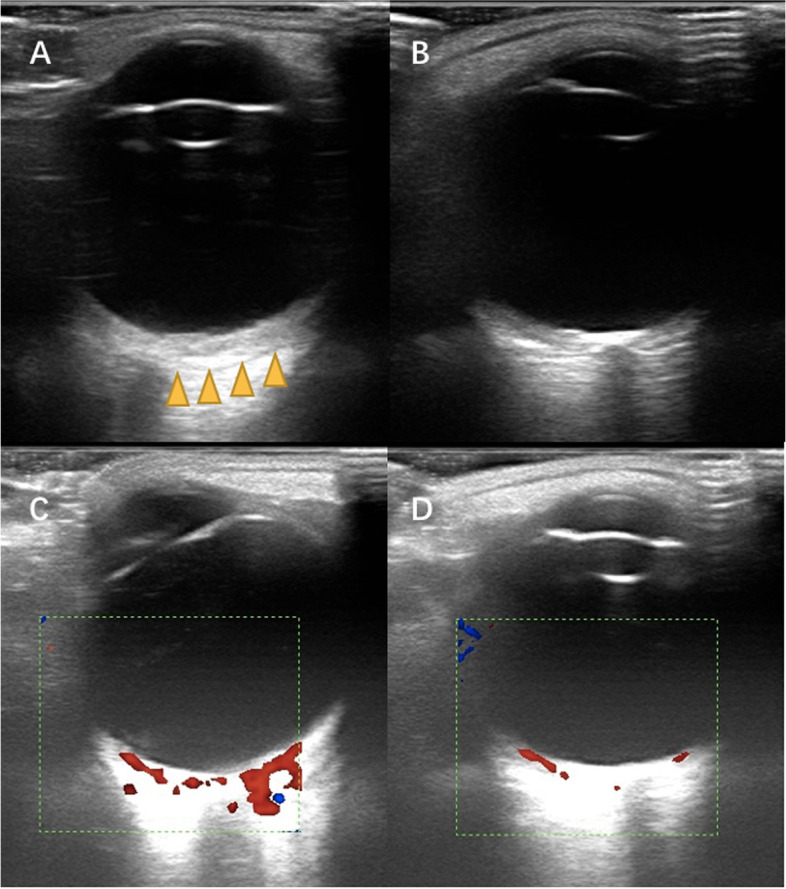
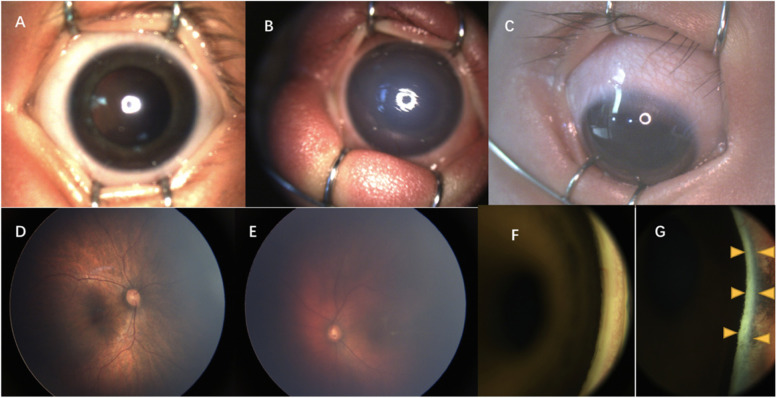
Fifty-seven patients were included, with a mean age of 9.9 ± 11.9 months, and 34 (59.6%) patients were male. In all, 61 eyes were diagnosed with glaucoma. Forty-one patients (71.9%) had unilateral facial PWS and glaucoma occurred on the same side. Eight patients (14.0%) had Mongolian spots and ten patients (17.5%) had epilepsy. Corneal changes included corneal oedema (n = 36 eyes, 59.0%), corneal opacity (n = 15 eyes, 24.6%), and Haab lines (n = 13 eyes, 21.3%). Mean corneal diameter and thickness in the eyes with glaucoma was larger than those in the unaffected eyes (12.2 ± 0.7 mm vs 10.8 ± 0.6 mm, P < 0.001; 681.2 ± 106.4 µm vs 578.2 ± 58.2 µm, P < 0.001). The eyes with glaucoma had higher IOP and larger axial length and C/D ratio (19.3 ± 6.2 mmHg vs 11.6 ± 4.2 mmHg, P < 0.001; 21.23 ± 1.93 mm vs 19.68 ± 1.61 mm, P < 0.001; and 0.57 ± 0.18 vs 0.24 ± 0.15, P < 0.001). Thirty-three (57.9%) and 25 (43.9%) patients showed diffuse choroidal haemangioma (DCH) and conjunctival/episcleral haemangiomas, respectively. Ten patients (17.5%) showed iris anterior insertion or hyperpigmentation in the anterior chamber angles. Six of them had Mongolian spots at the same time.
Monocular glaucoma, DCH, and conjunctival/episcleral haemangiomas are common in SWS patients with PWS and glaucoma. Glaucomatous eyes have larger corneal diameter and axial length and thicker cornea. Patients with Mongolian spots have higher incidence of iris anterior insertion or hyperpigmentation in anterior chamber angle.
Sturge-Weber 综合征(SWS)是一种罕见的累及眼、皮肤和脑的疾病。葡萄酒色痣(PWS)和青光眼是常见的临床表现。本研究分析了 SWS 继发 PWS 和青光眼患儿的临床特征。
纳入 SWS 继发 PWS 和青光眼的患儿。从眼科和全身检查结果中提取数据。眼部检查包括眼压、眼前段和眼底检查以及眼部 A 型和 B 型超声检查。
共纳入 57 例患儿,平均年龄 9.9±11.9 个月,34 例(59.6%)为男性。共有 61 只眼被诊断为青光眼。41 例(71.9%)患儿为单侧面部葡萄酒色痣,青光眼发生在同侧。8 例(14.0%)患儿有蒙古斑,10 例(17.5%)患儿有癫痫。角膜改变包括角膜水肿(n=36 眼,59.0%)、角膜混浊(n=15 眼,24.6%)和 Haab 线(n=13 眼,21.3%)。青光眼眼的平均角膜直径和厚度大于无青光眼眼(12.2±0.7mm 比 10.8±0.6mm,P<0.001;681.2±106.4μm 比 578.2±58.2μm,P<0.001)。青光眼眼的眼压更高,眼轴更长,C/D 比值更大(19.3±6.2mmHg 比 11.6±4.2mmHg,P<0.001;21.23±1.93mm 比 19.68±1.61mm,P<0.001;0.57±0.18 比 0.24±0.15,P<0.001)。33 例(57.9%)和 25 例(43.9%)患儿分别表现为弥漫性脉络膜血管瘤(DCH)和结膜/巩膜血管瘤。10 例(17.5%)患儿前房角出现虹膜前粘连或色素沉着。其中 6 例同时有蒙古斑。
SWS 继发 PWS 和青光眼患儿中常见单眼青光眼、DCH 和结膜/巩膜血管瘤。青光眼眼的角膜直径和眼轴更大,角膜更厚。有蒙古斑的患儿前房角虹膜前粘连或色素沉着的发生率更高。