Division of Life Sciences and Applied Life Science (BK 21 Four), College of Natural Science, Gyeongsang National University, Jinju 52828, Korea.
Department of Psychiatry and Neuropsychology, School for Mental Health and Neuroscience (MHeNs), Maastricht University, 6229ER Maastricht, The Netherlands.
Cells. 2022 May 28;11(11):1777. doi: 10.3390/cells11111777.
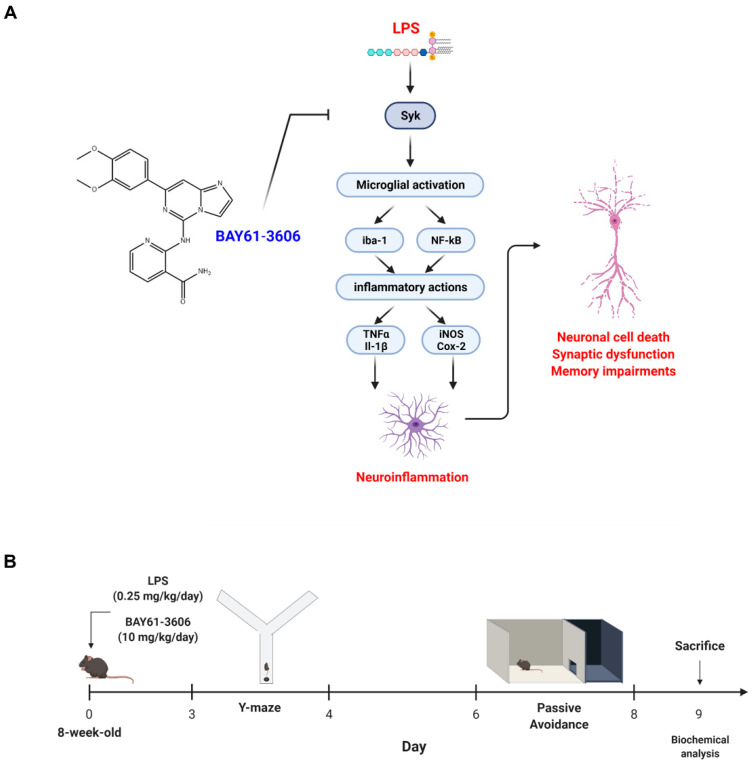
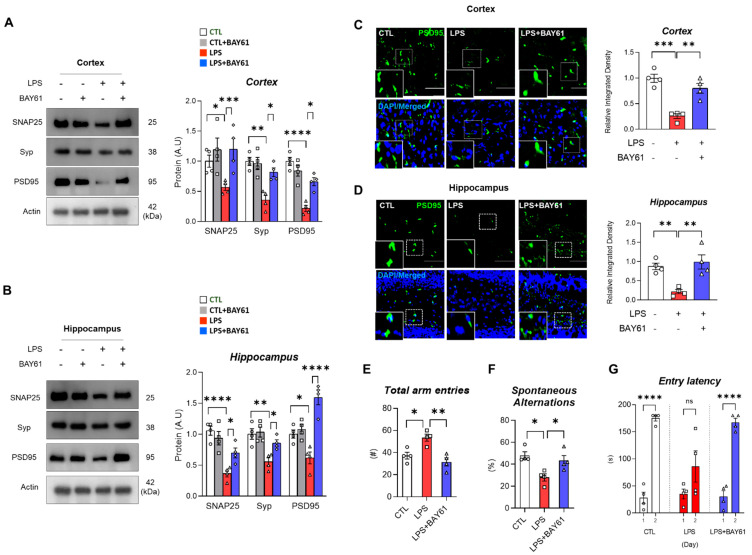
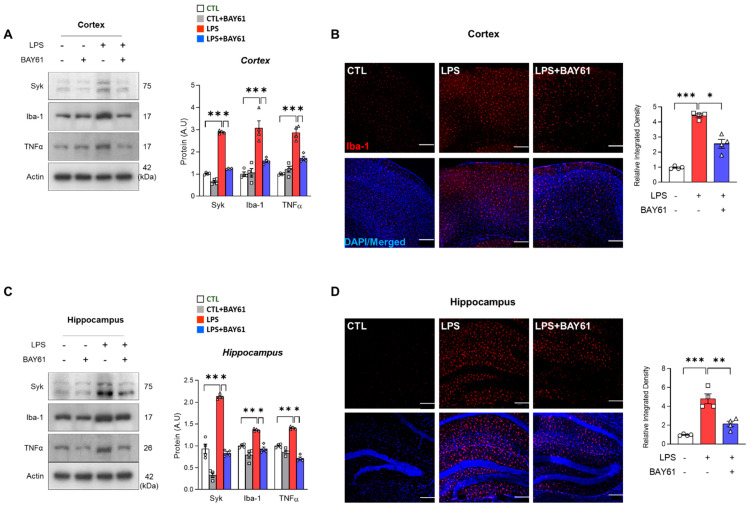
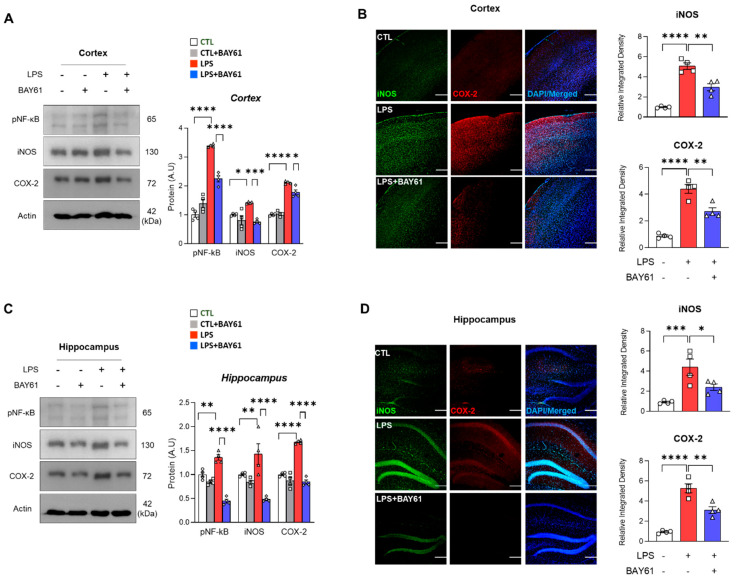
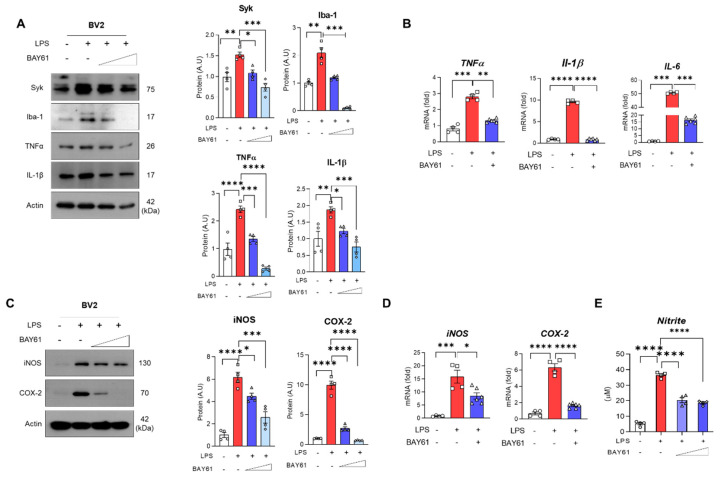
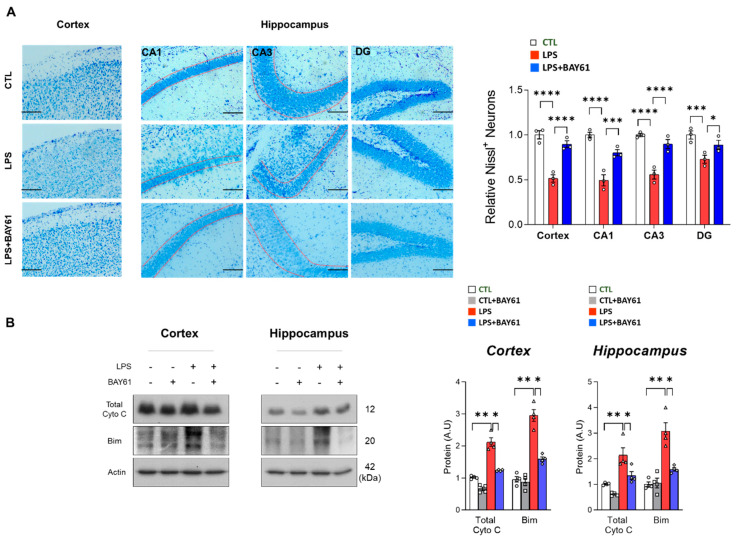
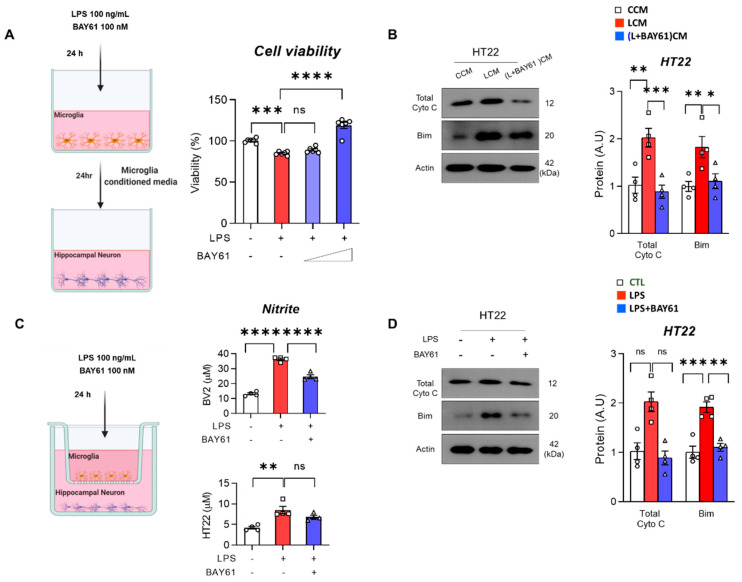
Tyrosine-protein kinase (Syk) plays a potential role in neuroinflammation and adaptive immune responses in several neurodegenerative conditions. Seeing the significant role of Syk in the pathophysiology of neurodegeneration, several pharmacological inhibitors have been developed. One of the known inhibitors of Syk is BAY61-3606, which has shown efficacies in Alzheimer's disease (AD) through regulating amyloid production. However, little is known about its efficacies in neuroinflammation and neurodegeneration. Our finding showed that Syk expression was up-regulated by lipopolysaccharide (LPS)-dependent manner, and BAY61-3606 significantly suppressed the activated microglia (ionized calcium-binding adaptor molecule 1 [Iba-1]) and the inflammatory cytokines (tumor necrosis factor-alpha [TNF-α], interleukin 1-beta [IL-1β], IL-6) and other inflammatory mediators (nuclear factor kappa B [NF-κB], cyclooxygenase-2 [Cox-2], and inducible nitric axide synthase [iNOS]) in the lipopolysaccharide (LPS)-treated in vivo and in vitro models. Moreover, BAY61-3606 significantly reduced microglia-mediated neuronal cell death by regulating the expression of Cytochrome C and Bim (B-cell lymphoma 2 [BCL-2] interacting mediator of cell death) in the LPS-treated mice brain and HT22 cells. Furthermore, the expression of synaptic markers, synaptosomal-associated protein, 25 kDa (SNAP25), synaptophysin (Syp), and postsynaptic density protein-95 (PSD95) in LPS-challenged mice showed that BAY61-3606 significantly recovered the synaptic markers. Finally, we have analyzed the effects of BAY61-3606 against memory and cognitive dysfunctions in the LPS injected mice. The Y-maze test and Passive avoidance test suggested that BAY61-3606 significantly protected against LPS-induced cognitive and memory dysfunctions. The current findings not only highlight the mechanisms of Syk in the pathophysiology of neuro-inflammation, but also support the therapeutic efficacy of BAY61-3606 in the management of neurodegeneration.
酪氨酸蛋白激酶(Syk)在几种神经退行性疾病的神经炎症和适应性免疫反应中发挥潜在作用。鉴于 Syk 在神经退行性变发病机制中的重要作用,已经开发出几种药理学抑制剂。Syk 的已知抑制剂之一是 BAY61-3606,它通过调节淀粉样蛋白的产生在阿尔茨海默病(AD)中显示出疗效。然而,其在神经炎症和神经退行性变中的疗效知之甚少。我们的研究结果表明,脂多糖(LPS)依赖性上调 Syk 的表达,BAY61-3606 显著抑制激活的小胶质细胞(离子钙结合衔接分子 1 [Iba-1])和炎症细胞因子(肿瘤坏死因子-α [TNF-α]、白细胞介素 1-β [IL-1β]、白细胞介素 6 [IL-6])和其他炎症介质(核因子 kappa B [NF-κB]、环氧化酶-2 [Cox-2]和诱导型一氧化氮合酶 [iNOS])在体内和体外 LPS 处理模型中。此外,BAY61-3606 通过调节 LPS 处理的小鼠大脑和 HT22 细胞中细胞色素 C 和 Bim(B 细胞淋巴瘤 2 [BCL-2] 相互作用的细胞死亡介体)的表达,显著减少小胶质细胞介导的神经元细胞死亡。此外,突触标志物突触相关蛋白 25kDa(SNAP25)、突触小体蛋白(Syp)和突触后密度蛋白-95(PSD95)在 LPS 攻击小鼠中的表达表明,BAY61-3606 显著恢复了突触标志物。最后,我们分析了 BAY61-3606 对 LPS 注射小鼠记忆和认知功能障碍的影响。Y 迷宫试验和被动回避试验表明,BAY61-3606 显著保护 LPS 诱导的认知和记忆功能障碍。目前的研究结果不仅强调了 Syk 在神经炎症发病机制中的作用机制,而且支持 BAY61-3606 在神经退行性变管理中的治疗效果。