Khan Kaffayatullah, Ahmad Ayaz, Amin Muhammad Nasir, Ahmad Waqas, Nazar Sohaib, Arab Abdullah Mohammad Abu
Department of Civil and Environmental Engineering, College of Engineering, King Faisal University, Al-Ahsa 31982, Saudi Arabia.
MaREI Centre, Ryan Institute and School of Engineering, College of Science and Engineering, National University of Ireland, H91 TK33 Galway, Ireland.
Materials (Basel). 2022 May 24;15(11):3762. doi: 10.3390/ma15113762.
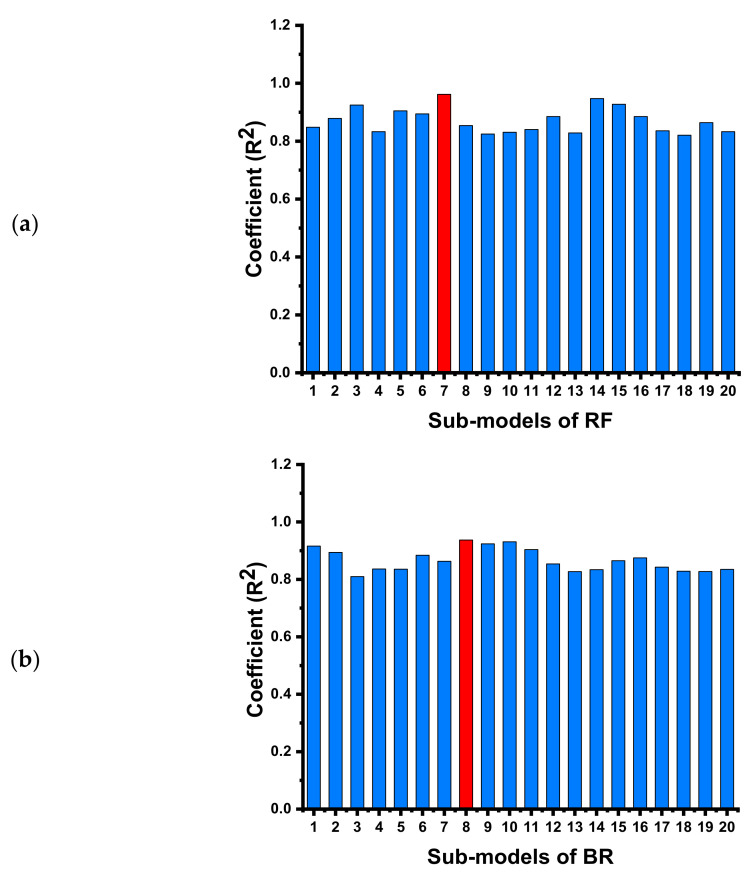
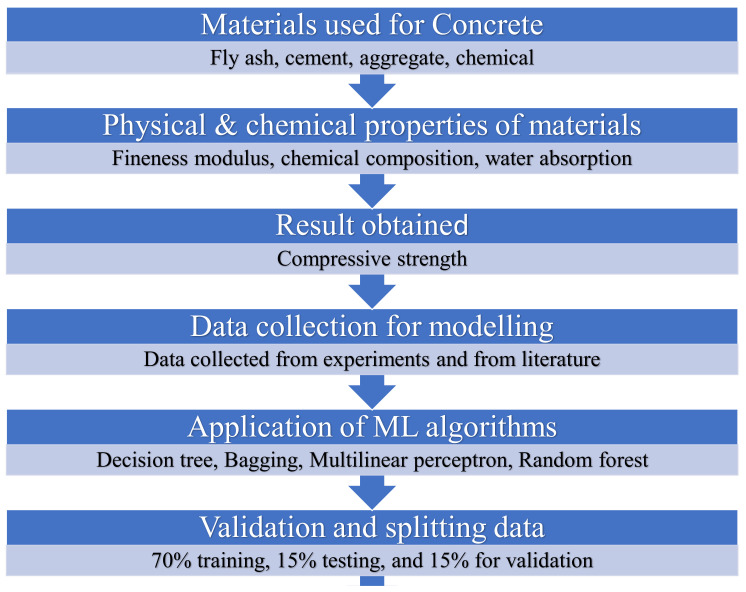
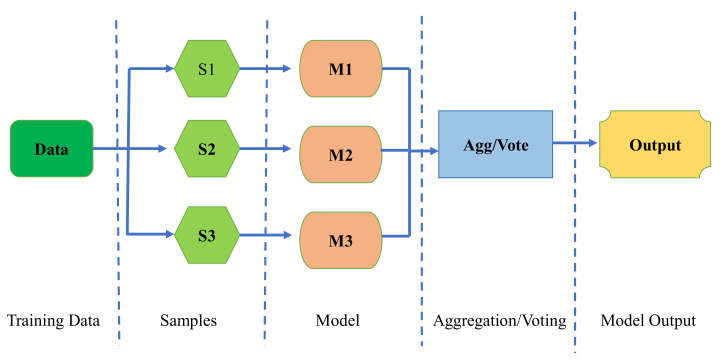
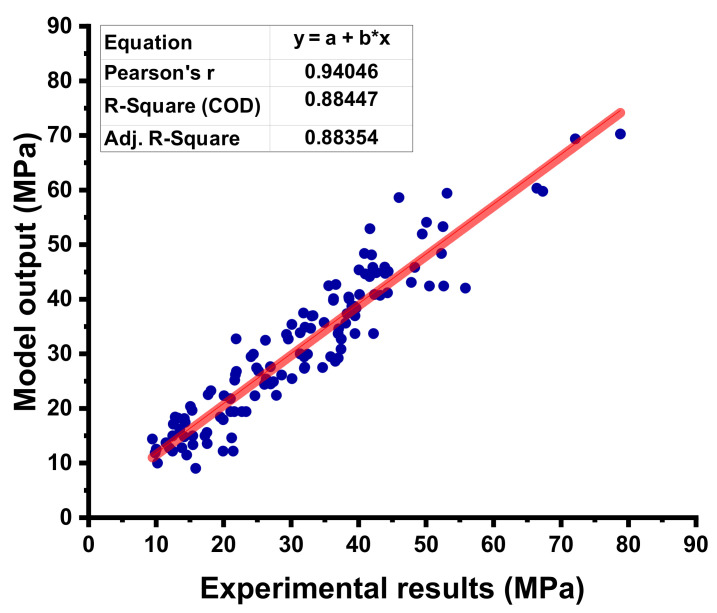
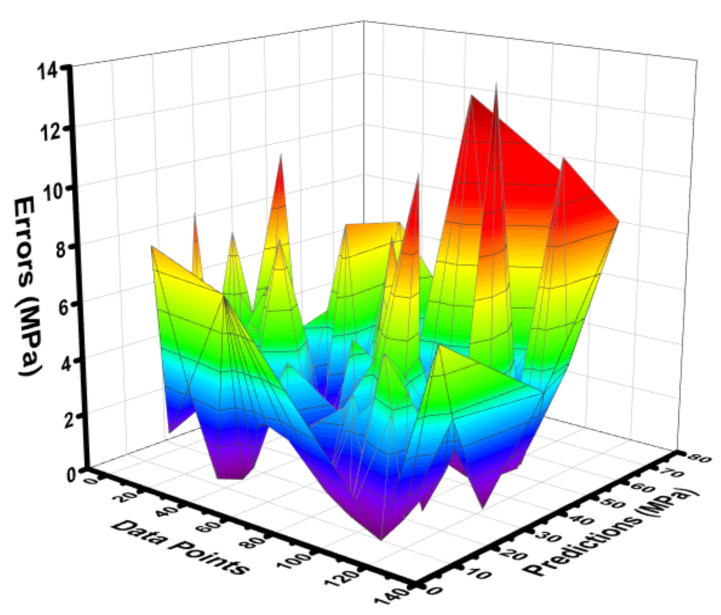
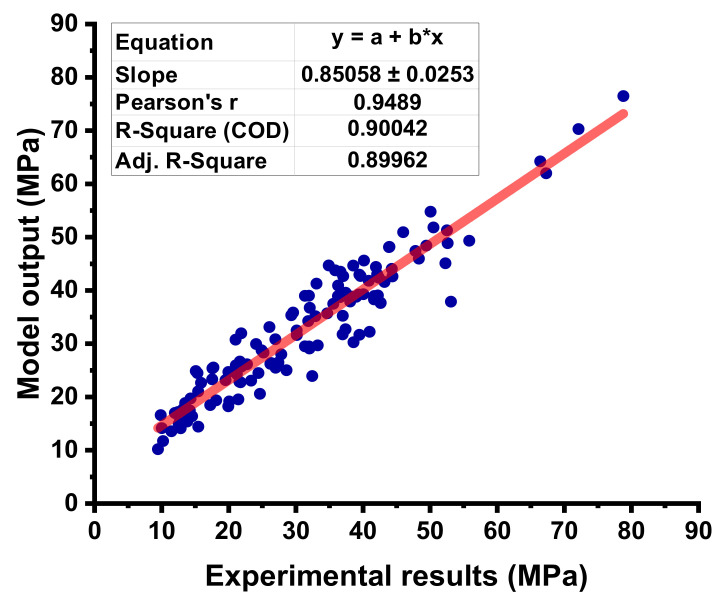
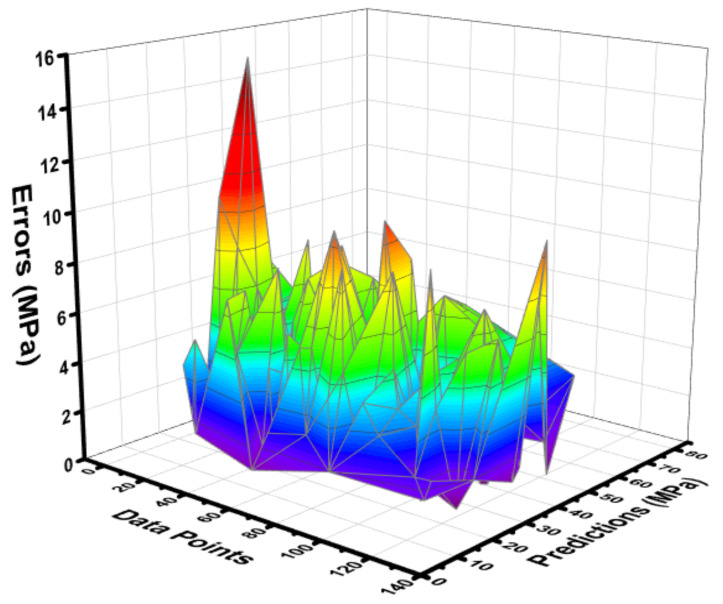
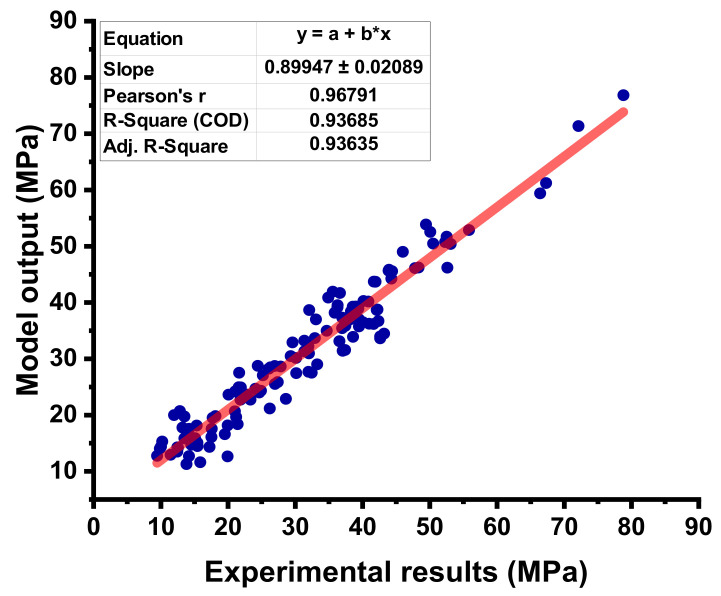
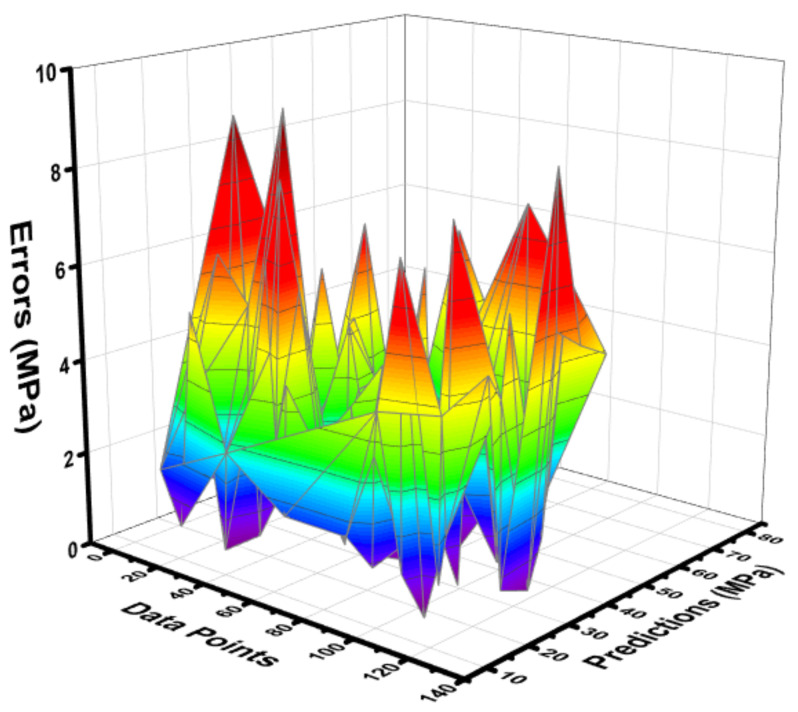
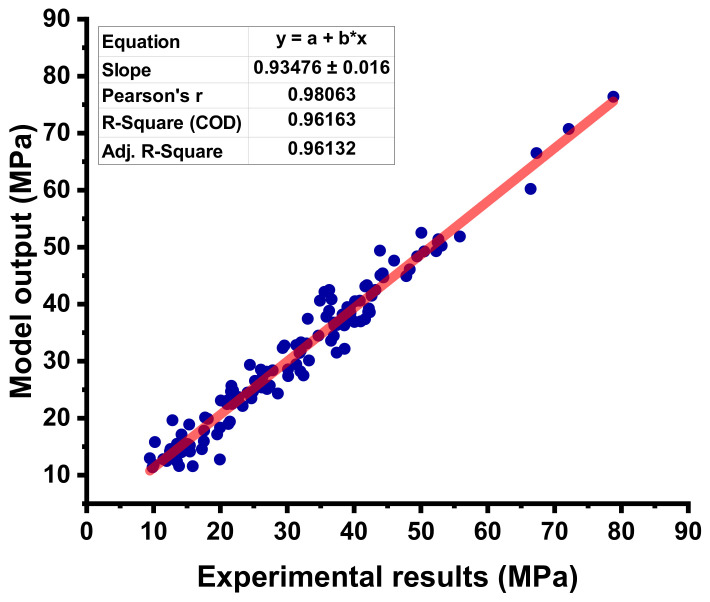
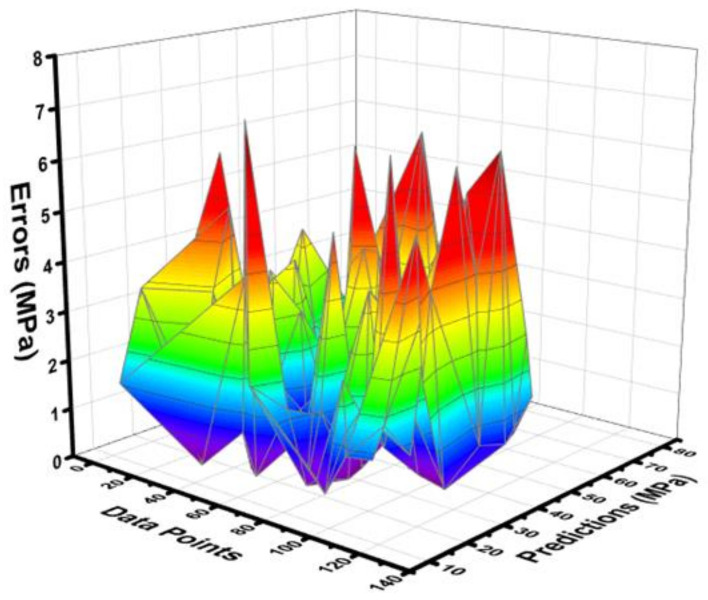
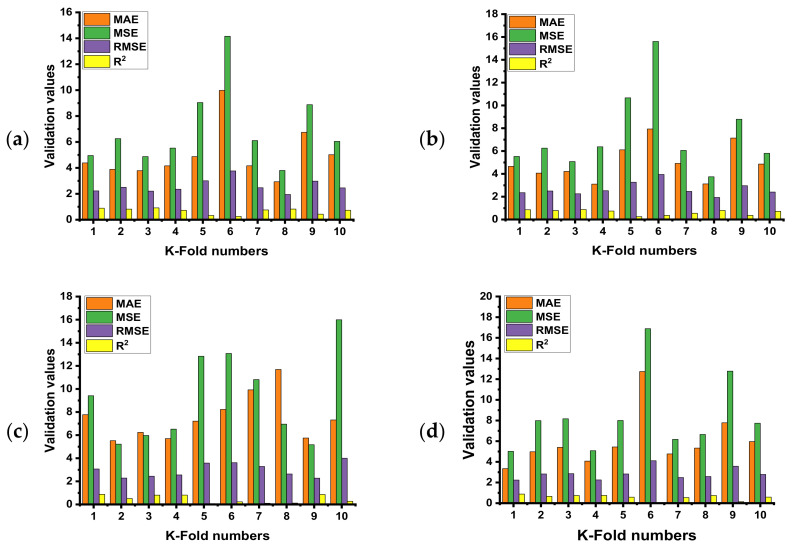
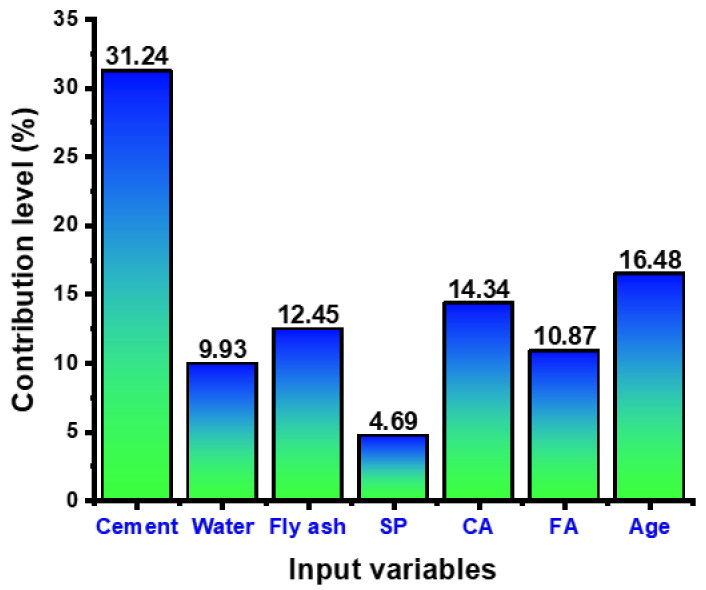
The application of supplementary cementitious materials (SCMs) in concrete has been reported as the sustainable approach toward the appropriate development. This research aims to compare the result of compressive strength (C-S) obtained from the experimental method and results estimated by employing the various modeling techniques for the fly-ash-based concrete. Although this study covers two aspects, an experimental approach and modeling techniques for predictions, the emphasis of this research is on the application of modeling methods. The physical and chemical properties of the cement and fly ash, water absorption and specific gravity of the aggregate used, surface area of the cement, and gradation of the aggregate were analyzed in the laboratory. The four predictive machine learning (PML) algorithms, such as decision tree (DT), multi-linear perceptron (MLP), random forest (RF), and bagging regressor (BR), were investigated to anticipate the C-S of concrete. Results reveal that the RF model was observed more exact in investigating the C-S of concrete containing fly ash (FA), as opposed to other employed PML techniques. The high R2 value (0.96) for the RF model indicates the high precision level for forecasting the required output as compared to DT, MLP, and BR model R results equal 0.88, 0.90, and 0.93, respectively. The statistical results and cross-validation (C-V) method also confirm the high predictive accuracy of the RF model. The highest contribution level of the cement towards the prediction was also reported in the sensitivity analysis and showed a 31.24% contribution. These PML methods can be effectively employed to anticipate the mechanical properties of concretes.
在混凝土中应用辅助胶凝材料(SCMs)已被报道为实现适度发展的可持续方法。本研究旨在比较通过实验方法获得的抗压强度(C-S)结果与采用各种建模技术估算的基于粉煤灰混凝土的结果。尽管本研究涵盖了实验方法和预测建模技术两个方面,但本研究的重点是建模方法的应用。在实验室中分析了水泥和粉煤灰的物理和化学性质、所用骨料的吸水率和比重、水泥的表面积以及骨料的级配。研究了四种预测性机器学习(PML)算法,即决策树(DT)、多线性感知器(MLP)、随机森林(RF)和装袋回归器(BR),以预测混凝土的C-S。结果表明,与其他采用的PML技术相比,RF模型在研究含粉煤灰(FA)混凝土的C-S方面更为准确。RF模型的高R2值(0.96)表明,与DT、MLP和BR模型的R结果分别为0.88、0.90和0.93相比,其预测所需输出的精度较高。统计结果和交叉验证(C-V)方法也证实了RF模型的高预测准确性。敏感性分析还报告了水泥对预测的最高贡献水平,贡献率为31.24%。这些PML方法可有效地用于预测混凝土的力学性能。