Bertaccini Assunta
Department of Agricultural and Food Sciences, Alma Mater Studiorum-University of Bologna, 40127 Bologna, Italy.
Plants (Basel). 2022 May 27;11(11):1425. doi: 10.3390/plants11111425.
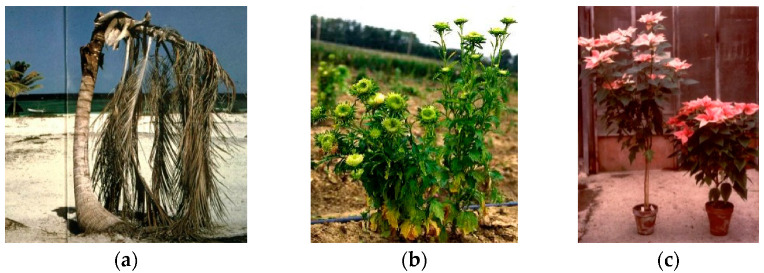
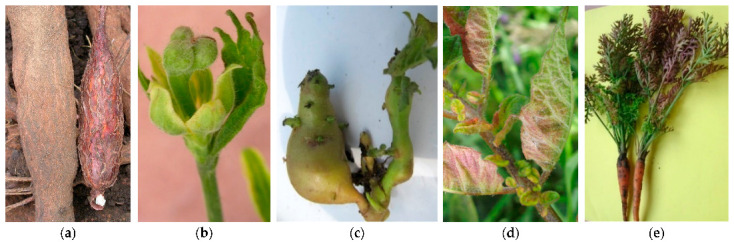
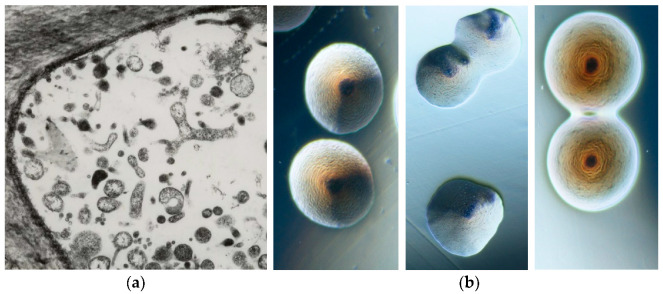
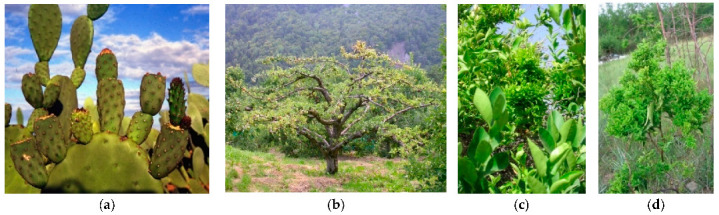
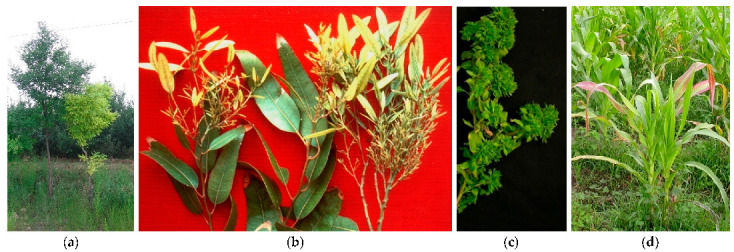
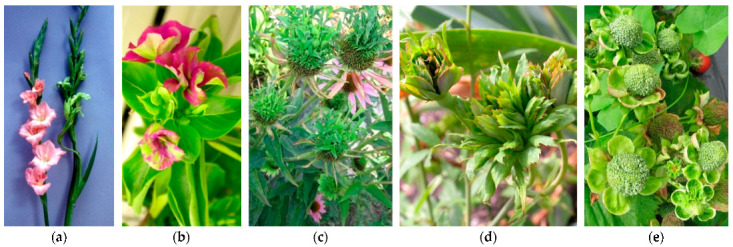
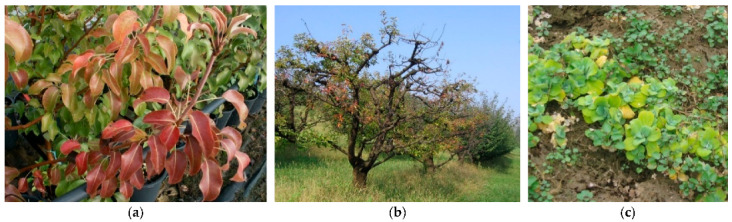
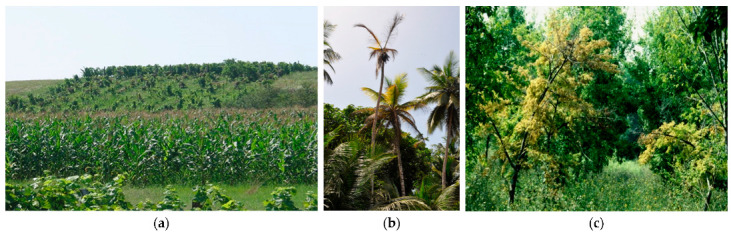
Plant pathogen presence is very dangerous for agricultural ecosystems and causes huge economic losses. Phytoplasmas are insect-transmitted wall-less bacteria living in plants, only in the phloem tissues and in the emolymph of their insect vectors. They are able to manipulate several metabolic pathways of their hosts, very often without impairing their life. The molecular diversity described (49 ' Phytoplasma' species and about 300 ribosomal subgroups) is only in some cases related to their associated symptomatology. As for the other plant pathogens, it is necessary to verify their identity and recognize the symptoms associated with their presence to appropriately manage the diseases. However, the never-ending mechanism of patho-adaptation and the copresence of other pathogens makes this management difficult. Reducing the huge impact of phytoplasma-associated diseases in all the main crops and wild species is, however, relevant, in order to reduce their effects that are jeopardizing plant biodiversity.
植物病原体的存在对农业生态系统非常危险,并会造成巨大的经济损失。植原体是一类由昆虫传播的无细胞壁细菌,寄生于植物体内,仅存在于韧皮部组织及其昆虫传播介体的血淋巴中。它们能够操控宿主的多种代谢途径,而且很多时候并不会损害宿主的生命。所描述的分子多样性(49种“植原体”物种和约300个核糖体亚组)仅在某些情况下与其相关的症状学有关。与其他植物病原体一样,有必要确认它们的身份并识别与其存在相关的症状,以便对疾病进行适当管理。然而,病原体不断适应的机制以及其他病原体的共存使得这种管理变得困难。不过,减轻植原体相关病害对所有主要作物和野生植物物种的巨大影响至关重要,以便减少它们对植物生物多样性造成的危害。