Infection, Immunity and Inflammation Section, UCL Great Ormond Street Institute of Child Health, London, WC1N 1EH, UK.
Department of Surgical Biotechnology, UCL Division of Surgery and Interventional Science, UCL, London, NW3 2PF, UK.
Microbiome. 2022 Jun 10;10(1):89. doi: 10.1186/s40168-022-01270-7.
Haematopoietic stem cell transplantation is a curative procedure for a variety of conditions. Despite major advances, a plethora of adverse clinical outcomes can develop post-transplantation including graft-versus-host disease and infections, which remain the major causes of morbidity and mortality. There is increasing evidence that the gastrointestinal microbiota is associated with clinical outcomes post-haematopoietic stem cell transplantation. Herein, we investigated the longitudinal dynamics of the gut microbiota and metabolome and potential associations to clinical outcomes in paediatric haematopoietic stem cell transplantation at a single centre.
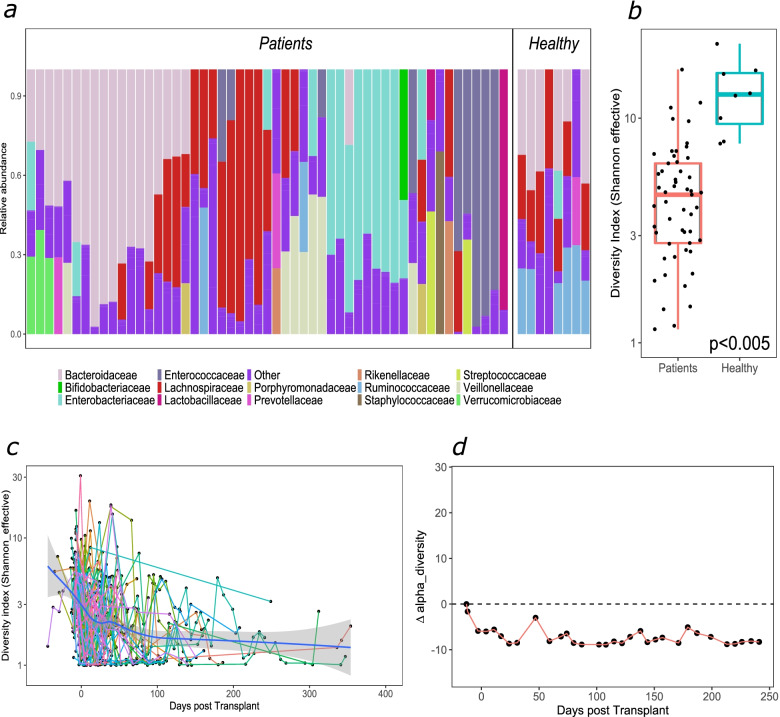
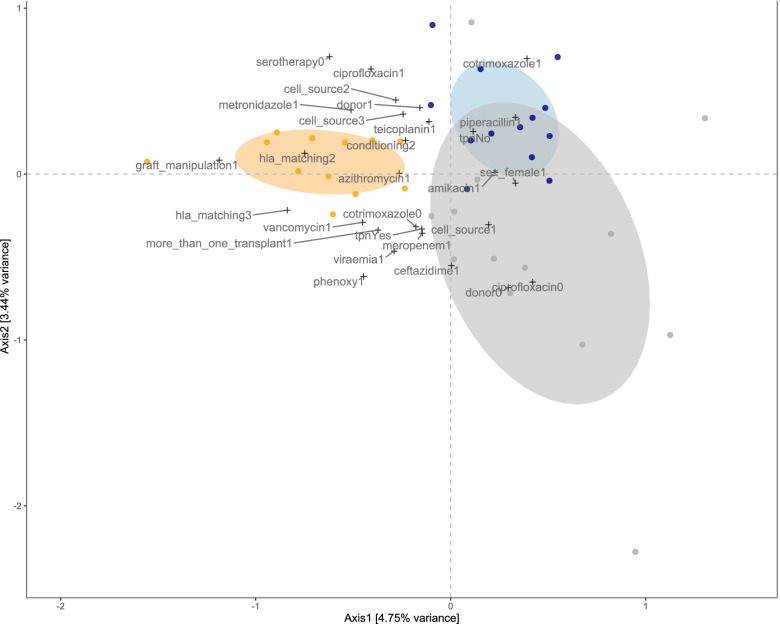
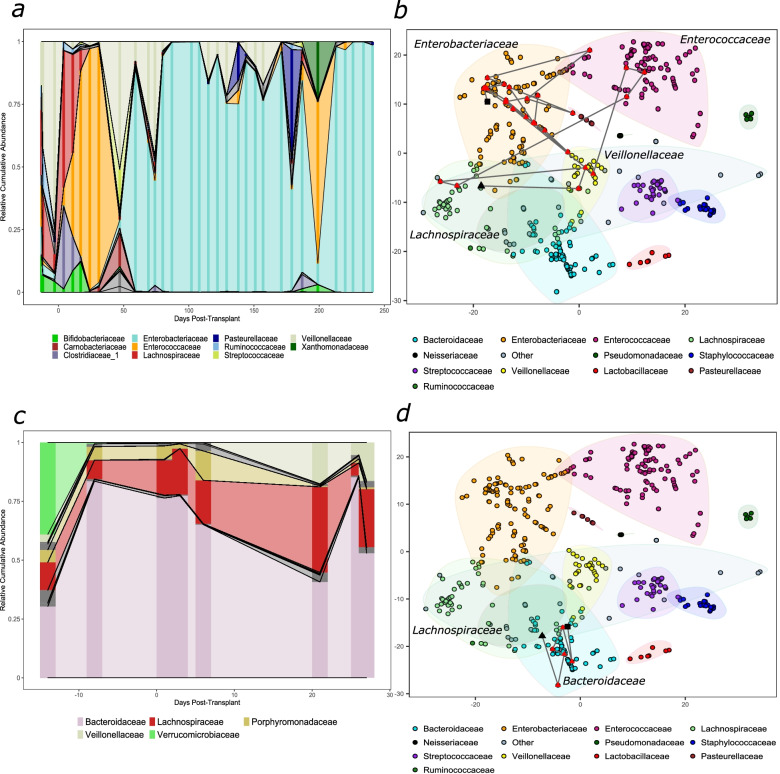
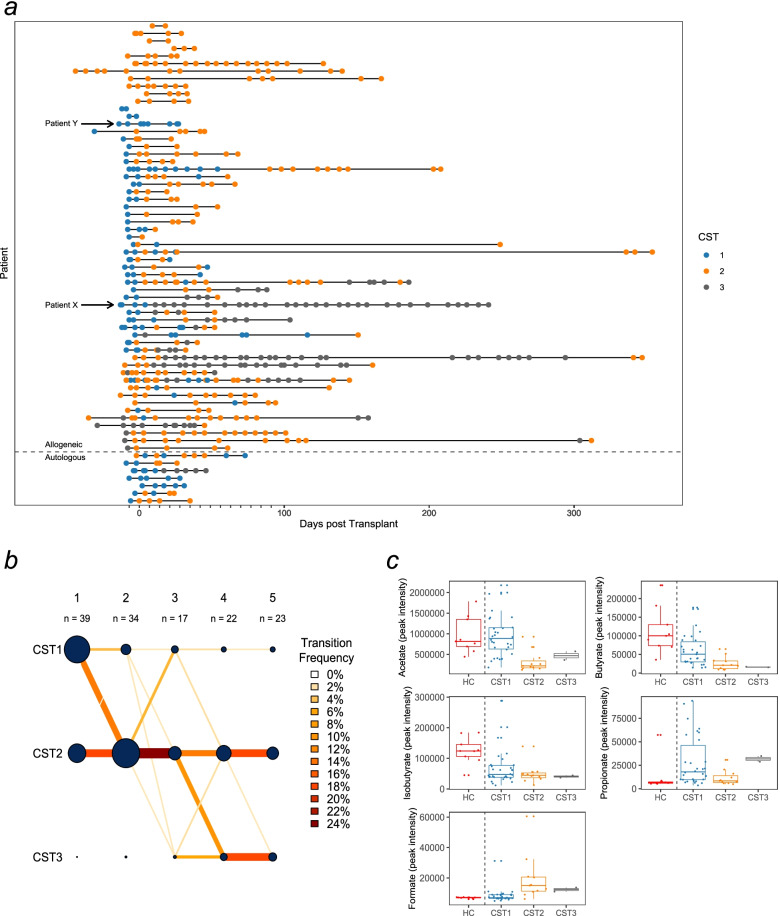
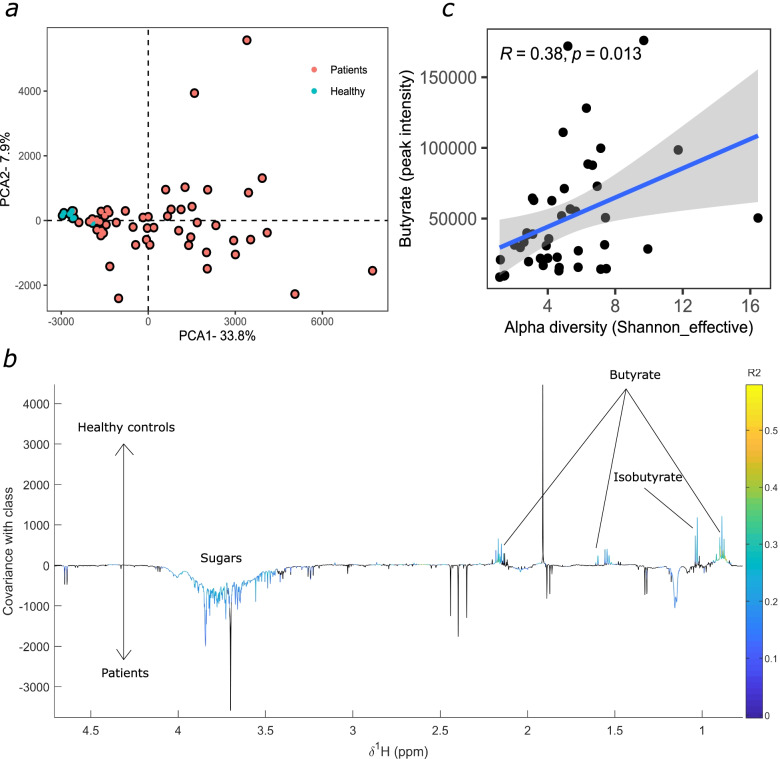
On admission (baseline), the majority of patients presented with a different gut microbial composition in comparison with healthy control children with a significantly lower alpha diversity. A further, marked decrease in alpha diversity was observed immediately post-transplantation and in most microbial diversity, and composition did not return to baseline status whilst hospitalised. Longitudinal trajectories identified continuous fluctuations in microbial composition, with the dominance of a single taxon in a significant proportion of patients. Using pam clustering, three clusters were observed in the dataset. Cluster 1 was common pre-transplantation, characterised by a higher abundance of Clostridium XIVa, Bacteroides and Lachnospiraceae; cluster 2 and cluster 3 were more common post-transplantation with a higher abundance of Streptococcus and Staphylococcus in the former whilst Enterococcus, Enterobacteriaceae and Escherichia predominated in the latter. Cluster 3 was also associated with a higher risk of viraemia. Likewise, further multivariate analysis reveals Enterobacteriaceae, viraemia, use of total parenteral nutrition and various antimicrobials contributing towards cluster 3, Streptococcaceae, Staphylococcaceae, Neisseriaceae, vancomycin and metronidazole contributing towards cluster 2. Lachnospiraceae, Ruminococcaceae, Bifidobacteriaceae and not being on total parenteral nutrition contributed to cluster 1. Untargeted metabolomic analyses revealed changes that paralleled fluctuations in microbiota composition; importantly, low faecal butyrate was associated with a higher risk of viraemia.
These findings highlight the frequent shifts and dominations in the gut microbiota of paediatric patients undergoing haematopoietic stem cell transplantation. The study reveals associations between the faecal microbiota, metabolome and viraemia. To identify and explore the potential of microbial biomarkers that may predict the risk of complications post-HSCT, larger multi-centre studies investigating the longitudinal microbial profiling in paediatric haematopoietic stem cell transplantation are warranted. Video abstract.
造血干细胞移植是治疗多种疾病的一种有治愈效果的方法。尽管取得了重大进展,但移植后仍可能出现多种不良临床结果,包括移植物抗宿主病和感染,这仍然是发病率和死亡率的主要原因。越来越多的证据表明,胃肠道微生物群与造血干细胞移植后的临床结果有关。在此,我们在单个中心研究了儿科造血干细胞移植患者的肠道微生物群和代谢组的纵向动态及其与临床结果的潜在关联。
在入院时(基线),与健康对照组儿童相比,大多数患者的肠道微生物组成不同,α多样性明显较低。移植后立即观察到 α 多样性进一步显著下降,而大多数微生物多样性和组成在住院期间并未恢复到基线状态。纵向轨迹确定了微生物组成的持续波动,在很大一部分患者中,单一分类群占主导地位。使用 pam 聚类,在数据集上观察到三个聚类。聚类 1 在移植前很常见,其特征是梭菌 XIVa、拟杆菌和lachnospiraceae 的丰度较高;聚类 2 和聚类 3 在移植后更为常见,前者链球菌和葡萄球菌的丰度较高,而后者肠球菌、肠杆菌科和大肠杆菌占主导地位。聚类 3也与病毒血症风险较高相关。同样,进一步的多变量分析表明,肠杆菌科、病毒血症、全胃肠外营养的使用和各种抗生素导致聚类 3,链球菌科、葡萄球菌科、奈瑟菌科、万古霉素和甲硝唑导致聚类 2。lachnospiraceae、ruminococcaceae、双歧杆菌科和未接受全胃肠外营养有助于聚类 1。非靶向代谢组学分析显示变化与微生物群落组成的波动平行;重要的是,粪便丁酸含量低与病毒血症风险较高相关。
这些发现强调了儿科造血干细胞移植患者肠道微生物群频繁的变化和主导地位。该研究揭示了粪便微生物群、代谢组和病毒血症之间的关联。为了确定和探索可能预测 HSCT 后并发症风险的微生物生物标志物,需要进行更大规模的多中心研究,以调查儿科造血干细胞移植中的纵向微生物分析。