Pediatric Oncology and Hematology "Lalla Seràgnoli", IRCCS Azienda Ospedaliero-Universitaria di Bologna, Bologna, Italy.
Department of Medical and Surgical Sciences, University of Bologna, Bologna, Italy.
Blood. 2023 Oct 19;142(16):1387-1398. doi: 10.1182/blood.2023020026.
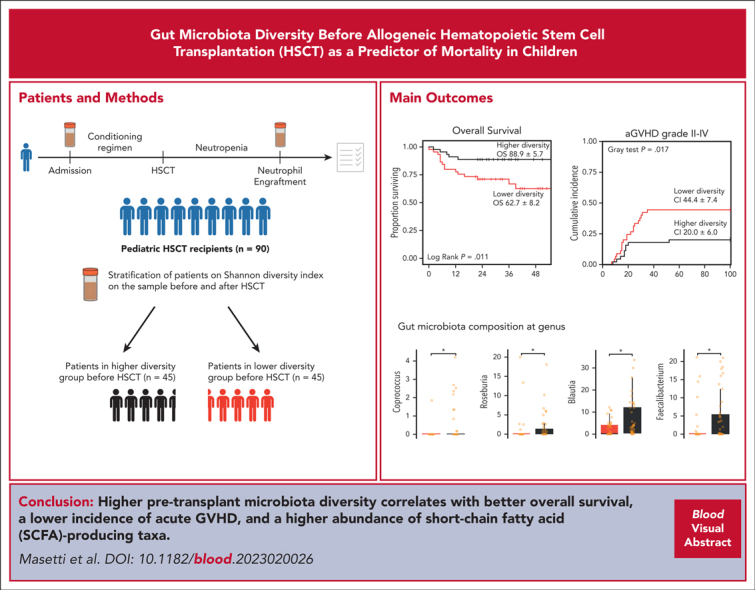
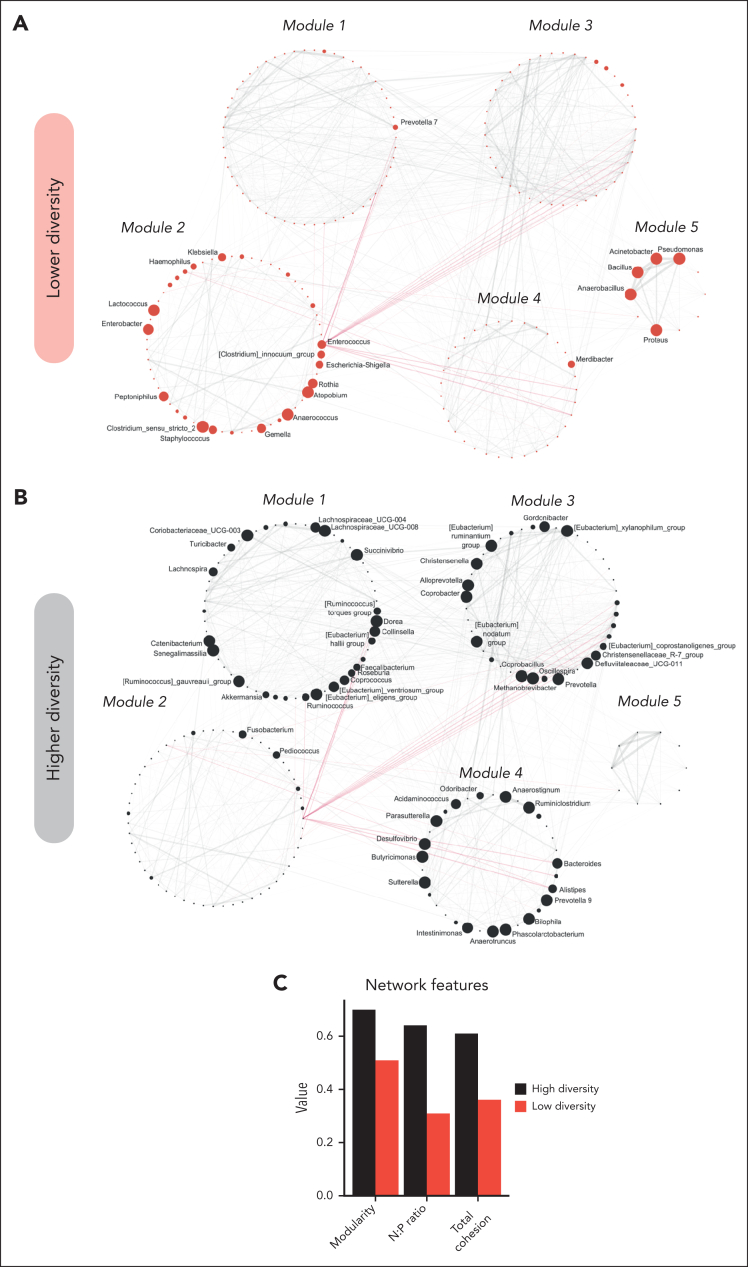
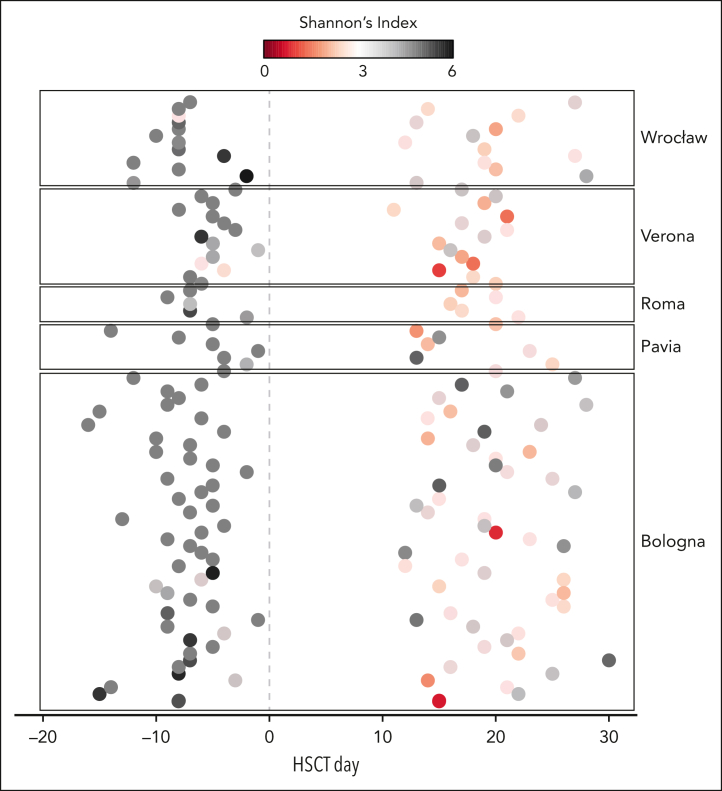
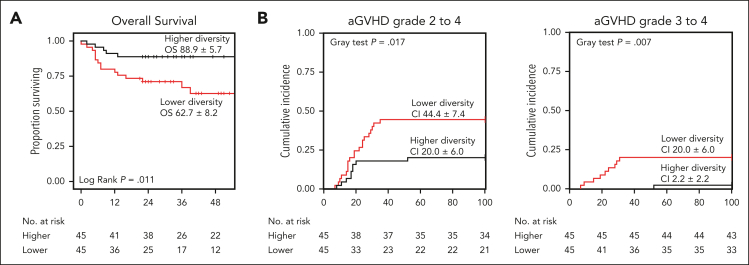
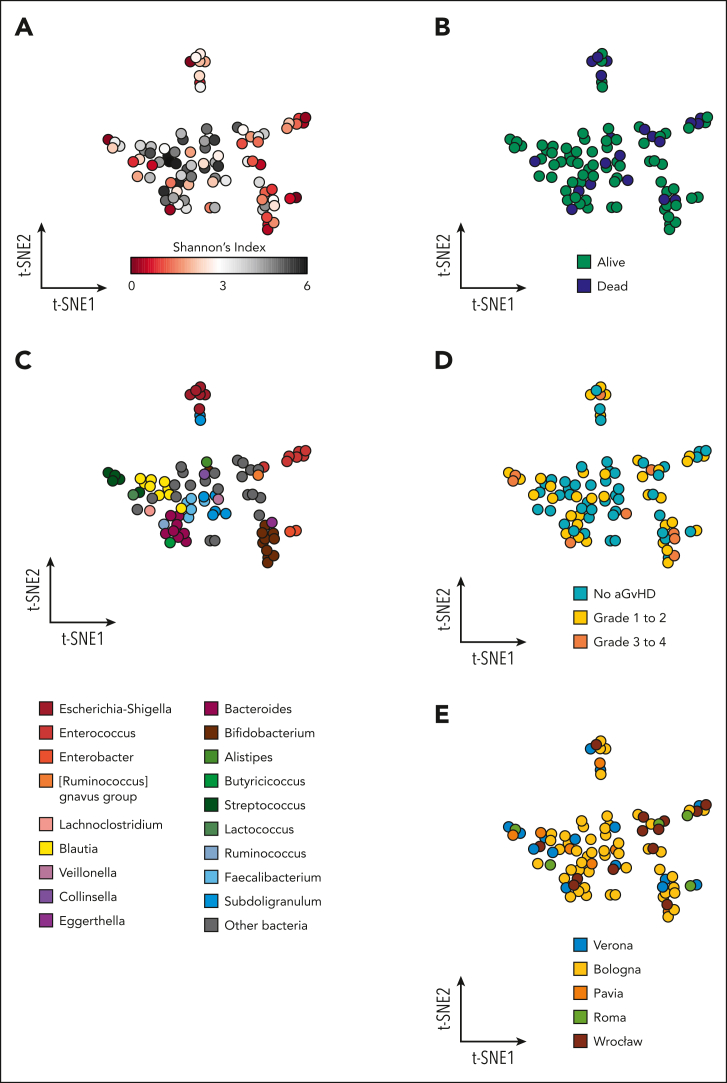
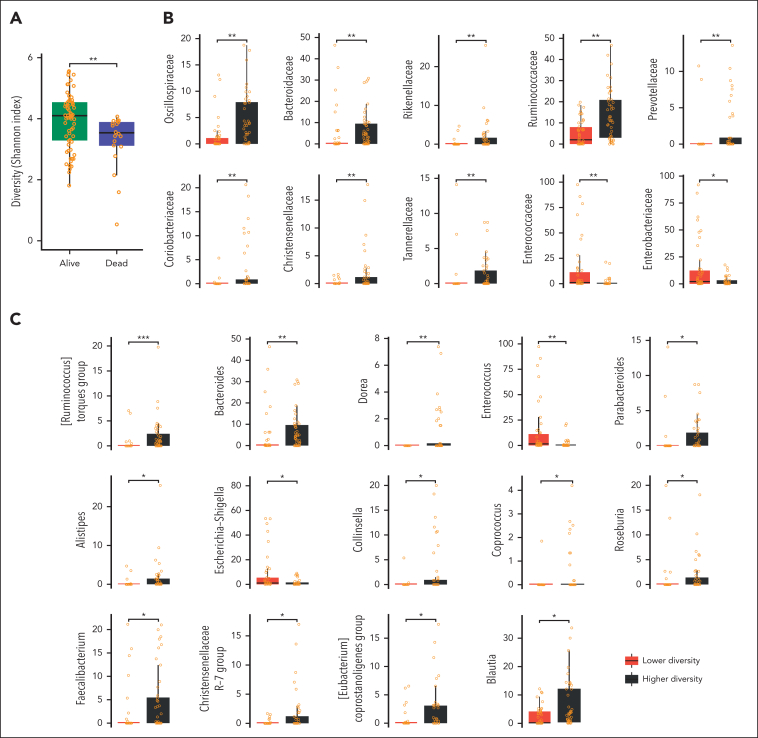
The correlation existing between gut microbiota diversity and survival after allogeneic hematopoietic stem cell transplantation (allo-HSCT) has so far been studied in adults. Pediatric studies question whether this association applies to children as well. Stool samples from a multicenter cohort of 90 pediatric allo-HSCT recipients were analyzed using 16S ribosomal RNA amplicon sequencing to profile the gut microbiota and estimate diversity with the Shannon index. A global-to-local networking approach was used to characterize the ecological structure of the gut microbiota. Patients were stratified into higher- and lower-diversity groups at 2 time points: before transplantation and at neutrophil engraftment. The higher-diversity group before transplantation exhibited a higher probability of overall survival (88.9% ± 5.7% standard error [SE] vs 62.7% ± 8.2% SE; P = .011) and lower incidence of grade 2 to 4 and grade 3 to 4 acute graft-versus-host disease (aGVHD). No significant difference in relapse-free survival was observed between the 2 groups (80.0% ± 6.0% SE vs 55.4% ± 10.8% SE; P = .091). The higher-diversity group was characterized by higher relative abundances of potentially health-related microbial families, such as Ruminococcaceae and Oscillospiraceae. In contrast, the lower-diversity group showed an overabundance of Enterococcaceae and Enterobacteriaceae. Network analysis detected short-chain fatty acid producers, such as Blautia, Faecalibacterium, Roseburia, and Bacteroides, as keystones in the higher-diversity group. Enterococcus, Escherichia-Shigella, and Enterobacter were instead the keystones detected in the lower-diversity group. These results indicate that gut microbiota diversity and composition before transplantation correlate with survival and with the likelihood of developing aGVHD.
肠道微生物多样性与异基因造血干细胞移植(allo-HSCT)后生存之间的相关性已在成人中进行了研究。儿科研究质疑这种相关性是否也适用于儿童。使用 16S 核糖体 RNA 扩增子测序分析了来自 90 名儿科 allo-HSCT 受者的多中心队列的粪便样本,以分析肠道微生物群并使用香农指数估计多样性。使用全局到局部的网络方法来描述肠道微生物群的生态结构。患者在 2 个时间点分为高多样性组和低多样性组:移植前和中性粒细胞植入时。移植前高多样性组的总生存率更高(88.9%±5.7%标准误差[SE]比 62.7%±8.2%SE;P=.011),2 至 4 级和 3 至 4 级急性移植物抗宿主病(aGVHD)的发生率更低。两组之间无无复发生存率的显著差异(80.0%±6.0%SE 比 55.4%±10.8%SE;P=.091)。高多样性组的潜在与健康相关的微生物家族(如 Ruminococcaceae 和 Oscillospiraceae)的相对丰度较高。相比之下,低多样性组表现出肠球菌科和肠杆菌科的过度生长。网络分析检测到短链脂肪酸产生菌,如 Blautia、Faecalibacterium、Roseburia 和 Bacteroides,作为高多样性组的关键菌。相反,在低多样性组中检测到 Enterococcus、Escherichia-Shigella 和 Enterobacter 是关键菌。这些结果表明,移植前肠道微生物多样性和组成与生存和发生 aGVHD 的可能性相关。