Institute of Legal Medicine, University Hospital Düsseldorf, Düsseldorf, Germany.
Mathematical Institute, Heinrich Heine University, Düsseldorf, Germany.
Int J Legal Med. 2022 Sep;136(5):1341-1350. doi: 10.1007/s00414-022-02837-7. Epub 2022 Jun 11.
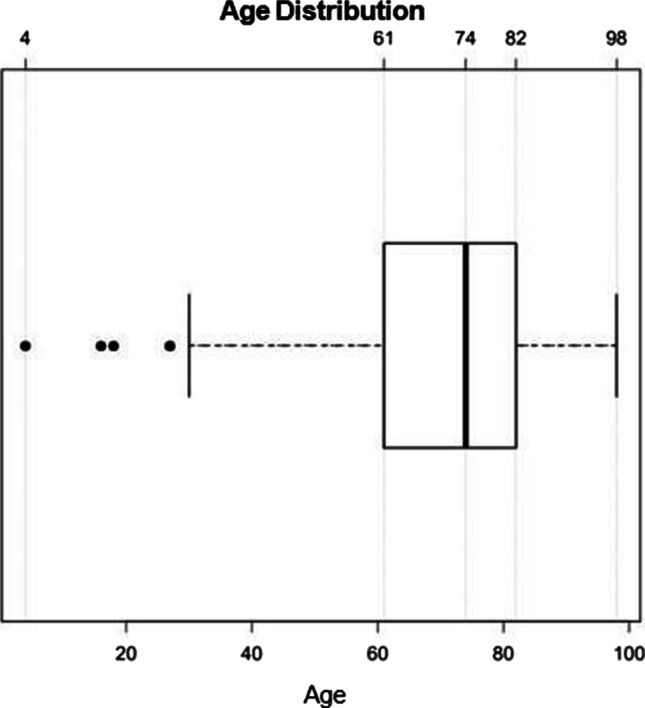
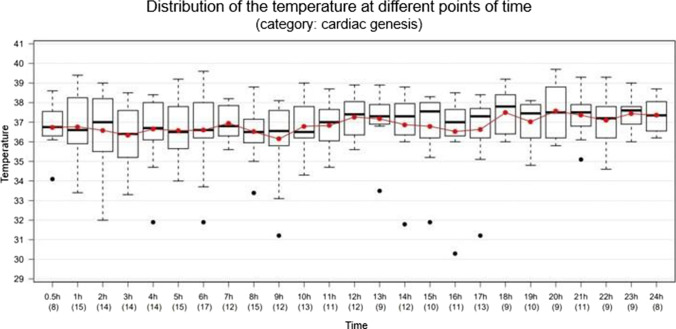
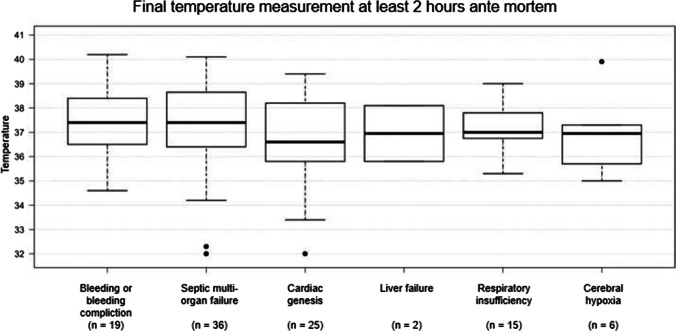
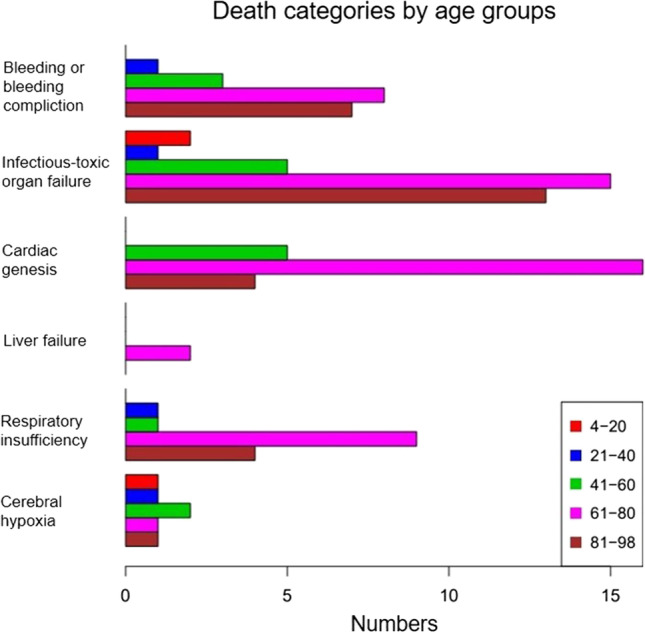
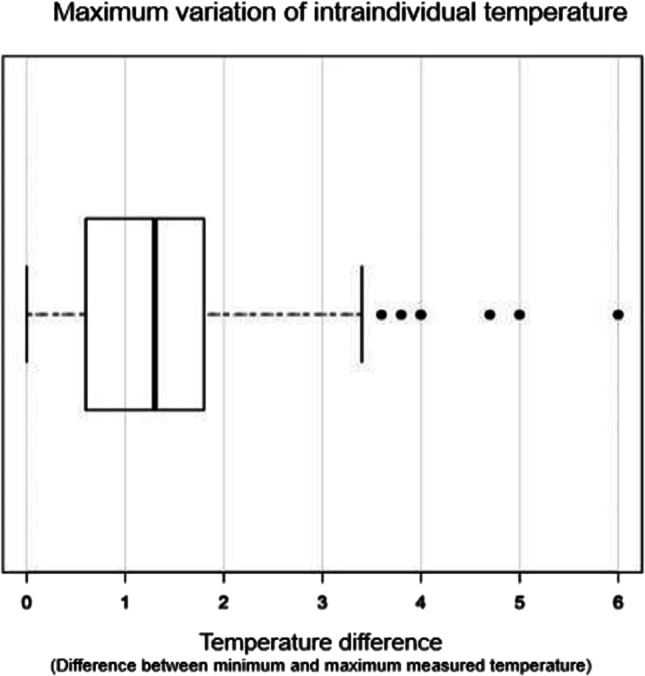
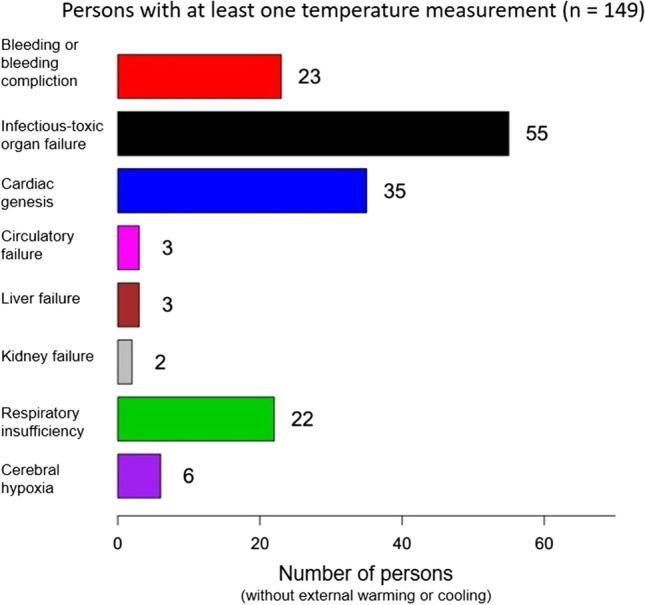
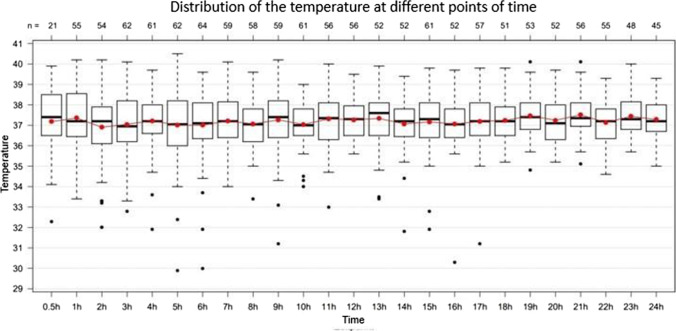
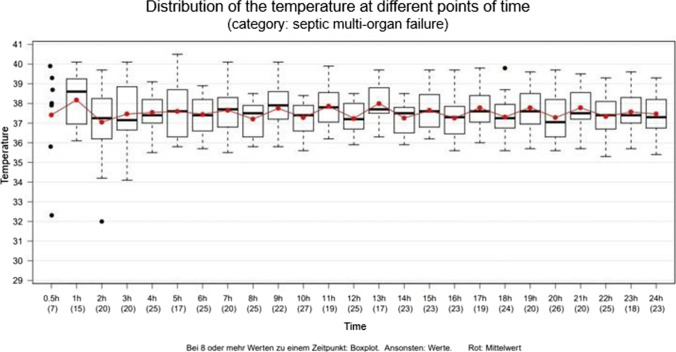
Temperature-based methods are widely accepted as the gold standard for death time estimation. In the absence of any other information, the nomogram method generally assumes that a person died with a core body temperature of approximately 37.2 °C. Nevertheless, several external and internal factors may alter the body temperature during agony. A retrospective medical record analysis was carried out on in-hospital death cases from two consecutive years of surgical intensive care units to determine the effects of factors influencing the core body temperature at the point of death. Data from 103 case files were included in the statistical data evaluation. The body temperature fluctuated between and within individuals over time. No clear correlation to certain death groups was observed. Even primary cardiac deaths showed broad intervals of temperatures at the point of death. Men seem to die with higher body temperatures than women. The presented data highlight potential biases for death time estimations when generally assuming a core body temperature of 37.2 °C. In conclusion, the estimation of the time of death should include various methods, including a non-temperature-dependent method. Any uncertainties regarding the body temperature at point of death need to be resolved (e.g. by identifying fever constellations) and elucidated if elimination is not possible.
基于温度的方法被广泛认为是死亡时间估计的金标准。在没有其他信息的情况下,通常假设人体在核心体温约为 37.2°C 时死亡。然而,一些外部和内部因素可能会在痛苦过程中改变体温。对连续两年外科重症监护病房的住院死亡病例进行了回顾性病历分析,以确定影响死亡时核心体温的因素的影响。统计数据分析中包括了 103 份病例文件的数据。个体之间的体温随时间而波动。没有观察到与特定死亡群体有明确的相关性。即使是原发性心脏死亡,在死亡时也表现出广泛的温度区间。男性的体温似乎比女性高。所呈现的数据强调了在普遍假设核心体温为 37.2°C 的情况下,对死亡时间估计可能存在潜在的偏差。总之,死亡时间的估计应该包括各种方法,包括非温度依赖性方法。需要解决死亡时体温的任何不确定性(例如,通过确定发热情况),如果无法排除,则需要阐明。