Department of Surgery, University of Colorado, Aurora, CO.
Department of Surgery, University of Colorado, Aurora, CO; Ernest E. Moore Shock Trauma Center at Denver Health, CO.
Surgery. 2022 Aug;172(2):751-758. doi: 10.1016/j.surg.2022.04.055. Epub 2022 Jun 9.
Zone 1 resuscitative endovascular balloon occlusion of the aorta has been recommended for refractory shock after a dismounted complex blast injury for the austere combat scenario. While resuscitative endovascular balloon occlusion of the aorta should enhance coronary perfusion, there is a potential risk of secondary brain injury due to loss of cerebral autoregulation. We developed a combat casualty relevant dismounted complex blast injury swine model to evaluate the effects of resuscitative endovascular balloon occlusion of the aorta zone I on intracranial pressure and cerebral edema. We hypothesized that zone 1 aortic occlusion with resuscitative endovascular balloon occlusion of the aorta would increase mean arterial pressure transmitted in excessive intracranial pressure, thereby worsening brain injury.
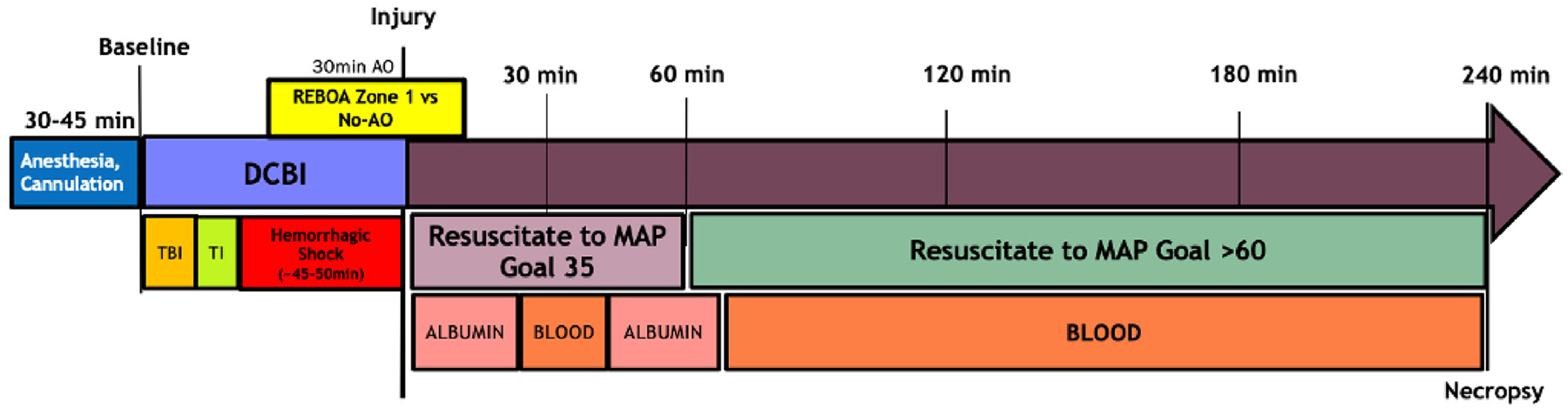
50 kg male Yorkshire swine were subjected to a combination dismounted complex blast injury model consisting of blast traumatic brain injury (50 psi, ARA Mobile Shock Laboratory), tissue injury (bilateral femur fractures), and hemorrhagic shock (controlled bleeding to a base deficit goal of 10 mEq/L). During the shock phase, pigs were randomized to no aortic occlusion (n = 8) or to 30 minutes of zone 1 resuscitative endovascular balloon occlusion of the aorta (zone 1 aortic occlusion group, n = 6). After shock, pigs in both groups received a modified Tactical Combat Casualty Care-based resuscitation and were monitored for an additional 240 minutes until euthanasia/death for a total of 6 hours. Intracranial pressure was monitored throughout, and brains were harvested for water content. Linear mixed models for repeated measures were used to compare mean arterial pressure and intracranial pressure between zone 1 aortic occlusion and no aortic occlusion groups.
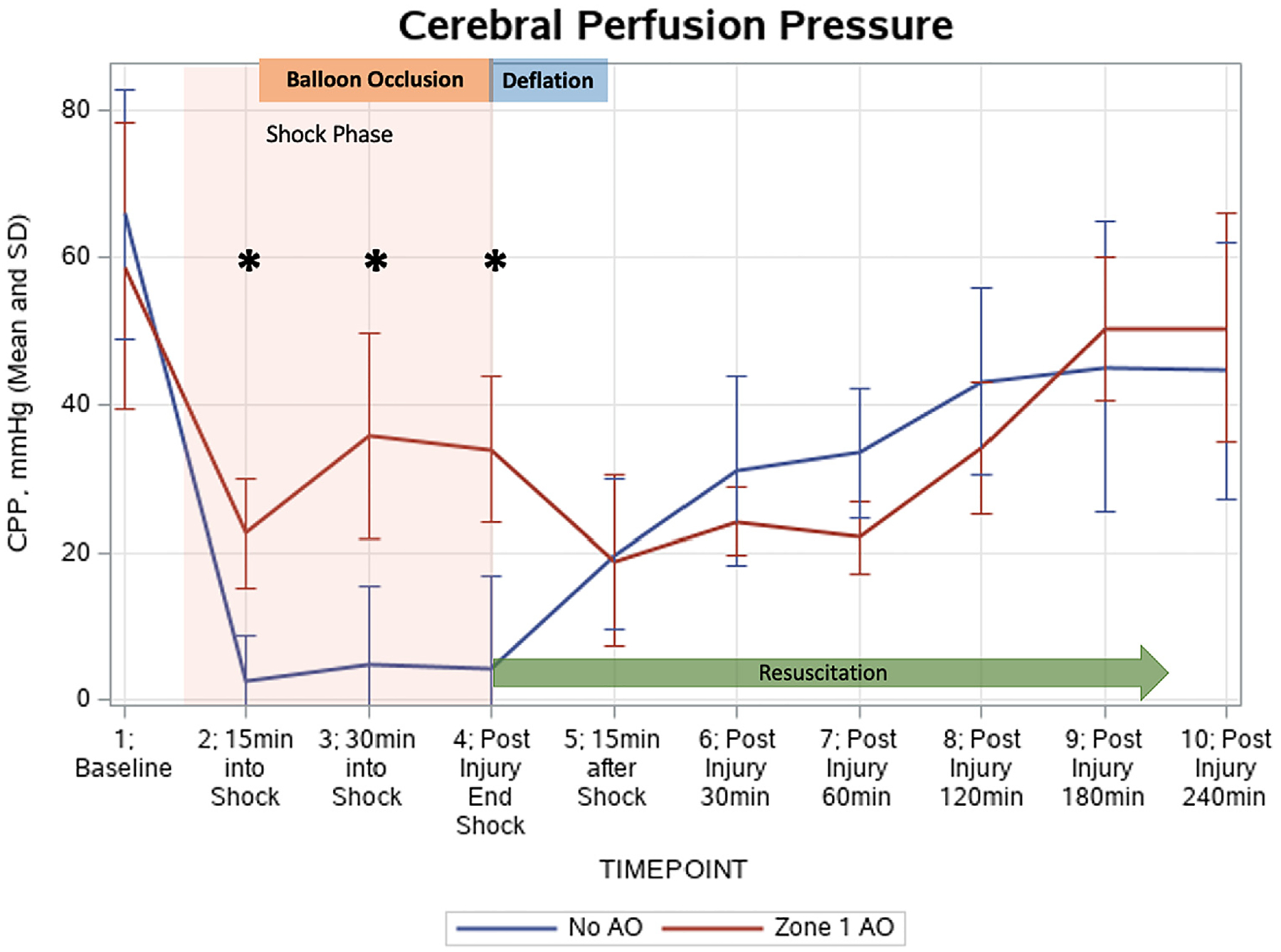
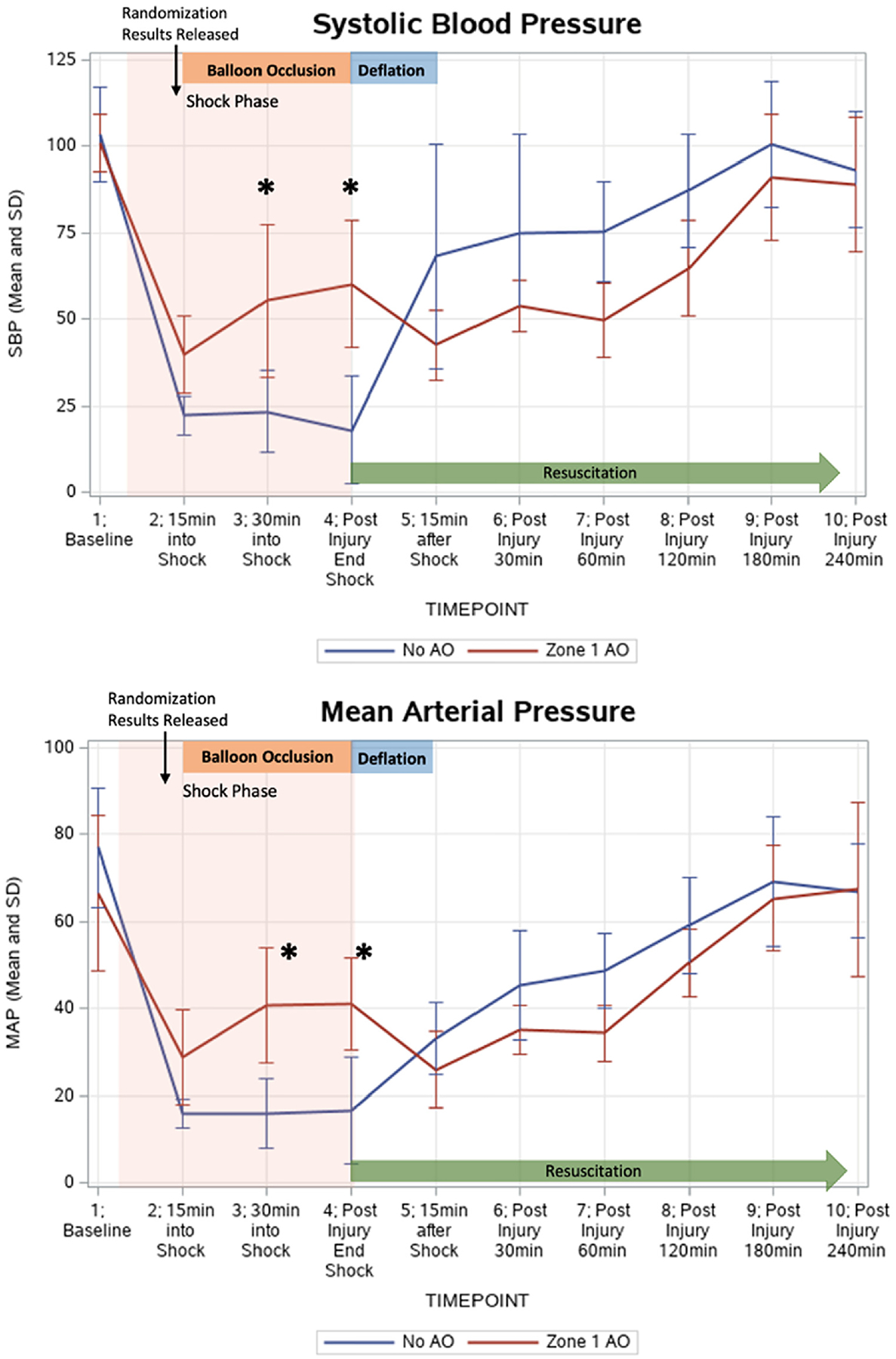
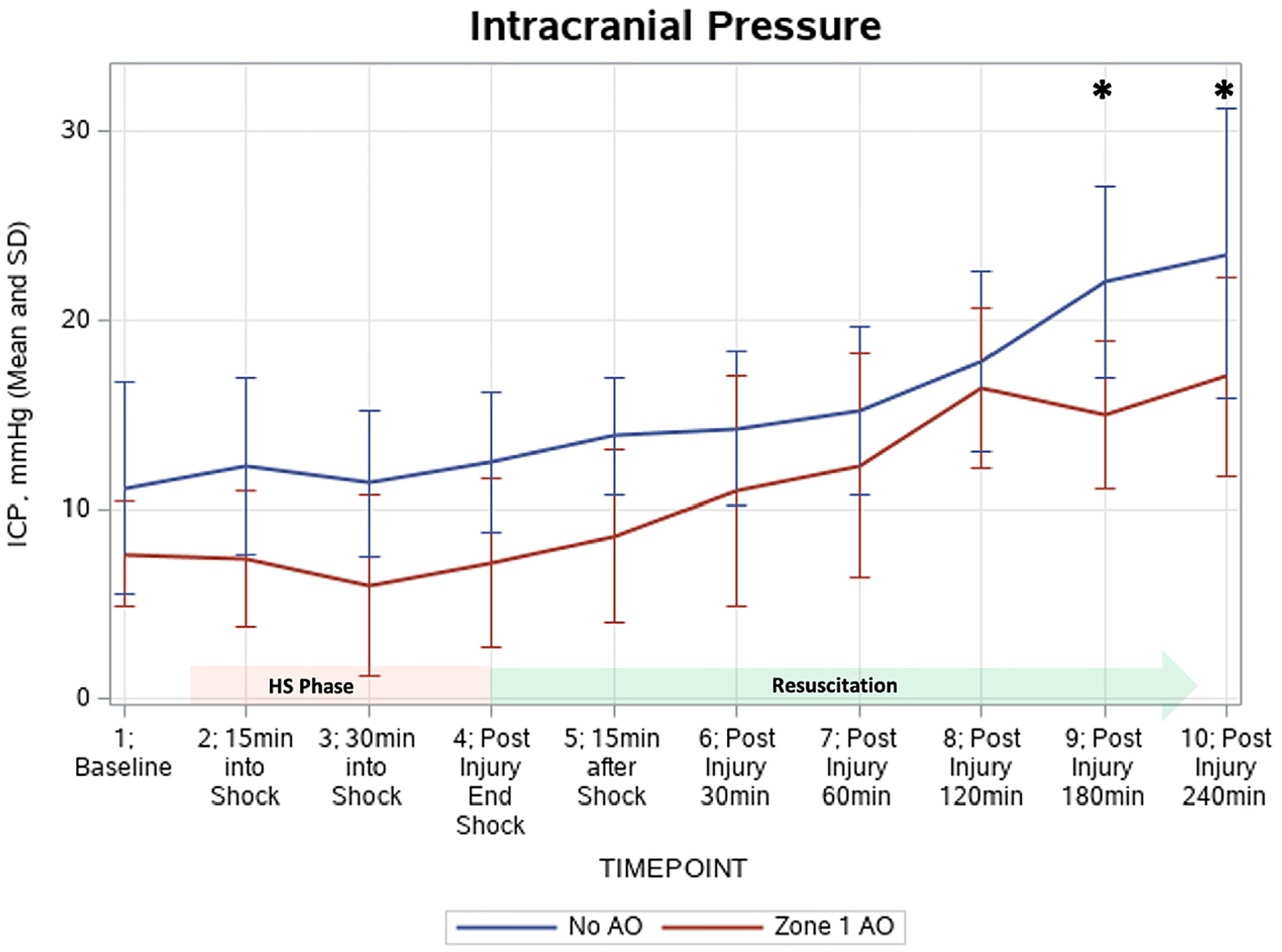
After dismounted complex blast injury, the zone 1 group had a significantly higher mean arterial pressure during hemorrhagic shock compared to the control group (41.2 mm Hg vs 16.7 mm Hg, P = .002). During balloon occlusion, intracranial pressure was not significantly elevated in the zone 1 aortic occlusion group vs control, but intracranial pressure was significantly lower in the zone 1 group at the end of the observation period. In addition, the zone 1 aortic occlusion group did not have increased brain water content (zone 1 aortic occlusion: 3.95 ± 0.1g vs no aortic occlusion: 3.95 ± 0.3 g, P = .87). Troponin levels significantly increased in the no aortic occlusion group but did not in the zone 1 aortic occlusion group.
Zone 1 aortic occlusion using resuscitative endovascular balloon occlusion of the aorta in a large animal dismounted complex blast injury model improved proximal mean arterial pressure while not significantly increasing intracranial pressure during balloon inflation. Observation up to 240 minutes postresuscitation did not show clinical signs of worsening brain injury or cardiac injury. These data suggest that in a dismounted complex blast injury swine model, resuscitative endovascular balloon occlusion of the aorta in zone 1 may provide neuro- and cardioprotection in the setting of blast traumatic brain injury. However, longer monitoring periods may be needed to confirm that the neuroprotection is lasting.
在复杂的爆炸伤后出现难治性休克的情况下,建议在体外循环球囊阻断主动脉的 1 区进行复苏。虽然体外循环球囊阻断主动脉可以增强冠状动脉灌注,但由于失去脑自动调节,可能存在继发性脑损伤的风险。我们开发了一种与战场相关的、复杂的爆炸伤去负荷猪模型,以评估体外循环球囊阻断主动脉 1 区对颅内压和脑水肿的影响。我们假设,体外循环球囊阻断主动脉的 1 区将增加在过高颅内压下传递的平均动脉压,从而加重脑损伤。
50 公斤雄性约克郡猪接受了一种组合去负荷复杂爆炸伤模型,包括爆炸创伤性脑损伤(50 psi,ARA 移动休克实验室)、组织损伤(双侧股骨骨折)和失血性休克(控制出血至 10 mEq/L 的基础不足目标)。在休克阶段,猪被随机分为无主动脉阻断(n=8)或 30 分钟的体外循环球囊阻断主动脉 1 区(1 区主动脉阻断组,n=6)。休克后,两组猪均接受改良的战术性战斗伤亡护理复苏,并监测 240 分钟,直至安乐死/死亡,总时间为 6 小时。整个过程中监测颅内压,收获大脑进行水含量分析。使用重复测量线性混合模型比较 1 区主动脉阻断组和无主动脉阻断组的平均动脉压和颅内压。
在去负荷复杂爆炸伤后,1 区组在失血性休克期间的平均动脉压明显高于对照组(41.2mmHg 对 16.7mmHg,P=0.002)。在球囊阻断期间,1 区主动脉阻断组的颅内压没有明显升高,但在观察期结束时,1 区组的颅内压明显降低。此外,1 区主动脉阻断组的脑水含量没有增加(1 区主动脉阻断组:3.95±0.1g 对无主动脉阻断组:3.95±0.3g,P=0.87)。无主动脉阻断组的肌钙蛋白水平显著升高,但 1 区主动脉阻断组没有升高。
在大型动物去负荷复杂爆炸伤模型中,使用体外循环球囊阻断主动脉的 1 区进行主动脉阻断,在球囊充气期间,近端平均动脉压升高,而颅内压没有明显升高。复苏后 240 分钟的观察没有显示出脑损伤或心脏损伤恶化的临床迹象。这些数据表明,在去负荷复杂爆炸伤猪模型中,体外循环球囊阻断主动脉的 1 区可能在爆炸伤性脑损伤的情况下提供神经和心脏保护。然而,可能需要更长的监测期来确认神经保护的持久性。