Heinemann Dag, Zabic Miroslav, Terakawa Mitsuhiro, Boch Jens
Hannover Centre for Optical Technologies, Leibniz University Hannover, Nienburger Str. 17, 30167, Hannover, Germany.
Institute of Horticultural Production Systems, Leibniz University Hannover, Herrenhäuser Str. 2, 30419, Hannover, Germany.
Plant Methods. 2022 Jun 11;18(1):82. doi: 10.1186/s13007-022-00908-9.
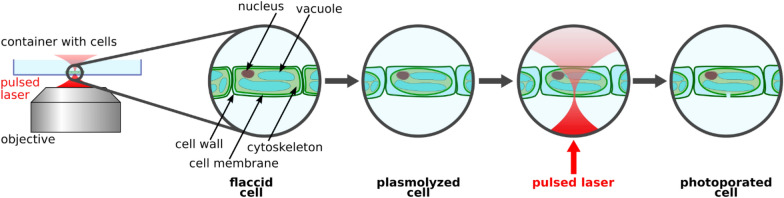
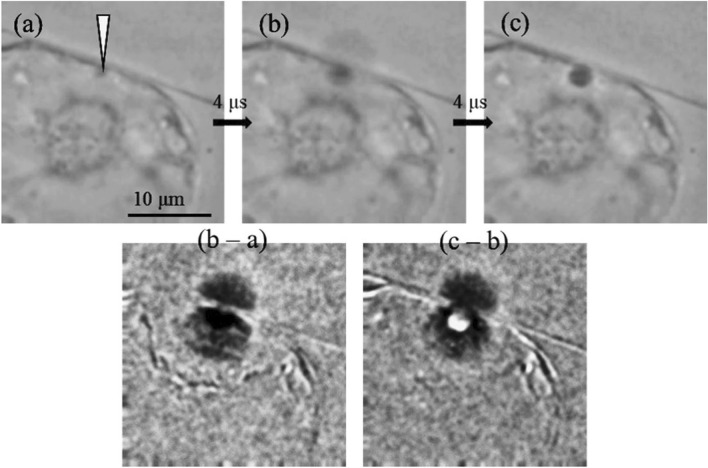
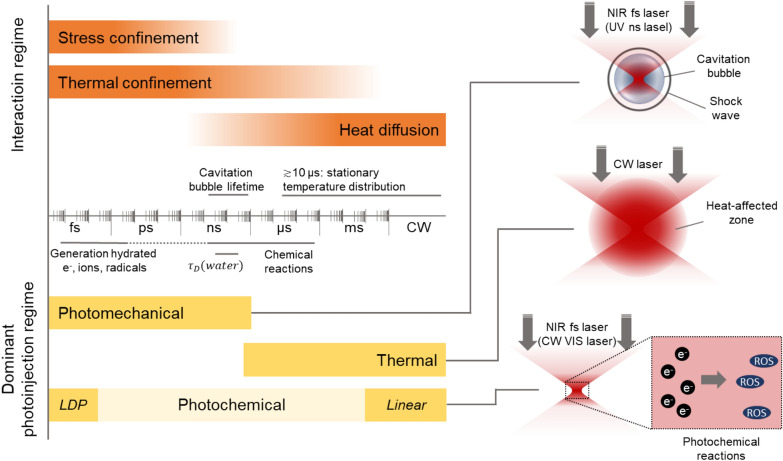
Lasers enable modification of living and non-living matter with submicron precision in a contact-free manner which has raised the interest of researchers for decades. Accordingly, laser technologies have drawn interest across disciplines. They have been established as a valuable tool to permeabilize cellular membranes for molecular delivery in a process termed photoinjection. Laser-based molecular delivery was first reported in 1984, when normal kidney cells were successfully transfected with a frequency-multiplied Nd:YAG laser. Due to the rapid development of optical technologies, far more sophisticated laser platforms have become available. In particular, near infrared femtosecond (NIR fs) laser sources enable an increasing progress of laser-based molecular delivery procedures and opened up multiple variations and applications of this technique.This review is intended to provide a plant science audience with the physical principles as well as the application potentials of laser-based molecular delivery. The historical origins and technical development of laser-based molecular delivery are summarized and the principle physical processes involved in these approaches and their implications for practical use are introduced. Successful cases of laser-based molecular delivery in plant science will be reviewed in detail, and the specific hurdles that plant materials pose will be discussed. Finally, we will give an outlook on current limitations and possible future applications of laser-based molecular delivery in the field of plant science.
激光能够以非接触方式对生物和非生物物质进行亚微米精度的改性,几十年来一直引起研究人员的兴趣。因此,激光技术已在各学科中受到关注。它们已成为一种有价值的工具,可在一种称为光注射的过程中使细胞膜通透以进行分子递送。基于激光的分子递送最早于1984年报道,当时用倍频钕:钇铝石榴石激光成功转染了正常肾细胞。由于光学技术的快速发展,现已出现了更为先进的激光平台。特别是,近红外飞秒(NIR fs)激光源推动了基于激光的分子递送程序的不断进步,并开启了该技术的多种变体和应用。本综述旨在向植物科学领域的读者介绍基于激光的分子递送的物理原理及其应用潜力。总结了基于激光的分子递送的历史起源和技术发展,并介绍了这些方法所涉及的主要物理过程及其实际应用意义。将详细回顾植物科学中基于激光的分子递送的成功案例,并讨论植物材料所带来的具体障碍。最后,我们将展望基于激光的分子递送在植物科学领域当前的局限性以及未来可能的应用。