MRC Laboratory of Molecular Biology, Cambridge CB2 0QH, UK.
Edinburgh Imaging (Royal Infirmary of Edinburgh) Facility, Edinburgh EH16 4SA, UK.
Brain. 2022 Jun 30;145(6):2031-2048. doi: 10.1093/brain/awab466.
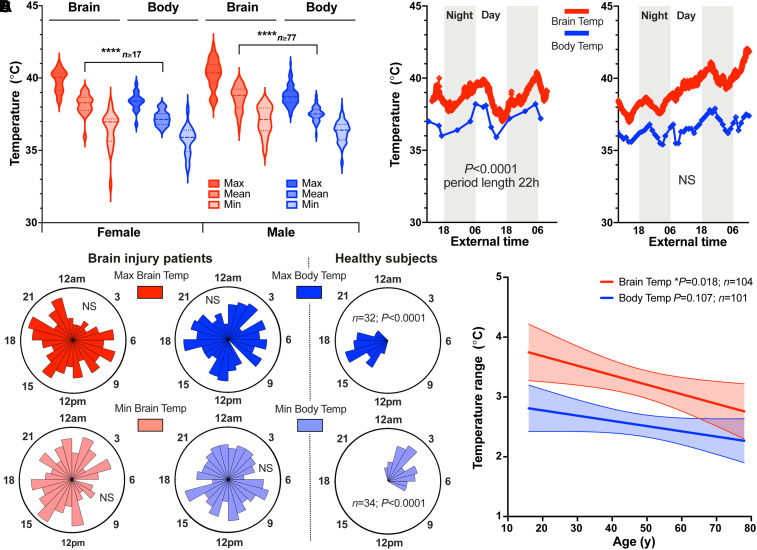
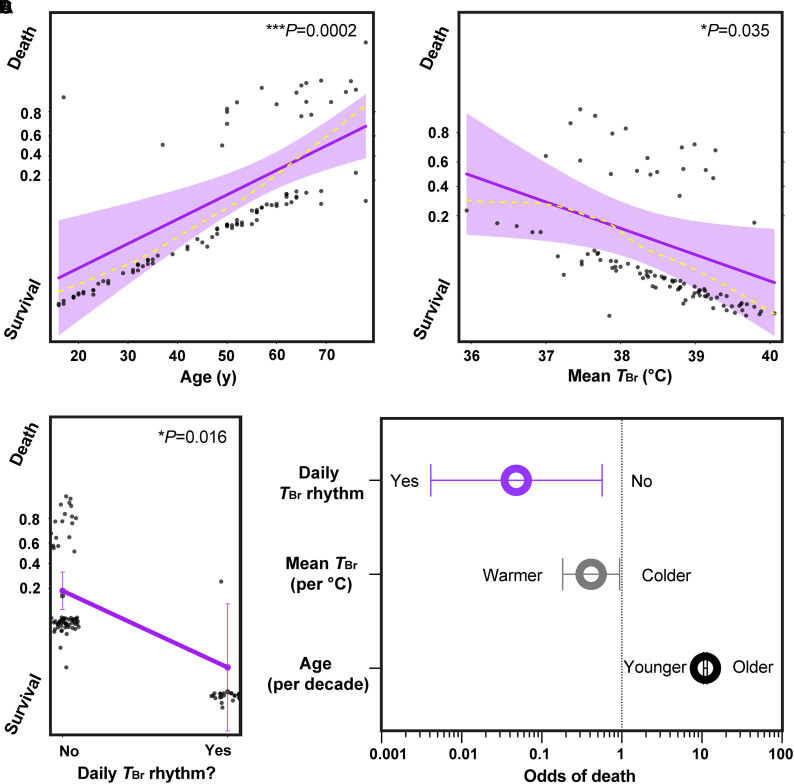
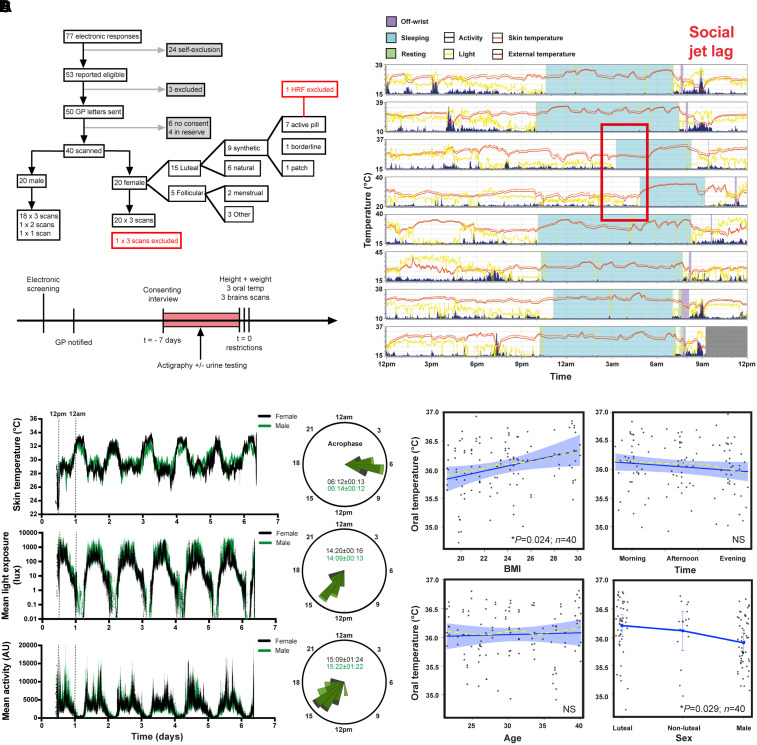
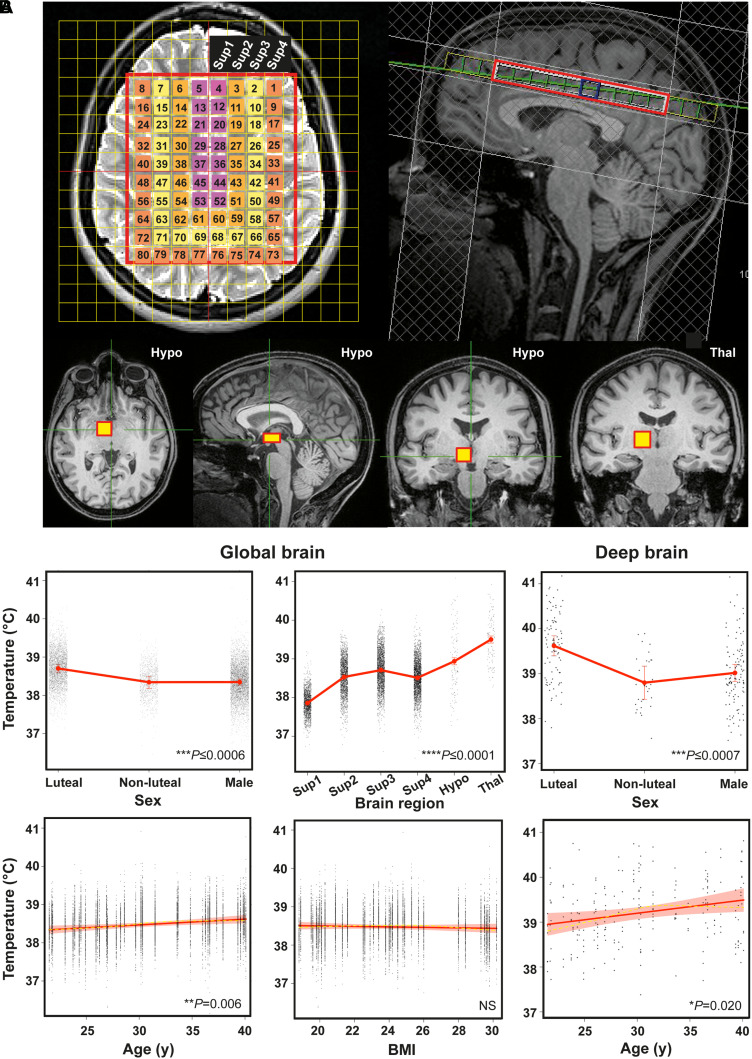
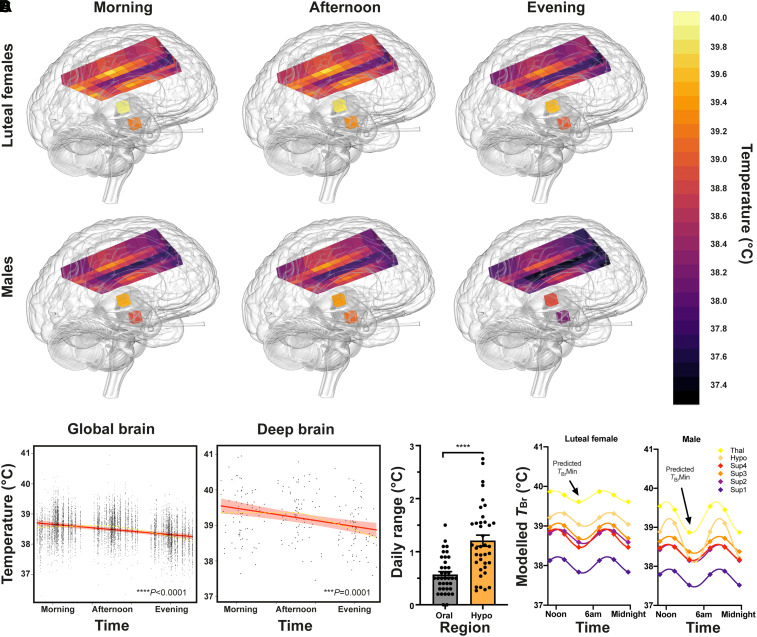
Patients undergo interventions to achieve a 'normal' brain temperature; a parameter that remains undefined for humans. The profound sensitivity of neuronal function to temperature implies the brain should be isothermal, but observations from patients and non-human primates suggest significant spatiotemporal variation. We aimed to determine the clinical relevance of brain temperature in patients by establishing how much it varies in healthy adults. We retrospectively screened data for all patients recruited to the Collaborative European NeuroTrauma Effectiveness Research in Traumatic Brain Injury (CENTER-TBI) High Resolution Intensive Care Unit Sub-Study. Only patients with direct brain temperature measurements and without targeted temperature management were included. To interpret patient analyses, we prospectively recruited 40 healthy adults (20 males, 20 females, 20-40 years) for brain thermometry using magnetic resonance spectroscopy. Participants were scanned in the morning, afternoon, and late evening of a single day. In patients (n = 114), brain temperature ranged from 32.6 to 42.3°C and mean brain temperature (38.5 ± 0.8°C) exceeded body temperature (37.5 ± 0.5°C, P < 0.0001). Of 100 patients eligible for brain temperature rhythm analysis, 25 displayed a daily rhythm, and the brain temperature range decreased in older patients (P = 0.018). In healthy participants, brain temperature ranged from 36.1 to 40.9°C; mean brain temperature (38.5 ± 0.4°C) exceeded oral temperature (36.0 ± 0.5°C) and was 0.36°C higher in luteal females relative to follicular females and males (P = 0.0006 and P < 0.0001, respectively). Temperature increased with age, most notably in deep brain regions (0.6°C over 20 years, P = 0.0002), and varied spatially by 2.41 ± 0.46°C with highest temperatures in the thalamus. Brain temperature varied by time of day, especially in deep regions (0.86°C, P = 0.0001), and was lowest at night. From the healthy data we built HEATWAVE-a 4D map of human brain temperature. Testing the clinical relevance of HEATWAVE in patients, we found that lack of a daily brain temperature rhythm increased the odds of death in intensive care 21-fold (P = 0.016), whilst absolute temperature maxima or minima did not predict outcome. A warmer mean brain temperature was associated with survival (P = 0.035), however, and ageing by 10 years increased the odds of death 11-fold (P = 0.0002). Human brain temperature is higher and varies more than previously assumed-by age, sex, menstrual cycle, brain region, and time of day. This has major implications for temperature monitoring and management, with daily brain temperature rhythmicity emerging as one of the strongest single predictors of survival after brain injury. We conclude that daily rhythmic brain temperature variation-not absolute brain temperature-is one way in which human brain physiology may be distinguished from pathophysiology.
患者接受干预以达到“正常”的大脑温度;这一参数对人类来说仍然没有定义。神经元功能对温度的极度敏感意味着大脑应该是等温的,但来自患者和非人类灵长类动物的观察表明,大脑温度存在显著的时空变化。我们旨在通过确定健康成年人的大脑温度变化程度来确定患者的大脑温度的临床相关性。我们回顾性筛选了所有参与协作欧洲神经创伤功效研究创伤性脑损伤(CENTER-TBI)高分辨率重症监护病房子研究的患者的数据。只有直接测量大脑温度且没有目标温度管理的患者被纳入。为了解释患者的分析,我们前瞻性地招募了 40 名健康成年人(20 名男性,20 名女性,20-40 岁)进行使用磁共振波谱法的大脑测温。参与者在一天中的早晨、下午和深夜进行扫描。在患者(n=114)中,大脑温度范围为 32.6 至 42.3°C,平均大脑温度(38.5±0.8°C)高于体温(37.5±0.5°C,P<0.0001)。在 100 名有资格进行大脑温度节律分析的患者中,25 名患者显示出每日节律,并且老年患者的大脑温度范围减小(P=0.018)。在健康参与者中,大脑温度范围为 36.1 至 40.9°C;平均大脑温度(38.5±0.4°C)高于口腔温度(36.0±0.5°C),黄体期女性的大脑温度比卵泡期女性和男性高 0.36°C(P=0.0006 和 P<0.0001)。体温随年龄增长而升高,在深部大脑区域最为明显(20 年内升高 0.6°C,P=0.0002),并且在丘脑等高区域存在 2.41±0.46°C 的空间差异。大脑温度随时间变化,尤其是在深部区域(0.86°C,P=0.0001),夜间最低。从健康数据中,我们构建了一个人类大脑温度的 4D 图谱 HEATWAVE。我们在患者中测试了 HEATWAVE 的临床相关性,发现缺乏每日大脑温度节律会使患者在重症监护中死亡的几率增加 21 倍(P=0.016),而绝对温度最大值或最小值并不能预测结果。较高的平均大脑温度与存活率相关(P=0.035),但是年龄每增加 10 岁,死亡的几率会增加 11 倍(P=0.0002)。人类大脑温度比以前认为的要高,变化也更大——受年龄、性别、月经周期、大脑区域和时间的影响。这对温度监测和管理有重大影响,每日大脑温度节律性成为预测脑损伤后生存的最强单一预测因素之一。我们得出结论,每日节律性大脑温度变化——而不是绝对大脑温度——是人类大脑生理学与病理生理学的区别之一。