Wang Guowei, Zhang Xiaobo, Feng Wanjiang, Wang Jianlong
Department of Orthopedics, Third Xiangya Hospital, Central South University, Changsha, China.
Front Genet. 2022 May 26;13:917935. doi: 10.3389/fgene.2022.917935. eCollection 2022.
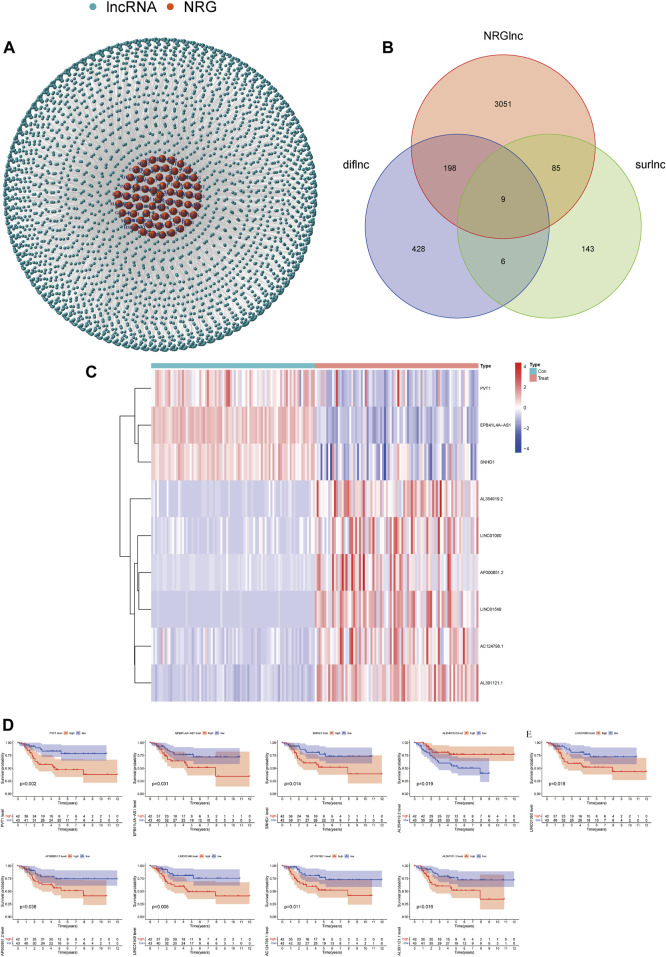
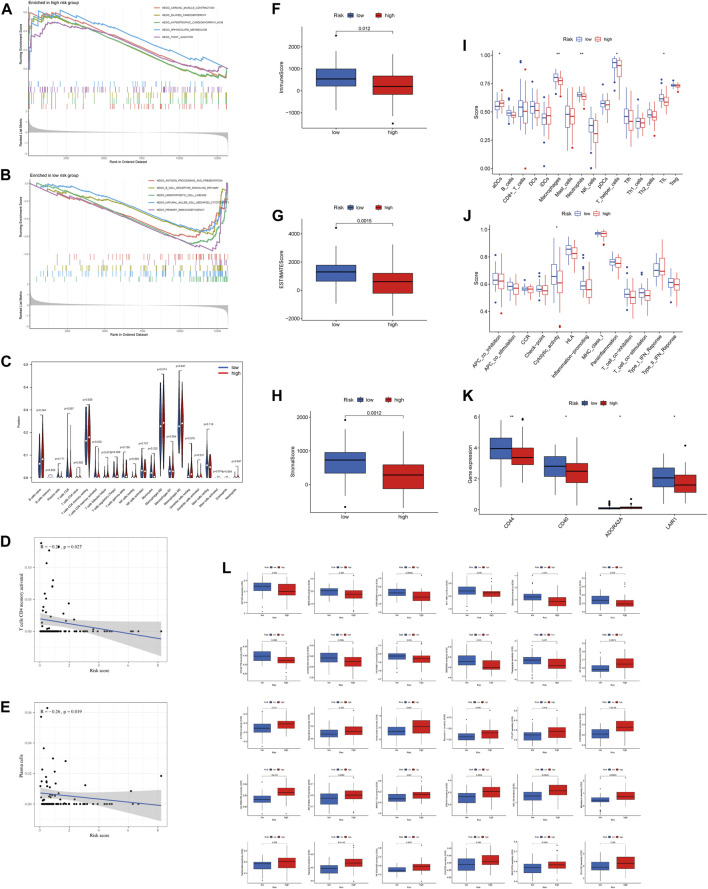
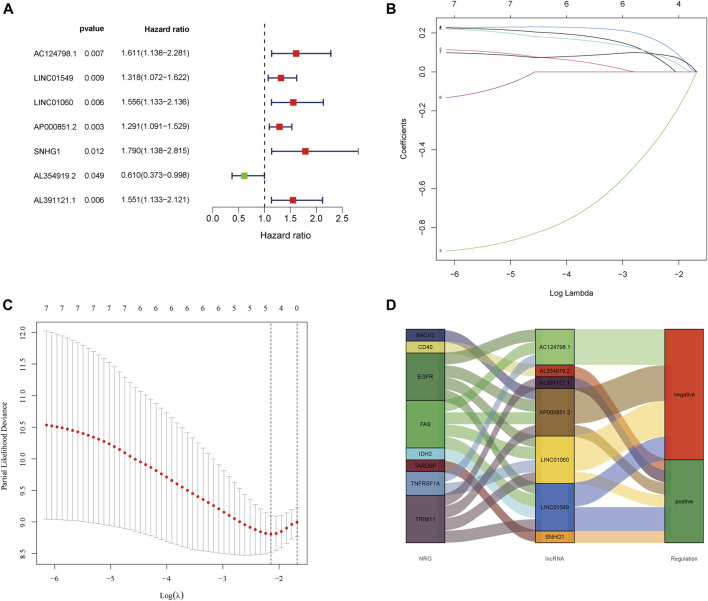
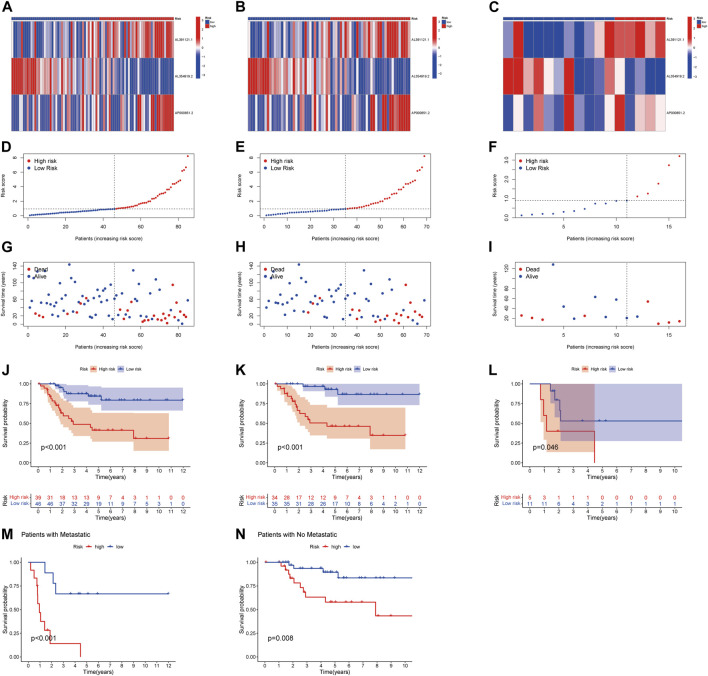
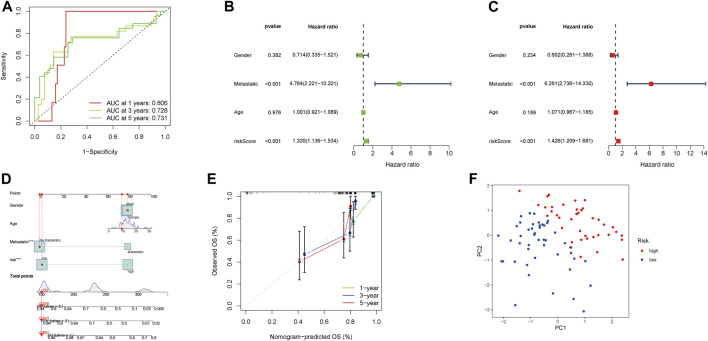
Osteosarcoma (OS) is the most common primary tumor of bone in adolescents, and its survival rate is generally less than 20% when metastases occur. Necroptosis, a novel form of programmed necrotic cell death distinct from apoptosis, has been increasingly recognized as a promising therapeutic strategy. This study sought to identify long non-coding RNAs (lncRNAs) associated with necrotizing apoptosis to predict prognosis and target drug use to improve patient survival. Transcriptomic data and clinical data from 85 OS patients with survival time data and expression profiles from 85 random normal adipose tissue samples were extracted from the UCSC Xena website (http://xena.ucsc.edu/). Nine necroptosis-associated differential prognostic lncRNAs were then identified by analysis of variance, correlation analysis, univariate Cox (uni-Cox) regression, and Kaplan-Meier analysis. Then, patients were randomized into training or testing groups. According to uni-Cox, we obtained prognostic lncRNAs in the training group and intersected them with the abovementioned nine lncRNAs to obtain the final necrotizing apoptosis-related differential prognostic lncRNAs (NRlncRNAs). Next, we performed the least absolute shrinkage and selection operator (LASSO) to construct a risk model of NRlncRNAs. Kaplan-Meier analysis, ROC curves, nomograms, calibration curves, and PCA were used to validate and evaluate the models and grouping. We also analyzed the differences in tumor immunity and drugs between risk groups. We constructed a model containing three NRlncRNAs (AL391121.1, AL354919.2, and AP000851.2) and validated its prognostic predictive power. The value of the AUC curve of 1-, 3-, and 5-year survival probability was 0.806, 0.728, and 0.731, respectively. Moreover, we found that the overall survival time of patients in the high-risk group was shorter than that in the low-risk group. GSEA and ssGSEA showed that immune-related pathways were mainly abundant in the low-risk group. We also validated the differential prediction of immune checkpoint expression, tumor immunity, and therapeutic compounds in the two risk groups. Overall, NRlncRNAs have important functions in OS, and these three NRlncRNAs can predict the prognosis of OS and provide guidance for immunotherapy in OS.
骨肉瘤(OS)是青少年中最常见的原发性骨肿瘤,发生转移时其生存率通常低于20%。坏死性凋亡是一种不同于细胞凋亡的新型程序性坏死性细胞死亡形式,已日益被视为一种有前景的治疗策略。本研究旨在鉴定与坏死性凋亡相关的长链非编码RNA(lncRNA),以预测预后并指导靶向药物使用,从而提高患者生存率。从UCSC Xena网站(http://xena.ucsc.edu/)提取了85例有生存时间数据的骨肉瘤患者的转录组数据和临床数据,以及85个随机正常脂肪组织样本的表达谱。然后通过方差分析、相关性分析、单变量Cox(uni-Cox)回归和Kaplan-Meier分析,鉴定出9个与坏死性凋亡相关的差异预后lncRNA。随后,将患者随机分为训练组或测试组。根据uni-Cox分析,我们在训练组中获得了预后lncRNA,并将其与上述9个lncRNA进行交叉分析,以获得最终的坏死性凋亡相关差异预后lncRNA(NRlncRNA)。接下来,我们进行了最小绝对收缩和选择算子(LASSO)分析,以构建NRlncRNA的风险模型。使用Kaplan-Meier分析、ROC曲线、列线图、校准曲线和主成分分析(PCA)对模型和分组进行验证和评估。我们还分析了风险组之间肿瘤免疫和药物的差异。我们构建了一个包含三个NRlncRNA(AL391121.1、AL354919.2和AP000851.2)的模型,并验证了其预后预测能力。1年、3年和5年生存概率的AUC曲线值分别为0.806、0.728和0.731。此外,我们发现高风险组患者的总生存时间短于低风险组。基因集富集分析(GSEA)和单样本基因集富集分析(ssGSEA)表明,免疫相关通路在低风险组中主要富集。我们还验证了两个风险组中免疫检查点表达、肿瘤免疫和治疗性化合物的差异预测。总体而言,NRlncRNA在骨肉瘤中具有重要作用,这三个NRlncRNA可以预测骨肉瘤的预后,并为骨肉瘤的免疫治疗提供指导。