Shoukrie Shoukrie I, Venugopal Sathish, Dhanoa Ravneet K, Selvaraj Ramaneshwar, Selvamani Tharun Y, Zahra Anam, Malla Jyothirmai, Hamouda Ranim K, Hamid Pousette F
Orthopaedics and Traumatology, California Institute of Behavioral Neurosciences & Psychology, Fairfield, USA.
Neurosurgery, California Institute of Behavioral Neurosciences & Psychology, Fairfield, USA.
Cureus. 2022 May 8;14(5):e24823. doi: 10.7759/cureus.24823. eCollection 2022 May.
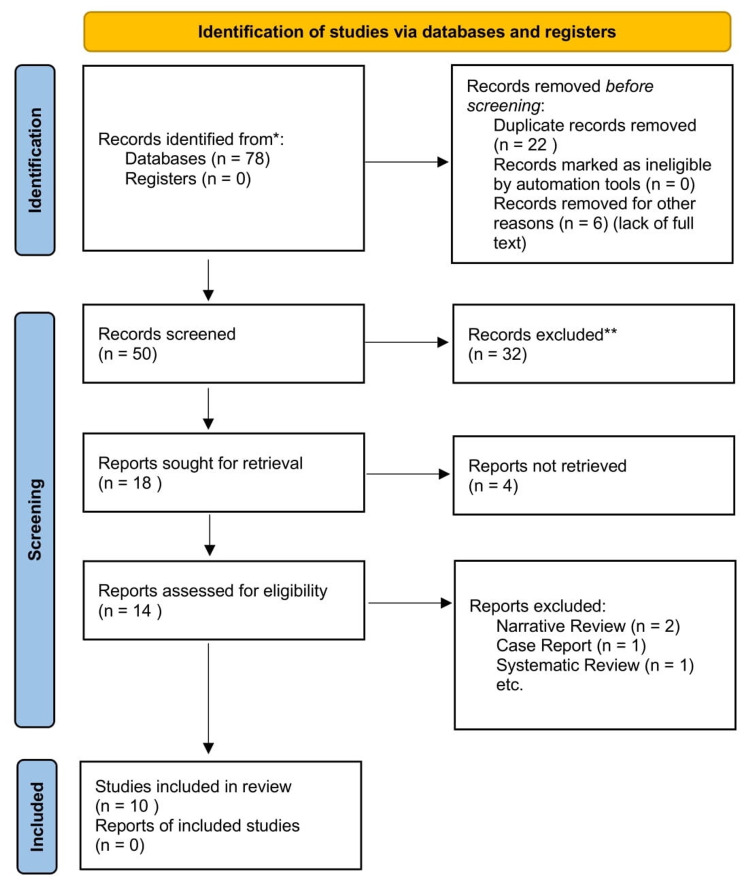
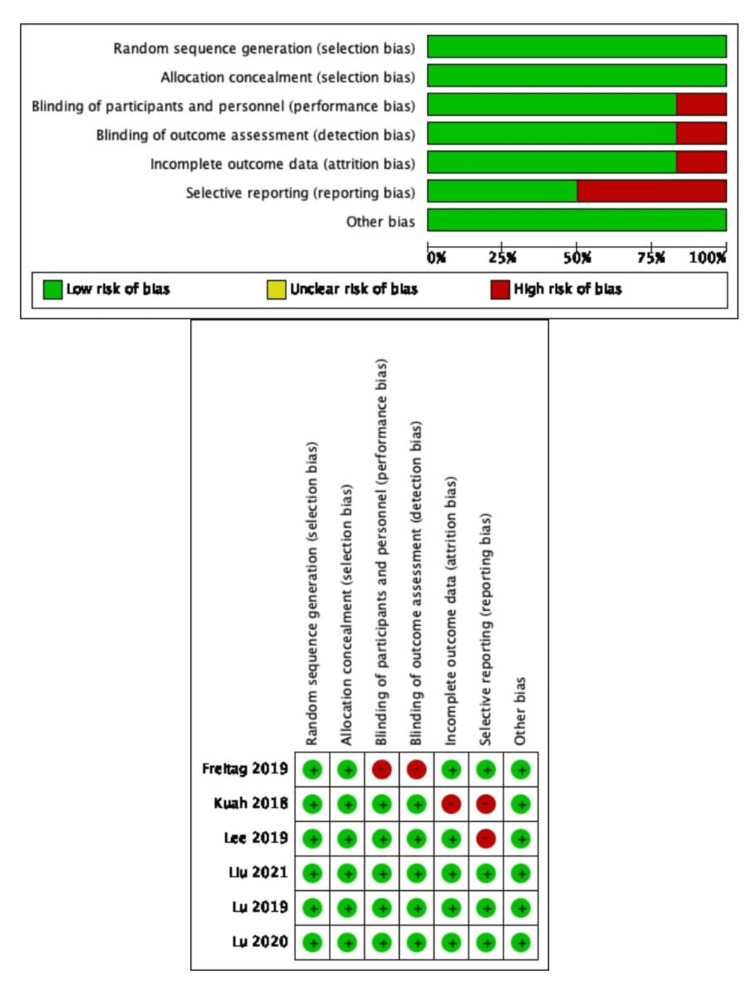
Intraarticular stem cell therapy has become increasingly used to treat knee osteoarthritis (KOA) with minimal high-quality evidence to support its use. This study aims to see how well intra-articular injections of mesenchymal stem cells (MSCs) worked and how safe they were for individuals with KOA. A total of 10 studies were extracted using PubMed, Cochrane Library, and PMC from 2017 to 2021 in the English language. An assessment of the risk of bias was applied via the Cochrane Collaborative Bias Risk Tool and Newcastle-Ottawa Quality. Changes in pain and functional outcomes in patients with KOA were measured by a Knee injury and Osteoarthritis Outcome Score (KOOS) scores, Visual Analogue Scale (VAS), Western Ontario and McMaster Universities Osteoarthritis Index (WOMAC) scores at baseline, and follow-up evaluation criteria. The magnetic resonance imaging (MRI) was evaluated using the whole-organ magnetic resonance imaging score (WORMS) and cartilage volume changes. A total of six randomized controlled trials (RCTs), three prospective retrospective clinical trials, and one retrospective clinical trial included 723 patients. They were diagnosed with unilateral or bilateral KOA with Kellgren-Lawrence (KL) grade 1-4 KOA and followed up for six, 12, and 24 months. The experimental groups received multipotent MSCs, mesenchymal progenitor cells (MPCs), adipose tissue progenitor stem cells (AD-MPCs), adipose tissue mesenchymal stem cells (AD-MSCs), bone marrow mesenchymal stem cells (BM-MSCs), bone marrow aspiration (BMA), bone marrow aspiration concentration (BMAC), or micro fragmented adipose tissue (MFAT) while the controlled groups received normal saline (NS), hyaluronic acid (HA), placebo, or went through conservative management. In conclusion, significant improvements were noticed in the MSCs groups via different outcome measuring tools like KOOS, VAS, WOMAC, and MRI. Furthermore, no significant adverse events (AEs) have been observed. Therefore, intra-articular injections of MSCs are effective and safe in relieving pain and improving motor function in individuals with KOA in the short term, contrary to earlier research findings.
关节内干细胞疗法越来越多地用于治疗膝关节骨关节炎(KOA),但支持其使用的高质量证据却很少。本研究旨在观察关节内注射间充质干细胞(MSCs)的效果如何,以及对KOA患者的安全性如何。2017年至2021年期间,使用PubMed、Cochrane图书馆和PMC以英文共提取了10项研究。通过Cochrane协作偏倚风险工具和纽卡斯尔-渥太华质量评估偏倚风险。采用膝关节损伤和骨关节炎结局评分(KOOS)、视觉模拟量表(VAS)、西安大略和麦克马斯特大学骨关节炎指数(WOMAC)评分,在基线和随访评估标准下测量KOA患者疼痛和功能结局的变化。使用全器官磁共振成像评分(WORMS)和软骨体积变化评估磁共振成像(MRI)。共有六项随机对照试验(RCT)、三项前瞻性回顾性临床试验和一项回顾性临床试验纳入了723例患者。他们被诊断为单侧或双侧KOA且Kellgren-Lawrence(KL)分级为1-4级KOA,并随访6、12和24个月。实验组接受多能MSCs、间充质祖细胞(MPCs)、脂肪组织祖干细胞(AD-MPCs)、脂肪组织间充质干细胞(AD-MSCs)、骨髓间充质干细胞(BM-MSCs)、骨髓抽吸物(BMA)、骨髓抽吸浓缩物(BMAC)或微片段化脂肪组织(MFAT),而对照组接受生理盐水(NS)、透明质酸(HA)、安慰剂或接受保守治疗。总之,通过KOOS、VAS、WOMAC和MRI等不同结局测量工具,在MSCs组中发现了显著改善。此外,并观察到显著不良事件(AE)。因此,与早期研究结果相反,关节内注射MSCs在短期内缓解KOA患者疼痛和改善运动功能方面是有效且安全的。