Shanghai Veterinary Research Institute, Chinese Academy of Agricultural Sciences, Shanghai, China.
College of Animal Science, Tarim University, Xinjiang, China.
J Virol. 2022 Jul 13;96(13):e0061822. doi: 10.1128/jvi.00618-22. Epub 2022 Jun 13.
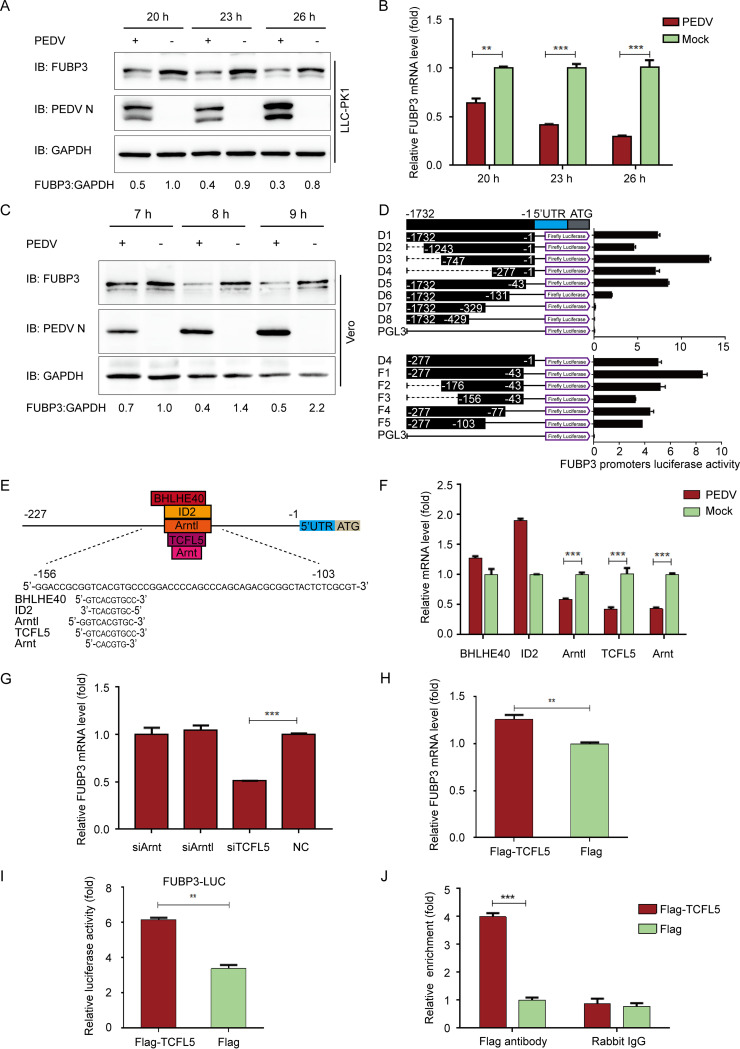
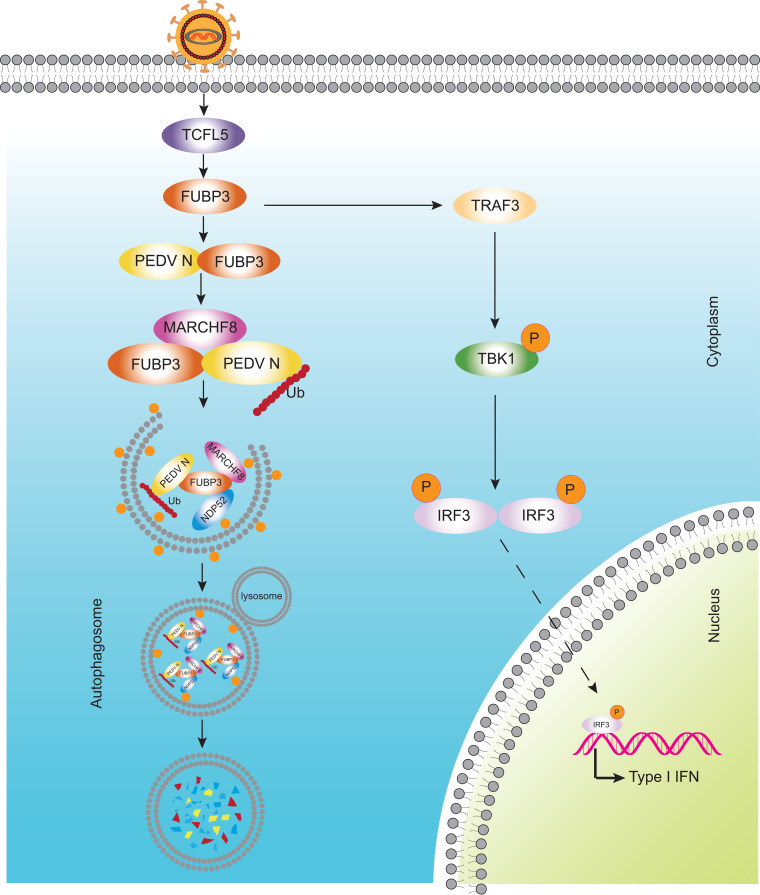
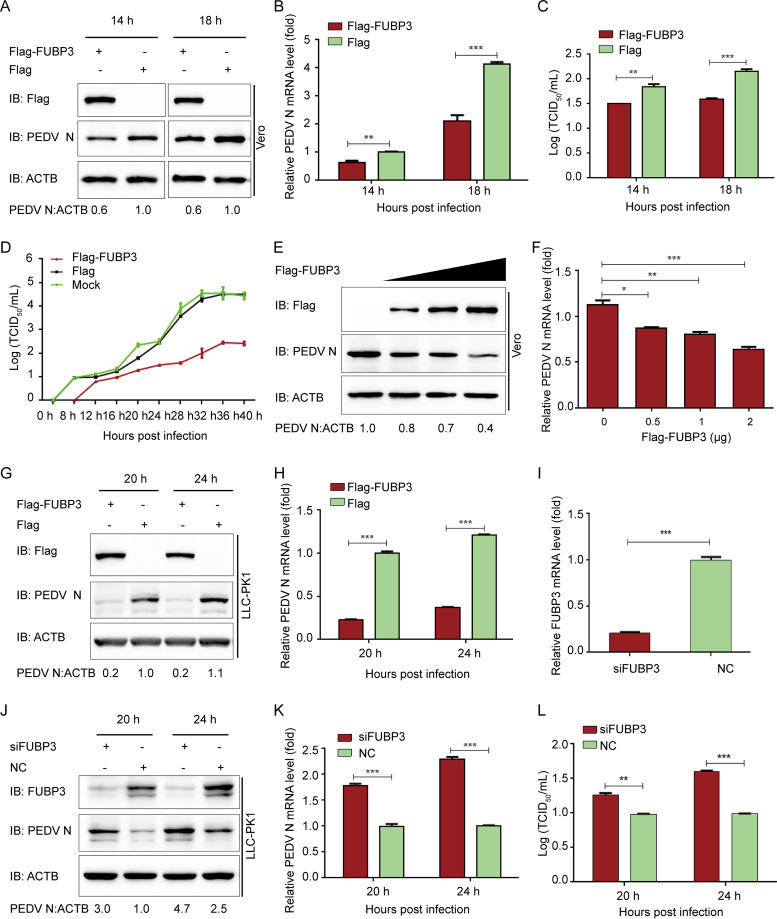
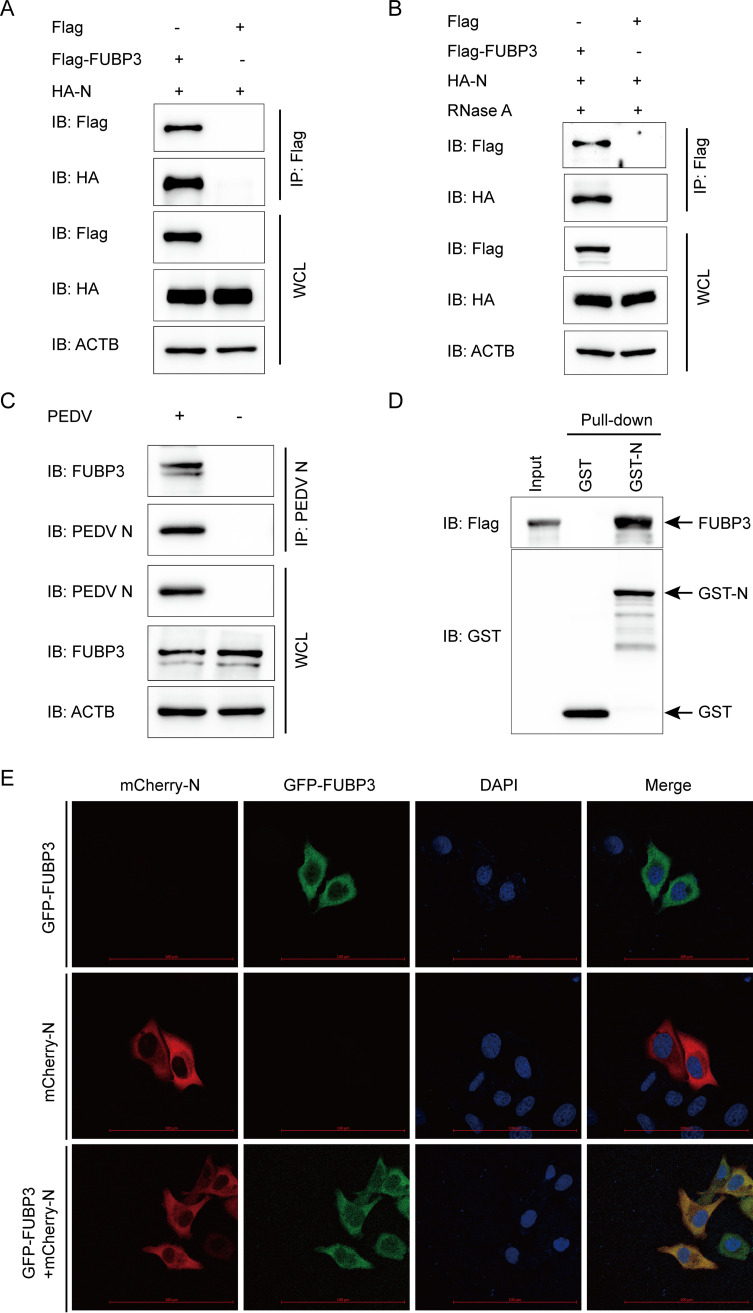
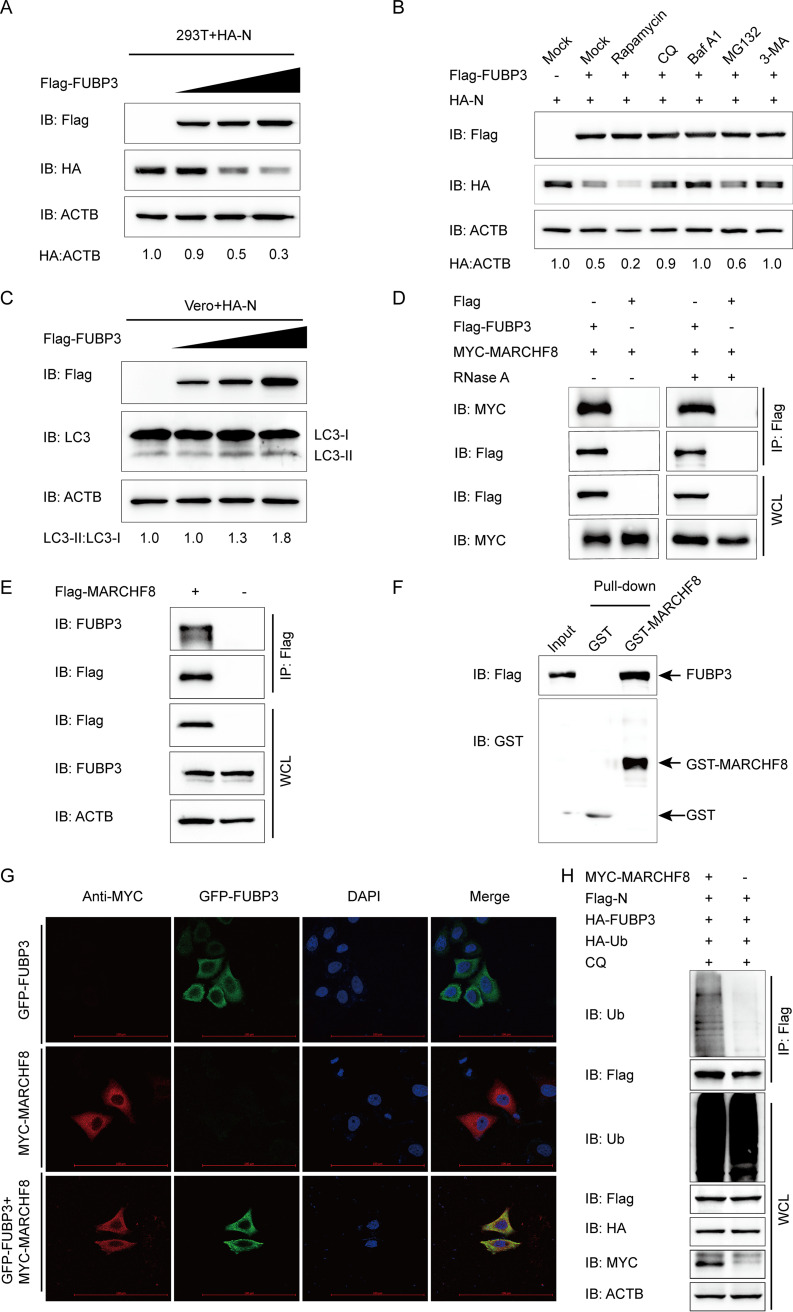
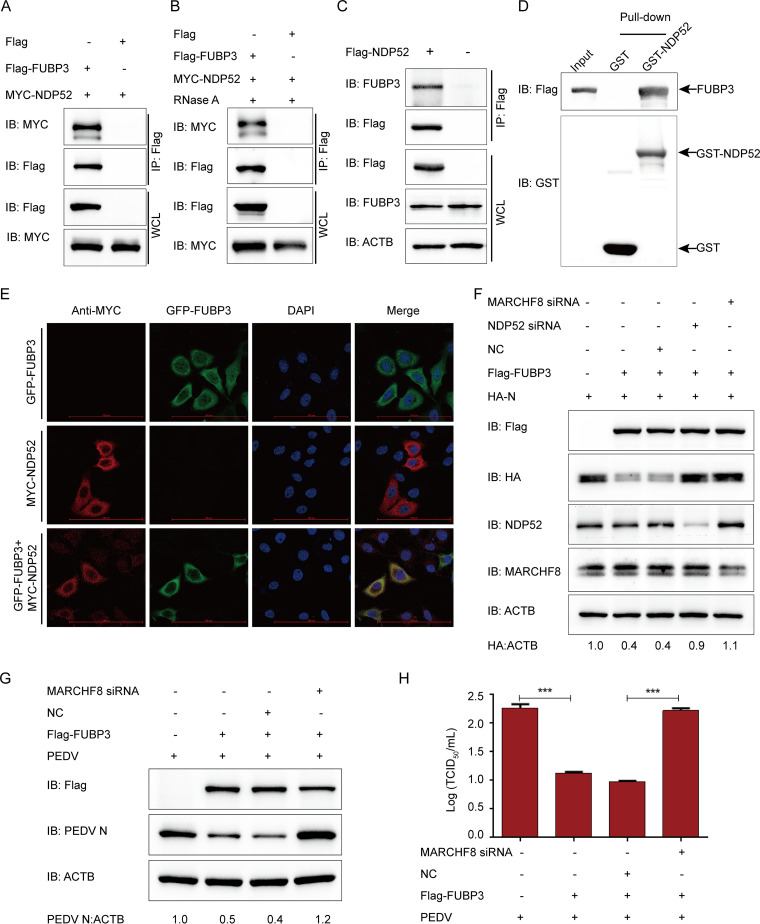
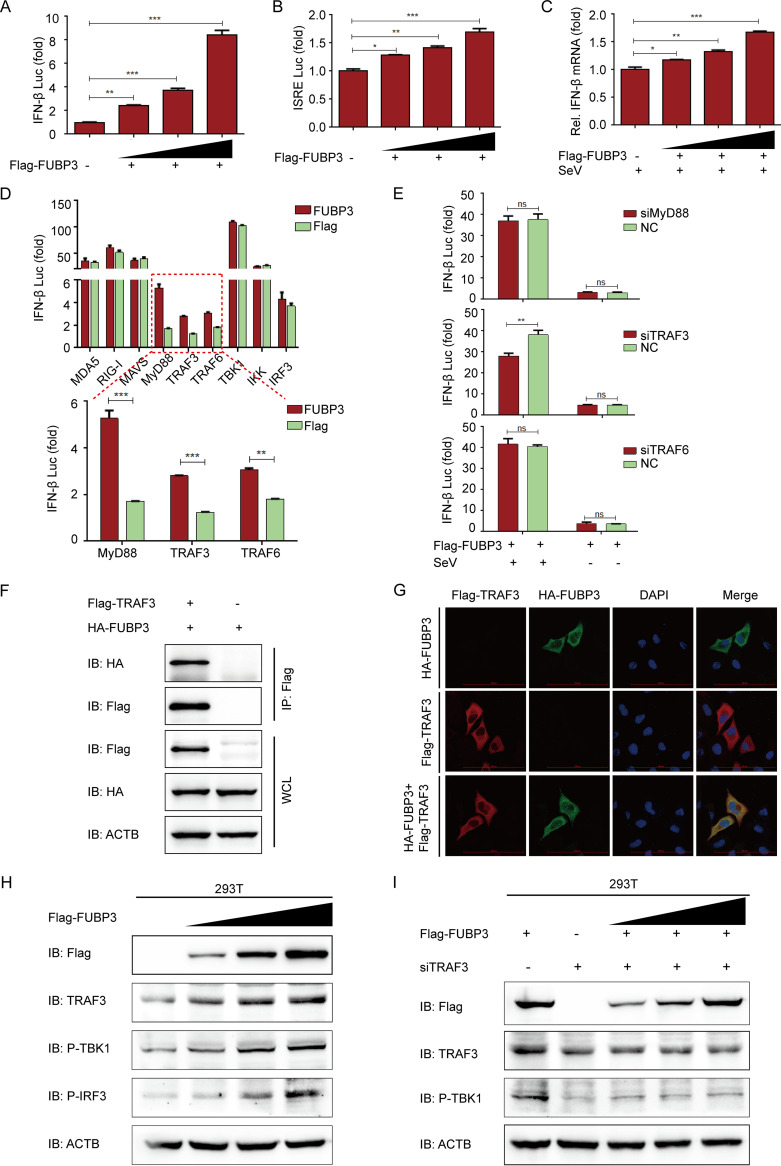
Porcine epidemic diarrhea virus (PEDV) is the globally distributed alphacoronavirus that can cause lethal watery diarrhea in piglets, causing substantial economic damage. However, the current commercial vaccines cannot effectively the existing diseases. Thus, it is of great necessity to identify the host antiviral factors and the mechanism by which the host immune system responds against PEDV infection required to be explored. The current work demonstrated that the host protein, the far upstream element-binding protein 3 (FUBP3), could be controlled by the transcription factor TCFL5, which could suppress PEDV replication through targeting and degrading the nucleocapsid (N) protein of the virus based on selective autophagy. For the ubiquitination of the N protein, FUBP3 was found to recruit the E3 ubiquitin ligase MARCH8/MARCHF8, which was then identified, transported to, and degraded in autolysosomes via NDP52/CALCOCO2 (cargo receptors), resulting in impaired viral proliferation. Additionally, FUBP3 was found to positively regulate type-I interferon (IFN-I) signaling and activate the IFN-I signaling pathway by interacting and increasing the expression of tumor necrosis factor (TNF) receptor-associated factor 3 (TRAF3). Collectively, this study showed a novel mechanism of FUBP3-mediated virus restriction, where FUBP3 was found to degrade the viral N protein and induce IFN-I production, aiming to hinder the replication of PEDV. PEDV refers to the alphacoronavirus that is found globally and has re-emerged recently, causing severe financial losses. In PEDV infection, the host activates various host restriction factors to maintain innate antiviral responses to suppress virus replication. Here, FUBP3 was detected as a new host restriction factor. FUBP3 was found to suppress PEDV replication via the degradation of the PEDV-encoded nucleocapsid (N) protein via E3 ubiquitin ligase MARCH8 as well as the cargo receptor NDP52/CALCOCO2. Additionally, FUBP3 upregulated the IFN-I signaling pathway by interacting with and increasing tumor necrosis factor (TNF) receptor-associated factor 3 (TRAF3) expression. This study further demonstrated that another layer of complexity could be added to the selective autophagy and innate immune response against PEDV infection are complicated.
猪流行性腹泻病毒(PEDV)是一种广泛分布的甲型冠状病毒,可导致仔猪致命性水样腹泻,造成巨大的经济损失。然而,目前的商业疫苗并不能有效预防现有疾病。因此,有必要鉴定宿主抗病毒因子和宿主免疫系统对 PEDV 感染的反应机制。本研究发现,宿主蛋白远上游元件结合蛋白 3(FUBP3)可被转录因子 TCFL5 调控,通过靶向和降解病毒的核衣壳(N)蛋白,基于选择性自噬抑制 PEDV 复制。为了对 N 蛋白进行泛素化,FUBP3 被发现招募 E3 泛素连接酶 MARCH8/MARCHF8,然后通过 NDP52/CALCOCO2(货物受体)被运输到自噬溶酶体中并降解,导致病毒增殖受损。此外,FUBP3 被发现通过与肿瘤坏死因子(TNF)受体相关因子 3(TRAF3)相互作用并增加其表达,从而正向调节 I 型干扰素(IFN-I)信号通路并激活 IFN-I 信号通路。总之,本研究揭示了 FUBP3 介导的病毒限制的新机制,发现 FUBP3 降解病毒 N 蛋白并诱导 IFN-I 产生,旨在阻碍 PEDV 的复制。
PEDV 是指在全球范围内发现的并最近重新出现的甲型冠状病毒,它会导致严重的经济损失。在 PEDV 感染中,宿主激活各种宿主限制因子来维持先天抗病毒反应,以抑制病毒复制。在这里,发现 FUBP3 是一种新的宿主限制因子。FUBP3 通过 E3 泛素连接酶 MARCH8 以及货物受体 NDP52/CALCOCO2 降解 PEDV 编码的核衣壳(N)蛋白来抑制 PEDV 复制。此外,FUBP3 通过与肿瘤坏死因子(TNF)受体相关因子 3(TRAF3)相互作用并增加其表达而上调 IFN-I 信号通路。本研究进一步表明,选择性自噬和先天免疫反应对 PEDV 感染的反应可能会更加复杂。